
Succulents are the houseplants of the patio world: sculptural, endlessly varied, and perfectly happy being ignored for two weeks. A well-built succulent arrangement looks like a designer installed it, costs a fraction of a flower bed, and survives the neglect that kills everything else.
1. The Thriller-Filler-Spiller Bowl
Best for: The foolproof first arrangement.
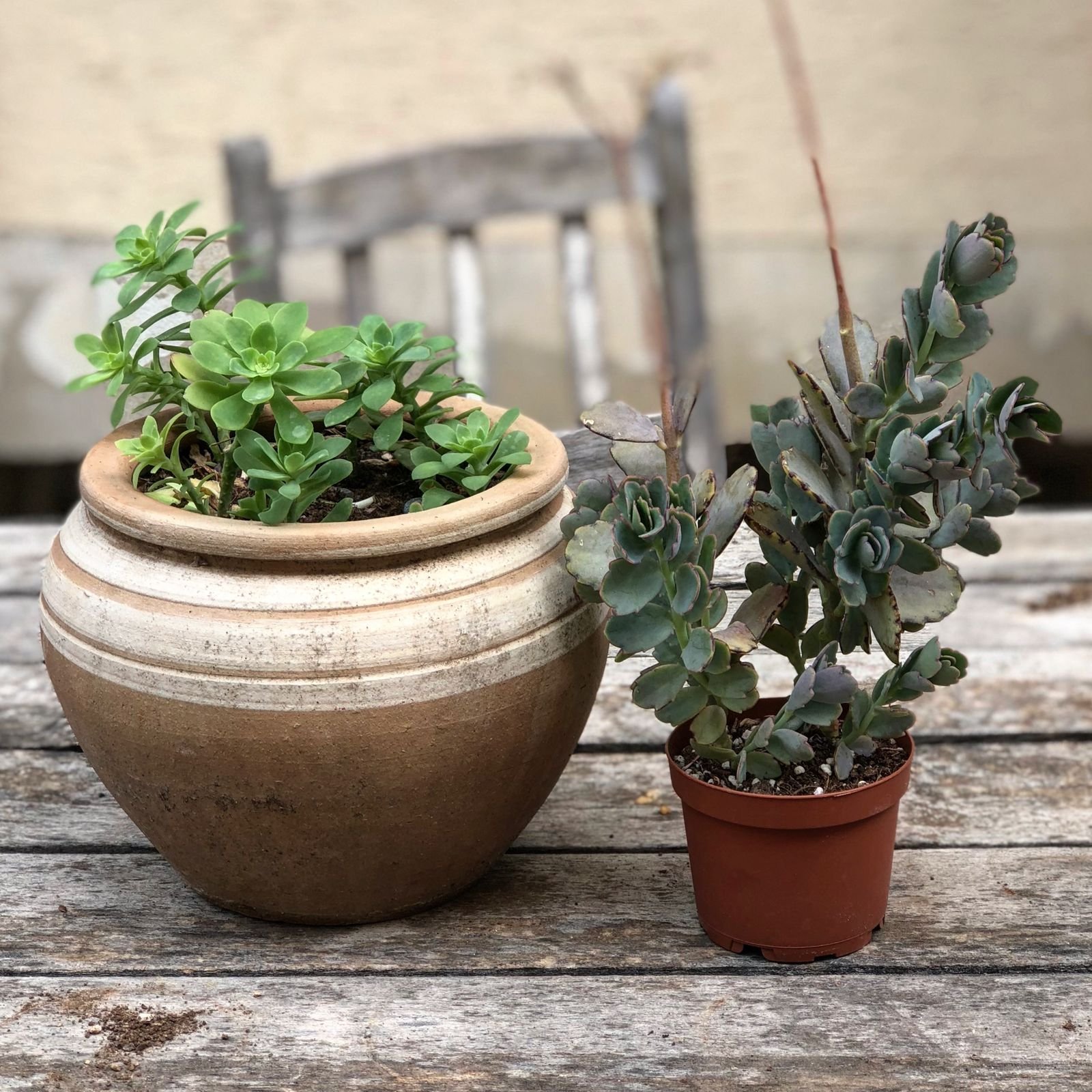
Pick one tall architectural succulent (agave, aeonium, or a tall echeveria) as the thriller, ring it with mounding fillers (sedum, graptoveria), and edge the bowl with trailers (string of pearls, burro’s tail). One 14-inch bowl, three plant types, instant professional look. Use cactus mix, not regular potting soil — drainage is everything.
2. Living Succulent Wreath

Best for: Front doors and patio walls.
A wire wreath frame packed with sphagnum moss becomes a living wreath when you poke succulent cuttings through the moss. Echeveria, sedum, and sempervivum root right into it. Hang in bright indirect light and mist weekly — no soil, no pots, just a circle of living geometry. Our fall planter ideas beyond mums uses the same wreath technique seasonally.
3. Tiered Fountain Planter

Best for: Big impact in one square foot.
Stacked tier planters (or a thrifted 3-tier serving stand) let you build a succulent waterfall — tall varieties on top, trailers spilling over every edge. The vertical cascade reads as lush abundance even though it’s maybe 15 plants. Terracotta tiers age beautifully and wick excess moisture away from roots.
4. Concrete Bowl Minimalism

Best for: Modern patios.
A single low concrete or hypertufa bowl planted with just 3 to 5 large specimens (one agave, two echeveria, a sedum groundcover) is gallery-level minimalism. The gray bowl makes blue-green succulents glow. Our DIY concrete planter guide shows how to cast the bowl yourself for under $15.
5. Vintage Drawer Arrangement

Best for: Thrift-store charm.
An old wooden drawer lined with a plastic tray becomes a shadow-box succulent garden. The contained rectangle forces a composition — think of it as a living painting. Drill drainage holes in the tray, fill with gritty mix, and pack succulents tight; they like crowding. Lean it against a wall or lay it flat on a table.
6. Succulent + Rock Zen Garden
Best for: Meditation corners.
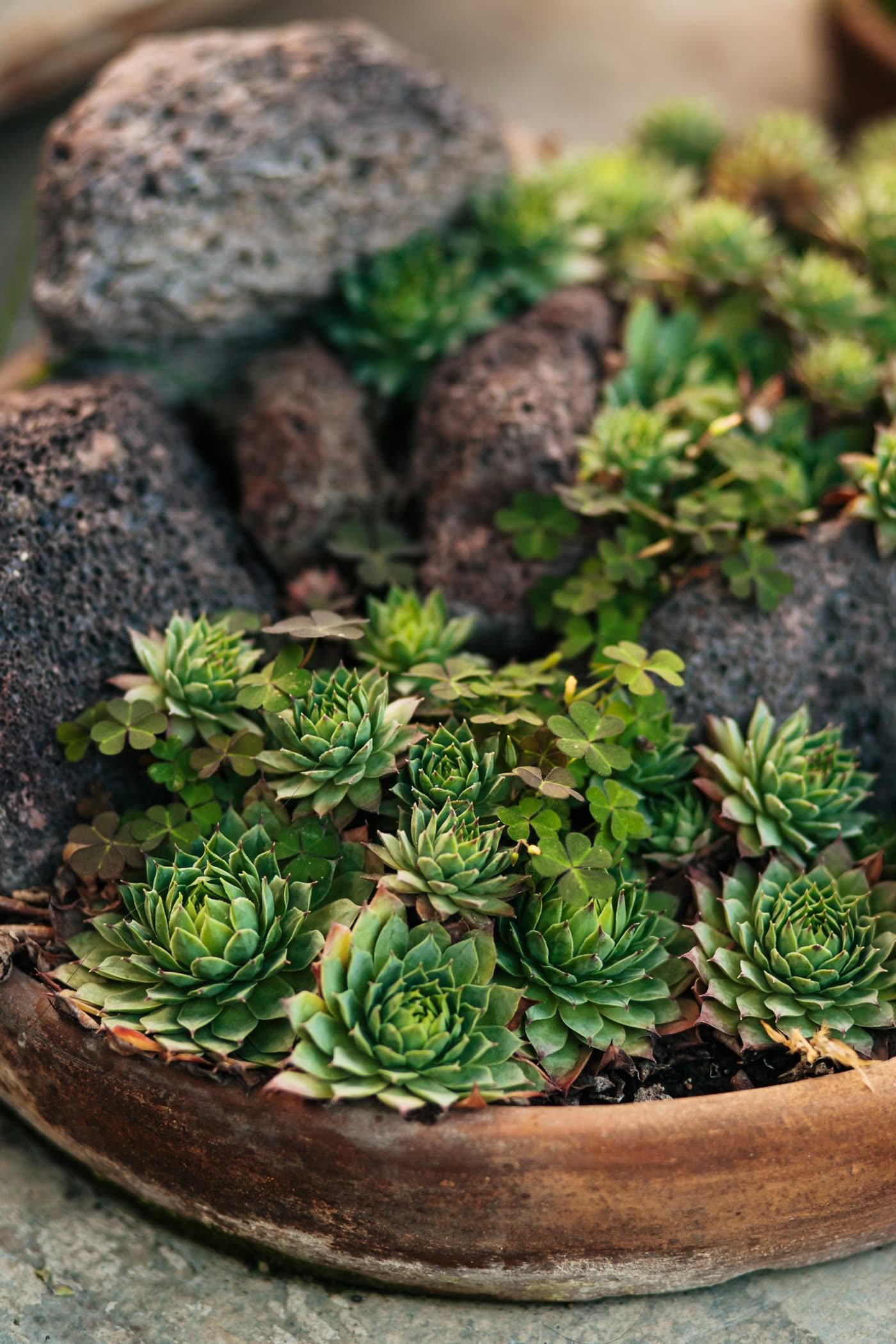
A shallow wide bowl with 2 to 3 sculptural succulents (a spiral aloe, a lithops cluster) surrounded by raked gravel or sand is a tiny zen garden. The negative space is the point — restraint makes each plant look precious. Top-dress with crushed granite or black sand for contrast.
7. Hanging Glass Terrarium Cluster
Best for: Covered patios and bright shade.
Glass globe terrariums hung at staggered heights from a pergola or shepherd’s hook catch light beautifully. Plant each with 2 to 3 tiny succulents (haworthia, baby echeveria) in a sand-and-gravel mix. They need bright indirect light — direct sun through glass cooks the plants. Mist lightly every 10 days; terrariums hold humidity.
8. Strawberry Pot Tower

Best for: 360-degree succulent displays.
Terracotta strawberry pots with side pockets were made for succulents. Plant the top with a statement agave, fill every pocket with a different echeveria or sedum, and let trailers spill. One 18-inch pot holds 20-plus plants. The porous terracotta prevents the overwatering that kills most succulents.
9. Driftwood Succulent Log

Best for: Coastal and naturalistic styles.
A hollowed driftwood log or branch section filled with moss and planted with small succulents looks like it washed up art-directed. Sedums and sempervivum root into the crevices and spread to cover the wood. Seal the log’s bottom with outdoor polyurethane so it doesn’t rot out in one season.
10. Color-Blocked Monochrome Pots

Best for: Design-forward patios.
Plant single-variety drifts: an entire pot of blue echeveria, another of red-tipped sedum, a third of ghost-plant graptopetalum. Group the monochrome pots in odd numbers. The repetition reads as intentional design, and single-variety pots are easier to water correctly since every plant wants the same thing. See our front porch planter ideas for more color-blocking tricks.
11. Succulent Table Centerpiece (Living Runner)

Best for: Outdoor dining tables.
A long shallow trough down the center of your patio table, planted with a ribbon of mixed succulents, is a centerpiece that never wilts. Keep it low (under 8 inches of plant height) so dinner conversation flows over it. A 3-foot cedar box costs about $20 to build and holds a full succulent tapestry.
12. Vertical Succulent Frame Art

Best for: Walls that need art, not just plants.
A shallow wooden frame (3 inches deep) with hardware cloth across the front, filled with succulent soil, becomes a living picture when planted with a mosaic of colorful echeveria and sedum. Hang it like art in bright shade. Water by laying it flat and soaking monthly — then hang it back up. It doubles as the vertical garden in our vertical garden patio ideas roundup.
Propagate Your Succulents: Free Plants Forever
Best for: Multiplying your collection for free.
Succulents are the easiest plants on earth to propagate. Leaf propagation: gently twist a healthy leaf off an echeveria, let the cut end callus for 2 to 3 days, lay it on dry cactus mix, and mist lightly every few days — roots and a baby rosette appear in 2 to 4 weeks. Stem cuttings: snip a leggy stem, callus the cut, stick it upright in dry mix, and water after a week. Offsets: hens-and-chicks and aloe produce baby “chicks” around the mother plant — tease them off with roots attached and pot immediately. One $5 echeveria becomes twenty plants within a year. Pot up your propagations in tiny terracotta pots and give them as gifts, or use them to fill out next season’s arrangements for free.
Frequently Asked Questions
How often do outdoor succulents need water?
Every 10 to 14 days in summer, monthly in winter — and only when the soil is completely dry. The number one succulent killer is love: overwatering rots the roots. When in doubt, wait another three days.
Can succulents survive winter on the patio?
It depends on the variety and your zone. Sempervivum (hens-and-chicks) and many sedums survive to zone 4. Tender echeveria and aeonium need to come inside below 40°F. Check the plant tag — cold-hardy succulents are the set-and-forget choice for northern patios.
What soil do succulents need?
Fast-draining gritty mix: standard cactus/succulent bagged mix works, or make your own with equal parts potting soil, coarse sand, and perlite or pumice. Regular potting soil holds too much water and rots succulent roots.
Why are my succulents stretching tall and leggy?
Not enough light. Succulents stretch toward light sources (etiolation), losing their compact rosettes. Move them to a brighter spot — most want 4 to 6 hours of direct sun. Leggy growth won’t revert, but new growth will stay tight once light improves; behead and replant the rosette if you want to reset.
Succulents are the closest thing to a plant-it-and-forget-it patio: one good arrangement, gritty soil, and water twice a month. Start with a thriller-filler-spiller bowl this weekend — it’s the gateway arrangement, and within a month you’ll be propagating cuttings for every windowsill you own.
Source: The Cactus and Succulent Society of America offers free culture sheets for hundreds of varieties, including cold-hardiness ratings.