
Green spots, mystery stains, and that damp smell mean your outdoor rug needs attention, not a replacement. Here is how to clean an outdoor rug step by step, from routine freshening to full mildew removal, plus what never to use on rug fibers.
1. Shake Off Loose Dirt and Debris

Start by removing everything the hose cannot. Take the rug to a clean section of lawn or driveway, fold it in half, and beat it firmly with a broom handle, or shake it out with a partner if it is large. You will be amazed how much sand, dead leaves, and grit fall out of a rug that looked merely dirty. This matters because grit ground into fibers acts like sandpaper during scrubbing. Sweep the patio underneath while the rug is off, since dirt under the rug holds moisture and feeds mildew from below.
Best for: Every cleaning | Large rugs | Gritty patios
2. Vacuum Both Sides

After shaking, vacuum the rug thoroughly on a hard-floor or outdoor setting, front first, then flip and do the back. The backing side collects fine silt and pollen that shaking misses, and cleaning only the top leaves half the problem in place. Use the hose attachment along the edges and fringe, where debris wedges into the binding. If your rug has a non-slip pad underneath, vacuum that too or replace it if it smells musty, pads are cheap and often the real source of the odor. A thorough vacuum means your soap and water work on stains, not on loose dirt.
Best for: Pet hair | Pollen season | Deep-clean prep
3. Hose It Down Thoroughly

Lay the rug flat on a clean driveway or deck and soak it completely with a garden hose, both sides. Saturating the fibers first prevents the cleaning solution from soaking in unevenly and leaving water marks. Use a spray nozzle to push water through the weave, working from one end to the other so dirt flows out rather than deeper in. If the rug sits on grass, move it to a hard surface first so you do not grind mud into the backing. Let the water run until it flows mostly clear from the edges. A fully soaked rug is ready for soap.
Best for: Synthetic rugs | First rinse | Dusty climates
4. Scrub With Dish Soap and Water

The best cleaner for most outdoor rugs is the simplest: a few squirts of mild dish soap in a bucket of warm water. Dish soap cuts grease, food spills, and sunscreen residue without the harsh chemicals that fade colors or damage latex backing. Work in sections with a soft-bristle brush or push broom, scrubbing with the grain of the weave in overlapping strokes. For polypropylene and other synthetic rugs, you can scrub firmly. For natural fibers like jute or sisal, use less water and a lighter touch, since these fibers absorb water and can shrink or brown. Let the soapy solution sit for ten minutes on stained areas before scrubbing them again.
Best for: Food spills | Sunscreen stains | Most rug types
5. Treat Mold and Mildew Spots

Green or black spots are mildew growing on dirt trapped in the fibers, not on the rug material itself. For synthetic rugs, mix one cup of white vinegar per gallon of water, or use a diluted bleach solution of one cup bleach per gallon of water for severe cases, and test a hidden corner first. Apply to the spots, let it sit for 15 minutes, then scrub with a brush and rinse completely. For natural fiber rugs, stick to vinegar only, bleach can discolor jute, sisal, and cotton. The Carpet and Rug Institute notes that certified cleaning products and proper technique matter more than harsh chemicals for maintaining rug performance, see their cleaning standards for guidance. Whatever you use, rinse until no residue remains, because leftover cleaner attracts new dirt.
Best for: Green spots | Shaded patios | Musty smells
6. Lift Stubborn Stains Individually

Different stains need different attacks. For grease or food stains, sprinkle baking soda over the spot, let it sit for 30 minutes to absorb the oil, then vacuum and scrub with dish soap. For rust stains from metal furniture legs, use a commercial rust remover made for fabrics, testing first, since bleach sets rust permanently. For pet stains, an enzyme-based cleaner breaks down the proteins that cause lingering odor, regular soap just masks it. For red wine or berry stains, blot, never rub, then treat with hydrogen peroxide on light-colored synthetics. Always work from the outside of the stain inward so you do not spread it.
Best for: Grease | Pet accidents | Rust marks
7. Pressure Wash on a Low Setting

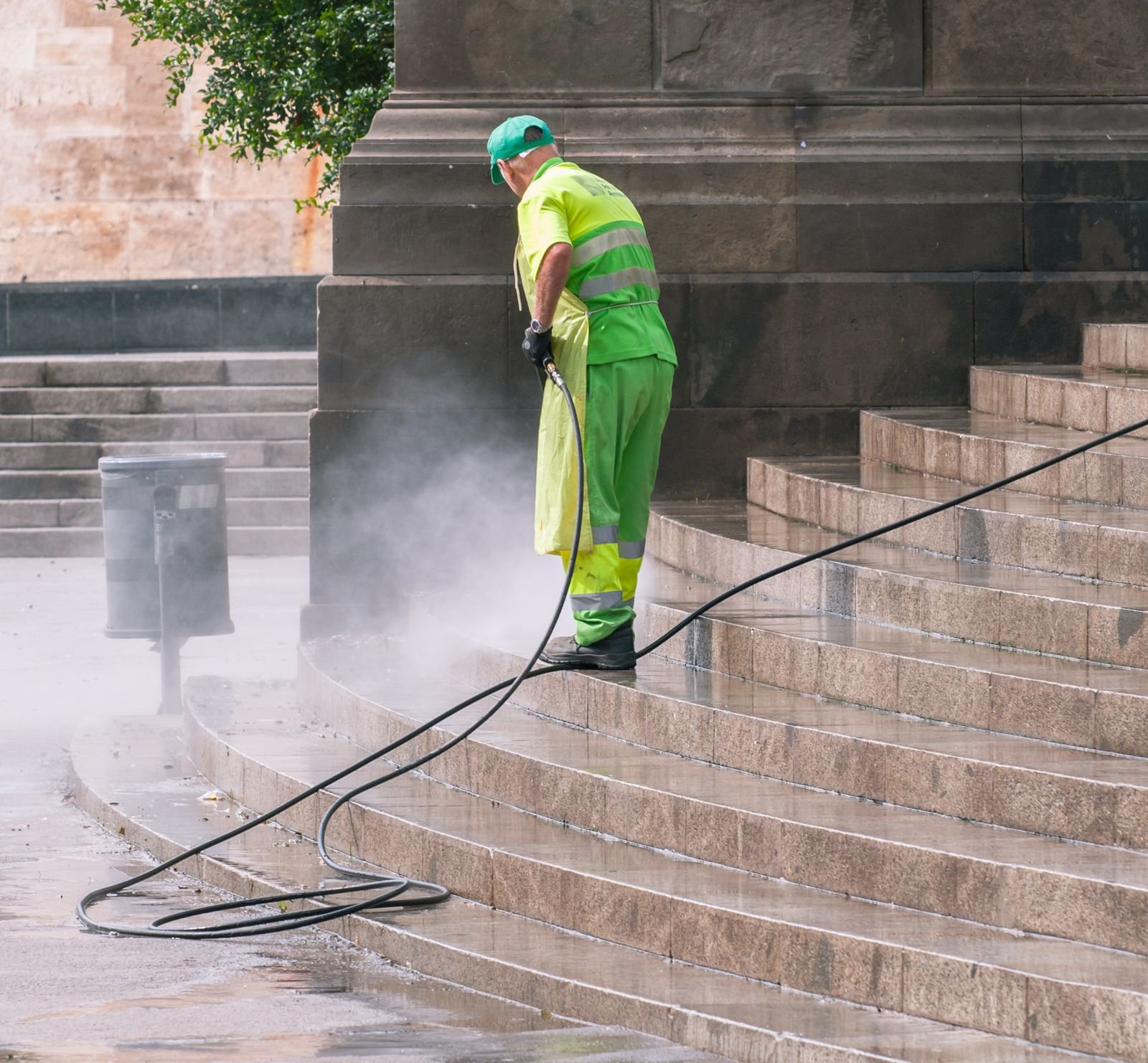
Yes, you can clean an outdoor rug with a pressure washer, but technique is everything. Use a wide fan tip, keep pressure under 1,500 PSI, and hold the wand at least 12 inches from the surface, sweeping in smooth passes with the weave. This blasts embedded grime out of thick synthetic rugs beautifully. Never pressure wash natural fiber rugs like jute or sisal, the force shreds the fibers and drives water deep into the core where it rots. Keep the nozzle moving and never linger on one spot, or you will fray the weave. If you are unsure about your rug's material, test an inconspicuous corner first. When in doubt, stick with the garden hose and brush.
Best for: Thick synthetics | Ground-in grime | Polypropylene rugs
8. Rinse Until the Water Runs Clear

Incomplete rinsing is the most common rug-cleaning mistake. Soap residue left in the fibers attracts dirt faster than before, so your clean rug looks grimy again within weeks. Hose the rug thoroughly from both sides, then press your hand into the fibers and check for slickness or bubbles. If you see suds, keep rinsing. For thick rugs, squeegee the water out with a push broom toward the edges to speed the process. Tilt the rug and watch the runoff, clear water means you are done. This step takes longer than people expect, often ten minutes for a large rug, but it is the difference between a rug that stays clean and one that does not.
Best for: Soapy residue | Long-lasting results | Thick pile
9. Dry Flat in the Sun, Never Fold Damp

Mildew grows in dark, damp folds, so drying is as important as cleaning. Lay the rug flat in direct sunlight, which naturally disinfects and bleaches out remaining mildew stains, and flip it after a few hours so both sides dry. Prop it slightly so air flows underneath, draping it over a railing or sawhorses works well for smaller rugs. Never fold or roll a damp rug, and never put it back on a shaded patio while it is still wet. In humid weather, point a fan at it to keep air moving. Wait until the backing feels completely dry to the touch before returning the rug to its spot, which can take a full sunny day for thick rugs.
Best for: Mildew prevention | Humid climates | Natural disinfection
A rug that survives cleaning deserves a good spot to live. Pair it with comfortable seating from our fire pit seating area ideas, or see how rugs anchor tiny layouts in our small balcony decor ideas.
FAQ
Can you clean an outdoor rug with a pressure washer? Yes, for synthetic rugs like polypropylene. Use a wide fan tip under 1,500 PSI, hold the wand at least 12 inches away, and sweep with the weave. Never pressure wash natural fiber rugs like jute or sisal, the force damages fibers and traps water in the core. When in doubt, use a garden hose and brush instead.
How do you get mildew out of an outdoor rug? Apply a vinegar solution or diluted bleach solution to the spots, let it sit 15 minutes, scrub with a brush, and rinse completely. Sunlight finishes the job by naturally disinfecting the fibers. Use vinegar only on natural fiber rugs, since bleach can discolor jute, sisal, and cotton.
What is the best cleaner for an outdoor rug? Mild dish soap and warm water handle most outdoor rug cleaning safely and cheaply. For mildew, use white vinegar or a diluted bleach solution on synthetics. Enzyme cleaners work best for pet stains, and baking soda absorbs grease. Avoid harsh solvents, abrasive powders, and undiluted bleach.
Can I put an outdoor rug in the washing machine? Only small, lightweight rugs, and only if the care label allows it. Most full-size outdoor rugs are too bulky and will damage a home washer or never rinse clean. Hand washing with a hose and brush is safer and more effective for anything larger than a doormat.