
That dark speckling on your patio umbrella canopy is mildew, and the washed-out color is sun damage, and both are fixable without buying a new umbrella. A proper cleaning takes about an hour, costs almost nothing, and can add years to the canopy's life.
Here are 10 steps for cleaning a patio umbrella the right way, from mildew removal to fade prevention, using supplies you already own.
1. Start With a Dry Brush-Down

Before any water touches the fabric, open the umbrella and brush the entire canopy with a soft-bristle brush or broom. Work from the top down so debris falls off rather than grinding deeper into the weave. This removes loose dirt, pollen, dead insects, and leaf litter that would turn into muddy streaks the moment you add water. Pay special attention to the folds and the area around the finial, where grime collects. Five minutes of dry brushing makes every wet step that follows dramatically more effective.
Best for: Every cleaning session, as the non-negotiable first step.
2. Clean It Fully Open, Never Folded

Always clean the umbrella in its fully open position. Cleaning a closed umbrella traps moisture and cleaning solution inside the folds, which is exactly how mildew gets its foothold in the first place. Opening it fully also lets you see every stained panel and gives the fabric airflow to dry afterward. If the umbrella is freestanding, hose down the surrounding patio first so dirty splash-back does not undo your work. A breezy, sunny day is ideal, because sunlight is a mild natural disinfectant and speeds drying.
Best for: Preventing the trapped-moisture mildew cycle.
3. Treat Mildew Spots With White Vinegar

For the dark mildew speckles, mix one part distilled white vinegar with four parts water in a spray bottle. Spray the spotted areas generously and let the solution sit for 15 minutes so the mild acid can break down the mildew's structure. Then scrub gently with a soft brush in circular motions, working from the outside of each spot inward so you do not spread it. Vinegar kills most surface mildew on outdoor fabrics without bleaching colors or weakening fibers the way harsh chemicals do. The EPA's mold cleanup guidance notes that small surface mold problems like this are safely handled with household cleaning, thorough scrubbing, and complete drying.
Best for: The dark speckles and musty-smelling patches.
4. The Dish Soap Deep Clean

After spot-treating mildew, wash the whole canopy with a bucket of lukewarm water and a squirt of mild dish soap, about a tablespoon per gallon. Working one panel at a time, scrub with a soft brush or sponge in gentle circles, then rinse each panel with a garden hose before the soap dries. Dish soap cuts through the film of sunscreen, pollen, bird droppings, and airborne grease that dulls outdoor fabric. Avoid hot water, which can set some stains, and never use laundry detergent with optical brighteners on colored canopies. Rinse thoroughly, because soap residue left in the fabric attracts dirt faster.
Best for: The all-over seasonal deep clean.
5. Baking Soda Paste for Stubborn Spots

For stains that survive the vinegar and soap rounds, make a paste of baking soda and a little water, about the consistency of toothpaste. Spread it over the stubborn spots, let it sit for 20 minutes, then scrub gently and rinse. Baking soda's mild abrasiveness lifts ground-in grime without the fiber damage of a stiff brush or harsh chemical, and it deodorizes musty fabric at the same time. This works especially well on the light-colored undersides of canopies where mildew shows most. Repeat once if needed rather than scrubbing harder; patience beats pressure on outdoor fabric.
Best for: Stains that laugh at the first round of cleaning.
6. What NOT to Use on Umbrella Fabric

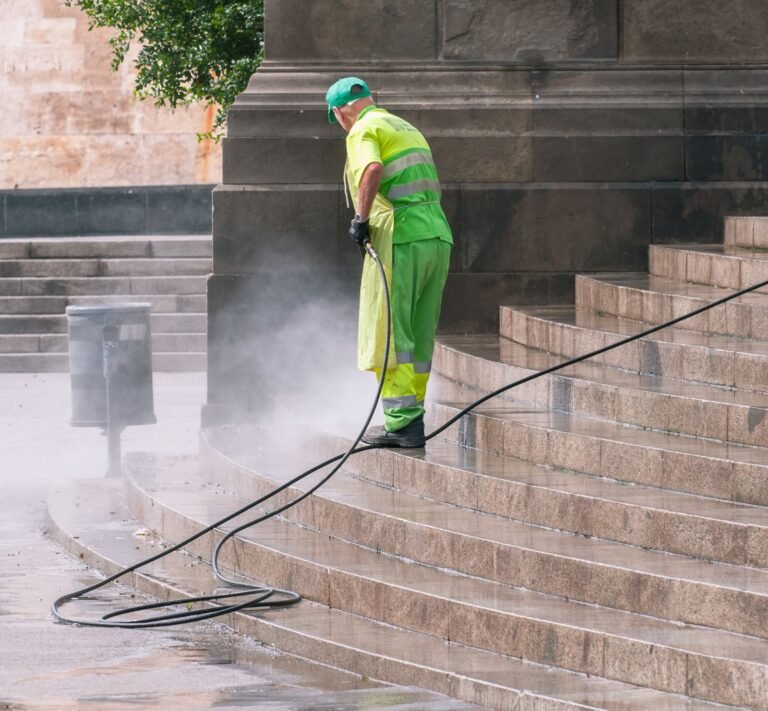
This step saves more umbrellas than any cleaner. Do not use chlorine bleach on colored or printed canopies: it weakens the fibers, destroys water-repellent coatings, and leaves blotchy faded patches worse than the mildew. If you must disinfect white fabric, use oxygen bleach, not chlorine, and rinse extremely well. Skip the pressure washer at close range, which can shred the weave and blast apart seams; a garden hose has plenty of power. Avoid solvents, abrasive powders, and stiff wire brushes. When a cleaner label says “not for outdoor fabrics,” believe it.
Best for: Avoiding the cleaning mistakes that ruin canopies.
7. Rinse Thoroughly and Dry in Full Sun

Rinse every panel until the water runs completely clear and no suds remain, because leftover cleaner residue attracts dirt and can irritate skin on contact. Then leave the umbrella fully open in direct sunlight until it is bone dry, which usually takes a few hours on a warm day. This drying step is not optional: closing a damp umbrella is the number one cause of recurring mildew, and no cleaner can compensate for trapped moisture. If clouds roll in, keep it open under a covered area with airflow rather than folding it damp “just for tonight.”
Best for: Making sure mildew does not return next month.
8. Fixing Faded Fabric Honestly

Let us be straight: no cleaner restores sun-faded color. What you can do is slow future fading and improve appearance. After cleaning and full drying, apply a UV fabric protectant spray made for outdoor fabrics, which adds water repellency and UV resistance; reapply each season. For severely faded but structurally sound canopies, fabric spray paints designed for outdoor use can refresh color, but results vary and the finish will never match factory dyeing. Prevention beats repair here: closing the umbrella when not in use and using a cover doubles the life of the color.
Best for: Sun-bleached canopies that still have good fabric.
9. Do Not Forget the Frame and Crank

A sparkling canopy on a gritty, sticking frame still feels neglected. Wipe aluminum frames with soapy water and dry them to prevent water spots; treat wooden poles with teak or outdoor furniture oil once a season. Spray a silicone-based lubricant, not oil-based, into the crank mechanism and tilt joints so the umbrella opens smoothly. Check the ribs and the canopy attachment points for bent arms or pulled stitching while you are up there, and tighten any loose screws. Ten minutes on the hardware extends the whole umbrella's life as much as the fabric care does.
Best for: Sticking cranks and wobbly frames.
10. Build a Storage Routine That Prevents Mildew

The cleaning only sticks if the storage routine supports it. Always let the umbrella dry fully open before closing it, even after a surprise rain. Use a breathable umbrella cover rather than a plastic tarp, which traps condensation underneath. In winter or long rainy stretches, store the umbrella indoors or in a shed if possible; if it must stay out, keep it closed, covered, and tilted so water sheds off. A quick monthly check during the off-season catches mildew early when vinegar still handles it. For shade-planning context, see our patio shade ideas and patio umbrella base weight guide, and if the umbrella shades your dining set, browse outdoor dining sets for small patios.
Best for: Keeping the umbrella clean between deep cleans.
Frequently Asked Questions
Can I use bleach on my patio umbrella? Avoid chlorine bleach on colored or printed canopies; it weakens fibers, ruins water-repellent coatings, and causes blotchy fading. For white canopies that need disinfecting, oxygen bleach is the safer choice, used sparingly and rinsed thoroughly.
How often should I clean my patio umbrella? Give it a full wash twice a year, in spring before the season starts and in fall before storage, plus quick spot-cleaning whenever you notice mildew or bird droppings. Umbrellas under trees or in humid climates may need a mid-summer wash too.
Why does mildew keep coming back on my umbrella? Almost always trapped moisture. The usual culprits are closing the umbrella while damp, storing it in a non-breathable cover, or leaving it open in constant shade where it never fully dries. Fix the drying routine and the mildew stops returning.
Can I put the umbrella canopy in the washing machine? Generally no. Machine agitation can tear seams, bend removable ribs, and destroy water-repellent coatings, and most manufacturers void the warranty for machine washing. Hand-washing with the methods above is safer and just as effective.