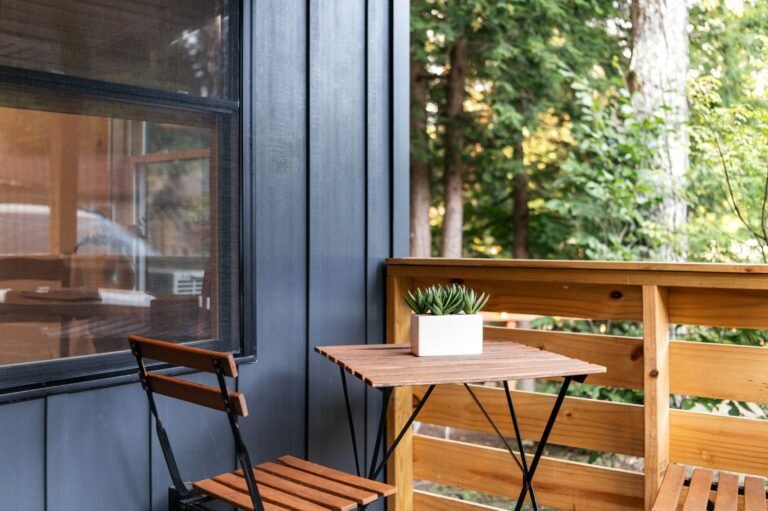
Your patio floor is tiny, but your walls are standing there doing nothing. A vertical garden turns that empty fence, blank wall, or bare railing into a living green wall that adds privacy, color, and serious wow factor without stealing a single square foot of floor space.
1. Pocket Planter Wall on the Fence

Best for: Renters and instant green walls.
Fabric pocket planters hang from grommets over any fence or railing — no drilling, no tools. Fill each pocket with herbs, trailing pothos, or colorful annuals, and water from the top so it trickles down. One 36-pocket panel covers a 3-by-3-foot section for around $25. For more fence-line inspiration, see our backyard fence line landscaping ideas.
2. Pallet Garden (The Classic for a Reason)

Best for: Budget gardeners who love a weekend project.
A heat-treated (not chemically treated) wood pallet becomes a vertical planter with landscape fabric stapled across the back and bottom of each slat opening. Stand it upright, fill with potting mix, and plant succulents, herbs, or strawberries in the gaps. Lean it against a wall or secure it with L-brackets. Total cost: $10 to $30 if you source a free pallet.
3. Hanging Gutter Planters

Best for: Long narrow walls and herb rows.
Vinyl rain gutters cut to length, capped at the ends, and mounted in stacked rows make perfect shallow planters for lettuce, strawberries, and trailing flowers. Drill drainage holes every 6 inches, mount with gutter brackets, and stagger the rows so upper planters don’t shade the lower ones. Three 4-foot gutters run about $40 in materials.
4. Trellis + Climbing Plants Combo

Best for: Privacy plus flowers.
A simple wood or metal trellis mounted 4 inches off the wall gives climbing plants something to grab. Star jasmine, clematis, mandevilla, and climbing roses all thrive vertically and deliver flowers plus screening. Our DIY garden trellis ideas walk through 15 designs from $15 builds to statement pieces.
5. Stacked Crate Tower

Best for: Rustic style and deep-rooted plants.
Stack wooden crates in a pyramid, securing each layer with screws, and plant the open faces. The depth of a crate (10 to 12 inches) handles vegetables and larger perennials that shallow pocket planters can’t. Stain or paint the crates to match your patio furniture for a pulled-together look.
6. Shoe Organizer Herb Wall

Best for: The cheapest vertical garden on this list.
A clear-pocket over-the-door shoe organizer hung on a fence or wall becomes a 24-plant herb garden for under $15. Poke drainage holes in each pocket, fill with potting mix, and plant basil, mint, parsley, and thyme. Hang it where it gets 4 to 6 hours of sun — most culinary herbs are happy with morning light and afternoon shade.
7. Living Wall Frame (Moss + Succulent Art)

Best for: Small patios that need art, not just plants.
Build or buy a shallow shadow-box frame (2 to 3 inches deep), fill it with succulent soil, and plant a mosaic of echeveria, sedum, and hens-and-chicks. Hang it like a picture. Succulents need water only every week or two, so this is the lowest-maintenance vertical garden here. It doubles as outdoor wall art that happens to be alive.
8. Ladder Shelf Garden

Best for: Vintage charm and tiered planting.
An old wooden ladder leaned against the wall becomes instant shelving — rest small pots on each rung, or lay boards across the rungs for wider shelves. The angled profile means upper plants don’t fully shade lower ones. Hit thrift stores for ladders under $20, and seal the wood with outdoor polyurethane so it survives the seasons.
9. PVC Pipe Tower Garden

Best for: Maximum plants in minimum footprint.
A 4-inch PVC pipe, 4 to 5 feet tall, with staggered holes cut along its length, becomes a vertical tower holding 20-plus plants in a 1-square-foot footprint. Strawberries and herbs are the classic tower crops. Cap the bottom, add a central watering tube, and you’ve got a self-watering column that fits in the corner of any patio.
10. Wall-Mounted Rail Planters

Best for: Clean modern look on railings.
Railing planters that hook over deck or balcony rails put your garden at hand height with zero floor space used. Metal or resin versions hold up for years; plant trailing flowers like calibrachoa or sweet potato vine for the spillover effect that makes railings look professionally designed. If your space is truly tiny, our small balcony decor ideas have more railing tricks.
11. Fence-Panel Espalier
Best for: Fruit on a flat plane.
Espalier trains fruit trees — apples, pears, figs — to grow flat against a fence or wall in a formal pattern. It sounds fancy, but the horizontal cordon style is just a central trunk with arms tied to wires at 18-inch intervals. You get real fruit harvests from 6 inches of depth. Buy a pre-trained tree from a nursery to skip the 3-year training wait.
12. Hanging Basket Column

Best for: Cascading color with zero wall damage.
Suspend 3 to 4 hanging baskets at staggered heights from a shepherd’s hook, pergola beam, or ceiling hook using chains of different lengths. Plant each with a thriller-filler-spiller combo (upright flower, mounding filler, trailing vine). The vertical column of blooms draws the eye up and makes low ceilings feel taller.
13. Cedar Slat Privacy Screen with Planter Boxes

Best for: Privacy and planting in one build.
Build a simple cedar slat screen (1×2 slats with half-inch gaps) and mount planter boxes on the front face at two heights. You get a 6-foot privacy screen that also grows herbs, flowers, or trailing vines. Cedar weathers to a beautiful silver-gray if left unstained. For more no-fence privacy strategies, see our backyard privacy ideas without a fence.
14. Hydroponic Wall Kit

Best for: Tech lovers and year-round greens.
Wall-mounted hydroponic systems circulate nutrient water past plant roots with no soil — just net pots and clay pebbles. Countertop-scale kits start around $80 and grow lettuce, basil, and peppers right on your patio wall. No weeding, no soil mess, and growth rates that embarrass traditional planters. Bring the unit under cover in freezing weather.
Frequently Asked Questions
How do you water a vertical garden without making a mess?
Water slowly from the top and let gravity do the work, catching drips with a tray or planting thirsty ground-level pots underneath. Drip irrigation kits with emitters at each pocket ($20 to $30) automate the whole thing on a timer.
What plants work best in vertical gardens?
Trailing and compact plants: pothos, philodendron, ferns, herbs, strawberries, succulents, and annuals like petunias and calibrachoa. Avoid deep-rooted vegetables (carrots, full-size tomatoes) unless your system has 10-plus inches of soil depth.
Will a vertical garden damage my fence or wall?
Pocket planters and hanging systems add weight (a soaked 36-pocket panel can hit 40 pounds), so use sturdy hooks and spread the load. Keep 1 to 2 inches of air gap behind fabric planters so the fence dries out between waterings and doesn’t rot.
Can I build a vertical garden as a renter?
Absolutely. Freestanding options — pallet gardens leaned (not screwed) against walls, ladder shelves, crate towers, and railing planters — need zero holes. Over-the-railing hooks and tension-mounted poles work on balconies without a single screw.
Growing up instead of out is the single biggest unlock for small patios — pick one wall this weekend and start with a pocket planter or pallet. Your floor space stays free, and your patio gets the lush layered look of a garden three times its size. For the full small-space playbook, browse our small backyard ideas on a budget.
Source: The National Gardening Association’s garden.org offers free vertical gardening guides and plant-spacing charts by region.