Patio wind protection ideas start with one goal: block the gusts without blocking the view. A retractable side awning tames cross-breezes on a deck, weighted outdoor curtains calm an exposed patio, and glass panels stop the wind cold while keeping your sightline. Below are 12 ideas that actually work, with costs for every budget.
If your patio chairs have ever staged a jailbreak during dinner, you know wind is the uninvited guest that ruins everything — napkins airborne, candles blown out, conversations shouted. The good news: you don’t need to enclose the whole patio to fix it. Wind usually comes from one dominant direction, so a single well-placed barrier can transform how your space feels. In the Midwest and Northeast, spring and fall bring the worst gusts; in Texas and the Plains, it’s summer windstorms; on the coasts, it’s the everyday sea breeze. Whatever your weather, the twelve ideas below give you layered options, from a $25 mesh screen you can install this afternoon to permanent solutions worth every penny.
A quick way to find your wind’s direction: tie a light ribbon to your patio railing and check it at different times of day for a week. Protect the side it points toward most often, and you’ll solve most of the problem with one project.




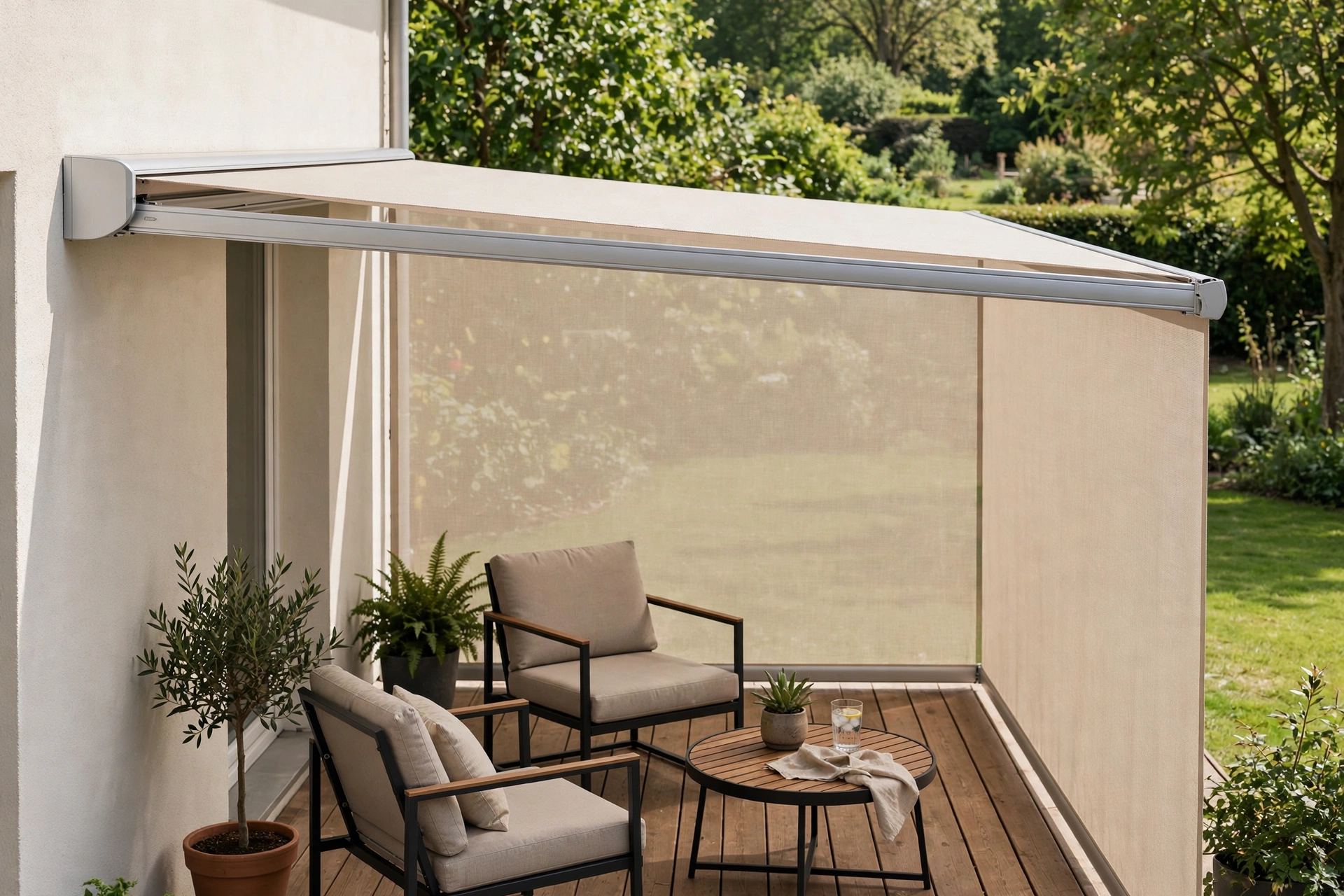
1. Retractable Side Awning Screen
The retractable side awning is the workhorse of patio wind protection ideas, and for good reason: it mounts to a wall or sturdy post, pulls out horizontally like a window shade turned sideways, and retracts into a slim cassette when you want the view back. Most models span 10 to 20 feet wide and stand about 5 to 6 feet tall — enough to shield a seating area from the dominant wind direction. Look for UV-resistant polyester fabric (180 gsm or heavier) and a rust-proof aluminum housing. Installation takes one person about an hour with a drill, and because it retracts, you never lose your open-air feeling on calm days. It doubles as a privacy screen and light shade, which makes it the best value per dollar on this list.
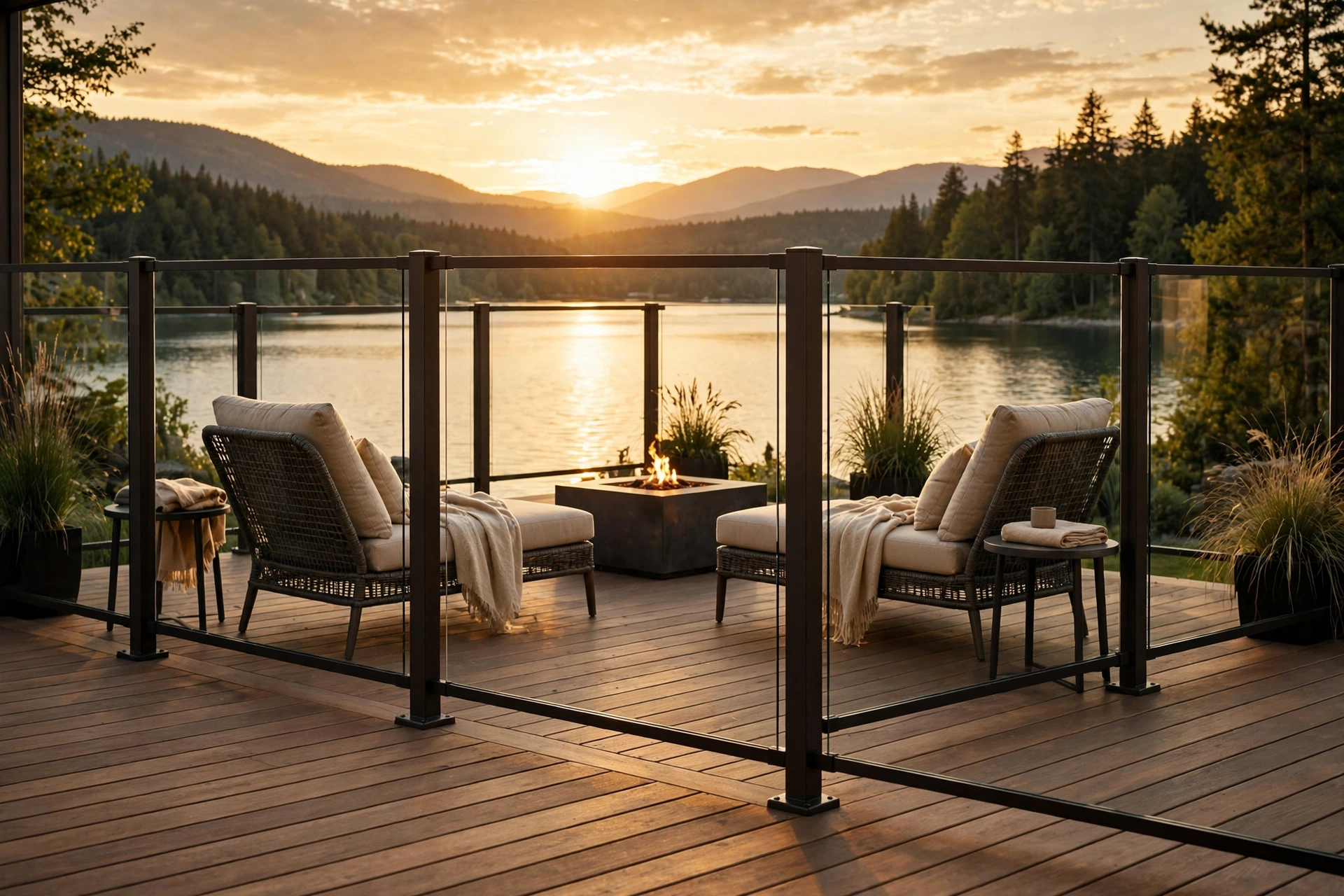
2. Tempered Glass Wind Panels
Glass panels stop wind completely while preserving every bit of your view — the reason restaurants on windy waterfronts use them. Tempered glass panels (typically 3/8 inch thick) mount into posts or a low rail along the windward side of your patio. They break the wind’s force without creating the turbulence that solid walls sometimes cause, so the air behind them feels calm instead of swirly. This is a premium option — expect glass, hardware, and installation to run several hundred dollars per panel — but on a deck with a sunset or lake view you never want to lose, nothing else compares. In USDA zones with heavy snow, choose panels rated for your local wind and snow loads, and have a professional confirm your railing can handle the added weight.
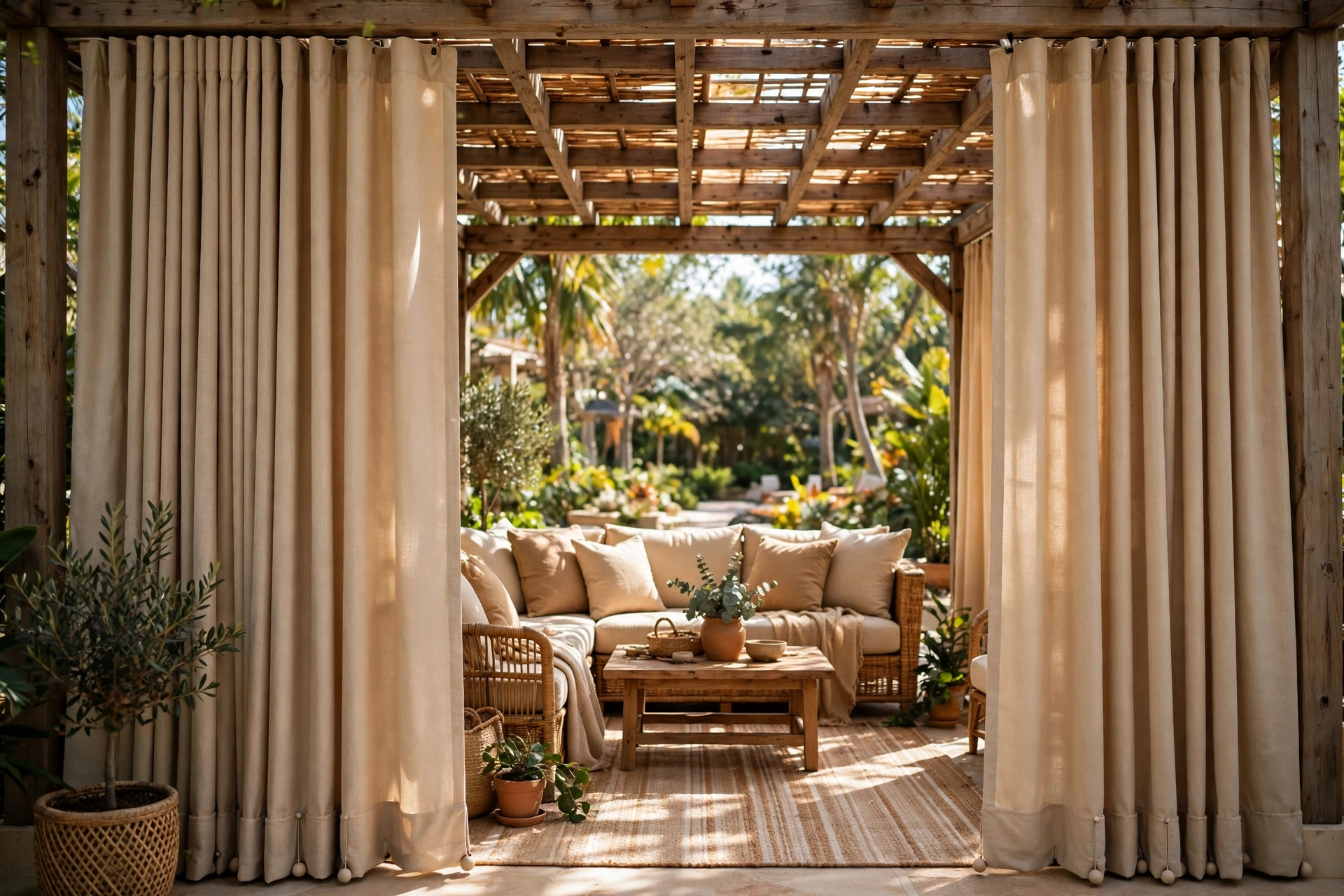
3. Weighted Outdoor Curtains
Outdoor curtains are the softest way to tame a breeze, and they bring instant resort vibes with them. Hang weatherproof curtain panels (solution-dyed acrylic or polyester) from a rod or wire cable along the windward edge of a pergola, porch, or gazebo. The secret is weight: choose panels with weighted hems or slide discreet drapery weights into the pockets so they hang straight instead of flapping. Tie them back on calm days, draw them closed when the wind picks up, and your patio instantly feels like a cabana. They also filter harsh afternoon sun and give you adjustable privacy from neighbors. Wash them once a season and they’ll look new for years. For hanging methods and fabric choices, see my outdoor patio curtain ideas.
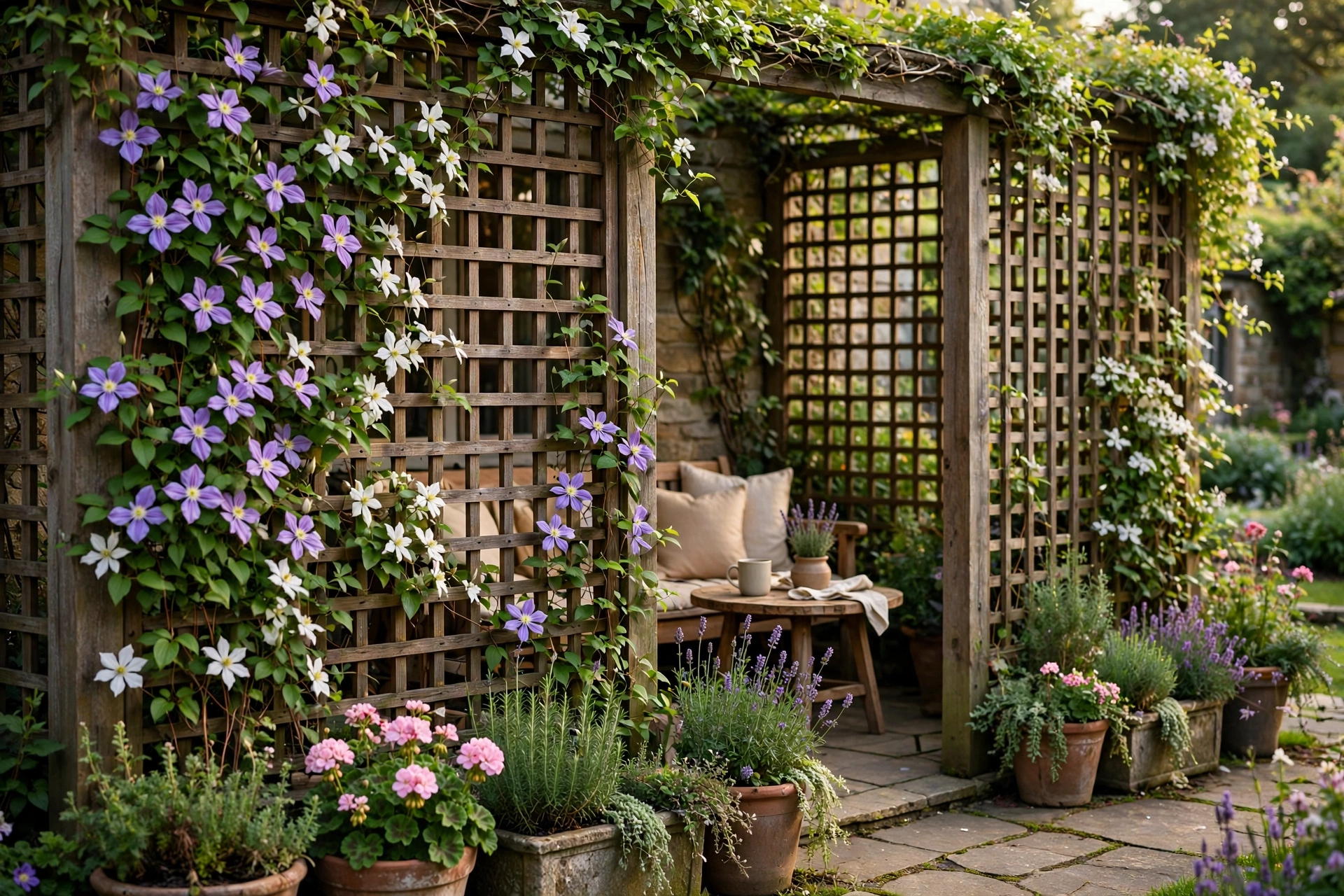
4. Lattice Panels With Climbing Vines
A lattice panel covered in vines is wind protection that gets better every year. The open grid breaks up gusts — wind filters through instead of slamming into a solid wall — while fast-growing climbers like clematis, Carolina jasmine, or honeysuckle (all hardy across most of USDA zones 4–9) fill in the gaps with green. Mount 4×8-foot pressure-treated lattice sections to posts along your windward side, or hinge two together as a freestanding screen. Plant vines in large containers at the base, and within two growing seasons you’ll have a living wall that softens wind, adds privacy, and smells wonderful. The lattice itself is inexpensive; the patience is the price. This is also one of the prettiest options if your patio style leans cottage or garden — see how it pairs with patio privacy screens and plants.
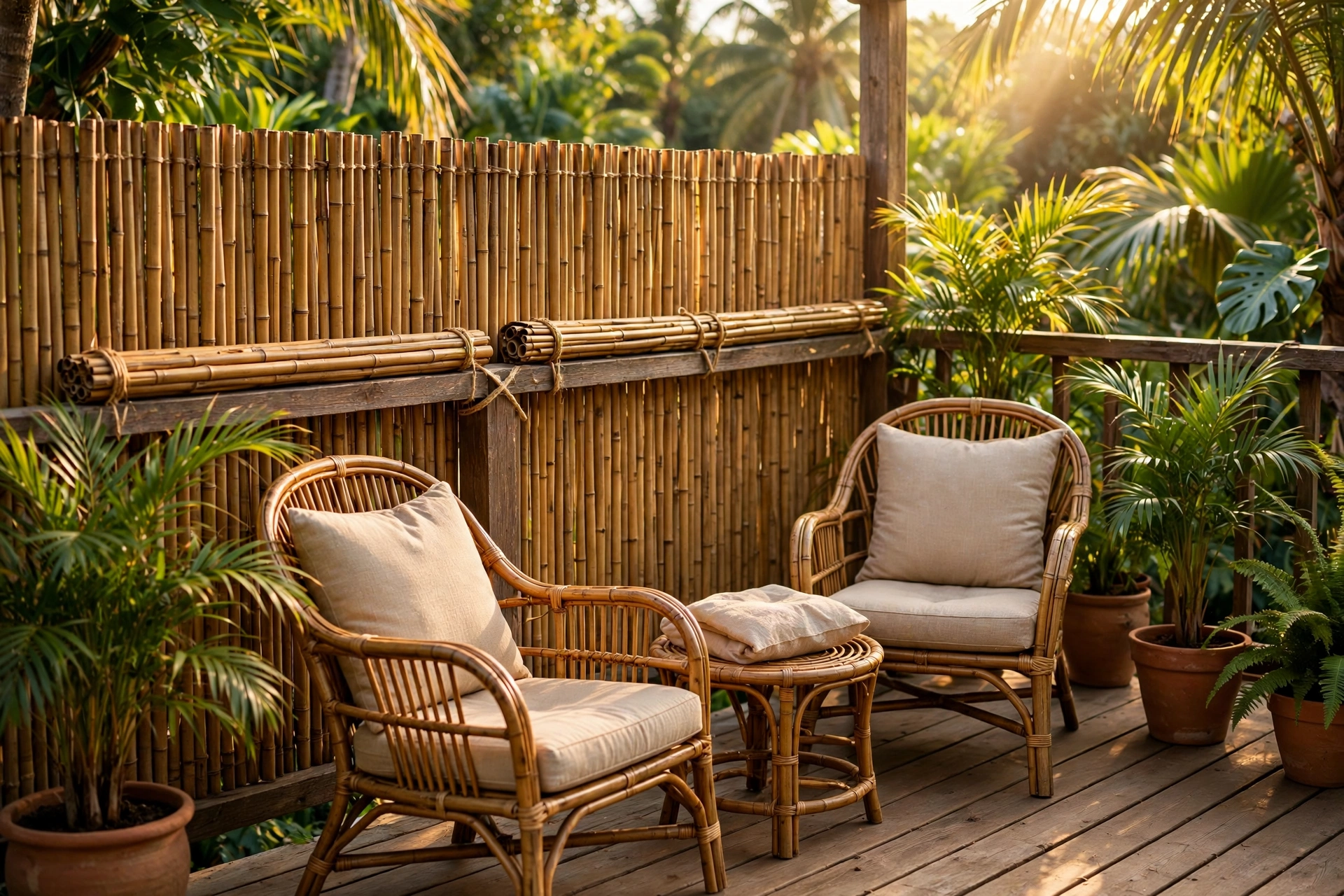
5. Bamboo Fencing Sections
Rolled bamboo fencing is the fastest privacy-plus-wind solution you can buy: unroll it, zip-tie or wire it to your existing railing or a few T-posts, and you’re done in under an hour. The closely spaced canes block a surprising amount of wind while still letting some air through, so you don’t get that dead-air feeling behind a solid wall. It suits tropical, boho, and coastal patios beautifully, and it’s one of the most affordable options per linear foot. The trade-off is lifespan — expect 3 to 5 years before weather takes its toll — but at this price, replacing it feels like refreshing decor rather than a repair. Seal it with an exterior wood preservative to stretch its life, and choose the thicker “Hawaiian” style rolls for maximum wind blocking.
6. Planter Wall Windbreak
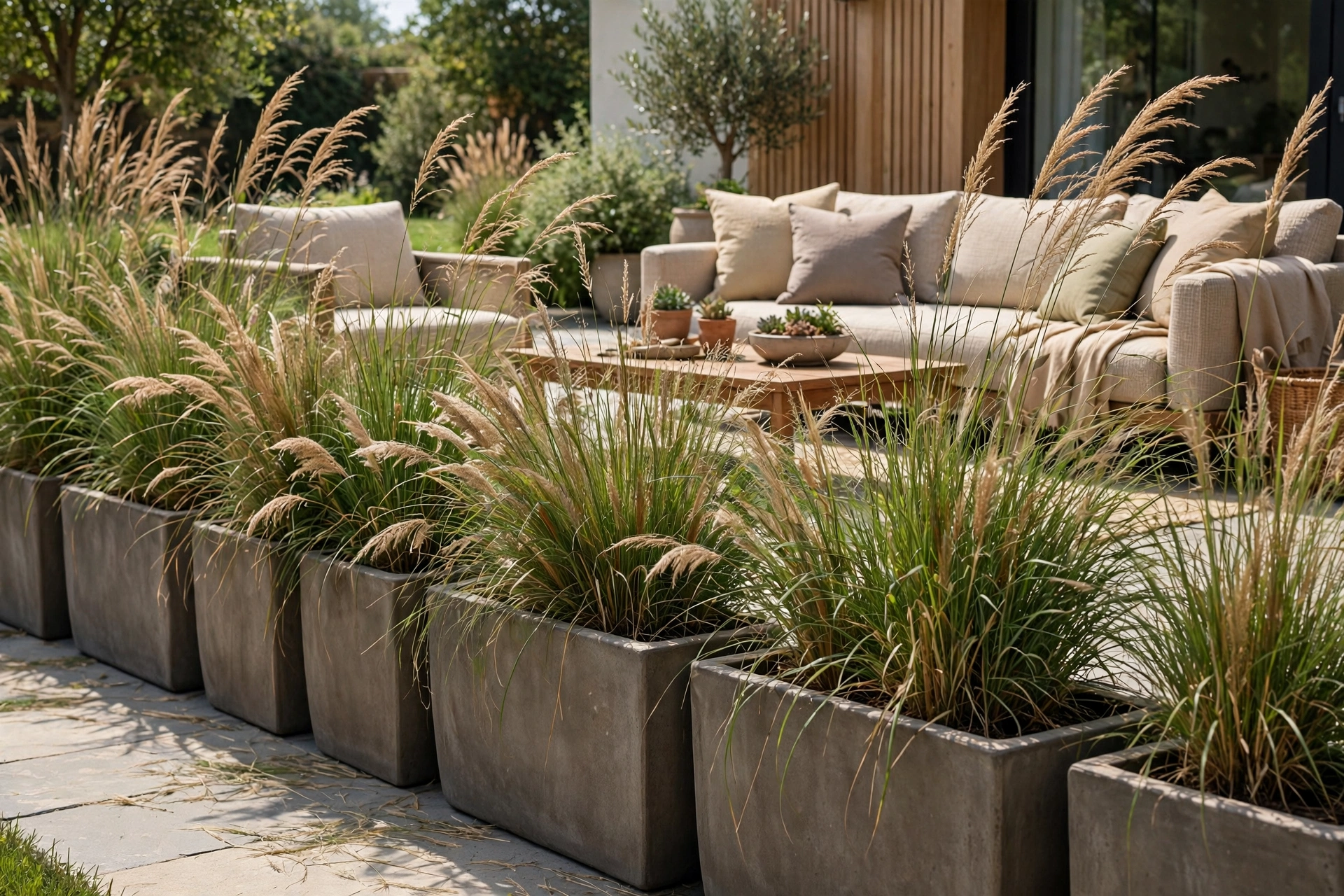
A wall of planters does double duty: greenery you can see and wind protection you can feel. Line up three or four large, heavy planters (24 inches or wider so they can’t tip) along your windward edge and fill them with tall grasses like miscanthus, pampas grass, or feather reed grass — all of which sway gracefully instead of snapping in gusts. For year-round structure in colder USDA zones, mix in evergreen boxwood or arborvitae. Elevate the planters on a low platform or bench-height stand and you gain wind protection at seated head height, exactly where it matters for comfort. Fill the pots with a heavy soil mix and add a few inches of gravel at the bottom for ballast. The result feels like a garden, not a barrier, and you can rearrange it whenever you like.
7. Freestanding Folding Screens
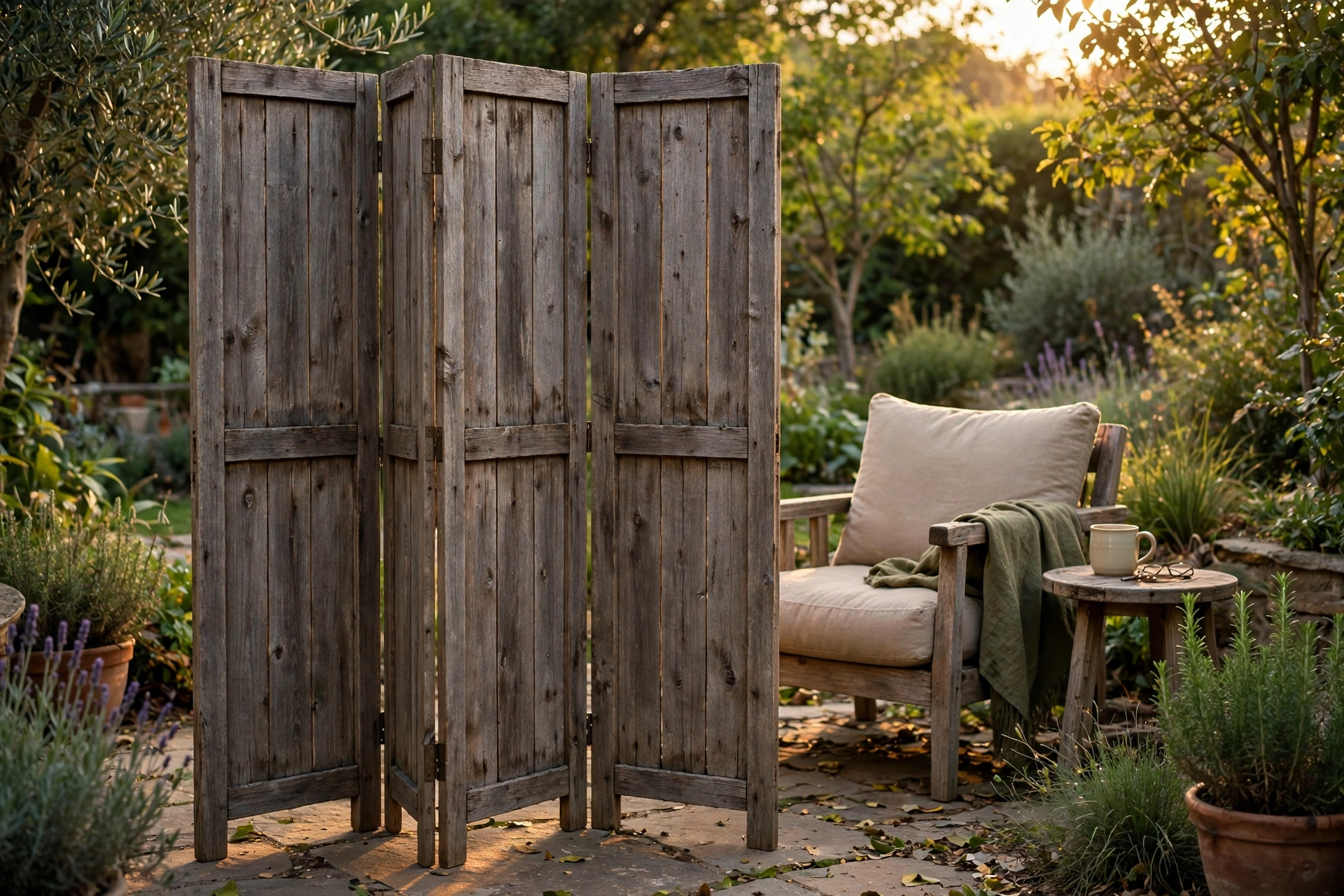
When the wind shifts direction — or when you’re renting and can’t mount anything — a freestanding folding screen saves the day. These accordion-style panels (usually three to four sections, about 6 feet tall) stand on their own with no hardware, so you can deploy one exactly where the gusts hit and fold it flat for storage afterward. Choose weather-resistant materials like treated wood, metal with outdoor fabric, or all-weather wicker, and anchor the feet with sandbags or planter weights on truly blustery days. Beyond wind, they’re instant privacy for a hot tub corner or a reading nook, and they look intentional rather than improvised. Keep one folded in the garage and you’ll reach for it constantly.
8. Pergola With Roll-Down Shades
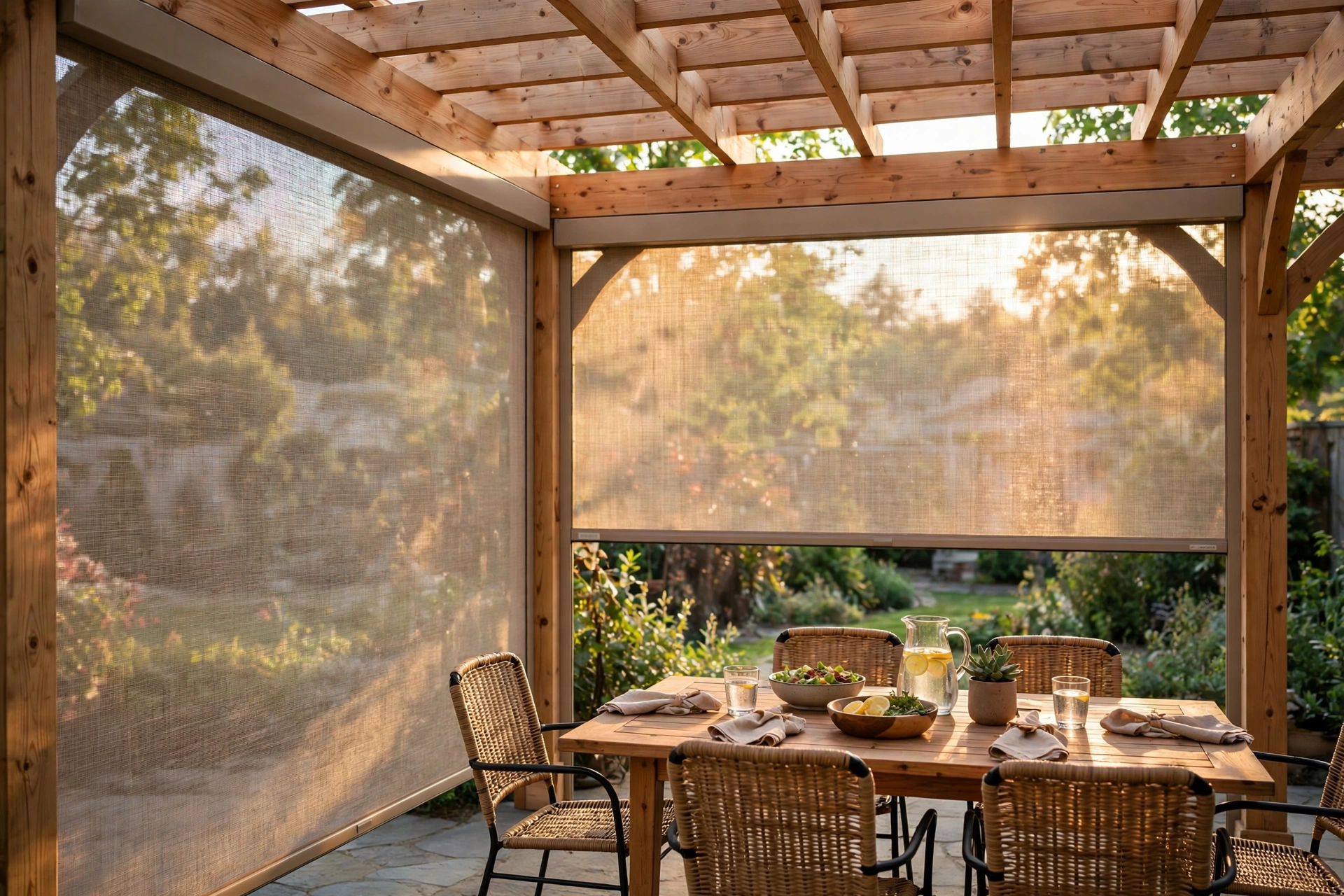
If you already have a pergola, roll-down exterior shades turn it into a three-season wind shelter. These shades mount to the pergola beams and roll down like giant window blinds along the open sides, blocking wind, low sun, and prying eyes in one motion. Choose solar screen fabric (which preserves your view outward while cutting glare) or solid acrylic for maximum wind block. Manual crank versions keep costs reasonable; motorized ones add convenience at a premium. Because they roll up into a slim valance, your pergola looks unchanged on calm days. This is the upgrade to choose when you love your pergola but only use it half the year — the shades effectively buy you extra months of outdoor living, especially in the breezy shoulder seasons of the Midwest and Northeast.
9. Angled Shade Sail
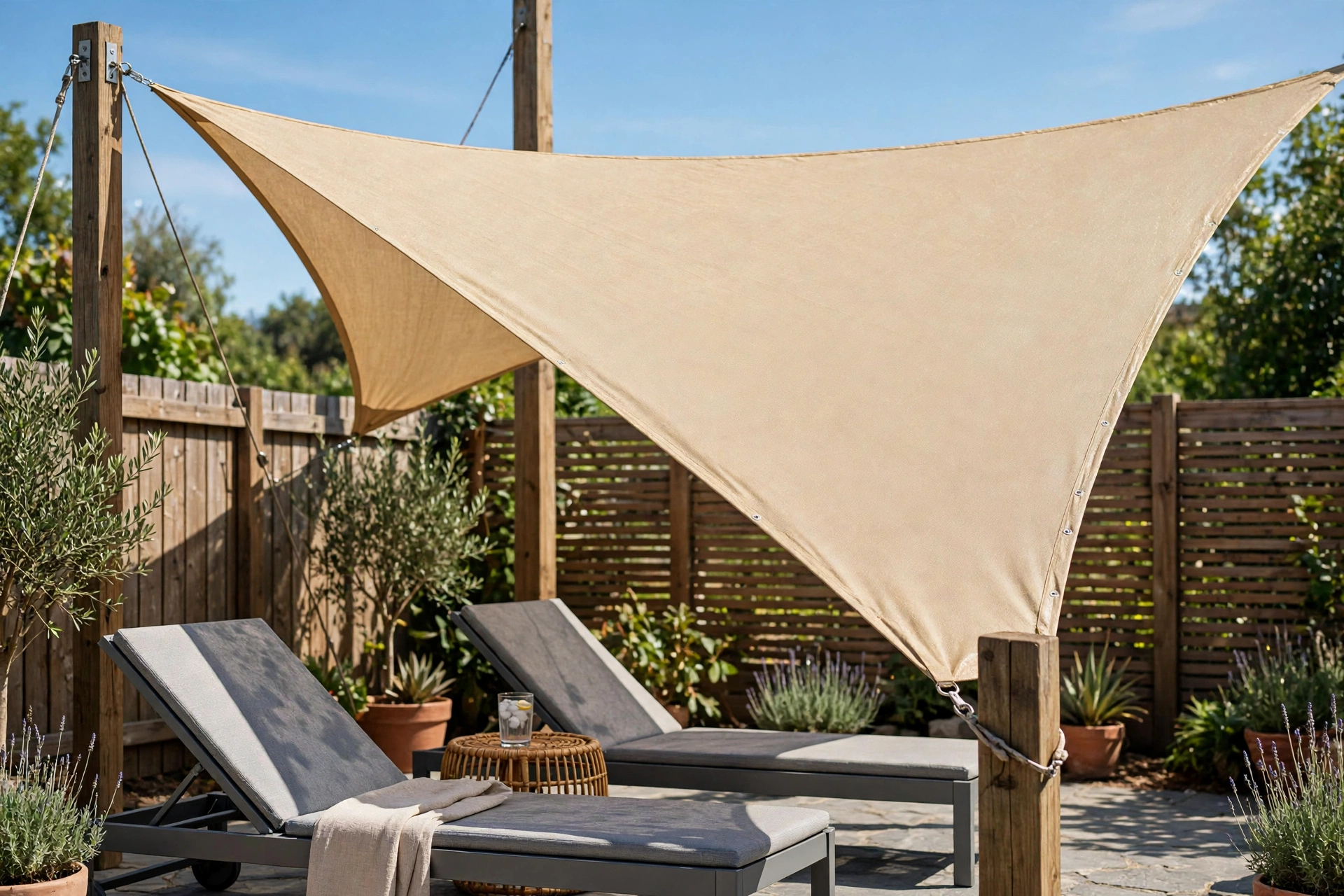
A shade sail won’t block ground-level wind the way a screen does, but installed at a steep angle on the windward side, it deflects the worst of the gusts up and over your seating area. The trick is the angle: mount the windward edge low (about 7 feet) and the opposite edge high (10 to 12 feet), creating a slope that pushes wind upward. Choose a high-density polyethylene (HDPE) sail rated for at least 90 percent UV block with reinforced corners, and anchor it to solid posts or your house — never to a flimsy fence. Tension it drum-tight with turnbuckles so it doesn’t flap. As a bonus, you get glorious shade on hot afternoons, which makes this a two-for-one upgrade in sunny states like Arizona, Texas, and Florida where wind and sun arrive together.
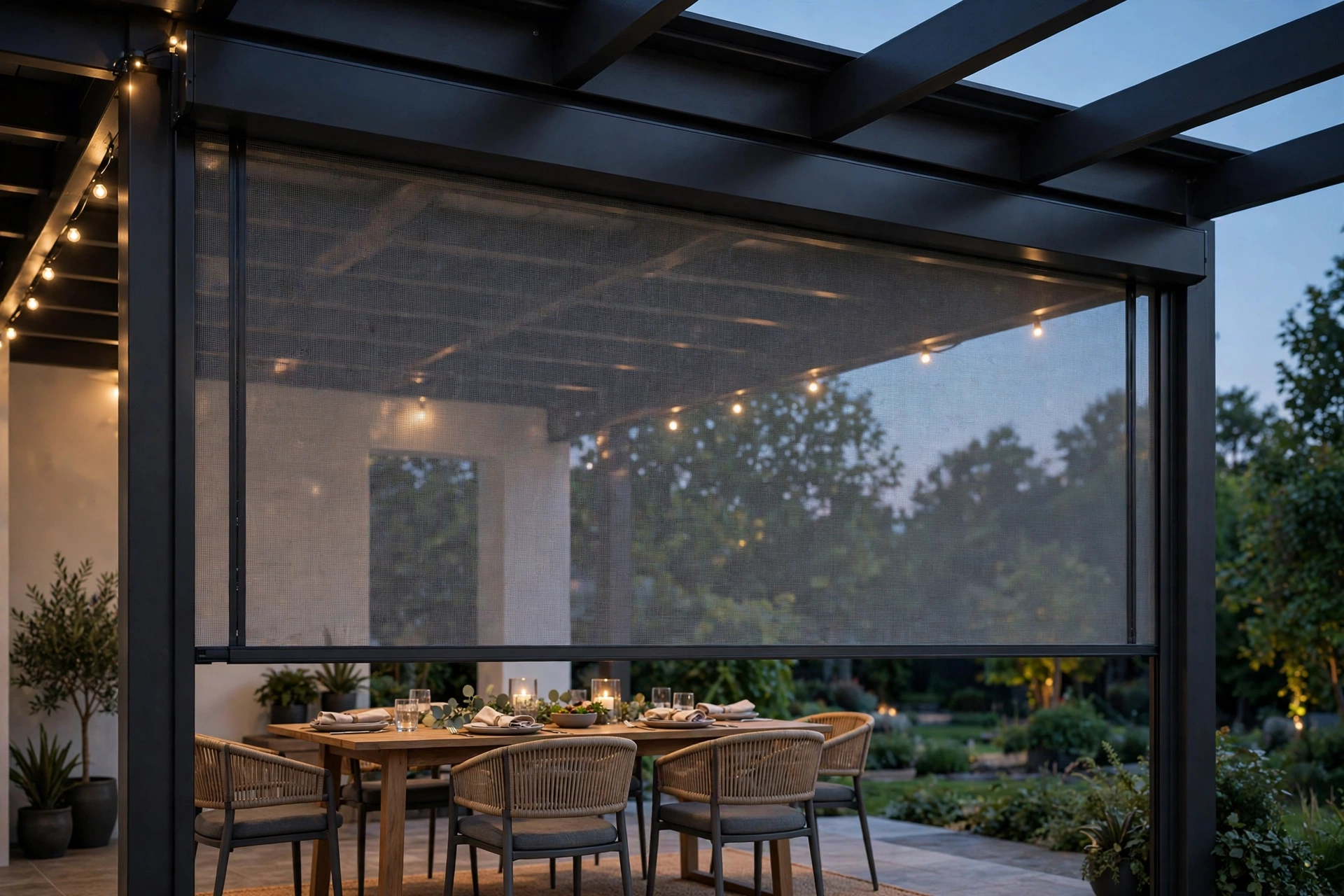
10. Motorized Drop-Down Screens: Patio Wind Protection Ideas for High-Wind Regions
Motorized screens are the luxury end of patio wind protection ideas — press a button and a screen glides down from a housing mounted under your roof or pergola beam, sealing off an entire side in seconds. Modern systems use zip-track edges that lock the fabric into side channels, so they hold firm in real wind (many are rated for gusts up to 50+ mph) instead of flapping like old-fashioned roll-ups. They retract completely out of sight when not needed, keeping your patio open and airy. This is a professional-installation project and the priciest option here, but for exposed patios in windy regions — think the Great Plains or coastal properties — it’s the closest thing to adding a real room. If you’re comparing, see how screens stack up against a full enclosed patio for year-round use.
11. Cedar Slat Privacy Wall
A cedar slat wall is the designer’s answer to wind: horizontal or vertical slats with small gaps between them, mounted in a sturdy frame. The gaps are the genius — they let some air pass through, which reduces the pressure buildup that makes solid fences whistle and shake. Cedar naturally resists rot and insects, and it weathers to a beautiful silvery gray if you leave it unfinished (or keep it warm-toned with an annual coat of exterior stain). Build it 6 to 8 feet tall along the windward side, and anchor the posts in concrete footings below your local frost line. It reads as modern architecture rather than a wind barrier, which is why it’s the favorite of the design-forward crowd. Budget for lumber, posts, concrete, and a weekend — or a carpenter’s day rate if you’d rather not DIY.
12. Living Evergreen Hedge Row
The most patient — and ultimately the most beautiful — windbreak is a living hedge. Dense evergreens like arborvitae, holly, or juniper, planted in a staggered double row, slow wind dramatically while looking like they were always meant to be there. Space them according to their mature width (usually 3 to 4 feet apart), choose varieties hardy in your USDA zone, and water deeply the first two seasons. You’ll wait 3 to 5 years for a full windbreak, but you’ll get four-season structure, wildlife habitat, and zero maintenance once established. For faster results, buy the largest specimens your budget allows — a 6-foot arborvitae costs more but buys you years. In windy coastal or Plains states, a hedge also protects the rest of your garden, making it the rare wind solution that improves everything around it.
How Much Does Patio Wind Protection Cost?
Cost ranges below are estimates based on typical 2026 pricing from major home-improvement and outdoor retailers, plus a 2026 industry guide for motorized systems — actual prices vary by size, brand, and region.
| Solution | Best for | Estimated cost |
|---|---|---|
| Mesh privacy screen (3’x16′) | Renters, railings, quick fix | $20 – $40 |
| Bamboo fencing roll | Fast tropical-style coverage | $30 – $80 |
| Retractable side awning | Decks, balconies, best value | $95 – $150 |
| Freestanding folding screen | Renters, shifting wind | $60 – $150 |
| Weighted outdoor curtains | Pergolas, porches, soft look | $40 – $120 |
| Planter wall windbreak | Garden-style patios | $100 – $300 |
| Angled shade sail | Sun + wind combo | $80 – $250 |
| Cedar slat wall (8-ft section) | Modern permanent barrier | $200 – $500 |
| Tempered glass panels | View preservation | $300 – $800+ per panel |
| Motorized drop-down screens | Luxury, high-wind regions | $1,200 – $8,000+ |
Prices reviewed: October 2026.
Frequently Asked Questions
What is the best wind block for a patio?
For most patios, a retractable side awning is the best balance of cost, effectiveness, and convenience — it blocks the dominant wind, retracts when you want the view, and installs in about an hour. For permanent protection with a design-forward look, a cedar slat wall wins. For preserving a view, tempered glass panels are unmatched.
How do I block wind on my patio without blocking the view?
Choose see-through solutions: tempered glass panels stop wind cold while keeping your sightline, and solar screen fabrics on roll-down shades cut wind while preserving the outward view. A lattice with vines filters gusts softly without a solid wall. Avoid tall solid fences if the view matters to you.
Will outdoor curtains actually block wind?
They tame it rather than stop it. Weighted outdoor curtains break up gusts and make a patio noticeably calmer, especially under a pergola or porch roof — but in truly high winds they’ll billow. For gusty regions, pair curtains with a retractable awning or solid screen on the windward side.
Can I install a retractable side awning myself?
Yes — most models are designed for DIY installation with a drill, a level, and about an hour of time. You’ll mount brackets to a wall, post, or railing, then slide the cassette in. The key is a solid mounting surface: masonry or structural wood, not hollow vinyl siding. If you’re unsure, a handyman can do it in one short visit.
How tall should a patio windbreak be?
Aim to protect seated head height and a bit more — 5 to 6 feet is the sweet spot for most patios. Barriers much taller than that can create turbulence on the sheltered side, and anything shorter won’t help when you’re sitting down. For dining areas, 6 feet handles it; for lounge chairs, 5 feet is plenty.
Key Takeaways
- Wind usually comes from one dominant direction — find it with a ribbon test and protect that side first.
- A retractable side awning ($95–$150) is the best value: effective, DIY-friendly, and disappears on calm days.
- Glass panels preserve views; cedar slat walls add modern style; hedges and vines improve with age.
- Weight matters: weighted curtains, heavy planters, and anchored screens all outperform lightweight versions.
- Layer solutions — one windward barrier plus softer edges — for the calmest patio.
Start with the ribbon test this weekend, then pick the one idea that matches your wind, your budget, and your style. Even a single $25 screen on the right side can be the difference between a patio you avoid and a patio you live on. For overhead coverage to match your new windbreak, browse my retractable patio canopy ideas. And once the wind is handled, your string lights stay lit, your candles stay burning, and dinner stays on the table — which is really the whole point.