

A homeowner emailed me last October frustrated that her new screened porch still felt unusable by November — she’d assumed “enclosed” meant the space would stay warm, and no one had explained the difference between a screened enclosure and an insulated one before she paid for the build. She’d needed a four-season room and gotten a three-season screen instead.
When I helped plan a reader’s own enclosed patio project last summer, the detail that mattered more than any design choice was airflow — her first sliding glass wall mockup trapped heat so badly by afternoon that we had to add a top vent panel before construction even started. Good enclosed patio ideas solve for climate and airflow first, then style second.
An enclosed patio can mean a lot of different things — a simple screen frame that keeps mosquitoes out, a full glass wall system that turns the space into a year-round room, or something in between. This guide walks through what actually separates those options (screened vs. glass vs. partial vs. four-season), then covers 15 specific enclosed patio ideas by budget, DIY feasibility, space size, and style — including what to check with your local building department before you start.
Understanding Enclosed Patio Types (Read This First)
Before picking a style, it helps to know which category you’re actually building, since the terms get used interchangeably online but mean different things structurally:
- Screened enclosure: Mesh panels (fiberglass, aluminum, or pet-resistant screen) in a lightweight frame. Blocks insects and some wind-blown debris; does not meaningfully change temperature or block rain in a driving storm.
- Partially/semi-enclosed: A half-wall (knee wall) or partial screening on one or two sides, with the rest open. Blocks wind and adds privacy without fully closing off the space or requiring a permit in most areas.
- Glass-enclosed: Fixed or sliding glass panels, either single-pane or dual-pane (insulated glass unit). A three-season glass room can be comfortable spring through fall; a dual-pane, insulated version can function as a true four-season room.
- Covered and enclosed combo: A solid roof structure (not just screening) paired with any of the wall types above — this is the version most likely to require a building permit, since it usually ties structurally into the home.
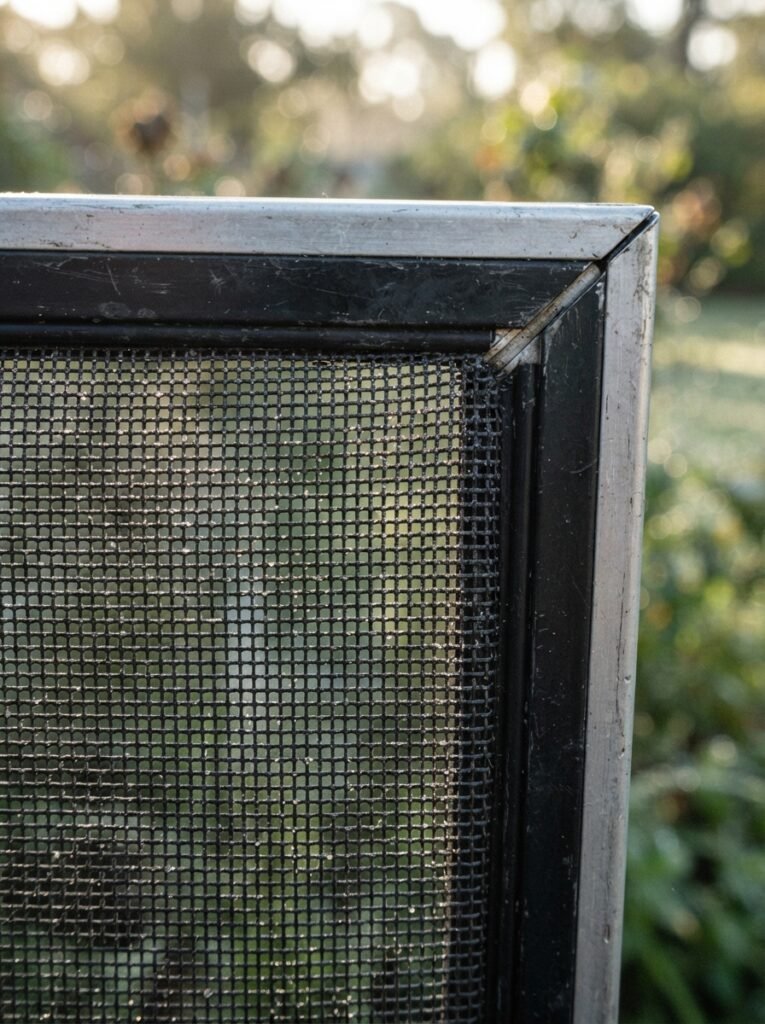

💡 PRO TIP Before designing anything, call your local building department (not just your HOA) and ask two questions: does this structure require a permit, and does it need to meet wind load or snow load code for your region? This five-minute call has saved more than one reader from a costly teardown-and-redo.
Enclosed Patio Ideas on a Budget
1. Repurposed Storm Windows for an Instant Screen-to-Glass Conversion
Best for: Enclosed patio ideas on a budget | Under $400 for a small patio
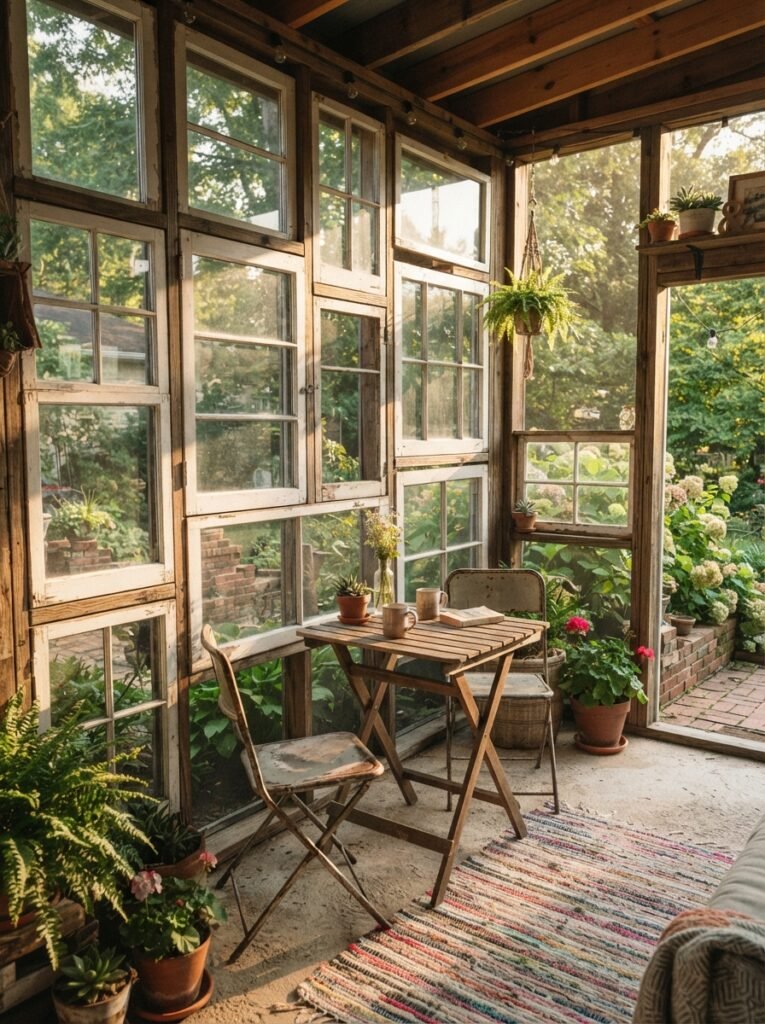
Salvaged aluminum storm windows, sourced secondhand or from a building material reuse store, can be framed into an existing screen porch structure to convert it from screen-only to glass-enclosed for a fraction of custom glass panel pricing. Sizes won’t always match perfectly, which is where a simple wood trim frame earns its keep — it hides inconsistent window dimensions while still looking intentional.
Ask your supplier for: “salvaged aluminum storm window, single-pane, various sizes” at a building materials reuse center
2. Clear Vinyl Curtain Panels Over an Existing Screen Frame
Best for: DIY enclosed patio ideas on a budget | Under $150
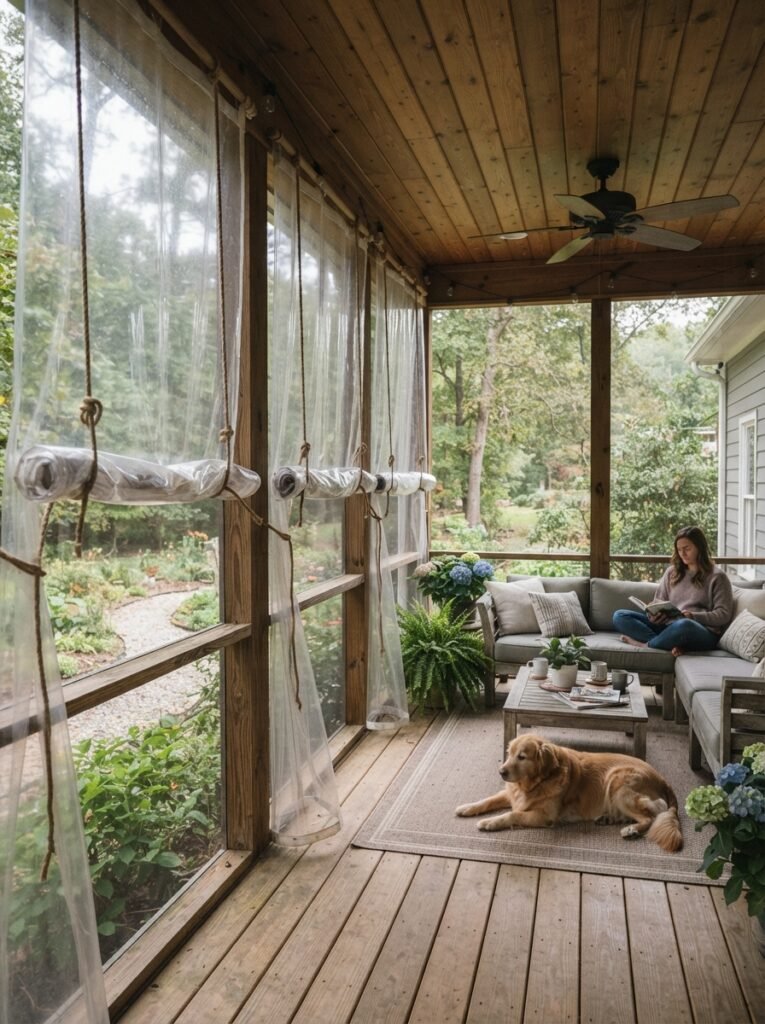
Heavy-gauge clear vinyl curtain panels, hung with grommets over an existing screen frame, add wind and light rain protection without any structural work at all — roll them up and tie them back in warm weather, drop them down when a storm rolls in.
Search for: “clear vinyl porch curtain panel, 20 mil, grommet top, weather-resistant”
3. Roll-Down Bamboo Shades as a Simple Semi-Enclosure
Best for: Simple enclosed patio ideas | Under $200
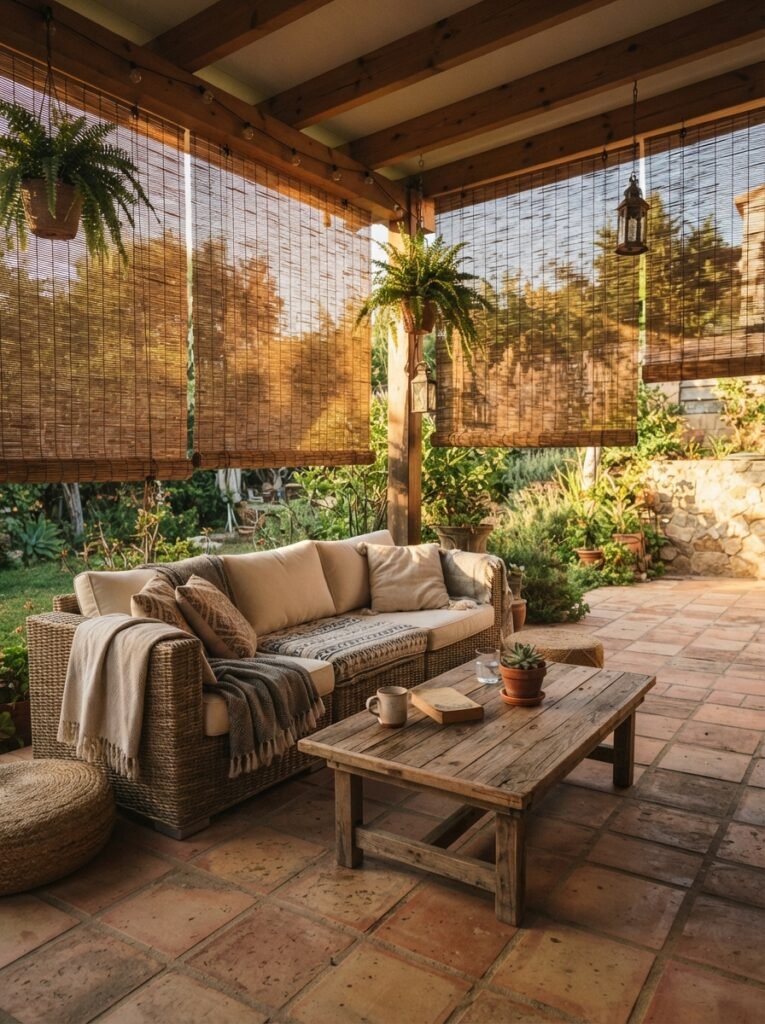
Roll-down exterior bamboo shades, mounted along an open patio’s beam line, create a semi-enclosed feel with filtered light and partial wind block, without needing any framing or permanent screening at all. This is one of the simplest true patio-to-semi-enclosure conversions on this list.
Search for: “exterior roll-down bamboo shade, cordless, UV-resistant weave”
📌 You’ll Also Love This 15 Stunning Paver Patio Ideas, Real Costs, and DIY Steps Planning the flooring before you enclose the space? Start here →
DIY Enclosed Patio Ideas
4. DIY Screen Panel Frame Kit Installation
Best for: DIY enclosed patio ideas | Mid-range budget
Prefabricated aluminum screen panel kits, sized to standard porch bay widths, let a confident DIYer enclose an open patio with screening over a weekend without custom carpentry — the panels snap into a track system rather than requiring individual mesh stapling.
Search for: “aluminum screen panel kit, snap-in track system, porch width”
5. DIY Track-Mounted Acrylic Panel System
Best for: Diy enclosed patio ideas on a budget | Mid-range budget
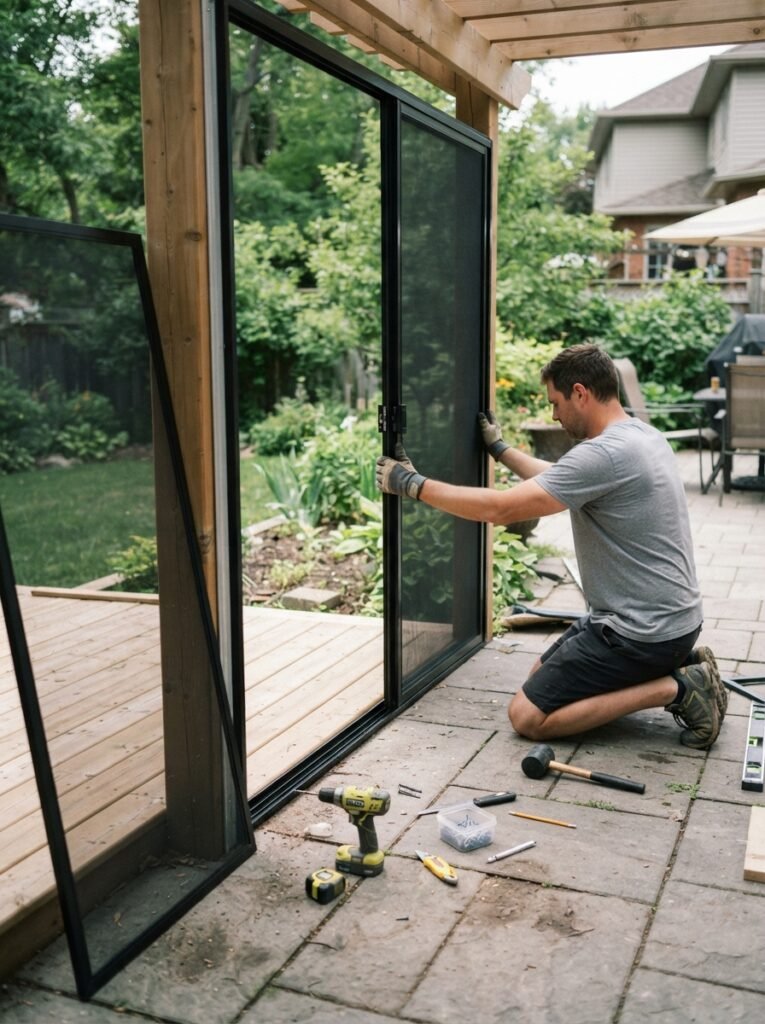
A sliding track system fitted with clear acrylic (rather than glass) panels gives most of the wind and rain protection of a glass enclosure at a lower material cost and significantly lighter panel weight — acrylic is easier for one person to handle during a DIY install than tempered glass.
Search for: “clear acrylic sliding panel track system, patio enclosure kit”
6. DIY Cedar Screen Frame with Retractable Mesh
Best for: Diy enclosed patio ideas | Mid-range budget
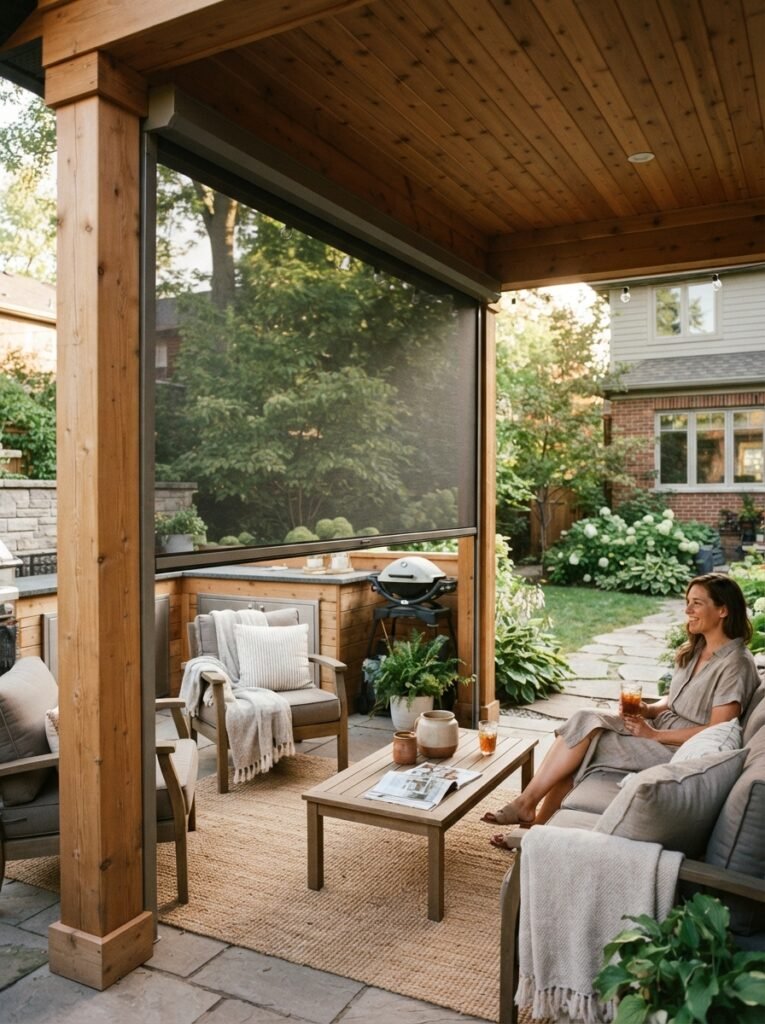
Building a simple cedar frame structure fitted with retractable screen mesh (the kind used in retractable door screens, scaled up) gives you a fully custom-sized enclosure that disappears into a side-mounted cassette when not in use.
Search for: “retractable screen mesh cassette kit, large format, custom width”
💡 PRO TIP If you’re DIYing any track-based system (acrylic, vinyl, or retractable screen), dry-fit and level the entire track before permanently fastening it. A track that’s off by even a quarter inch over a 10-foot span will bind or refuse to slide smoothly.
Small-Space Enclosed Patio Ideas
7. Compact Screened Reading Nook for Small Patios
Best for: Small enclosed patio ideas | Budget to mid-range
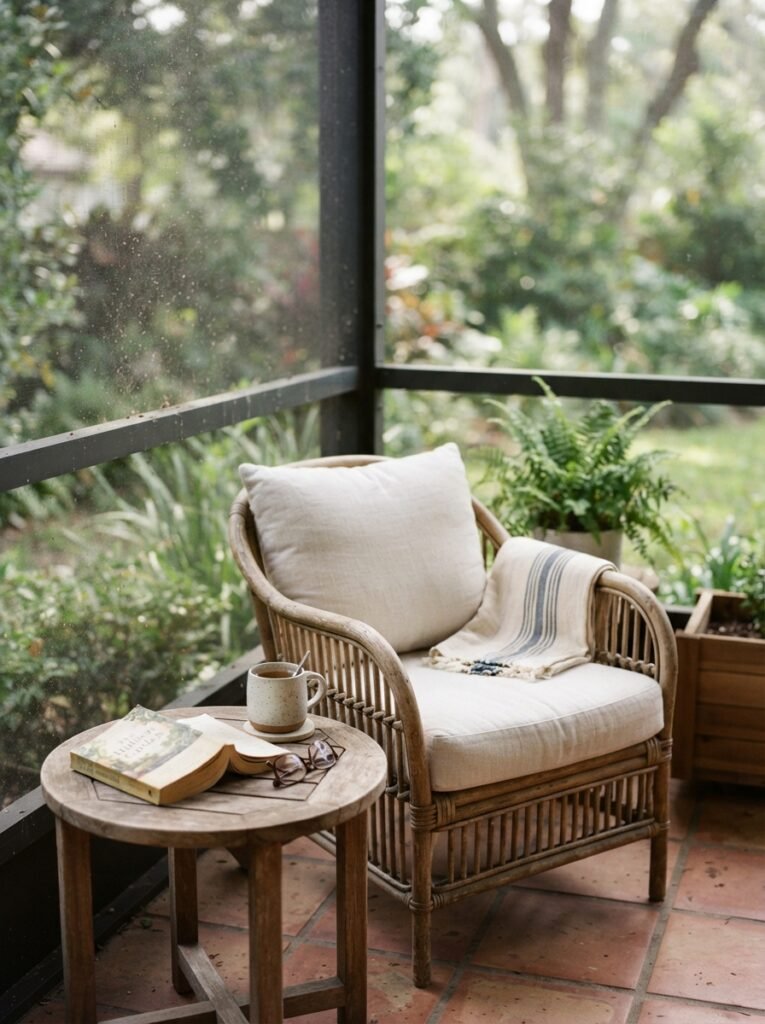
On a patio too small for a full enclosure, screening just one corner into a compact nook — large enough for a single chair and a small side table — still delivers the bug-free benefit without the material cost of enclosing the whole footprint.
Search for: “corner screen panel kit, single-bay, compact porch size”
8. Fold-Flat Furniture for a Small Enclosed Patio on a Budget
Best for: Small enclosed patio ideas on a budget | Under $150
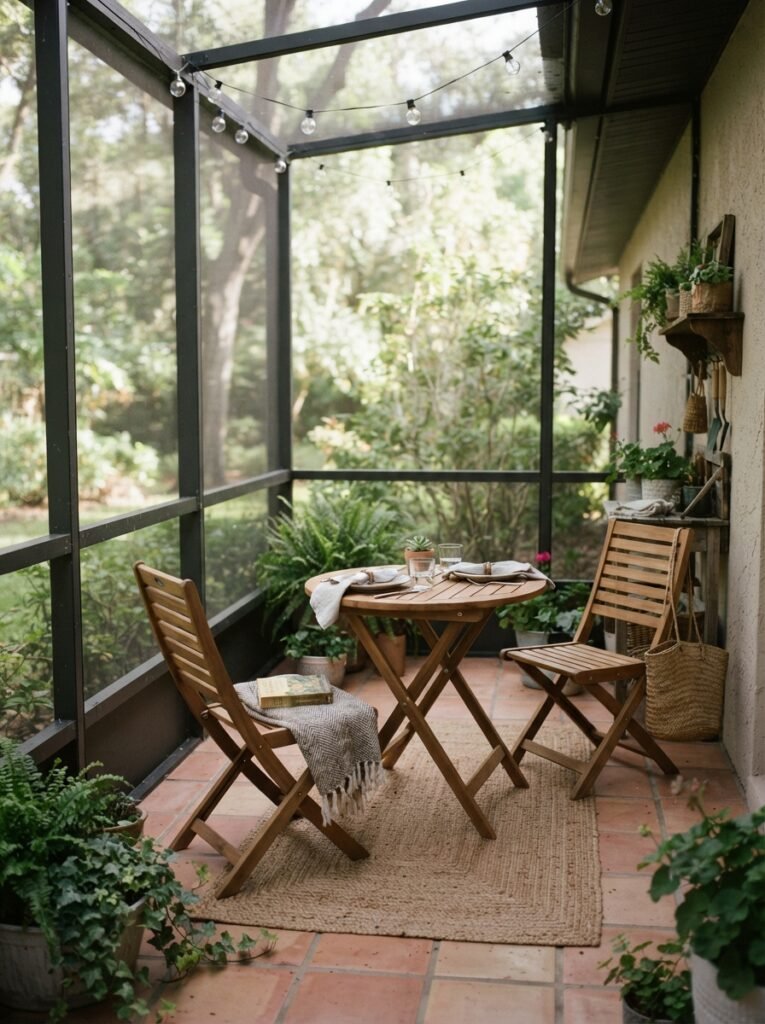
Once a small patio is enclosed, floor space becomes the scarce resource — fold-flat bistro furniture that stores against the wall when not in use keeps a compact enclosed patio from feeling cramped day to day.
Search for: “fold-flat bistro table and chair set, wall-storable, weather-resistant”
Modern and Glass Enclosed Patio Ideas
9. Full-Height Sliding Glass Wall System
Best for: Glass enclosed patio ideas | Splurge
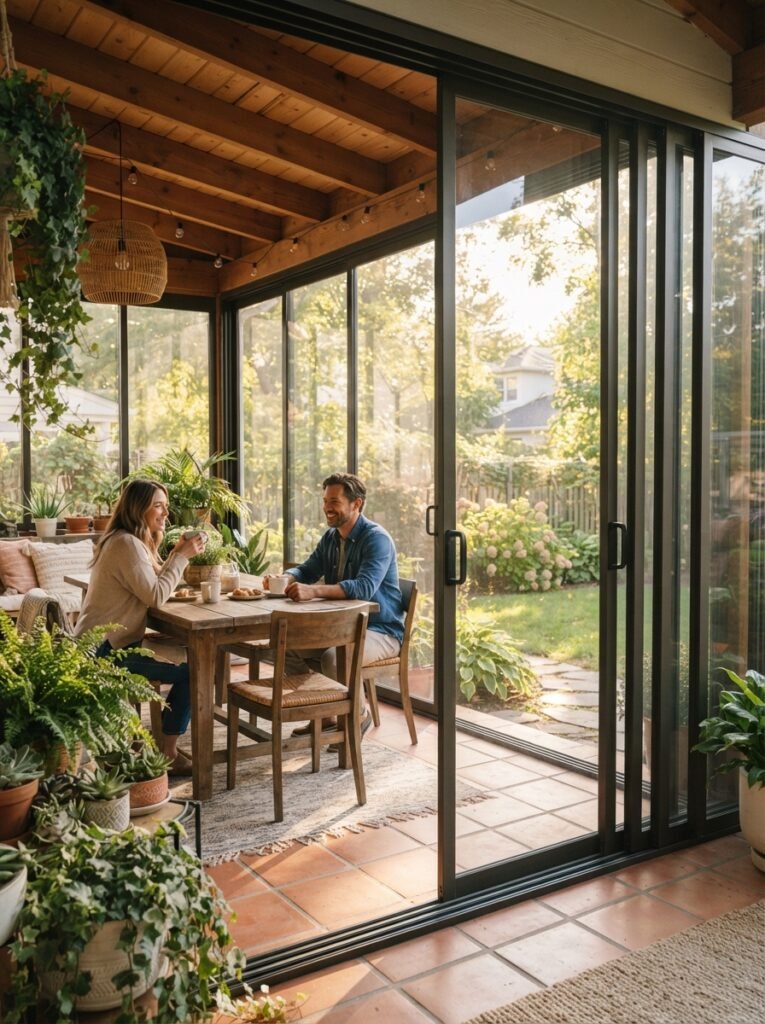
A full-height sliding glass wall system, where individual glass panels stack and slide to one side, lets you fully open the space in good weather and fully enclose it when needed — the most flexible (and most expensive) version of a glass-enclosed patio.
Ask your contractor for: “multi-slide glass wall system, stacking panel configuration, dual-pane”
10. Fixed Glass Panel Wall with Steel Frame
Best for: Enclosed patio ideas with windows | Mid-range to splurge
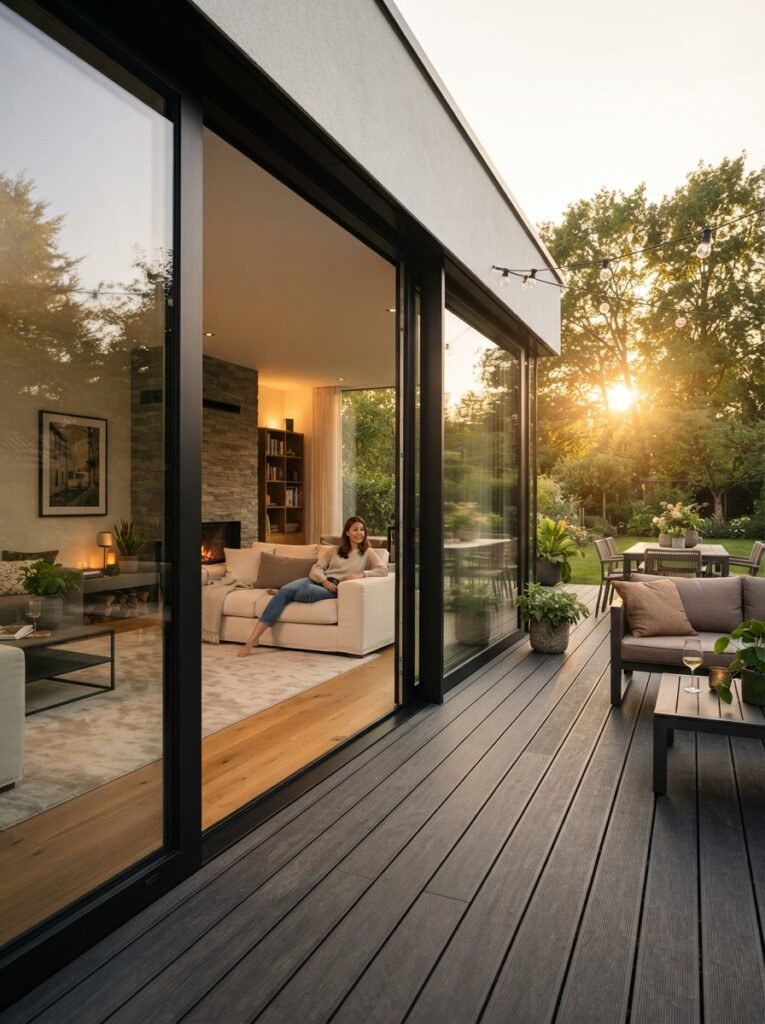
A fixed (non-sliding) glass panel wall in a slim black steel frame reads as more architectural than a bulkier aluminum sliding system, and it’s a meaningfully lower-cost option when you don’t need the panels to open at all.
Ask your contractor for: “fixed glass panel wall, black steel frame, tempered glass”
11. Modern Minimalist Glass Box Addition
Best for: Modern enclosed patio ideas | Splurge
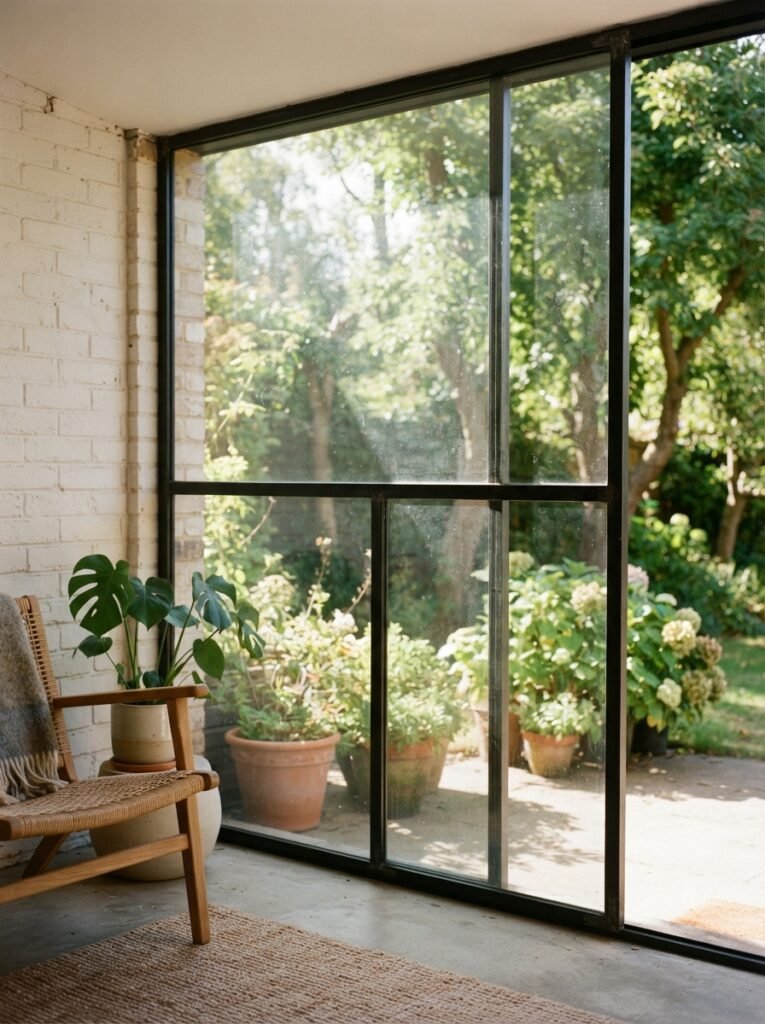
A glass-enclosed patio built with minimal visible framing — floor-to-ceiling glass on three sides with a flat roof — creates a true indoor-outdoor “glass box” effect, best suited to contemporary homes with clean architectural lines already in place.
Ask your contractor for: “minimal-frame glass room addition, flat roof, three-sided glazing”
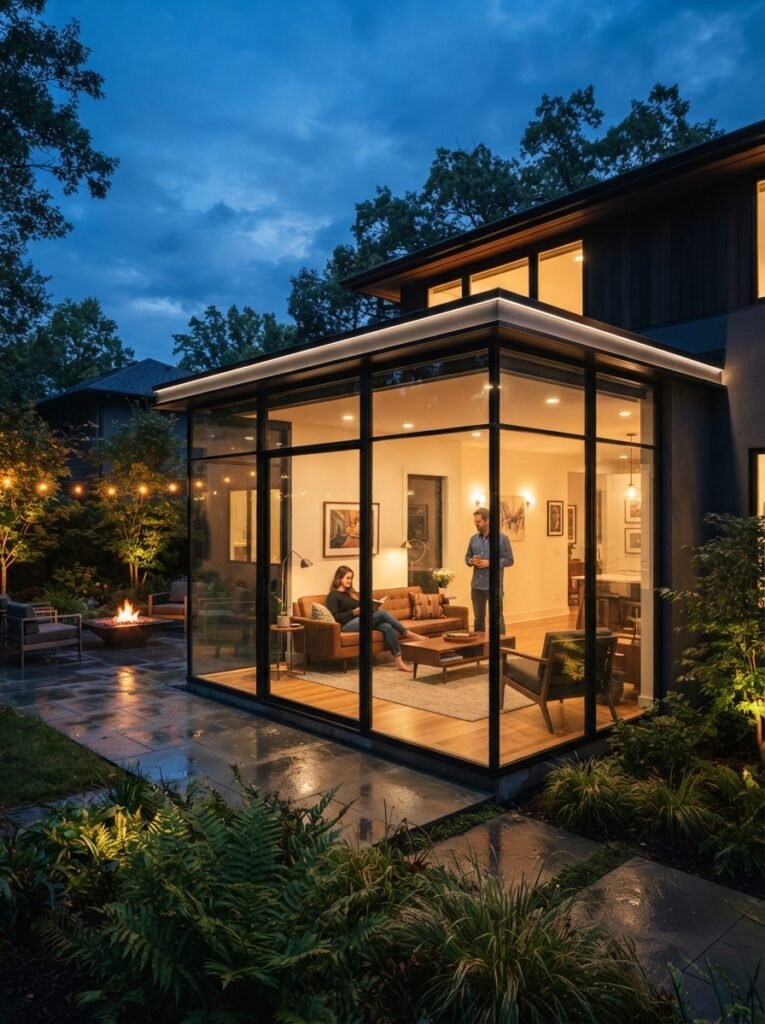
💡 PRO TIP Any all-glass enclosure needs a ventilation plan — a top-hinged vent panel, an exhaust fan, or simply operable (not fixed) sections on at least two sides. Without airflow, glass enclosures trap heat in summer and build up condensation in cooler months.
Backyard and Outdoor Enclosed Patio Ideas
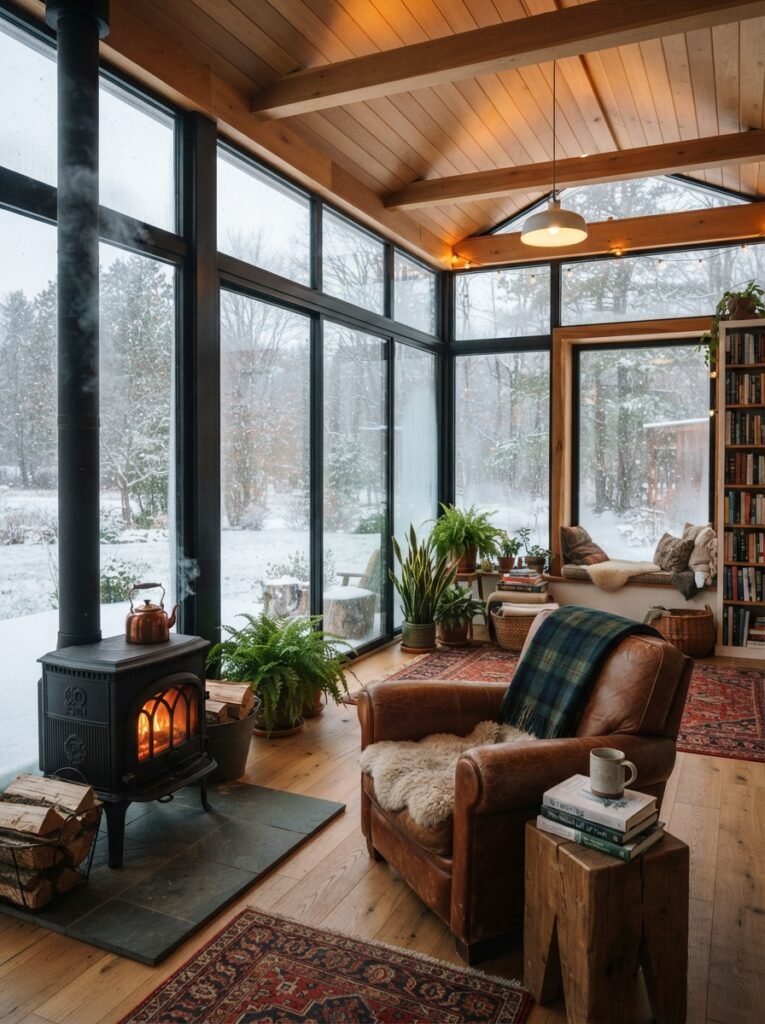
12. Four-Season Backyard Sunroom Conversion
Best for: Backyard enclosed patio ideas | Splurge
Converting an open backyard patio into a true four-season sunroom means adding insulated walls, dual-pane glazing, and a heating/cooling source tied into the home’s existing system — a genuinely different (and more expensive) project than a screened or single-pane glass enclosure, but the only version that functions as usable living space in a cold winter.
Ask your contractor for: “four-season sunroom conversion, insulated wall panels, dual-pane glazing, HVAC tie-in”
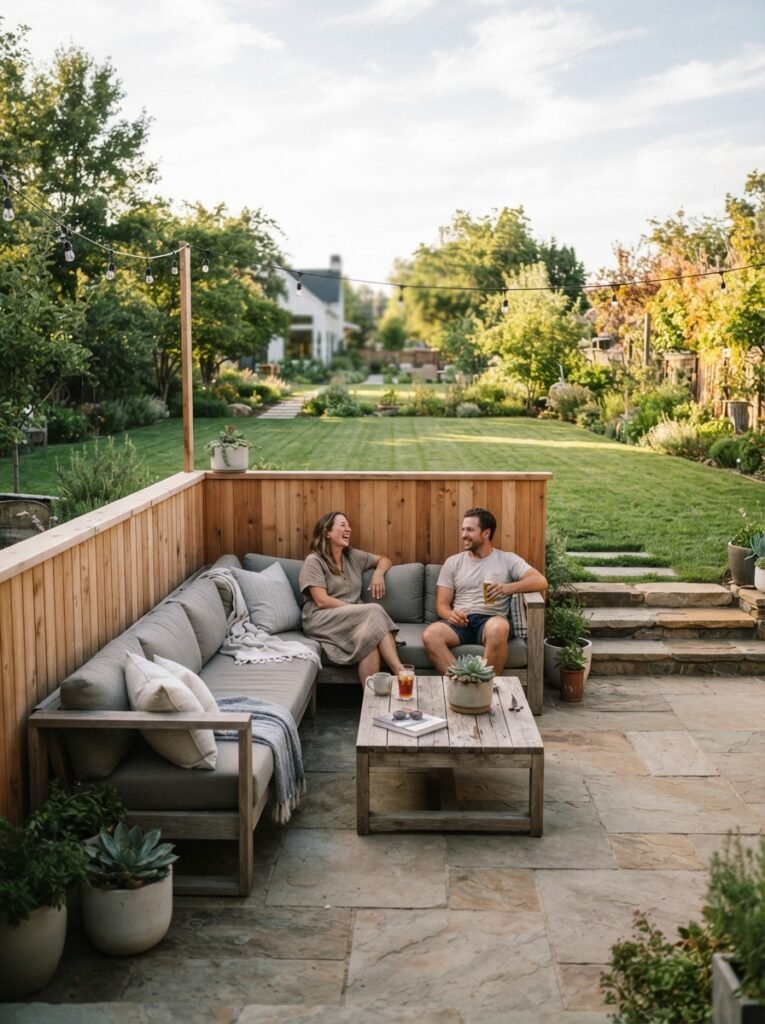
13. Partially Enclosed Outdoor Lounge with Half-Wall
Best for: Partially enclosed patio ideas, semi enclosed patio ideas | Mid-range budget
A knee-height half-wall on the windward side of an outdoor lounge, left open above and on the remaining sides, blocks the majority of wind and adds a sense of enclosure without a permit-triggering full structure in most jurisdictions.
Search for: “outdoor half-wall kit, cedar or composite cap, 36 inch height”
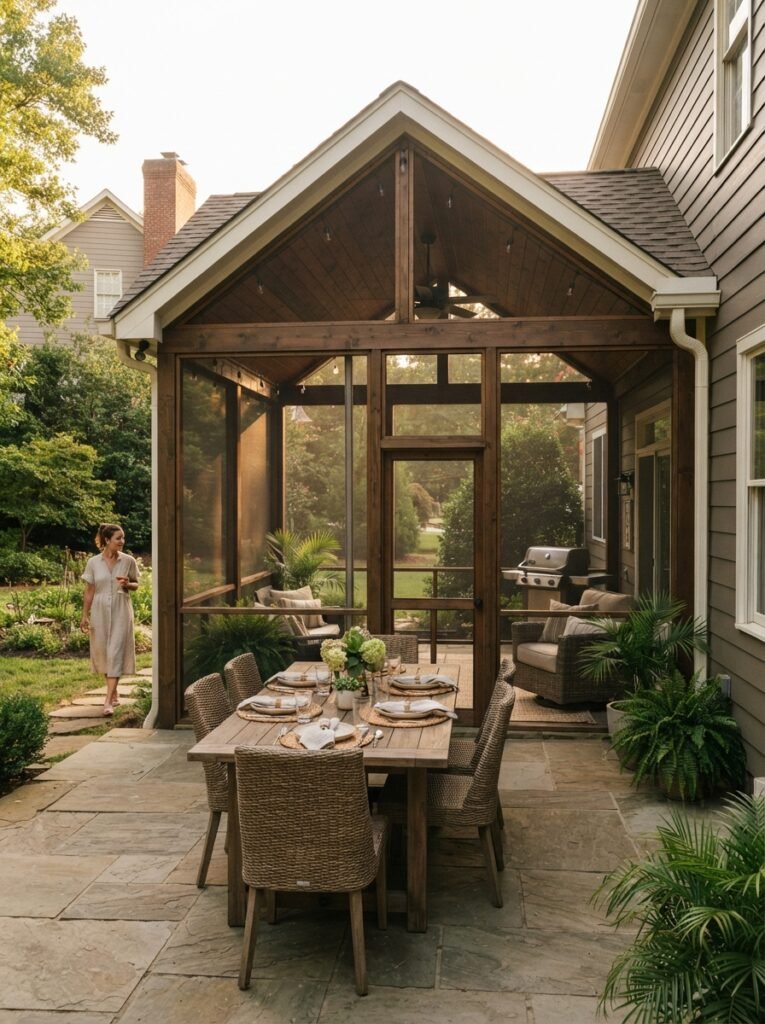
14. Covered and Screened Combo Structure
Best for: Covered enclosed patio ideas | Mid-range to splurge
Pairing a solid pitched roof with full screening on all open sides gives you rain protection and bug protection in one structure — the most complete non-glass enclosure option, and typically the version most likely to need a building permit since it ties into the home’s roofline.
Ask your contractor for: “covered screen porch addition, pitched roof tie-in, full screen enclosure”
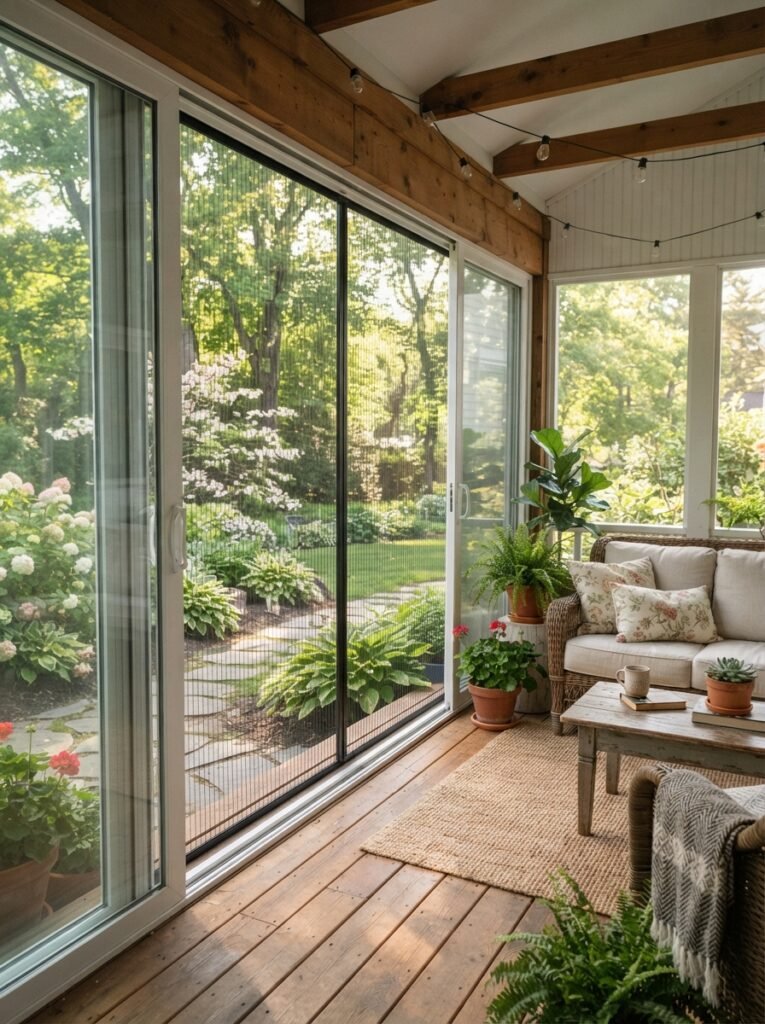
15. Three-Season Enclosed Porch with Retractable Screens
Best for: Outdoor enclosed patio ideas | Mid-range budget
A three-season porch — single-pane glass or vinyl panels paired with retractable screens behind them — lets you choose bug protection, wind protection, or fully open airflow depending on the day, without the insulation cost of a true four-season build.
Ask your contractor for: “three-season porch enclosure, single-pane sliding panels with retractable screen layer”
Enclosed Patio Types Compared
| Type | Weather Protection | Temperature Control | Permit Likely? | Approx. Cost Tier |
|---|---|---|---|---|
| Screened only | Bugs, light debris | None | Usually no | $ |
| Partial/half-wall | Wind (partial) | None | Usually no | $ |
| Vinyl or acrylic panel | Wind, light rain | Minimal | Sometimes | $$ |
| Single-pane glass (3-season) | Full weather | Limited — no insulation | Often yes | $$$ |
| Dual-pane glass (4-season) | Full weather | Full, with HVAC tie-in | Yes | $$$$ |
| Covered + screened combo | Full rain, bugs | None | Yes (roof tie-in) | $$$ |
Enclosed Patio Ideas That Actually Work Long-Term
- Match the enclosure type to the actual problem you’re solving — bugs need screen, wind needs a half-wall or panel system, and temperature needs insulated glass. Don’t over-build (or under-build) for what you actually need.
- Check permit requirements before designing anything, especially for roof-tied or fully glazed structures.
- Plan ventilation into any glass enclosure from day one — a vent panel or exhaust fan prevents most condensation and overheating complaints.
- Budget enclosed patio ideas (vinyl curtains, roll-down shades) are fully reversible — a good test option before committing to a permanent glass or screen structure.
- Retractable systems cost more upfront than fixed screens or panels, but they let one structure serve as both an open patio and an enclosed one.
- Half-walls solve wind problems without triggering most permit requirements — often the most efficient fix for an otherwise-great patio that’s simply too breezy to use.
Quick FAQ
What’s the difference between a screened and a glass enclosed patio? A screened enclosure uses mesh panels to block insects and light debris but does nothing for temperature control, while a glass-enclosed patio uses fixed or sliding glass panels that can meaningfully block wind and, with insulated dual-pane glass, support real temperature control for year-round use.
Do I need a permit for an enclosed patio? It depends on your structure type — a freestanding screen kit or a half-wall usually doesn’t require a permit, but any enclosure that ties into your home’s existing roofline or adds insulated walls typically does. Check with your local building department before starting.
What’s the cheapest way to enclose a patio? Clear vinyl curtain panels or roll-down bamboo shades over an existing open or screened patio are typically the cheapest enclosed patio ideas, often costing under $200 and requiring no structural work.
Can a screened porch become a four-season room later? Sometimes, but it depends on the existing structure’s foundation and roofline — converting a screened porch to a true four-season room usually means adding insulation, upgrading to dual-pane glazing, and tying into your home’s HVAC system, which is a more involved project than the original screen build.
Why Trust This Guide
This guide separates enclosed patio types by what they actually do — weather protection, temperature control, and permit implications — rather than treating “enclosed patio” as a single style choice, because those distinctions are what determine whether a project succeeds or leaves someone disappointed by their first cold evening in a screened-only space. Cost tiers and permit guidance reflect general, widely known patterns rather than a specific jurisdiction’s requirements, since actual rules vary significantly by city and county.
The right enclosed patio idea depends on the specific problem you’re solving — bugs, wind, rain, or true year-round temperature control — more than it depends on which photo looks best. Start by identifying that problem, check your local permit requirements early, and then choose the enclosure type and style from this list that actually matches. For patio flooring and material options to pair with any of these enclosure types, our paver patio guide and our full patio ideas guide cover surface materials in more depth, and for the National Association of Home Builders’ overview of sunroom and enclosure permitting considerations, their remodeling resource center is a solid additional starting point.

[…] You’ll Also Love This 15 Stunning Enclosed Patio Ideas: Screened, Glass, and Budget Builds Want to enclose a small outdoor nook like this one year-round? Start here […]
[…] real cost ranges and planning steps behind each one. For more backyard layout inspiration, see our 15 Stunning Enclosed Patio Ideas And for the engineering basics behind roof attachment before you talk to a contractor, : this patio […]
[…] connections. For shade and covered structures to pair with your station, our patio cover guide and our enclosed patio ideas guide cover the surrounding structure in more depth. For general outdoor grill clearance and safety […]
[…] in more depth, and if you’re building a fully enclosed space instead of a partial screen, our enclosed patio ideas guide is the next step up. For general residential fence and screen height guidance, the International […]