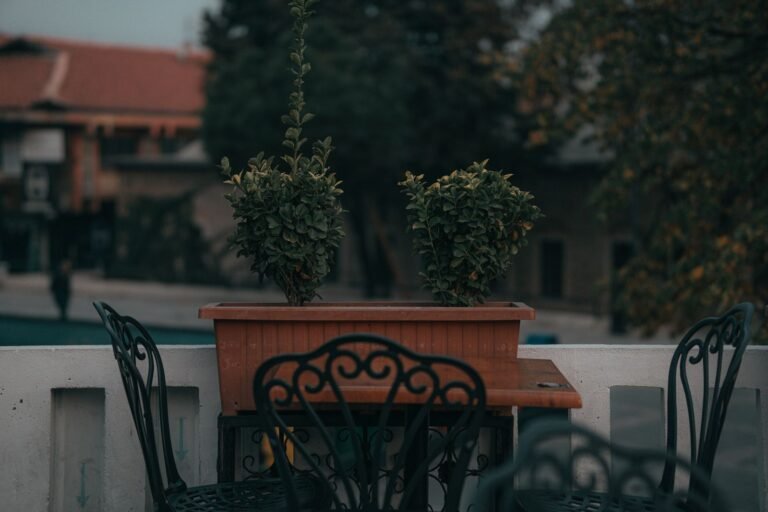
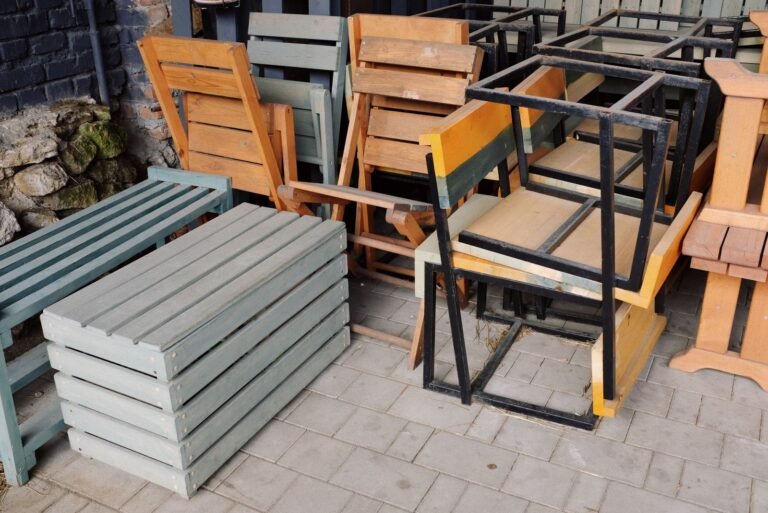
Nothing kills patio relaxation like making accidental eye contact with your neighbor every time you step outside. Shared patios and divided balconies are common in apartments, duplexes, and townhomes — and most of us just… live with the awkwardness.
You do not have to. These 8 shared patio dividing ideas create clear, attractive boundaries that give both sides privacy, all without permanent changes or neighbor disputes.
1. The Living Plant Wall
A row of tall plants in matching planters is the friendliest possible divider — it says “boundary” without saying “keep out.” Bamboo, ornamental grasses, and arborvitae grow 4-6 feet in containers.



Best for: The most neighbor-friendly option | Year-round privacy
Use identical planters in a straight row for a designed hedge look. Big pots of wet soil are heavy, so confirm your balcony’s weight limit first. This is the top recommendation in most privacy landscaping guides for good reason — it works and it looks great doing it.
2. Freestanding Privacy Screens
Hinged 3-panel outdoor privacy screens stand on their own, fold flat for storage, and come in wood, metal, and woven designs.
Best for: Instant, movable privacy | Renters who want zero installation
A 6-foot screen placed perpendicular to the shared line creates a clear visual boundary. Choose a design you love looking at, since you will see the back of it — woven patterns and slatted wood look good from both sides.
3. Outdoor Curtains on a Tension Rod
Sheer or solid outdoor curtains hung from a tension rod (or a freestanding garment rack) create a soft, resort-like divider that can be opened or closed.
Best for: Flexible privacy | Windy spots (curtains can be tied back)
This pairs beautifully with our DIY outdoor curtains under $100 — the same no-sew techniques work for dividers. Weight the hems so they do not become sails.
4. The Trellis Divider
A freestanding trellis panel in a planter box divides the space AND grows a vertical garden. Add fast-growing annual vines (morning glories, sweet peas) for first-summer coverage.
Best for: Beauty + privacy in one | Gardeners
Cedar trellis panels in weighted planter boxes will not blow over and need no attachment to the building. By midsummer, the vine coverage doubles the privacy.
5. Bamboo Roll-Up Fencing
Bamboo or reed roll fencing zip-tied to the existing railing adds 3-4 feet of natural screening for under $30. It reads as decor, not a barrier.
Best for: Tight budgets | Railing-height privacy gaps
Attach with UV-resistant zip ties (not wire, which rusts). It is technically on your side of the railing, so it rarely triggers neighbor complaints — but a heads-up conversation never hurts.
6. The Furniture Arrangement Boundary
Sometimes the divider is not a thing but a layout. Positioning a tall bookshelf, a storage bench on end, or a row of large planters along the shared line creates a psychological boundary.
Best for: Subtle separation | Patios where a physical screen feels hostile
Humans respect implied boundaries surprisingly well. A clear “this side is mine” furniture line, plus a friendly wave the first week, establishes the norm without any awkwardness. Our backyard privacy ideas without a fence use the same psychology at larger scale.
7. Hanging Plant Curtain
Suspend trailing plants (pothos, philodendron, string of pearls) from a tension rod or ceiling hooks in a row to create a living curtain that filters views softly.
Best for: Partial privacy that still feels open | Plant lovers
The filtered effect is key — you can see movement and light through it, but not details. It is privacy without the wall feeling. Mist the plants regularly; dry trailing plants look sad fast.
8. The Conversation (Yes, Really)
The most effective dividing idea is not a product: it is a 5-minute friendly chat. “Hey, I was thinking of adding some plants along our shared line for a bit of privacy on both sides — any preferences on your end?”
Best for: Every shared patio | Preventing 90% of neighbor tension
Most neighbors want the same privacy you do and will happily split costs or coordinate styles. Agreeing on a shared aesthetic (matching planters, complementary screens) makes both sides look better and keeps the peace for years.
Divider Shopping Guide: What to Buy for Each Budget
Under $40: Bamboo roll fencing ($28) + UV zip ties ($6). Covers a standard 6-foot railing section in 30 minutes. Best pure-privacy-per-dollar on this list.
$40-100: A 3-panel hinged privacy screen ($70-90) or a tension rod ($20) plus two outdoor curtain panels ($40). The screen is sturdier; the curtains are softer and more adjustable.
$100-200: A cedar trellis in a weighted planter box ($120-160) plus a fast-growing vine ($15). The premium pick — it looks like landscaping, not a barrier, and the plants improve every month. Split the cost with your neighbor after the conversation in idea #8 and it drops to $60-80 each.
Whichever you choose, buy for your wind conditions: lightweight screens need weight at the base (sandbags inside the planter, not visible), and anything fabric needs tie-backs for storm days.
Frequently Asked Questions
Can my neighbor remove or complain about my divider?
If it is freestanding, on your side of the property line, and complies with your lease/HOA, generally no. Check your lease for patio modification clauses first, and keep dividers below any HOA height limits (usually 6 feet).
What if my neighbor is offended by a divider?
Frame it as decor, not rejection: “I am adding a plant wall for shade” lands better than “I am blocking you out.” The conversation-first approach (idea #8) prevents almost all hurt feelings.
How do I divide a patio that has no clear midpoint?
Measure the total space and mark the halfway point with painter’s tape, then discuss with your neighbor before placing anything. If you cannot agree, place your divider slightly on your side of center — generosity now prevents disputes later.
What is the cheapest effective shared patio divider?
Bamboo roll fencing ($25-35) or a tension rod with outdoor curtains ($30-50). Both install in under an hour, need no tools beyond scissors, and come down cleanly at move-out.