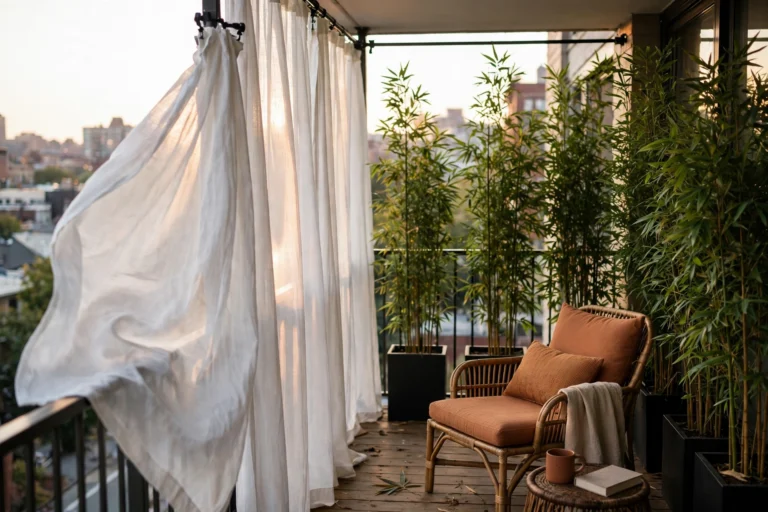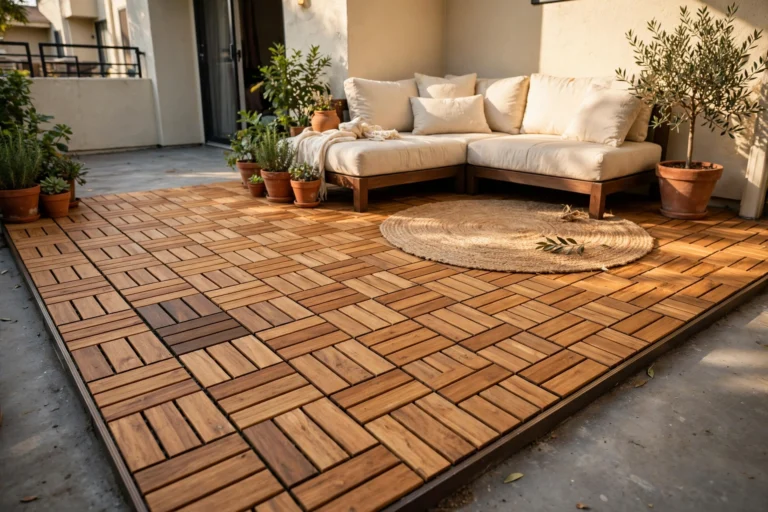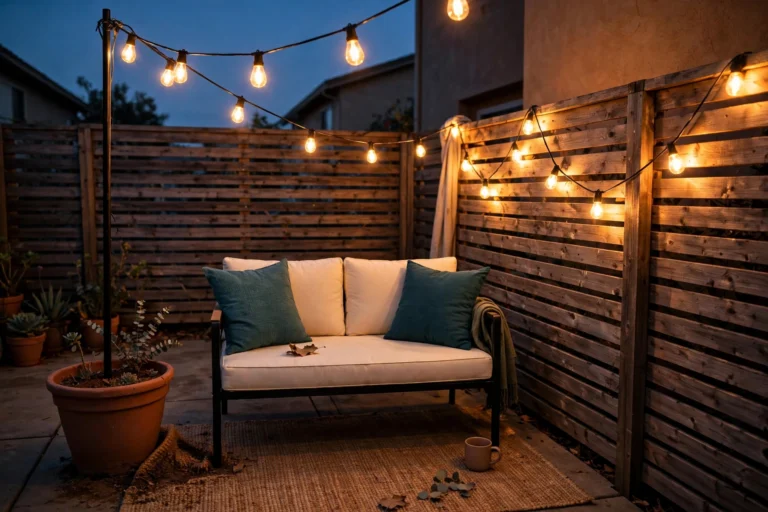

Outdoor curtains are the single highest-impact upgrade for a patio. They add privacy, soften harsh sun, make a space feel like a room, and hide the neighbor’s fence — for less than a dinner out. No sewing machine, no skills beyond a drill. Here’s the exact method.
Why Drop Cloths Beat “Outdoor Fabric”
Purpose-made outdoor curtain panels run $25–$50 each, and you’d need six. Canvas painter’s drop cloths cost $10–$15 for a 9×12-foot cloth that makes two generous panels. They’re heavy cotton canvas — they drape like linen, take fabric waterproofing well, and the natural oatmeal color suits every patio style. Bleach them once if you want a brighter white (there’s a great bleaching walkthrough here: https://ahouseinthehills.com/diy-drop-cloth-curtains-a-complete-tutorial/).
Avoid thin cotton sheets for full-sun patios — they mildew faster and shred in wind within a season. Drop cloth canvas lasts 2–3 years outdoors with basic care.



What to Buy (12-Foot Patio, ~$85 Total)
- 3 canvas drop cloths, 9×12 ft (~$12 each = $36). Get the ones without a center seam if you can.
- 1 electrical conduit pipe, ½-inch × 10 ft (~$8) — or a wooden closet rod. Conduit is cheaper and won’t warp.
- Conduit straps or eye hooks (~$6) to mount the rod to your pergola, porch posts, or wall.
- 24 curtain ring clips (~$12 for two 12-packs) — the clip style, not sewn tabs, so panels slide easily.
- Fabric waterproofing spray (~$12) — one can covers all three cloths.
- Spray paint (~$6) if you want to paint the conduit to match your trim.
- Fishing weights or large washers (~$5) for wind-proofing (explained below).
Already have a pergola or porch frame to mount to? Skip to the steps. If not, a simple wall-mounted setup works — mount the rod to the house wall above a patio door.
Step 1: Wash and Prep the Drop Cloths
Wash all three cloths in hot water (no fabric softener) and tumble dry. This removes the factory sizing, pre-shrinks them, and softens the canvas so it drapes instead of standing stiff. Iron or steam out the worst wrinkles — they’ll relax further once hung, so don’t obsess.
Optional: while they’re damp, spray both sides with the fabric waterproofing spray per the can’s directions, then let dry fully. This is the difference between curtains that survive rain and curtains that mildew by August.
Step 2: Mount the Rod
Measure your span and cut the conduit 4–6 inches wider than the opening (a $5 pipe cutter from the hardware store makes this a 2-minute job, or have the store cut it). Mount with conduit straps screwed into solid wood or masonry — not into vinyl soffit alone; use a mounting block if needed.
Height: mount the rod as close to the ceiling/roofline as practical — curtains hung high make the patio feel taller. For a standard 8-foot pergola, mount at 7’6″ and let panels just kiss the ground or puddle 2 inches.
Step 3: Clip the Panels (The No-Sew Part)
Fold the top 3 inches of each drop cloth over to the back and clip the ring clips through the doubled fabric every 8–10 inches — the fold gives the clips something substantial to grip so they don’t tear out in wind. Slide the rings onto the rod.
Each 9×12 cloth makes two panels: cut down the middle (or just fold it in half over the rod for a fuller look — a 9-foot-wide panel gathered onto a 4-foot span gives beautiful fullness). For a 12-foot span: three cloths = six panels, hung with slight overlap. Fullness is what makes curtains look expensive — skimp here and they look like bedsheets.
Step 4: Wind-Proof the Bottoms
This is the step that separates curtains that look great from curtains that spend all summer tangled. Pick your method:
- Washer weights: Sew (or hot-glue, or use iron-on hem tape) a large flat washer into each bottom corner. Invisible, effective, $5 total.
- Tie-backs: Install a small hook on each post and loosely tie panels back on breezy days — also the prettiest option.
- Bottom rod: Thread a second thin conduit through a folded bottom hem (secured with iron-on hem tape) for maximum structure.
Do at least the washers. Unweighted outdoor curtains in a gusty yard will drive you insane within a week.
Step 5: Style and Maintain
Pull the two center panels slightly to the sides and tie back for an open, airy default look — closed only when you want privacy or shade. Once a season, unclip and machine-wash on gentle, re-spray waterproofing annually, and take panels down before the first hard freeze if you’re in a snow zone (ice-loaded canvas tears clips out).
Cost Breakdown Reality Check
| Item | Cost |
|---|---|
| 3 drop cloths (9×12) | $36 |
| Conduit + straps | $14 |
| 24 ring clips | $12 |
| Waterproofing spray | $12 |
| Washers/misc | $11 |
| Total | ~$85 |
Compare: six ready-made outdoor panels ($180+) plus a rod ($40). You save over $130 and get heavier, better-draping fabric.
Variations Worth Trying
- Striped panels: Use painter’s tape and fabric paint to add stripes before hanging — crisp cabana look for $8 more.
- Sheer + canvas layering: Hang cheap sheer panels behind the canvas ones for filtered light on bright days.
- Privacy only: For a balcony, mount a tension rod inside the railing and hang a single drop-cloth panel — no drilling, renter-friendly.
- Two-tone dip: Dip-dye the bottom third of each panel in diluted fabric paint for a color-blocked look — sage green and terracotta both look fantastic against canvas.
Curtains are also one of the best privacy tools going — see our patio privacy ideas for screens and plantings that pair with them, and browse DIY patio decor ideas for more under-$100 projects.
FAQ
Will drop cloth curtains survive rain?
Yes, if you waterproof them. Untreated canvas absorbs water, gets heavy, and mildews. One thorough coat of fabric waterproofing spray per side each spring keeps them beading water all season. In a downpour they’ll still get damp — but they’ll dry without damage, unlike untreated cotton.
How do I keep outdoor curtains from blowing everywhere?
Weight the bottoms (washers in the corners is the cheapest fix), use tie-backs on windy days, and hang panels with generous fullness — fuller panels move less wildly than flat ones. In genuinely high-wind spots, a bottom rod through a taped hem is the most secure option.
Can I make outdoor curtains without any sewing at all?
Completely. Ring clips grip a folded top edge with zero stitching, and iron-on hem tape handles any hems or weight pockets with just an iron. The entire project in this guide uses no needle and thread — clips, tape, and a drill are the only tools.
How long do DIY outdoor curtains last?
Canvas drop cloth curtains last 2–3 seasons with annual waterproofing and winter storage in harsh climates. Sun is the main enemy — UV breaks down cotton fibers over time. When panels start feeling thin or tearing at the clips, it’s time for a $36 refresh, which beats replacing $200+ store-bought panels. Store them clean and dry in a sealed bin over winter and they’ll come back fresh each spring.