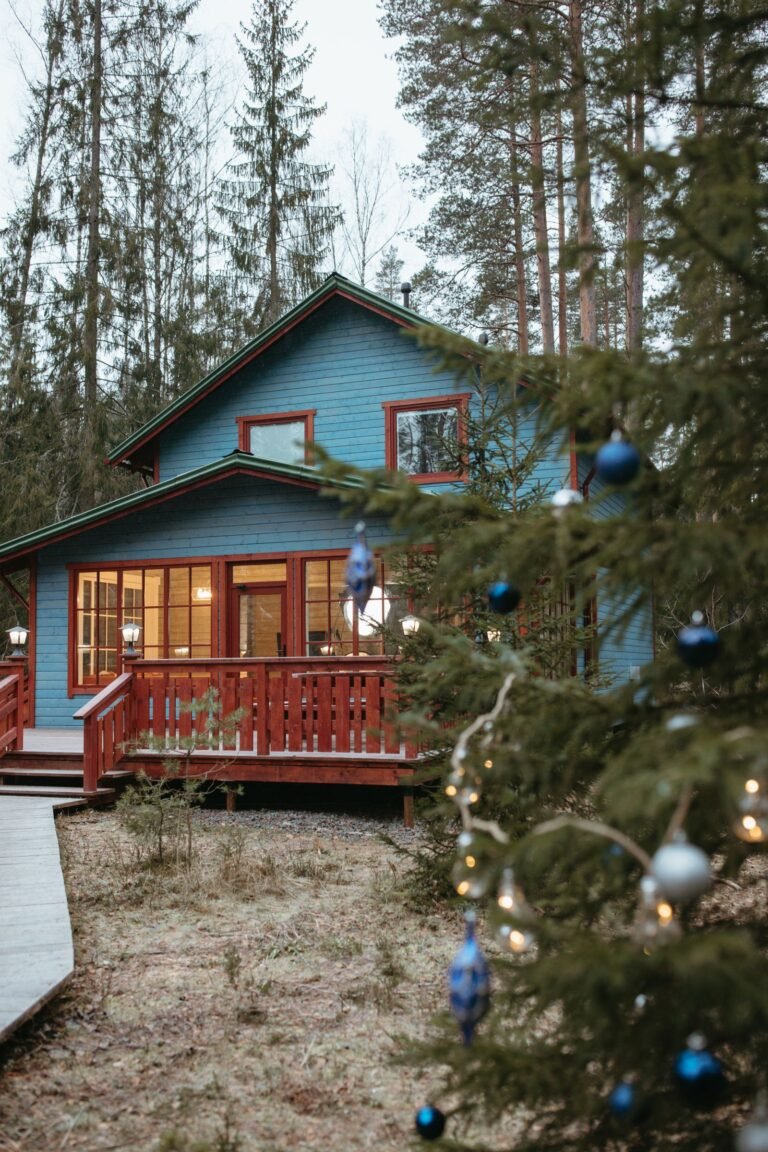

Patio heater ideas for winter range from $90 propane mushroom heaters to $1,100+ hardwired infrared systems, and the right one depends on your patio size and fuel access. Propane heaters warm 150–200 sq ft and cost about $150–$450; electric infrared heaters warm smaller zones for $100–$400 with far lower running costs. Here’s how to pick, place, and safely use the right heater for your space.
October arrives, the evenings turn crisp, and suddenly the patio you loved all summer sits empty. That’s the moment most people start shopping for heat — and the moment most people buy the wrong heater. A propane mushroom heater is fantastic for an open patio but wasted under a low ceiling; an infrared wall heater is perfect for a covered porch but useless in an open yard. The ideas below are organized by real situations — open patios, covered porches, dining tables, small budgets — so you can match the heater to the space instead of guessing.
A quick note on running costs before we dive in: propane typically costs $1.50–$3.00 per hour of use (a 20 lb tank refill runs about $18–$30), while a 1,500-watt electric infrared heater costs roughly $0.20–$0.30 per hour at typical US residential electricity rates. Propane heats bigger areas; electric heats cheaper. Keep that trade-off in mind as you read.



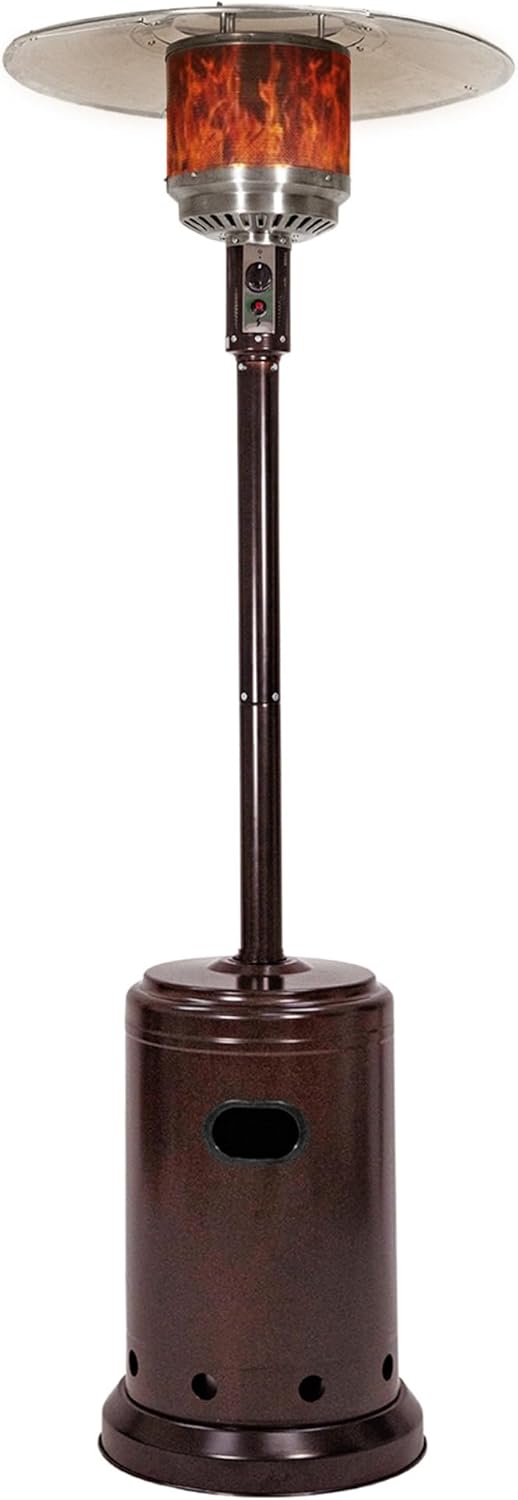

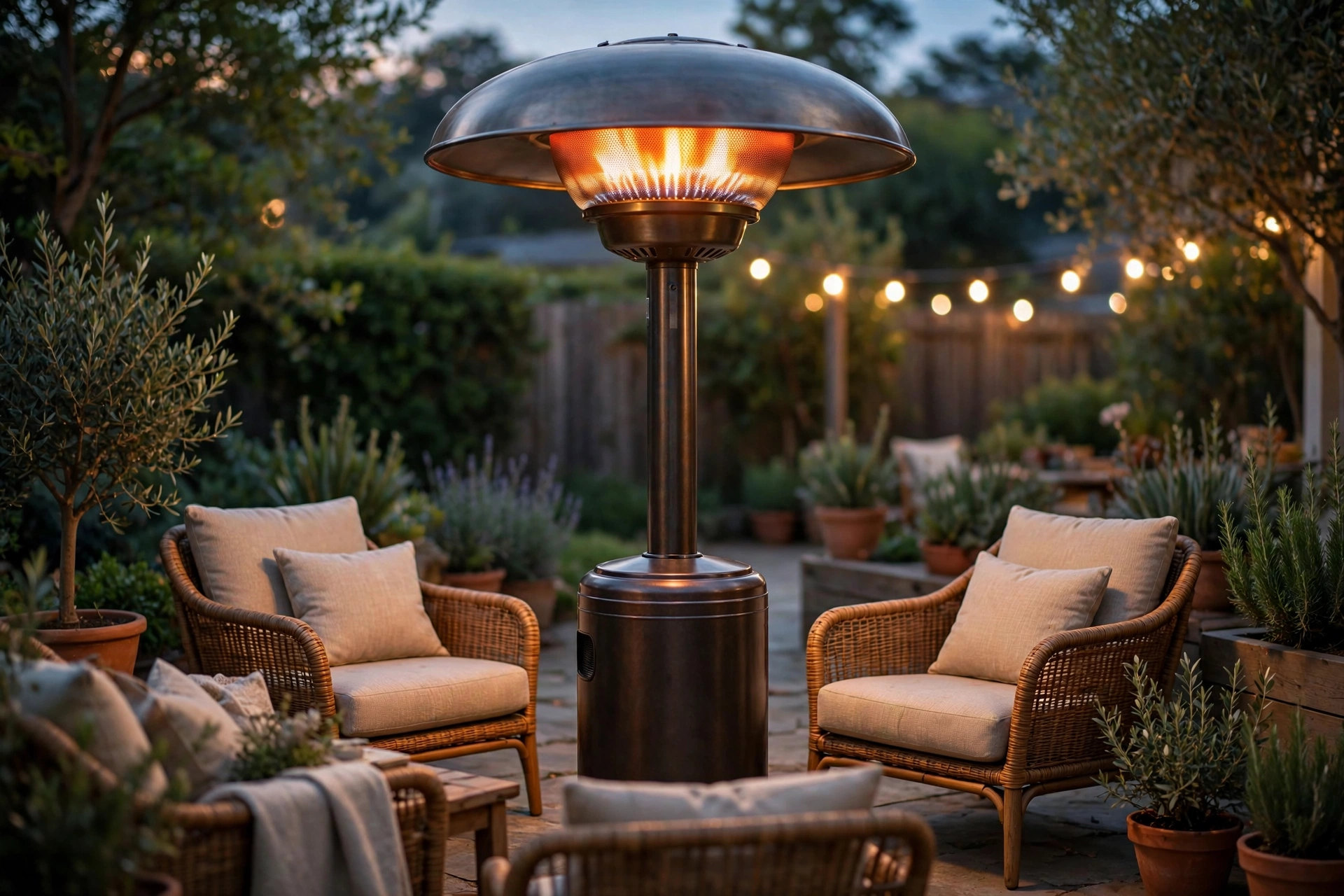
1. Classic Mushroom Propane Heater (The Original Patio Heater Idea)
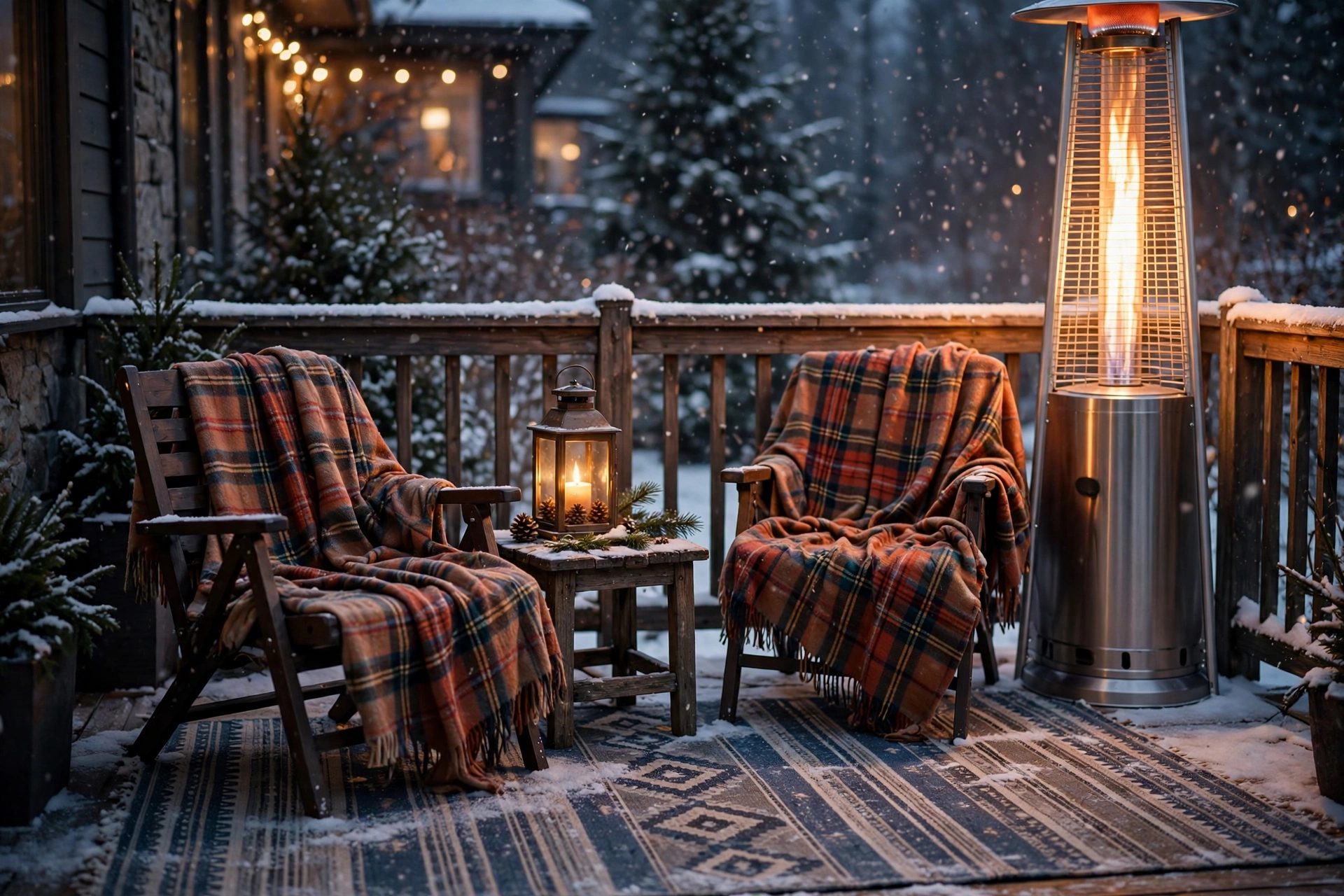
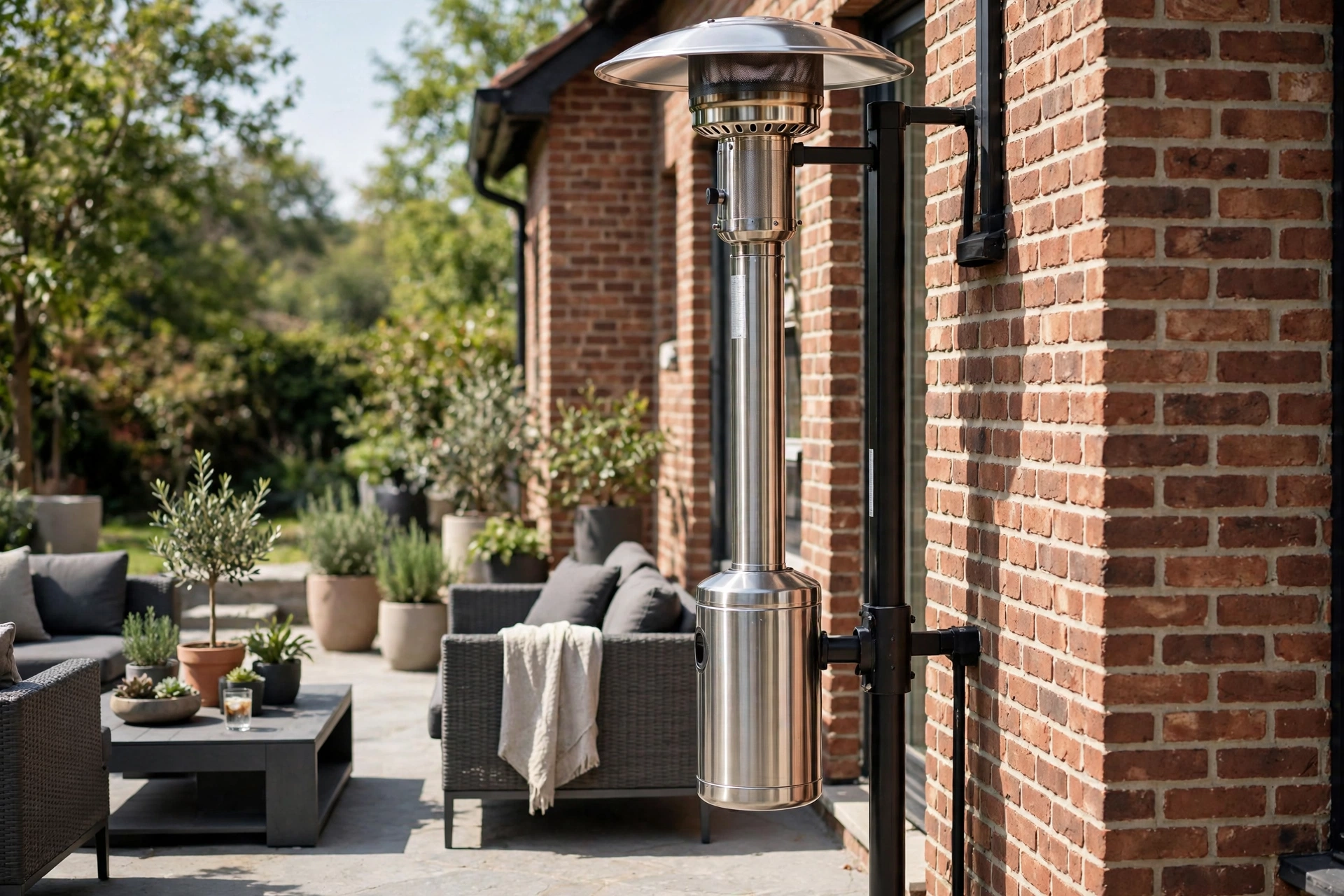
The tall mushroom-style propane heater is the one you’ve seen at every restaurant patio — and for good reason. A standard 40,000–48,000 BTU unit warms a circle roughly 15–20 feet across (about 175–300 sq ft), runs 8–10 hours on a 20 lb propane tank, and costs $130–$450 depending on finish and features. It’s freestanding, needs no wiring, and you can wheel it wherever the party is.
The downsides are honest ones: you will be swapping propane tanks, the heat drifts in wind (convective heat rises and blows away), and the tall profile needs stable, level ground. Look for units with a tip-over shutoff, a weighted base, and wheels. For open patios without nearby power, this remains the most practical of all patio heater ideas — which is exactly why restaurants buy them by the dozen.
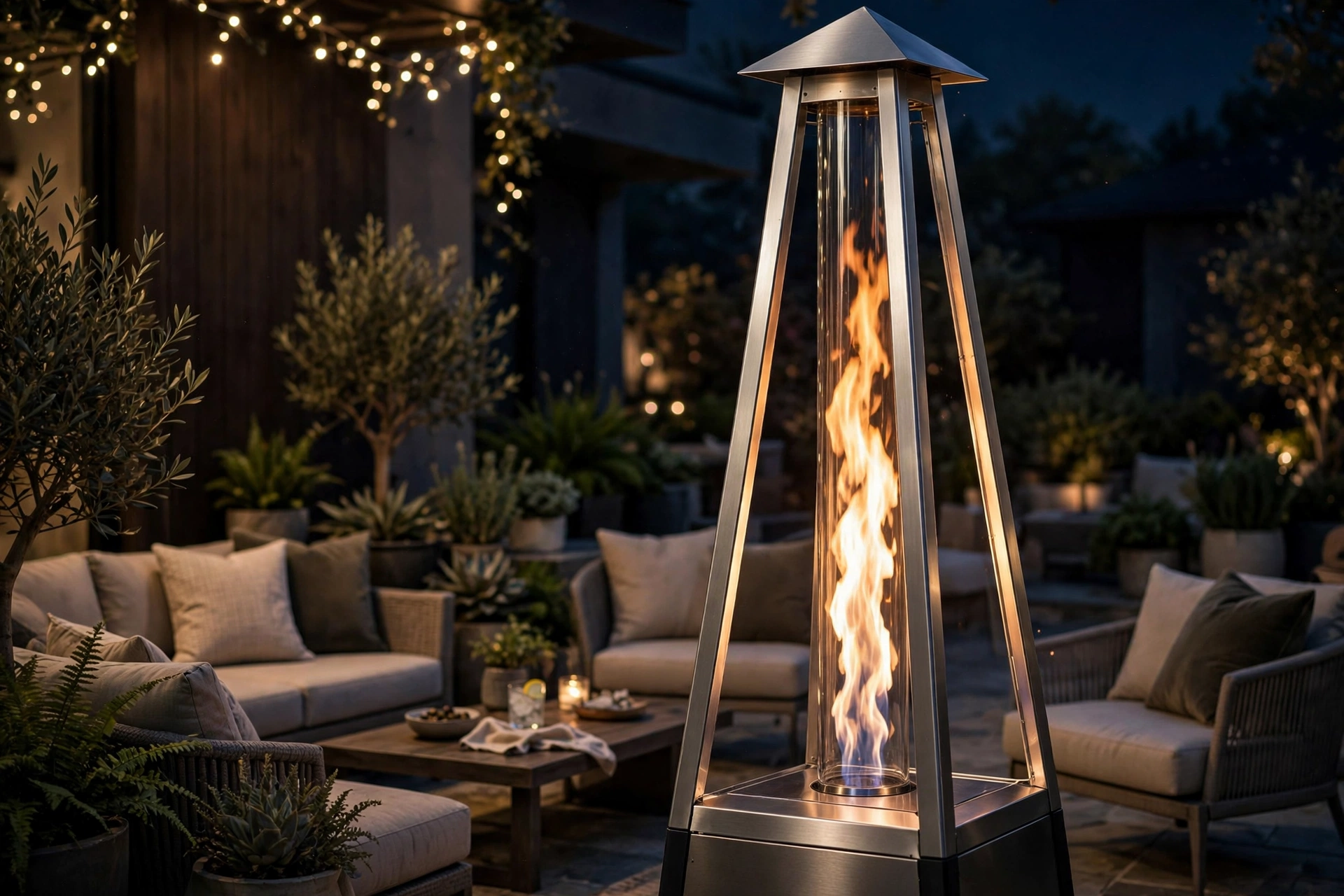
2. Pyramid Flame Tower Heater
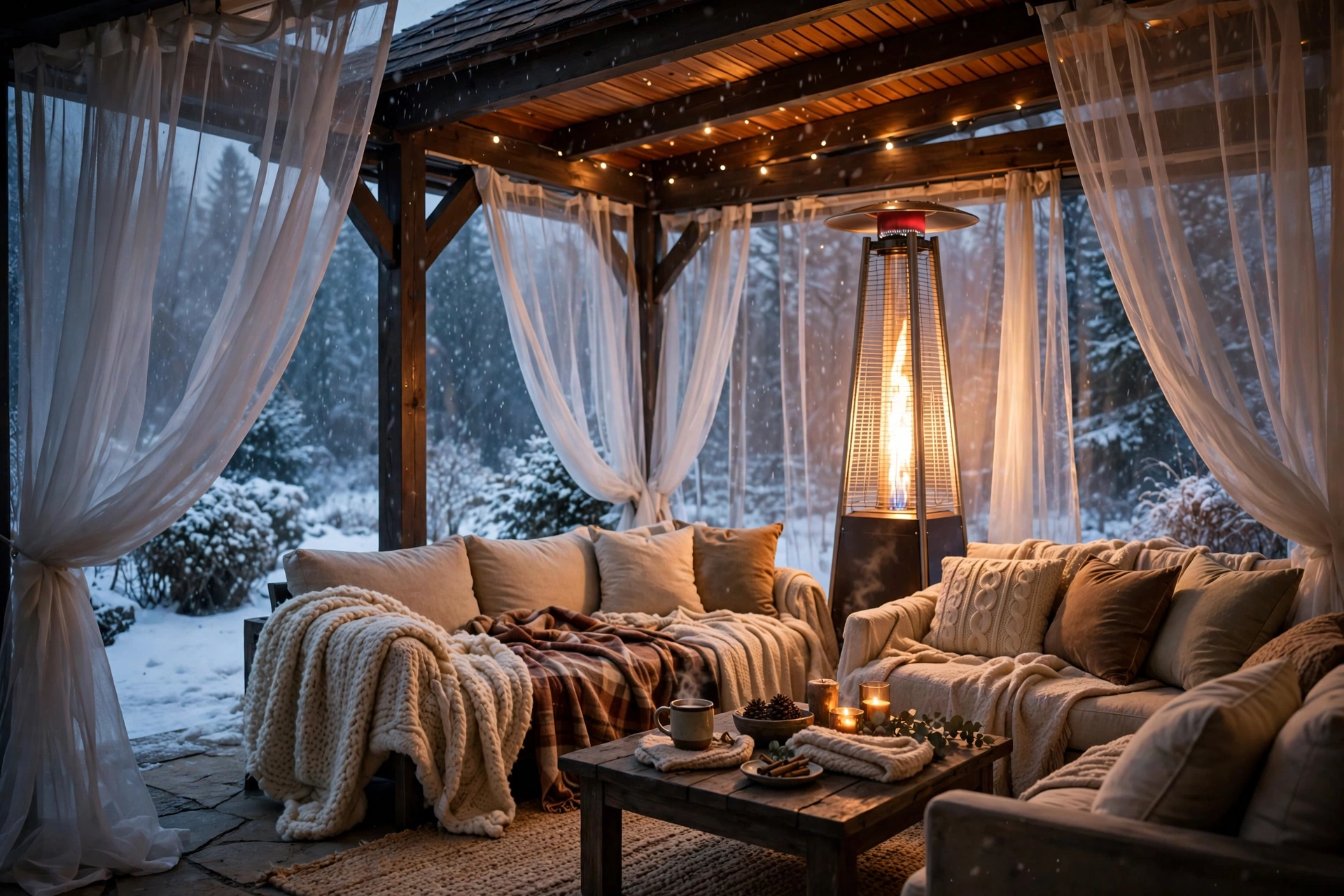
If you want heat with theater, the pyramid flame heater is your pick. A visible flame dances up through a glass tube, putting out around 40,000 BTU while looking like a modern sculpture. They cost $170–$350, run on the same 20 lb propane tanks as mushroom heaters, and warm a similar 150–200 sq ft zone.
The flame is real fire behind glass, so treat it with respect: keep it 3 feet from anything flammable, never leave it burning unattended, and let the glass cool before moving the unit. The glass tube is the fragile (and expensive-to-replace) part — budget $40–$80 for a replacement tube eventually. Where this heater shines is ambiance: it doubles as a light source and a conversation piece, making it ideal for entertaining patios.
3. Wall-Mounted Electric Infrared Heater
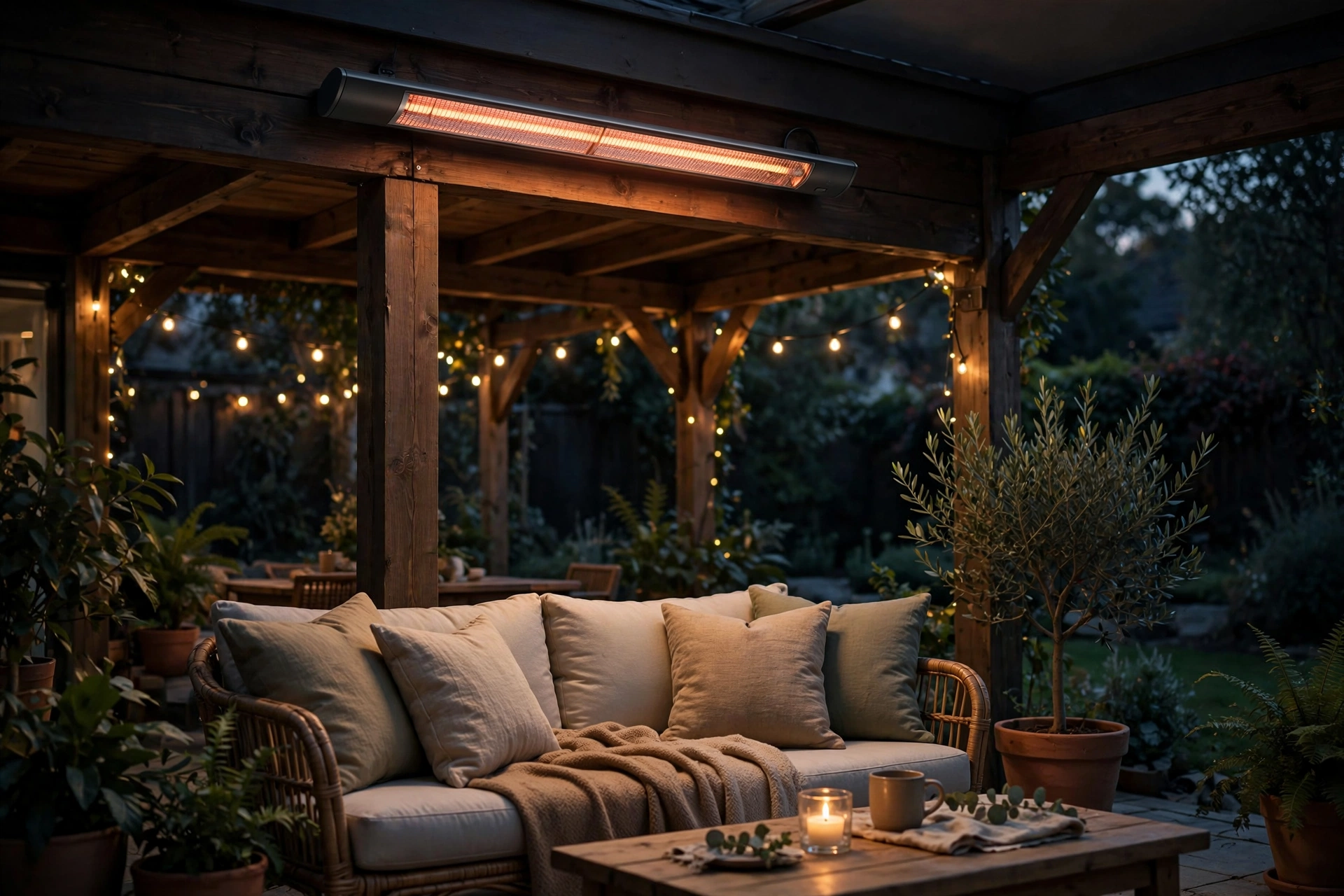
For covered patios and porches, a wall-mounted electric infrared heater is the set-it-and-forget-it option. These slim panels or tubes mount to a wall or post, plug into a standard 120V outlet (or hardwire for bigger units), and radiate heat directly onto people and furniture instead of warming the air — which means wind steals far less of it. A 1,500-watt unit warms about 50–100 sq ft and costs $100–$300.
Infrared is the efficiency winner: no tanks to swap, no fumes, silent operation, and running costs of roughly $0.20–$0.30 per hour. The catch is coverage — infrared heats what’s in its line of sight, so mount it 6–8 feet high, angled down at your seating, and don’t expect it to warm the whole yard. For a covered seating nook, though, it’s arguably the best of all patio heater ideas. Pair it with outdoor patio curtains to trap the warmth and you’ve built a genuine outdoor room.
4. Ceiling-Mounted Infrared for Covered Patios
Got a solid patio roof? A ceiling-mounted infrared heater keeps your walls and floor completely clear — nothing to trip over, nothing to store. These mount flush or on short drops from the ceiling, typically in 1,500–3,000 watt sizes, and cost $200–$600 plus installation if you need a new circuit.
This is the closest thing to indoor heating you can get outdoors: silent, instant, and invisible when off. You’ll want an electrician for hardwired 240V units (budget $300–$800 for the circuit work), but plug-in 120V models work for smaller zones. Keep the mounting height per the manufacturer’s specs — usually 8–10 feet — and never mount any heater where curtains or fabric could touch it. For the full cold-weather setup, see our winter patio transition ideas.
Prices reviewed: October 2026
| Heater Type | Typical Unit Cost | Coverage | Running Cost (est.) | Best For |
|---|---|---|---|---|
| Propane mushroom | $130–$450 | 175–300 sq ft | $1.50–$3.00/hr | Open patios, no power nearby |
| Pyramid flame tower | $170–$350 | 150–200 sq ft | $1.50–$3.00/hr | Entertaining, ambiance |
| Electric infrared (wall/ceiling) | $100–$600 | 50–150 sq ft | $0.20–$0.60/hr | Covered patios, quiet heat |
| Tabletop propane | $90–$170 | ~30 sq ft | $0.50–$1.00/hr | Dining tables, small groups |
| Fire table (propane) | $200–$800 | 100–150 sq ft | $1.00–$2.00/hr | Focal point + heat |
| Natural gas (plumbed) | $300–$1,100+ | 200–400 sq ft | $0.50–$1.50/hr | Permanent installations |
Cost ranges above are estimates based on typical 2026 pricing from major home-improvement retailers and online home stores; running costs vary with local propane and electricity rates.
5. Tabletop Propane Heater for Dining Tables
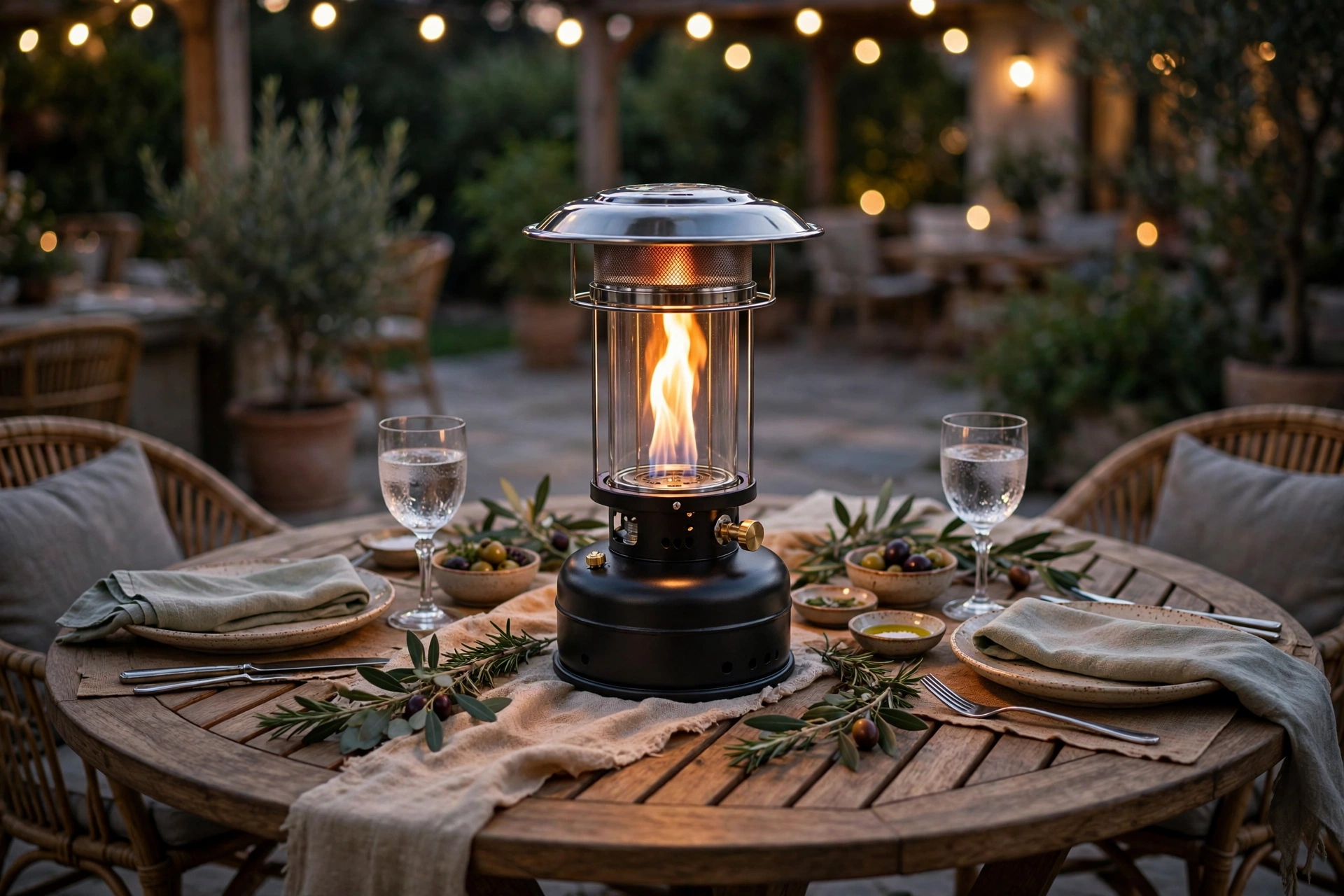
When the goal is keeping dinner warm — literally and socially — a tabletop propane heater is the right scale. These compact units (about 3 feet tall) sit in the center of the table, put out around 10,000–12,000 BTU, and warm the people seated around it for $90–$170. They run on small 1 lb camping cylinders or adapt to a 20 lb tank with a hose.
This is a spot heater, not a space heater: it warms about a 30 sq ft bubble, perfect for a 4–6 person dining table. Make sure your table is sturdy and the heater has a stable, wide base — a wobbling tabletop heater is a hazard. And keep the 1 lb cylinders in mind as an ongoing cost; they’re convenient but pricey per BTU compared to a refillable 20 lb tank.
6. Fire Table: Heat Plus a Focal Point
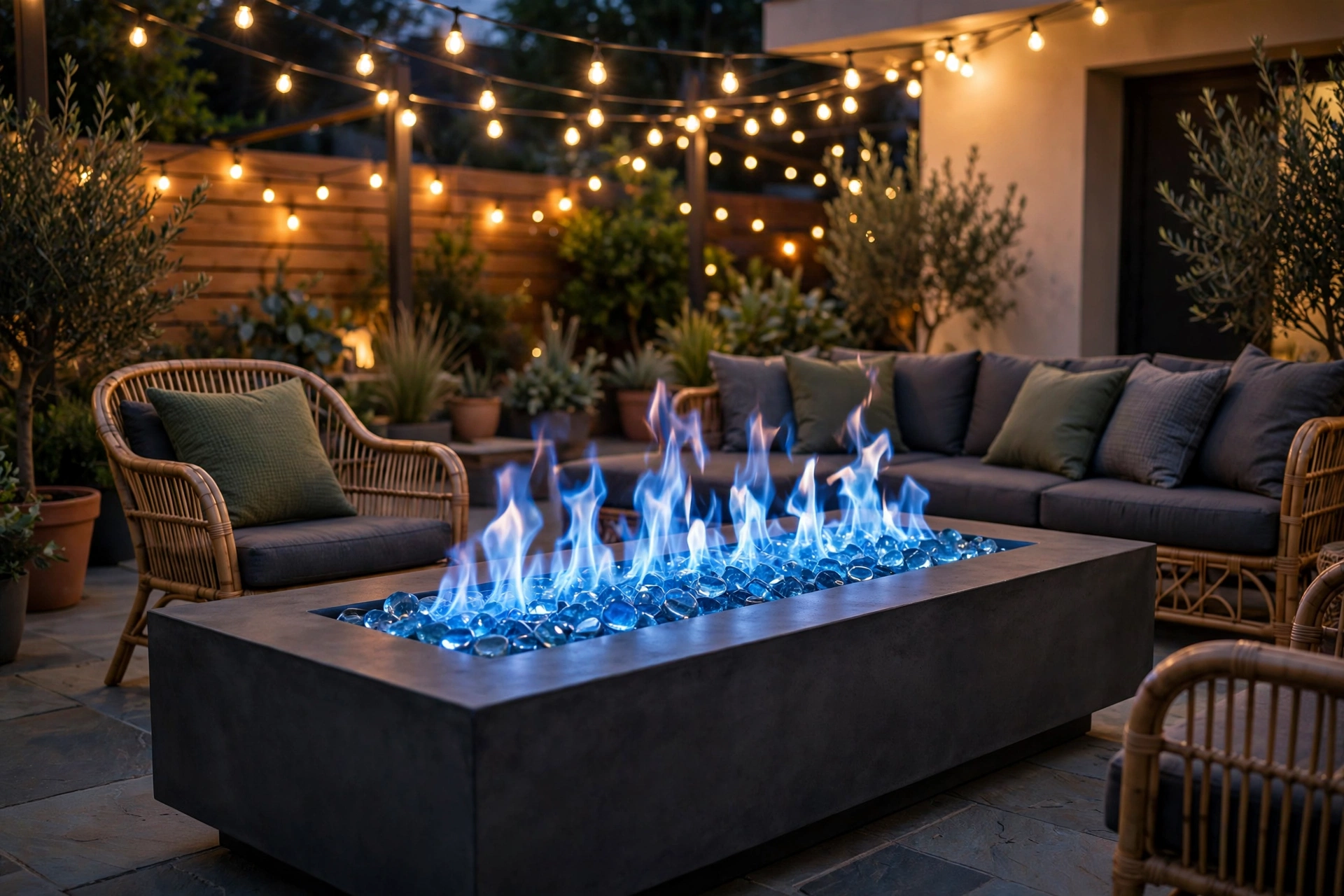
A propane fire table does two jobs at once: it’s the coffee table and the heater. With 40,000–60,000 BTU hidden under glass or lava rock, a fire table warms a 100–150 sq ft seating zone while giving everyone something to gather around. Prices run $200–$800 depending on size, material, and ignition type (match-light versus push-button).
Fire tables are the most furniture-like of all patio heater ideas, which makes them easy to style — they anchor a seating arrangement the way a coffee table does. They need the same clearances as any gas fire feature: 3+ feet from furniture edges, never under a low ceiling unless rated for it, and always on a non-flammable surface. The 20 lb tank hides inside the base on most models, keeping the look clean.
7. Plumbed Natural Gas Heater for Permanent Setups
If you’re building a forever patio, a plumbed natural gas heater eliminates the tank-swapping chore entirely. These connect to your home’s gas line (professional installation required), cost $300–$1,100+ for the unit plus $500–$1,500 for the gas line work, and deliver 40,000+ BTU continuously at the lowest per-hour fuel cost of any option.
This is a commitment, not a purchase: you’re paying for a gas line, permits in some areas, and a fixed location. But for a patio you use all winter in the Northeast or Midwest, the convenience is unmatched — flip a switch and you have heat, forever, with no tanks to haul. Get quotes from licensed gas fitters, and check local codes; some municipalities require permits for new gas lines.
8. Hanging Electric Pendant Heater
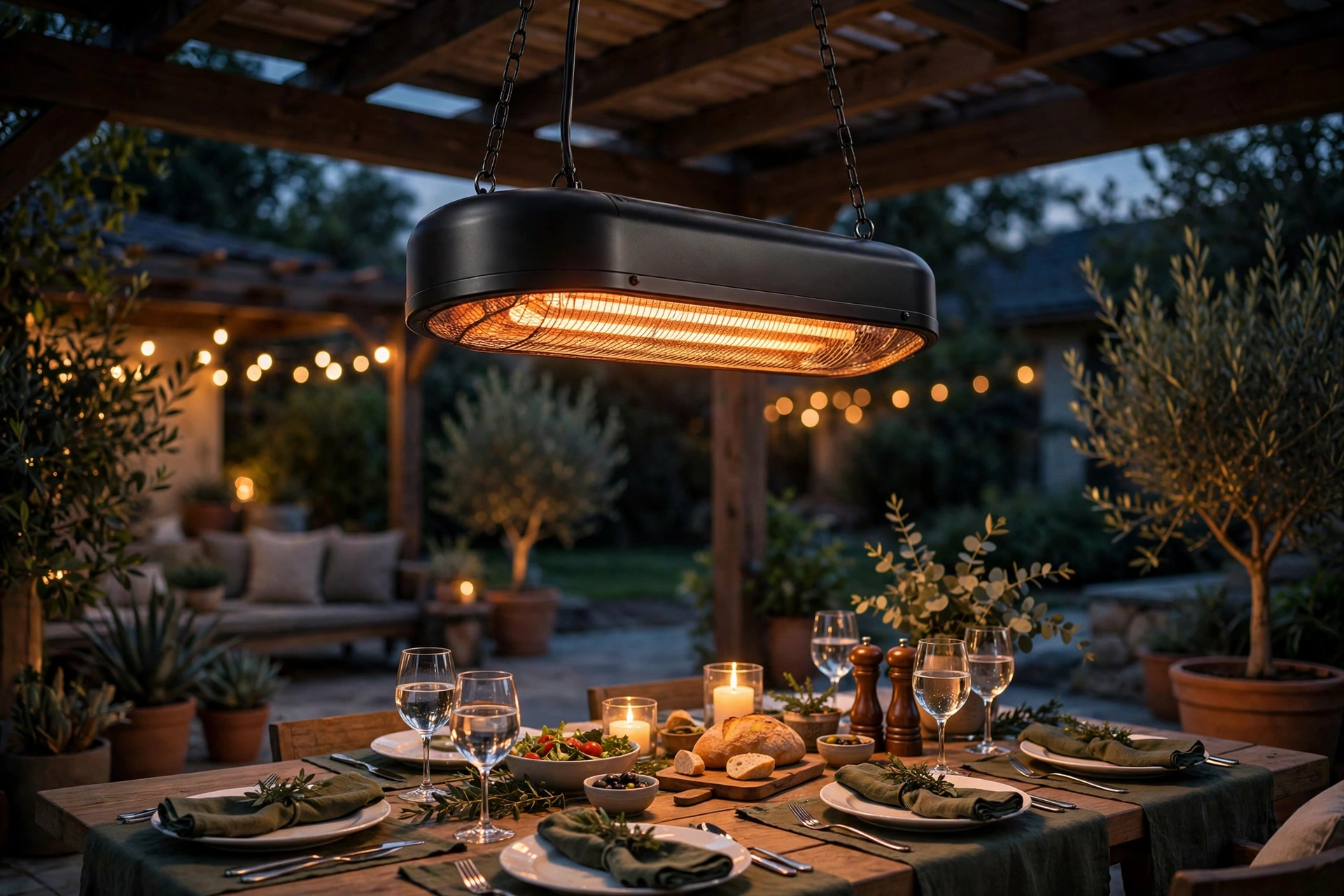
For covered patios with limited wall space, a hanging infrared pendant puts heat exactly where people sit without using a single square foot of floor or wall. These hang from the ceiling like a pendant light, typically 1,500–2,000 watts, and cost $150–$400. They’re especially good over dining tables — heat rains down right onto the meal.
Height matters: hang it 6–8 feet above the seating area per the manufacturer’s specs, and make sure the ceiling mount can handle the weight (most are 10–20 lbs). Because it’s electric infrared, there’s no fume concern under a roof, but keep the clearance specs religiously — the housing gets hot. One pendant per seating zone is the rule; two small pendants beat one oversized one for even coverage.
9. Fire Pit as a Heater Alternative
Sometimes the best patio heater idea isn’t a heater at all. A wood or propane fire pit puts out serious radiant heat — a 24–30 inch fire pit easily warms a 150+ sq ft seating circle — while delivering the crackle, smell, and marshmallow factor no manufactured heater can match. Wood fire pits start around $80–$300; propane fire pit kits run $200–$600.
The trade-offs: wood means smoke, sparks, and ash (check local burn bans — many Western cities restrict wood burning in winter), while propane means tanks but no mess. Either way, follow the same safety rules as any open flame: 10+ feet from structures, spark screen on wood fires, never unattended. For seating layouts that make the most of the warmth, see our fire pit seating area ideas.
10. More Patio Heater Ideas: Heater Plus Curtains for a Three-Season Room
The single most effective winter patio upgrade isn’t a bigger heater — it’s trapping the heat you already have. Pairing any heater with outdoor patio curtains or clear vinyl panels around the patio edge cuts wind dramatically, and wind is what steals most of your heat outdoors. A $150 mushroom heater behind wind-blocking curtains will outperform a $400 heater in the open.
Add an outdoor rug underfoot (cold concrete sucks heat from your feet), keep a basket of throw blankets handy, and consider patio wind protection ideas like screens or dense plantings on the windward side. This layered approach — block the wind, heat the people, warm the surfaces — is how restaurants keep patios open through a Chicago or Boston winter, and it works at home too.
Frequently Asked Questions
What is the best type of patio heater for winter?
For open patios, a 40,000+ BTU propane mushroom or pyramid heater warms the largest area. For covered patios, wall- or ceiling-mounted electric infrared heaters are more efficient because radiant heat isn’t lost to wind. The best choice depends on your space: open and powerless favors propane; covered with power favors infrared.
How much does it cost to run a patio heater?
Propane heaters typically cost $1.50–$3.00 per hour (a $18–$30 tank refill lasts 8–10 hours). A 1,500-watt electric infrared heater costs roughly $0.20–$0.30 per hour at typical US residential rates. Natural gas is cheapest per hour but requires professional installation.
Are patio heaters safe under a covered patio?
Electric infrared heaters are safe under covered patios when mounted with proper clearances. Never use a propane mushroom heater under a low ceiling — they need open ventilation and typically require 3+ feet of clearance above. Always follow the manufacturer’s clearance specs and keep a fire extinguisher accessible.
How many patio heaters do I need?
One 40,000–48,000 BTU propane heater covers roughly 175–300 sq ft — enough for a typical 12×16 patio seating zone. Electric infrared units cover 50–150 sq ft each, so you may need two or three for the same area. When in doubt, two smaller heaters placed well beat one big heater placed poorly.
Can I leave my patio heater outside in winter?
Most quality heaters are weather-resistant, but covering them (or storing them under cover) when not in use extends their life significantly — especially the burner and ignition components. Always disconnect propane tanks and store them upright outdoors, never in an enclosed garage or shed.

Key Takeaways
- Patio heater ideas for winter span $90 tabletop units to $1,100+ hardwired systems — match the heater to your space, not just your budget.
- Propane heats bigger areas (175–300 sq ft) but costs $1.50–$3.00/hr; electric infrared heats smaller zones for $0.20–$0.60/hr.
- Covered patios favor wall- or ceiling-mounted infrared; open patios favor freestanding propane.
- Wind protection (curtains, screens) multiplies any heater’s effectiveness more than buying a bigger unit.
- Follow clearance specs, never leave gas heaters unattended, and store propane tanks upright outdoors.