
An outdoor shower kit is the shortcut around plumbing: the fixtures arrive engineered to work together, and most connect to a garden hose in minutes. Here are the 9 kit types worth knowing, with honest costs and how hard each is to install.
Fixed vs portable: read this first
If you search for the best outdoor shower kit, most of what you find is camping gear: a bag you hang from a tree, a battery pump, a shower you pack away after the weekend. That is not what most of this guide is about. A fixed kit is installed in one place and stays there for the season — plumbed in or connected to a garden hose, mounted to a wall or standing on its own base, and built to stay outside.
A portable shower, by contrast, is carried to where you need it, filled or pumped by hand, and stored away between uses. Portable showers have a real place — a patio rinse, a poolside wash-off, a pet wash — and two types on this list (the solar bag at #5 and the propane kit at #6) are portable by design. But if you want to step outside and shower every day in summer without setting anything up first, you want a fixed kit.
The honest test is this: if you would be annoyed setting it up every time you use it, buy fixed. If you would be annoyed leaving it outside all winter, buy portable.
1. Freestanding Tower Kits (Typically $150–$400)
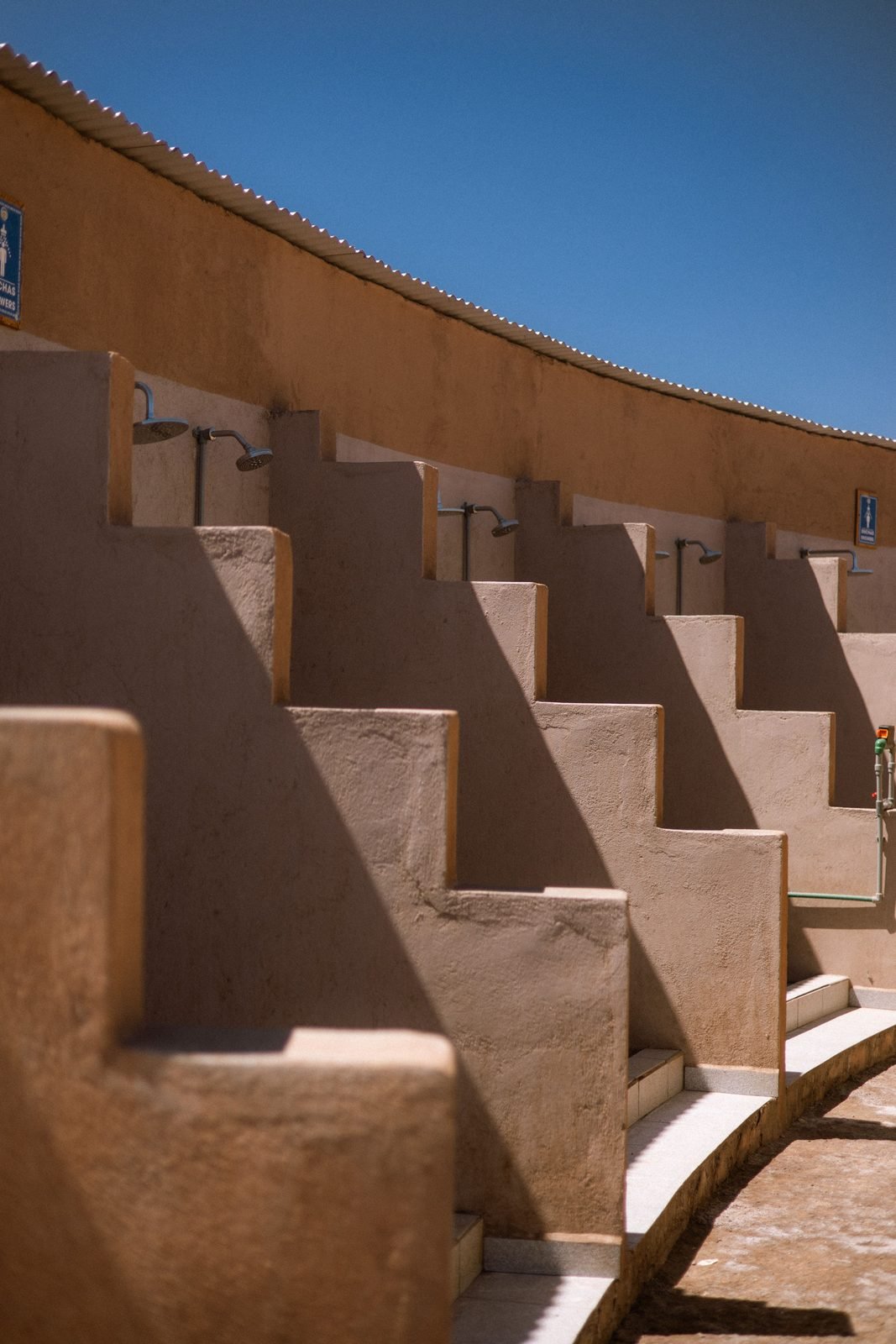
The classic stainless-steel tower with a rainfall outdoor shower head on top and a foot-wash spigot at the base. Installation is nearly zero: stake or bolt it down, connect the hose, done. Look for 316 marine-grade stainless if you live near salt water — it is the difference between a fixture that lasts two years and one that lasts ten. Most towers also include a simple temperature mixer you can plumb to a hot line later, so the kit grows with your ambitions.
Install difficulty: Trivial — 15 minutes, no tools beyond a wrench.
2. Panel Column Kits (Typically $200–$600)
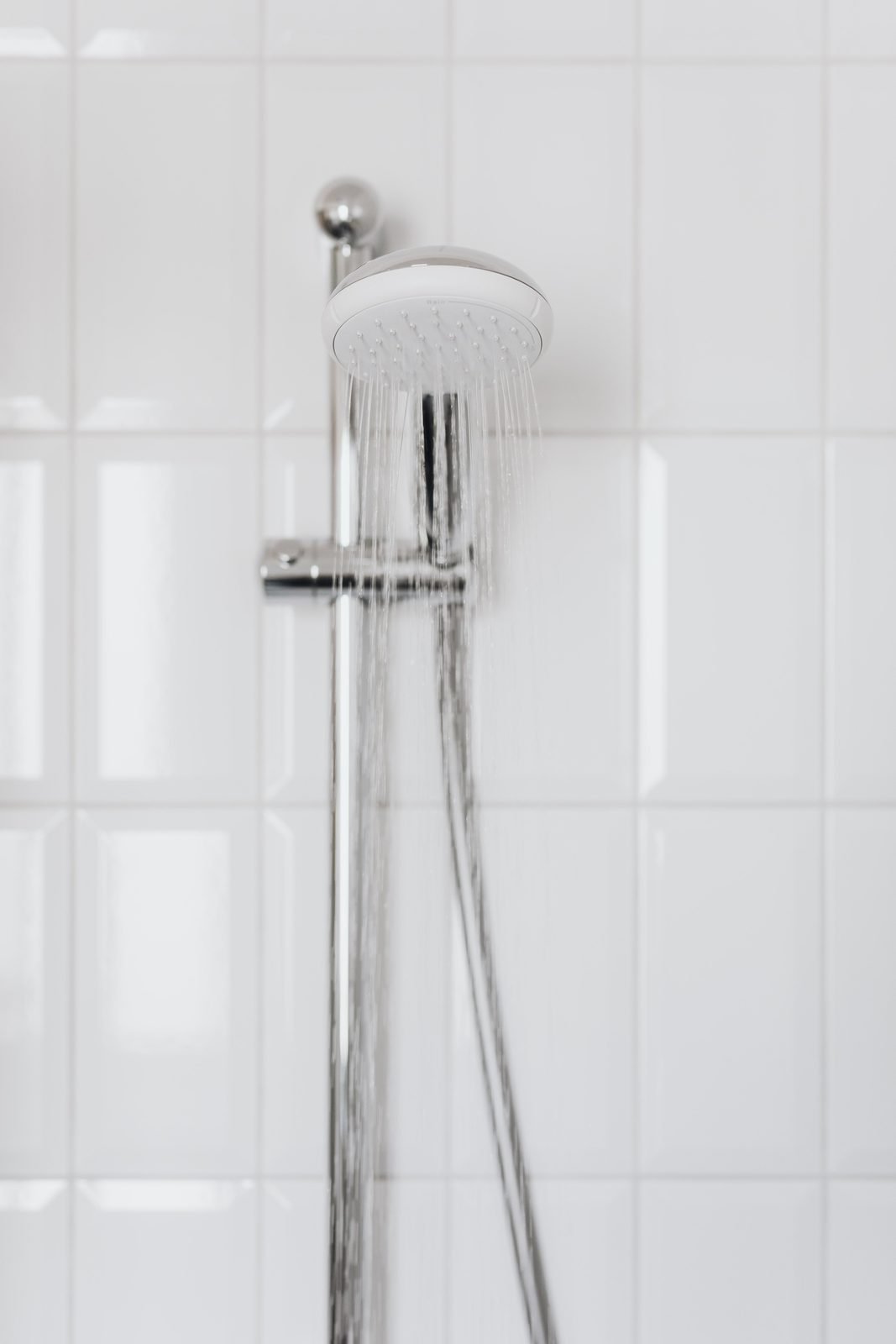
A slim vertical panel with body jets, a rainfall head, and a handheld wand — the spa experience in one unit. Panels mount to a wall or a freestanding bracket and usually offer hot/cold mixing, so they need both water connections. Because panels pack so many outdoor shower fixtures into one column, they are the best value if you want a genuinely luxurious rinse without designing a system from parts. Pair one with our 10 outdoor shower enclosure ideas and you have a legitimate outdoor bathroom.
Install difficulty: Moderate — mounting and dual water lines, plan a weekend.
3. Deck-Mount Post Kits (Typically $100–$300)
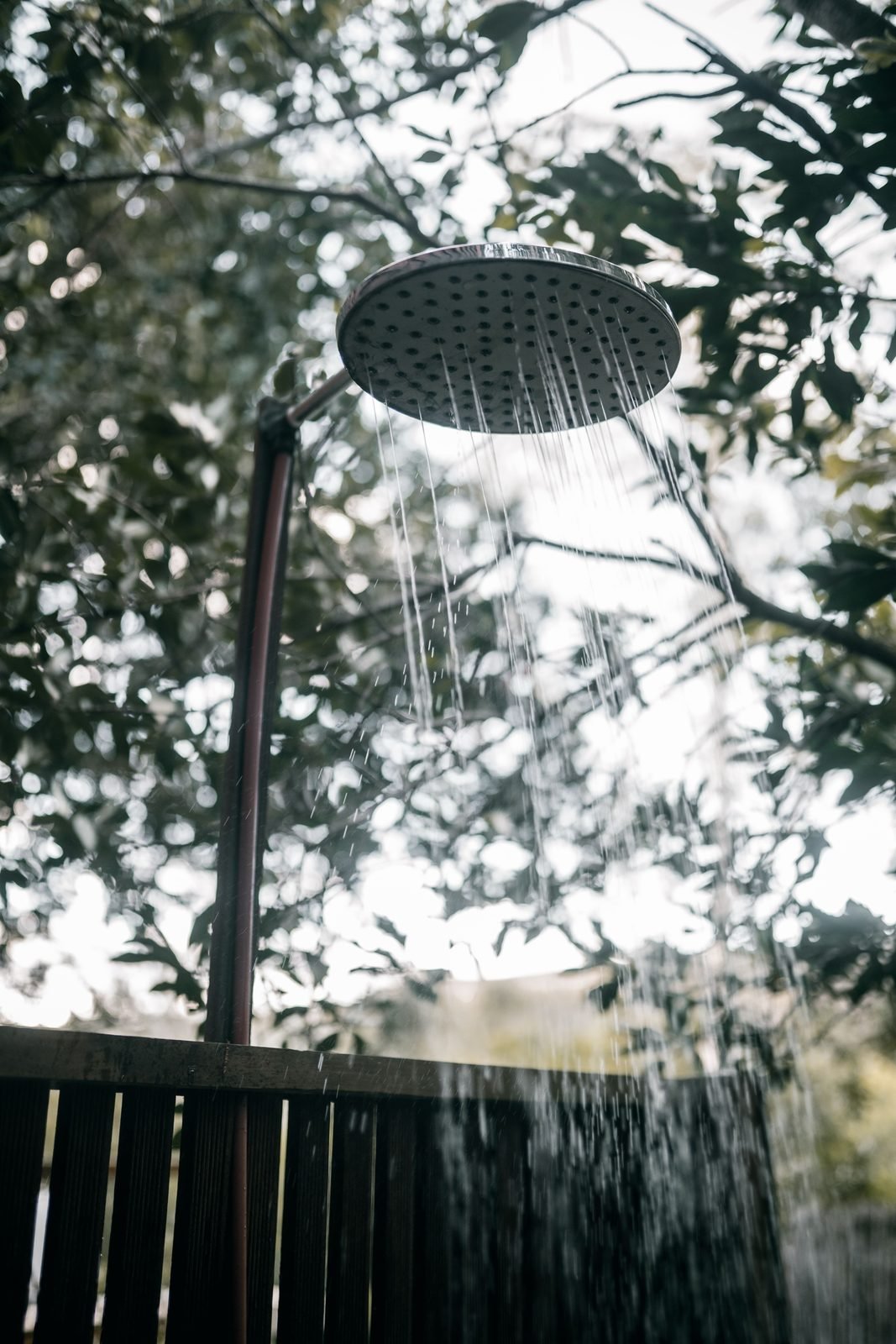
A single slim post that bolts to your deck or patio slab, available cold-only or with a mixer. The installation is a drill-and-bolt job into wood or concrete, with the water line run along or under the deck. These are the tidiest-looking option for patios where you do not want a big tower. On composite decking, add a stainless mounting plate to spread the load and keep the warranty intact.
Install difficulty: Easy — basic drilling, one afternoon.
4. Foot-Wash and Utility Kits (Typically $40–$120)
Small, low-profile outdoor shower fixtures designed for rinsing feet, paws, and garden tools rather than full showers. Most screw onto a spigot or tee off a hose line with a Y-splitter. Add one to any of the bigger setups on this list — it is the cheapest upgrade with the highest daily use. Mount it at 18 inches high with a pebble pad below, and guests will use it without being told.
Install difficulty: Trivial — under 30 minutes.
5. Solar Shower Bag Kits (Typically $25–$60)
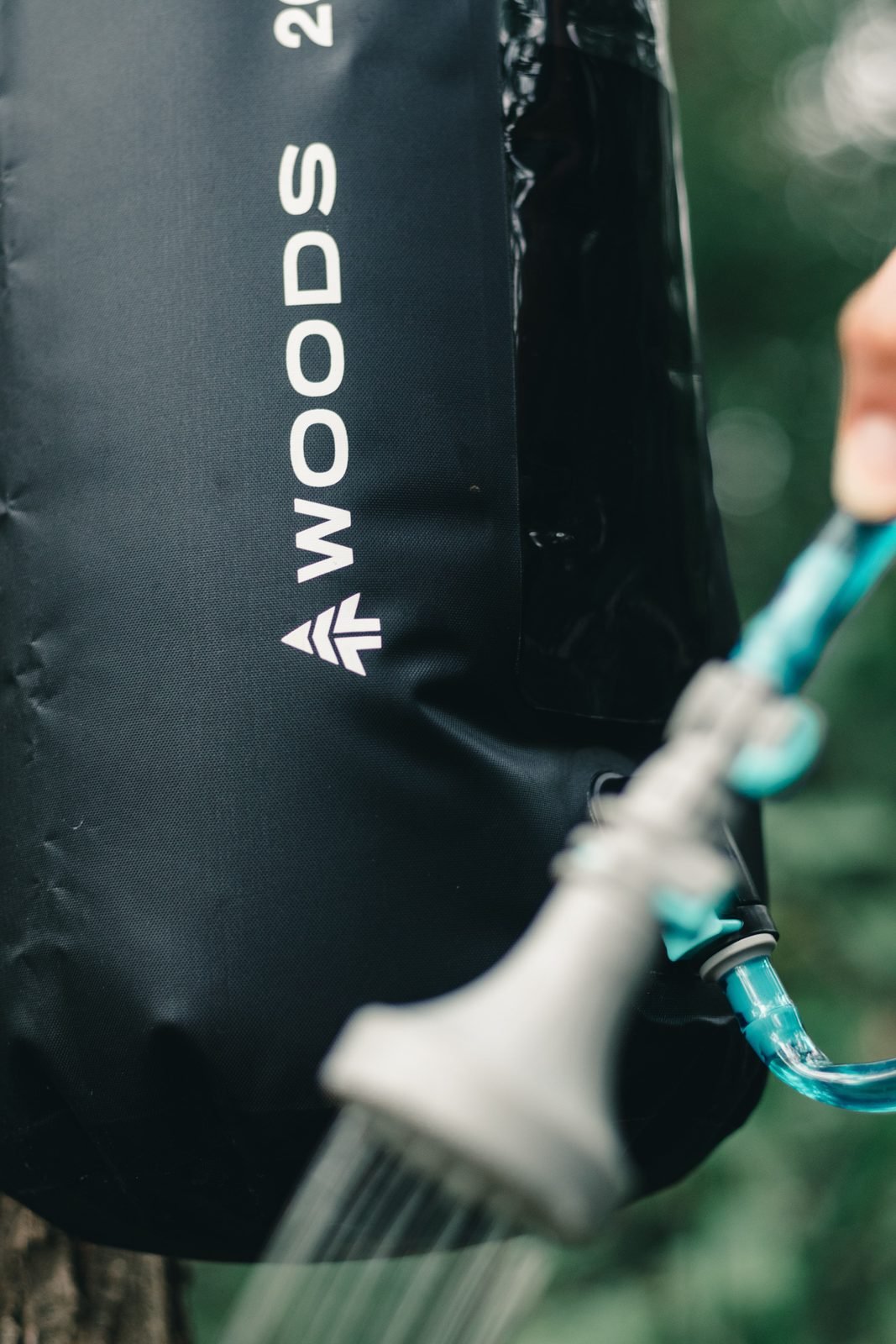
A 5-gallon black bag that heats water in the sun, now sold with hanging straps, a shower head, and a thermometer strip. It is the cheapest way to get warm outdoor water and a great trial before you spend real money. Hang it by 9 AM and you will have a genuinely hot shower by mid-afternoon on any sunny day. Solar heating is a simple, proven approach — this is just the pocket-sized version.
Install difficulty: None — fill, hang, wait for the sun.
6. Portable Propane Hot-Water Kits (Typically $150–$250)
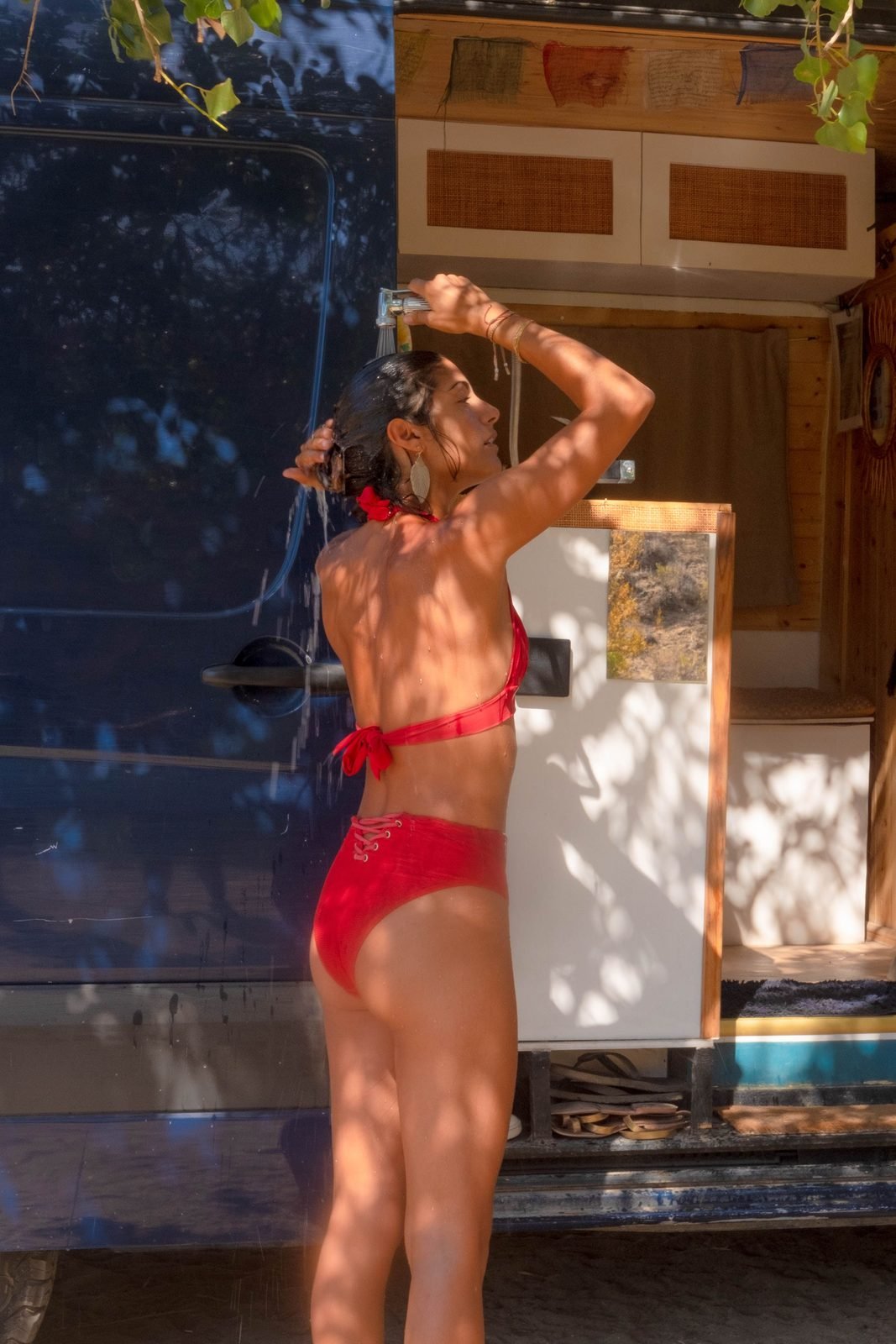
A battery-ignited instant water heater that takes any cold hose input and delivers hot water on demand — the same tech campers use, scaled for a backyard shower. You will need a 1-lb propane canister or a 20-lb tank with an adapter, plus ventilation (never run it inside an enclosed space). For true off-grid comfort, nothing beats it at this price. Expect about 1.5 gallons per minute of hot water — plenty for a shower, and you can dial the temperature with a single knob.
Install difficulty: Easy — hose connections plus safe propane placement.
7. Enclosed Cabin Kits (Typically $800–$2,500)
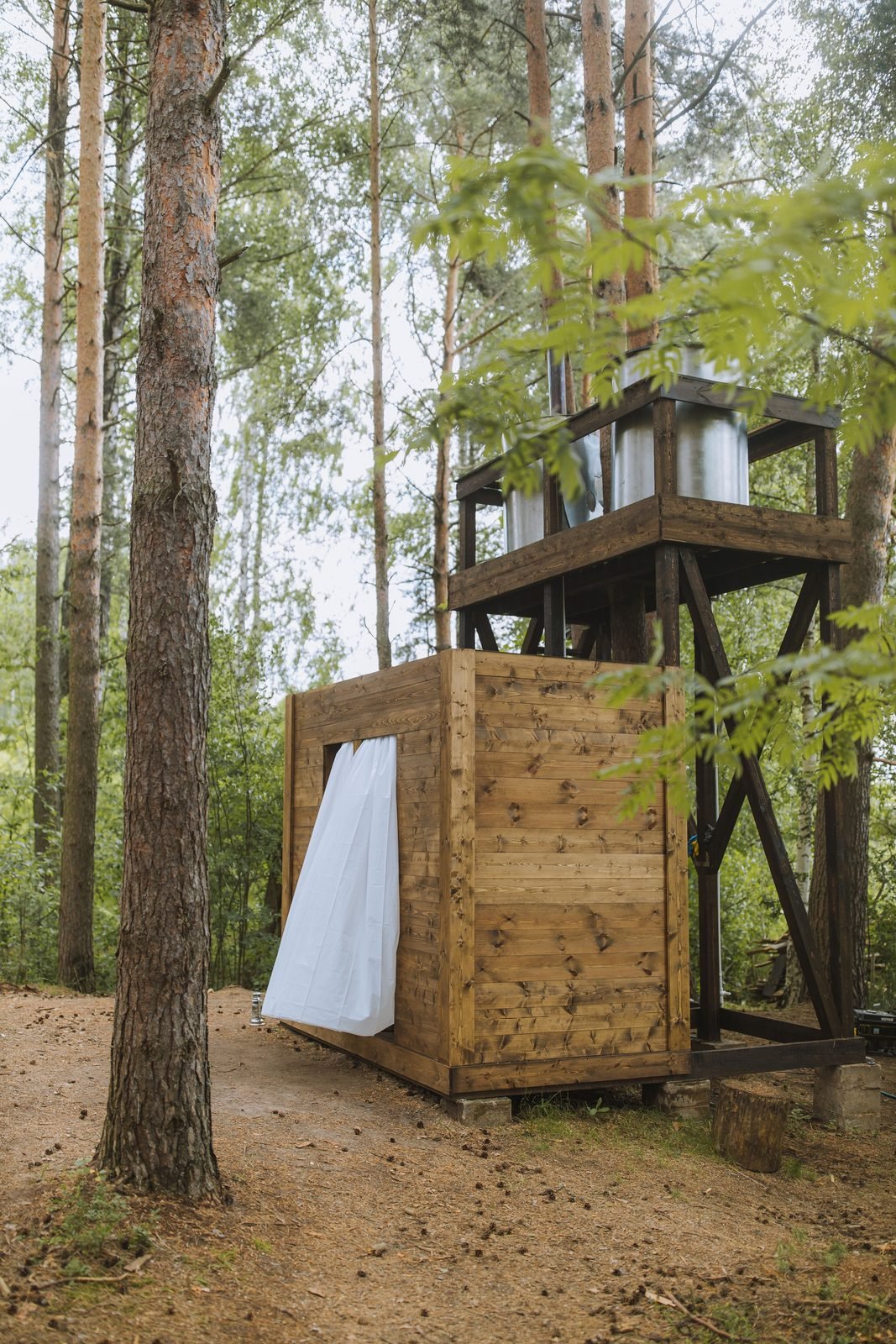
The all-in-one: walls, floor pan, fixtures, and sometimes even a changing bench in a single shipped package. These are the fastest route to a private, finished outdoor shower without hiring a contractor. Check the footprint carefully against your yard and confirm whether your city treats it as a structure (some require a permit over a certain square footage). Cabins cost more upfront, but when you add up separate enclosure lumber, fixtures, and your weekends, the premium is smaller than it looks.
Install difficulty: Moderate — assembly with a helper, typically one full day.
8. Faucet-Adapter Conversion Kits (Typically $30–$80)
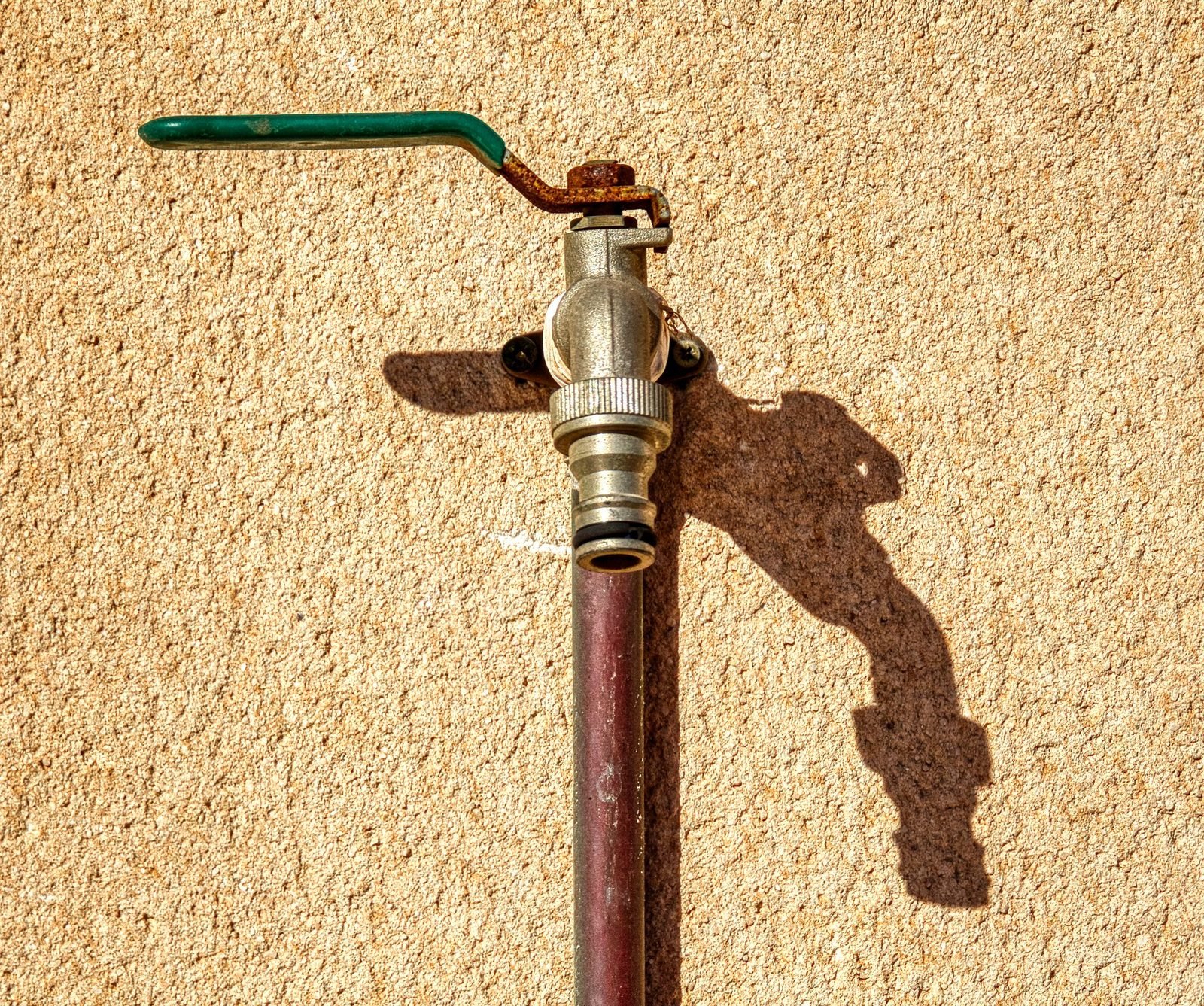
Clever little kits that convert an existing outdoor spigot or laundry faucet into a shower with a riser pipe, shower head, and sometimes a curtain ring. They are the ultimate low-commitment option: no new plumbing, no permanent changes, and you can take it with you if you move. They also make a great secondary rinse station next to the garden or the garage. Perfect complement to a DIY enclosure build.
Install difficulty: Trivial — screws onto existing fittings.
9. Ground-Spike Kits
Ground-spike kits push a spike into the ground and connect to a garden hose. No drilling, no base to build, and you can move the shower when the garden layout changes or when you move house — the most flexible fixed-style kit, and usually the lowest-cost one.
That flexibility has honest limits. A spike holds only as well as the ground it sits in. In soft, wet soil it can lean; in hard, dry soil it may not go in far enough to be stable; on a patio or deck it cannot be used at all. It is also the lightest-built of the fixed-style kits, so it suits occasional rinsing — after the pool, after gardening — better than daily showering.
For renters, a ground-spike kit is often the only fixed-style option that leaves no trace. Pair it with a gravel tray or a drain pan underneath so the ground below does not turn to mud, and pull it out before winter so frost does not damage the fittings. If you need something sturdier but still removable, a freestanding kit on a portable base is the step up.
Install difficulty: Trivial — push in, connect the hose, done.
Cost Comparison at a Glance
If the numbers are blurring together, here is the short version: under $100 typically gets you rinsing (solar bags, faucet adapters, foot-wash kits), $100–$300 typically gets you a real daily-use shower (towers, posts, propane hot water), and $300–$600 typically buys the spa experience (panels with body jets) — typical ranges; confirm current prices locally. Enclosed cabins sit in their own tier at typically $800–$2,500 because you are buying the room too. In every tier, stainless steel and brass outlast chrome-plated plastic by years — fixture material matters more than brand name. Read reviews that mention more than one season of use before you buy. And remember the hidden cost: any kit needing hot/cold plumbing adds either a plumber’s visit or a full DIY plumbing weekend, so budget for that before you fall in love with a panel.
Materials that last outside
Outdoor shower fittings live a hard life: constant water, sun, soap, and winter cold. The material you choose decides whether the kit looks good in year three or is streaked, seized, and leaking — and it matters more than brand name.
Stainless steel is the most common choice, and the grade matters. Standard 304 stainless steel handles most gardens well and resists rust in normal conditions. Near the coast, or beside a chlorinated pool, 316 stainless steel — sometimes called marine grade — resists salt and chlorine corrosion far better, and it is worth the step up if you live within a few miles of the sea. Either way, check that the fittings themselves are stainless, not just the showerhead: a stainless head on plated-steel fittings will still rust at the joints.
Brass is the other safe choice for fittings that hold water under pressure. Plastic has a place — in handles, connectors, and internal parts where weight and cost matter — but be wary of kits where the main structural parts are plastic. Plastic becomes brittle in sun and cold, cracks in a freeze, and threads strip more easily than metal ones. As a rule: plastic for parts you grip, metal for parts that hold water under pressure.
What to skip: kits with no stated material grade, chrome-plated steel fittings for a coastal garden, and any kit whose fixings are plain steel. Rust starts at the fixings first, and a rusted fixing is what makes an otherwise good shower impossible to remove or repair.
When to call a pro
Some fixed-kit jobs are straightforward do-it-yourself work: bolting a wall kit to a solid wall, connecting a hose-fed kit, setting a freestanding kit on a level pad. Others belong to a professional, and knowing the line saves money and water damage.
Call a plumber when the kit needs a new plumbed supply line, a connection to your home’s hot water, or any work inside a wall. A leaking outdoor connection can soak a wall cavity for months before anyone notices. Call a professional when drainage needs more than a gravel pad — a French drain, a dry well, or a connection to an existing drain. And get advice before winter in a cold climate: any kit with water left in its pipes can freeze, crack, and leak in spring, so freeze protection — draining the kit, shutting off the supply, or fitting a frost-proof valve — needs to be part of the installation, not an afterthought. Our winterizing guide walks through the shut-off and drain steps: https://cozypatiohome.com/how-to-winterize-an-outdoor-shower/
How to Choose the Right Kit
Start with your water source: hose-only yards should stick to tower, post, solar, or propane kits; yards near the house can support panels and cabins with hot/cold mixing. Then match the kit to your privacy — an open tower wants an enclosure or screen, while a cabin kit solves privacy itself. Finally, be honest about winter: if you get freezes, pick a kit you can disconnect and drain in 10 minutes. For inspiration on the finished look, browse our 11 outdoor shower ideas for backyards and patios and our cheap backyard pool ideas if the shower is joining a pool setup.
Frequently Asked Questions
How much does a good outdoor shower kit cost?
Most quality kits typically land between $150 and $400 (typical range — confirm current prices locally). Below $100 you are typically in solar-bag or adapter territory; above $600 you are typically buying panels with body jets or full cabins. Spend the middle range and you get stainless fixtures that last.
Can I install an outdoor shower kit myself?
Hose-fed kits, absolutely — no plumbing skills needed. Kits with hot/cold mixing need a plumber or solid DIY plumbing experience, especially if you are cutting into existing lines.
Do outdoor shower kits work with well water?
Yes, but rinse the fixture heads regularly — mineral-heavy well water clogs fine nozzles faster. Choose kits with removable, cleanable heads and consider an inline sediment filter on the hose line.
What is the best outdoor shower kit for cold climates?
A freestanding tower or post kit you can disconnect in minutes, since you will winterize it anyway. Avoid permanent plumbed panels unless your lines have indoor shutoffs and drain valves for freeze protection.
What is the best outdoor shower kit for a renter?
A ground-spike kit, because it leaves no trace — no drilling, no permanent base. Pair it with a gravel tray underneath, and pull it out before winter. A faucet-adapter kit is the other no-trace option if you only need a rinse station.
304 or 316 stainless steel — which do I need?
For most gardens, 304 is enough. Step up to 316 marine-grade steel if you live near the coast or beside a chlorinated pool, where salt and chlorine corrode 304 faster. Whichever grade you pick, make sure the fittings — not just the showerhead — are stainless.