
Raised beds are the cheat code for backyard gardening: better soil, fewer weeds, no back-breaking digging. Pick a plan below and you could be planting this weekend.
1. Classic Cedar 4×8 Bed
Two 2×8 cedar boards cut in half, screwed into a rectangle with 4×4 corner posts. Cedar resists rot for 10+ years without treatment. Total cost: around $60–80.
Best for: The standard first bed — proven, simple, lasts a decade.
2. Galvanized Metal Trough Bed
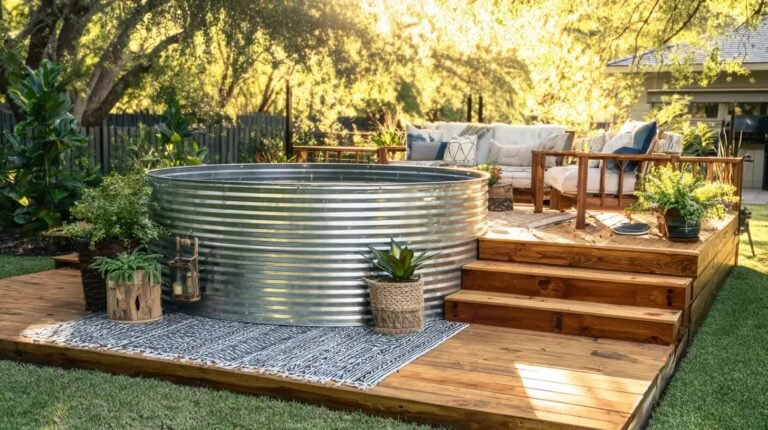
Stock tanks or corrugated metal roofing panels bent into a rectangle. They heat soil faster in spring and look fantastic in modern yards. Drill drainage holes in the bottom.
Best for: Modern aesthetics and earlier spring planting.




3. Cinder Block Bed
Stack dry-laid cinder blocks two high — no mortar needed. The block holes double as mini planters for herbs and marigolds. About $2 per block.
Best for: Renters or anyone who wants a bed they can disassemble later.
4. Straw Bale Bed
Condition bales with nitrogen fertilizer for two weeks, then plant directly into them. They compost down over one season — perfect trial bed.
Best for: Testing a garden spot before committing to lumber.
5. Stone Wall Bed
Dry-stack natural stone or wall block two courses high. Permanent, gorgeous, and doubles as extra seating. Heavier work upfront, zero maintenance after.
Best for: A forever bed that adds real landscape value.
6. Keyhole Garden Bed
A circular bed with a compost basket in the center and a notch for access. Popular in dry climates — the center basket waters and feeds the bed as it decomposes.
Best for: Hot, dry regions and composters.
7. Tiered Corner Bed
Build two or three stepped rectangles in a sunny corner. The tiers create microclimates — heat-lovers up top, lettuce in the cooler lower tier.
Best for: Sloped yards and visual interest.
8. Pallet Wood Bed (Free!)
Break down heat-treated (HT-stamped, never MB) pallets into planks. Line with landscape fabric. Free lumber, one afternoon of work.
Best for: The absolute cheapest bed that still works.
9. Elevated Table Bed
A waist-high bed on legs with a plywood bottom — gardening without bending. Great for seniors, wheelchair users, or anyone with a bad back.
Best for: Accessible gardening and small patios.
10. Hügelkultur Mound Bed
Pile logs, branches, and leaves inside a framed bed, then cover with soil. The wood acts as a sponge, cutting watering by half within two years.
Best for: Woody yards with free branch material and dry summers.
11. L-Shaped Bed for Corners
Two rectangles joined in an L to wrap a patio corner or fence junction. Uses awkward space brilliantly and creates a natural seating nook inside the L.
Best for: Corner spots and patio-adjacent growing.
12. The $25 Scrap Bed
Whatever untreated lumber you have — fence pickets, 2×4 offcuts — screwed into any rectangle at least 8 inches deep. Ugly? Maybe. Productive? Absolutely.
Best for: Starting TODAY with what’s in the garage.
The Soil Mix That Actually Works
Fill beds with roughly 60% topsoil, 30% compost, and 10% aeration (perlite or coarse vermiculite). Never use pure garden soil — it compacts. Never use pure compost — it shrinks and starves plants of structure. For a standard 4×8×12″ bed you’ll need about 32 cubic feet, or roughly one cubic yard.
What to Plant in Raised Beds (Season by Season)
Cool season (early spring & fall): lettuce, spinach, kale, radishes, peas, carrots, broccoli. These thrive in 40–65°F weather and actually taste sweeter after light frost.
Warm season (after last frost): tomatoes, peppers, cucumbers, beans, squash, basil, eggplant. Wait until nighttime temperatures stay above 50°F — planting warm crops early is the #1 beginner mistake.
Succession trick: When spring lettuce bolts in June, pull it and plant beans in the same spot. When summer tomatoes finish in September, sow spinach. One bed can produce three crops a year.
5 Raised Bed Mistakes to Avoid
1. Building too wide. If you can’t reach the middle from either side without stepping in, it’s too wide. Four feet is the max for access from both sides; 2–3 feet against a wall.
2. Skipping the weed barrier. Lay cardboard or landscape fabric under the bed before filling — grass growing up through 12 inches of soil is depressingly common.
3. Using treated railroad ties. Old creosote-soaked ties leach chemicals. Modern ACQ lumber is fine, but antique ties belong nowhere near food.
4. Forgetting a water source. Beds dry out faster than in-ground gardens. Put the bed within hose reach or install a simple drip line on a timer — your future self will thank you in August.
5. Overcrowding. That tiny tomato seedling wants 2 square feet. Follow spacing guides even when the bed looks empty in May — by July you’ll be grateful.
Watering: The Make-or-Break Detail
Raised beds dry out 2–3x faster than in-ground soil. Your options, cheapest first:
Hand watering — fine for one bed, miserable for four. Water deeply 2–3 times a week rather than a daily sprinkle; shallow watering trains roots to stay near the surface.
Soaker hose — snake a $15 soaker hose through the bed under the mulch. Even, slow delivery right to the root zone. Connect to a $30 battery timer and you’re fully automated.
Drip irrigation — ¼-inch drip line with emitters every 12 inches is the gold standard. A starter kit runs $40–60 per bed and cuts water use nearly in half versus sprinklers.
The finger test: Poke your finger 2 inches into the soil. Dry? Water. Moist? Wait. Overwatering drowns roots just as surely as drought kills them.
New to backyard growing? Start with our backyard landscaping for beginners guide, and pair beds with patio container garden ideas for herbs near the kitchen. Oregon State Extension has a thorough raised bed construction guide worth bookmarking.
FAQ
How deep should a raised garden bed be?
Twelve inches is the minimum for most vegetables; 18 inches is better for carrots, potatoes, and deep-rooted plants. Herbs and lettuce do fine in 8 inches.
What wood is safe for raised beds?
Cedar and redwood are naturally rot-resistant. Untreated pine lasts 3–5 years and is cheap to replace. Avoid old pressure-treated lumber (pre-2004 CCA); modern ACQ-treated lumber is considered garden-safe but line it with plastic if you’re cautious.
Do raised beds need drainage holes?
If the bed sits on soil, no — water drains through the bottom naturally. Elevated beds with solid bottoms need ½-inch holes every square foot, covered with landscape fabric.
How often do you replace the soil?
Top up with 2–3 inches of fresh compost every spring. Full replacement is rarely needed — after 5+ years, dig out the bottom half and refresh if drainage gets poor.