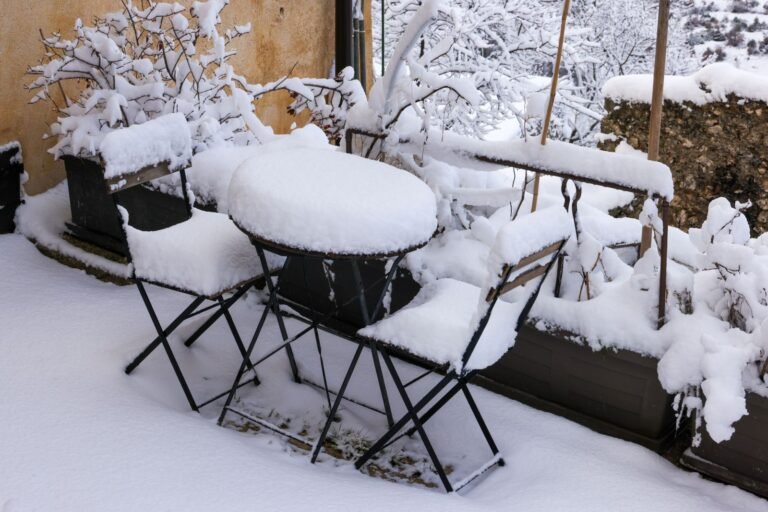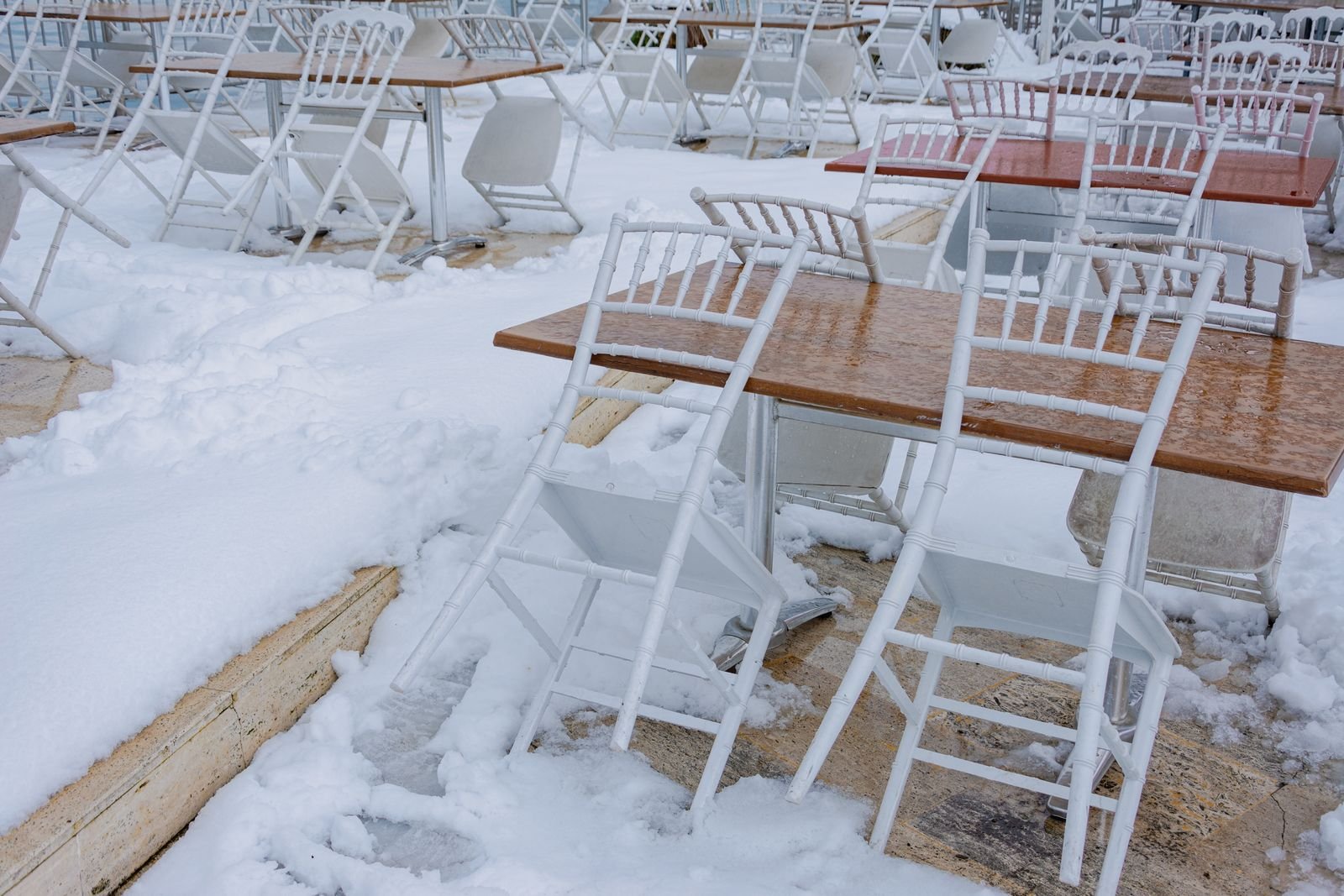

Good patio furniture costs real money, and one neglected winter can cut its life in half. This is how to store patio furniture for winter the right way: ten steps that protect every material from freeze-thaw damage, rust, and mildew.
1. Clean Every Piece Before Storage

Never store dirty furniture. Dirt holds moisture against surfaces all winter, growing mildew on fabric, pitting metal finishes, and staining wood. Wash frames with warm water, mild dish soap, and a soft brush, then rinse with a hose. For cushions with removable covers, machine wash on gentle if the label allows, or scrub in place with soapy water. Treat mildew spots with one cup of bleach per gallon of water, testing a hidden spot first. A thorough cleaning now means you open the shed in spring to furniture that is ready to use, not a science experiment.
Best for: Every material | Spring-ready results | Mildew prevention
2. Dry Everything Completely

Trapped moisture is the number one enemy of stored furniture. After cleaning, leave every piece in sun and breeze for a full day, tilting chairs and tables so water drains from crevices. Stand cushions on edge with space between them, and squeeze foam inserts to push out absorbed water. If a cushion feels even slightly damp after a few hours, give it more time. Storing a mildly damp cushion invites mildew that can ruin the foam beyond cleaning. This step costs nothing but patience and prevents the most common winter storage disaster.
Best for: Fabric cushions | Humid climates | Zero-cost protection
3. Repair and Touch Up Now, Not in Spring

Small problems get worse sitting untouched for months, so do a ten-minute repair audit before storage. Tighten every bolt and screw on folding chairs, tables, and umbrella frames. Sand rust spots on metal, seal with rust-inhibiting primer, and touch up with matching paint. Re-glue loose wicker strands and oil squeaky hinges. Bag hardware from disassembled pieces in labeled zip bags taped to the frame. Future-you, opening everything in April, will be grateful.
Best for: Older sets | Metal frames | Organized owners
4. Choose Your Storage Spot

The best storage spot is dry, covered, and ventilated, in that order. A garage or shed is ideal, a basement works for cushions and small pieces, and a rented unit split with a neighbor can be worth it for large sets. With no indoor space, a covered patio corner with quality covers is an acceptable backup, just avoid spots where roof runoff dumps or snow drifts pile up. Measure pieces before moving day to plan stacking. Keep furniture off bare concrete or dirt with pallets underneath to block ground moisture. For more winter prep, see our guide on how to winterize an outdoor shower.
Best for: Apartments | No-garage homes | Large furniture sets
5. Store Cushions Indoors in Breathable Bags

Cushions are the most vulnerable part of any set and deserve indoor storage every winter. Once bone dry, place them in breathable fabric bags or old pillowcases rather than airtight plastic, which traps residual humidity and grows mildew. Stand them upright in a closet or basement corner instead of stacking them flat under heavy weight. Toss in silica gel packets if the space is damp. For Sunbrella and other performance fabrics, follow the manufacturer's care guidance for deep cleaning before storage. Never leave cushions out under a tarp all winter.
Best for: Fabric cushions | Damp basements | Expensive sets
6. Oil or Seal Wood Furniture

Winter is when unsealed wood cracks, warps, and grays. After cleaning and drying, apply teak oil, linseed oil, or a penetrating sealer suited to your wood type, working it into the grain with a cloth. Teak can weather to a silver patina if you like, but even teak lasts longer with an annual oil treatment. For painted wood, touch up chips now so moisture cannot get under the finish during freeze-thaw cycles. Store wood in your driest spot, since even sealed wood swells with humidity swings. If wood must stay outside, elevate it on blocks under a ventilated cover.
Best for: Teak sets | Cedar furniture | Painted wood
7. Protect Metal From Rust

Aluminum and powder-coated steel handle winter reasonably well, but wrought iron and untreated steel rust fast when moisture sits on them. After cleaning, inspect joints, welds, and screw holes, since rust starts where water collects. Treat existing rust with a wire brush and rust-neutralizing primer, then apply a thin coat of car wax or mineral oil as a moisture barrier. Store metal where it will not sit in puddles, and avoid stacking pieces in ways that trap water between them. Check our fire pit seating area ideas for tips on protecting metal fire features too.
Best for: Wrought iron | Steel frames | Wet winters
8. Winterize Wicker the Right Way

Natural wicker and rattan are the fussiest patio materials in winter: damp storage makes the weave unravel, mildew, and turn brittle, so wicker needs a dry indoor spot if you have one. Clean with a soft brush and mild soapy water without soaking it, then dry thoroughly in the sun. Once dry, apply clear lacquer or paste wax to seal fibers against humidity swings. All-weather resin wicker is far more forgiving and can stay outside under a cover. Never wrap wicker in airtight plastic, it needs to breathe. A breathable cover or old sheet is the right wrap for shed storage.
Best for: Natural rattan | Wicker sectionals | Humid regions
9. Cover What Must Stay Outside

Some pieces are too big to move, and that is fine if you cover them properly. Buy fitted covers with built-in air vents rather than cheap flat tarps: vents let condensation escape instead of pooling underneath and growing mildew. Secure covers with straps or bungees so winter winds do not turn them into sails, and leave a few inches of gap at the bottom for airflow. Elevate legs on wooden blocks to keep them out of standing water and melting snow. A good cover costs $40 to $100 and adds years to a piece that would otherwise weather every storm uncovered.
Best for: Heavy dining sets | No indoor space | Fire pits and grills
10. Store Umbrellas, Rugs, and Small Accessories

The small stuff is easy to forget and expensive to replace. Close patio umbrellas, tie them, and store the canopy indoors or in a sleeve. Roll outdoor rugs pile-side out, wrap in a breathable sheet, and store upright, never folded, in a dry spot. Take down string lights to protect them from ice and wind, coiling them loosely in a bin. Empty planters and bring terracotta pots indoors, since freeze-thaw cycles crack them. One labeled bin for lanterns, throw pillows, and small decor makes spring setup a one-afternoon job.
Best for: Umbrellas | Outdoor rugs | Spring sanity
Storage experts at SpareFoot recommend moving furniture to shelter whenever possible and leaving ventilation space around covered pieces; their full guide to storing outdoor furniture covers material-specific prep in more depth.
FAQ
Can I leave patio furniture outside all winter? It depends on the material and climate. Aluminum, teak, and all-weather resin wicker can survive outdoors under a ventilated cover in mild climates. Fabric cushions, natural wicker, and wrought iron should come indoors. Where heavy snow and freeze-thaw cycles hit, indoor storage is always safer.
What is the best way to store outdoor cushions for winter? Clean them, dry them completely, then store indoors in breathable fabric bags standing upright. Avoid airtight plastic, which traps humidity and causes mildew. Add silica gel packets in damp spaces, and never store cushions that feel even slightly damp.
Do I need patio furniture covers if I store everything in a garage? Covers are optional indoors but still useful. A light breathable cover or old sheet keeps dust off and prevents scratches when pieces sit close together. Skip heavy waterproof covers in unheated garages, since they trap condensation.
When should I store patio furniture for winter? Aim for two to three weeks before your area's average first frost, late October in most of the northern US. Bring cushions in at the first sign of sustained cold or heavy rain. Cleaning and repairs go faster in mild fall weather than in a November rush.