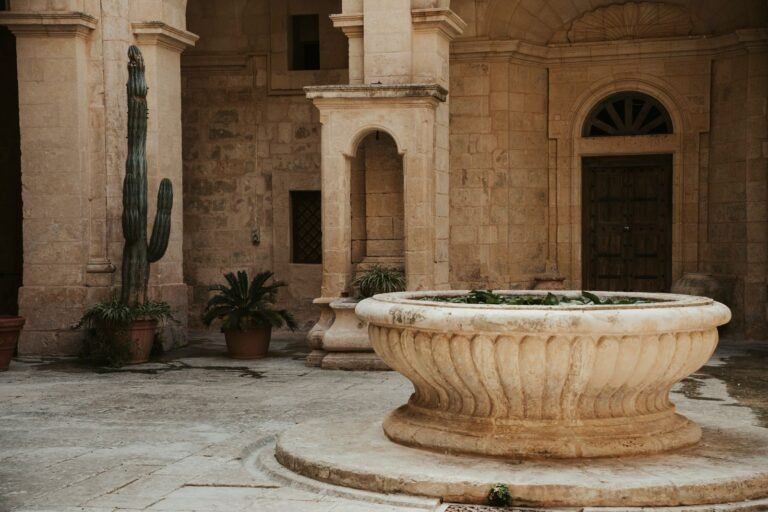

Nothing frames a front door like a well-planted pair of containers. It’s the oldest trick in curb-appeal history because it works every single time — symmetry tells the eye exactly where to look. These ten ideas go beyond “two ferns and done.”
1. The Perfect Flanking Pair

Two identical tall planters, identical plants, equidistant from the door. Boxwood cones, spiral junipers, or bay laurel standards are the classics. Measure from the door frame so the spacing is truly even — the eye catches asymmetry instantly.
Best for: The can’t-miss, always-right look. Start here if you’re unsure.




2. Asymmetric Pair, Same Family

Same planter style in two different heights, planted with related but not identical plants — say, a tall grass in the big one and a mounding verbena in the small one. You keep the balance without the stiffness of a mirror image.
Best for: Casual and cottage-style homes where perfect symmetry feels too formal.
3. Seasonal Swap System
Keep two permanent anchor plants (dwarf Alberta spruce works in most zones) and change only the underplanting: pansies in spring, lantana in summer, mums in fall, red berries and pine in winter. Four fresh looks a year, one shopping trip per season.
Best for: People who love decorating for seasons — pair with our cozy fall patio decor ideas for the full autumn entry.
4. One Side Only (for Narrow Entries)

If your door sits close to a garage wall or the stoop is tiny, skip the pair — one generous planter on the handle side of the door looks intentional, while a cramped pair looks like an obstacle course. Bigger is better here: one 24-inch pot beats two 12-inch ones.
Best for: Townhouses, narrow stoops, and doors tucked beside the garage.
5. Topiary Balls for Instant Polish

Clipped boxwood or faux boxwood spheres in simple square planters. Topiary reads as “professionally landscaped” even when you bought it at a big-box store, and it holds its shape year-round with one shearing in early summer.
Best for: Traditional and colonial homes; low-effort elegance. Real boxwood needs well-drained soil and resents wet feet — in soggy spots, switch to Japanese holly, which clips just as crisply.
6. Color-Matched to the Door

Paint or buy planters in your door’s exact color — or a shade darker. A black door with black planters and white flowers is magazine-cover material. Take a door paint chip to the store when planter shopping.
Best for: Bold door colors (red, navy, teal, black) that deserve echoing. Pro tip: paint the saucers too — a mismatched orange plastic saucer under a navy pot ruins the effect instantly.
7. Lantern + Planter Combo
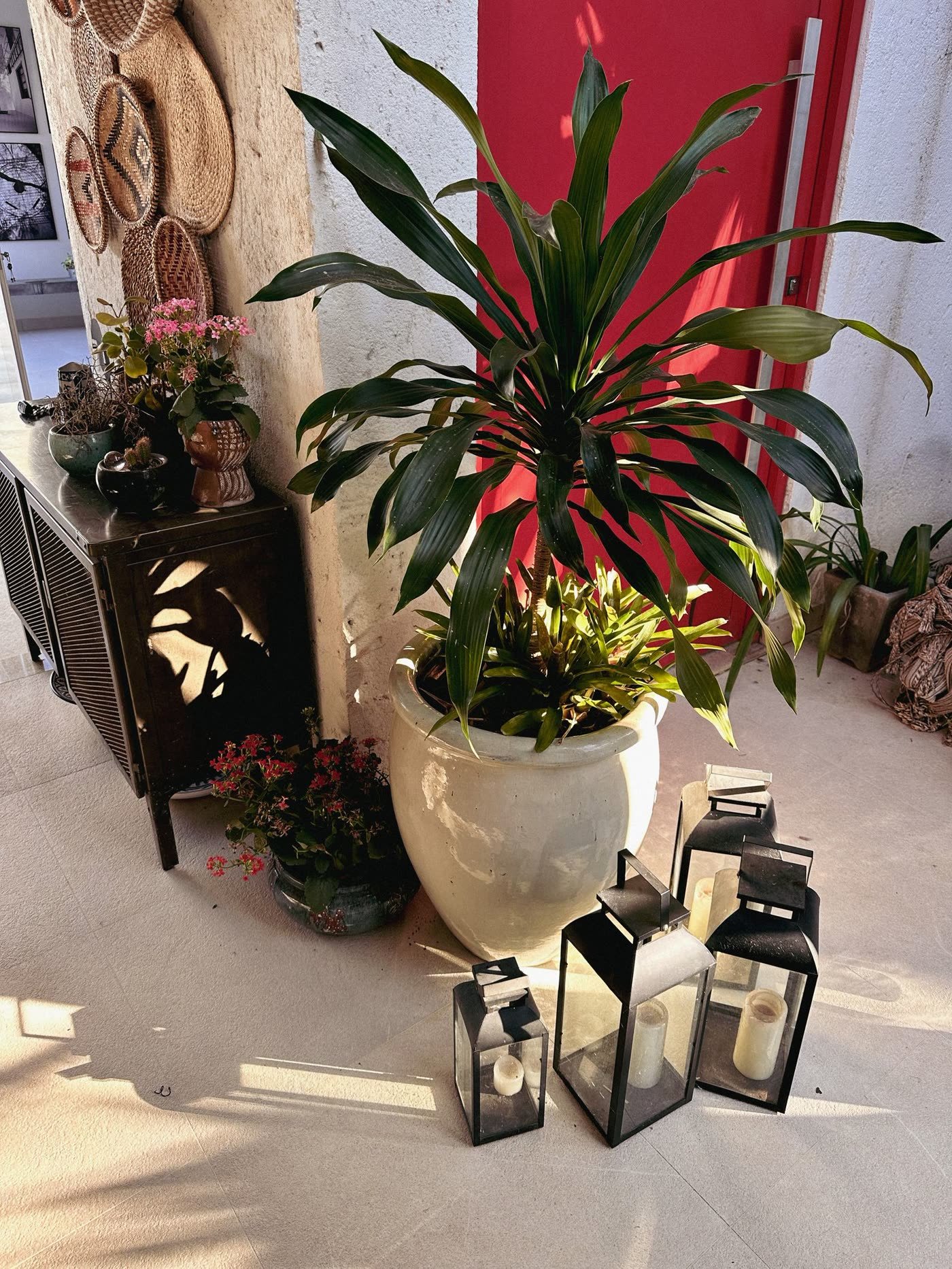
Place a tall planter on one side and an oversized outdoor lantern on the other. The height contrast is interesting, and the lantern gives you evening light exactly where guests arrive. In fall and winter, swap the lantern candle for a bundle of birch logs.
Best for: Entries that need evening warmth and anyone bored of the standard pair. For the lantern side, a battery-operated pillar candle on a timer beats a real flame — it lights itself at dusk every day without you thinking about it.
8. Trailing Plants for Softness

Let something spill: ivy, creeping Jenny, sweet potato vine, or trailing rosemary cascading over the rim of each flanking pot. Trailing edges soften hard architecture — brick, concrete, and vinyl siding all benefit.
Best for: Hard-surfaced entries that need softening.
9. Dwarf Citrus or Olive (Movable Statement)

A potted Meyer lemon or olive tree in a rolling plant caddy by the door — stunning in summer, wheeled into the garage or indoors for winter. The caddy is the secret; without it, you’ll never move a 60-pound pot twice a year.
Best for: Zones 7 and below (as a seasonal moveable) or zones 9+ (year-round).
10. The Welcome-Layered Entry

Combine your flanking planters with a layered doormat (coir mat over a patterned outdoor rug) and a simple wreath. Three layers — ground, mid (planters), door (wreath) — make even a plain slab door look styled. The planters are the engine of the whole composition.
Best for: Maximum impact when you’re starting from a bare concrete stoop.
Sizing Rules That Prevent the #1 Mistake
The most common front-door planter mistake is too small. Undersized pots look lost beside a 36-inch door. Follow these:
- Planter height should be roughly one-third the door’s height — about 24–28 inches for a standard door.
- Planter width should be at least half the door’s width when both are combined visually.
- When in doubt, go bigger. A slightly oversized planter looks deliberate; a small one looks like an afterthought.
For the bigger porch picture — steps, railings, and all — see our front porch planter ideas guide.
5 Front Door Planter Mistakes to Avoid
1. Pots that are too small. The #1 offender. A 12-inch pot beside a 36-inch door looks like a coffee mug next to a refrigerator. When in doubt, size up — you can always plant smaller in a big pot, but a tiny pot never looks right.
2. One-sided sun blindness. The planter on the shaded side of the door grows half as fast as its sunny twin. Rotate both pots weekly and accept that the shaded one may need shadier plant varieties from the start.
3. Blocking the walkway. Planters that force guests to sidestep are worse than no planters. Keep at least 36 inches of clear walking path — measure it, don’t eyeball it.
4. Forgetting winter. A pair of dead brown stalks flanking the door all winter undoes every good impression. Either plant evergreens as anchors or commit to the winter-branch arrangement (idea #12 in our porch planter guide).
5. Drip stains on the stoop. No saucer under a freshly watered pot means mineral-stained concrete within a month. Use saucers or pot feet — a $4 fix that saves a $400 pressure-washing job.
FAQ
Should front door planters be symmetrical?
Usually yes — symmetry at the entry feels welcoming and orderly, which is exactly the message a front door should send. The exception is a very narrow or offset entry, where one strong planter beats a cramped pair. When you do go symmetric, make the pair truly identical: same pot, same plant, same spacing.
What plants do best right by a front door?
It depends on exposure. Most entries are part-shade: boxwood, ferns, impatiens, and hostas thrive. Full-sun entries: geraniums, lantana, agave, and ornamental grasses. Also consider foot traffic — avoid thorny or bee-magnet plants right where guests brush past.
How do I keep flanking planters looking identical?
Plant them on the same day with the same soil and same-size starter plants, rotate each pot a quarter turn weekly so growth stays even, and water them equally — the one nearer the downspout or sprinkler always grows faster. Trim the fuller one back rather than waiting for the other to catch up.
Can I use fake plants by the front door?
Good faux has come a long way, and for deep-shade or brutal-heat entries where real plants die, quality faux boxwood or ferns are a legitimate option. Buy UV-rated outdoor faux (indoor faux fades in weeks), and dust them seasonally — dusty fake plants are worse than no plants.