Key Takeaways
- You don’t need a sewing machine — fabric glue, iron-on hem tape, and clever wrapping make durable DIY outdoor pillow covers in about 10 minutes each.
- Shower curtains, drop cloths, and bandanas are the best cheap fabrics: a $12 shower curtain covers 4–5 pillows.
- Olefin and solution-dyed acrylic fabrics resist fading, water, and mildew far better than cotton.
- Make covers slightly snug (1 inch smaller than the insert) for that plump designer look.
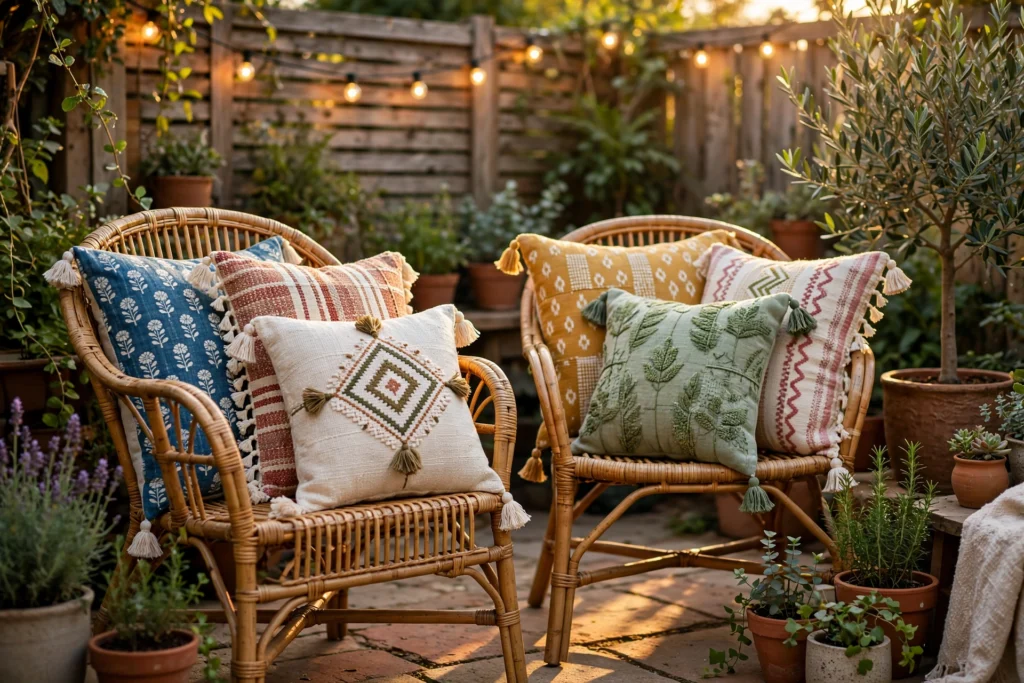
These DIY outdoor pillow covers started with a little sticker shock: last spring I priced new outdoor pillows for our patio set and nearly fell off my chair — $24 each, and I needed eight. That’s when my neighbor leaned over the fence and said, “Honey, just wrap them. Nobody will know.” She was right. Twenty minutes later my sad faded cushions looked like a catalog shoot, and the only tool I’d touched was a pair of scissors.
If your patio cushions have seen better days, a full patio refresh doesn’t have to start with new furniture. New pillow covers are the fastest, cheapest transformation in outdoor decor — and the no-sew methods below hold up to sun, surprise rain, and everything in between. The shower-curtain trick alone (yes, really — shower curtains make brilliant outdoor pillow fabric because they’re built for moisture) can cover four or five pillows for about twelve dollars.



Table of Contents
1. The Classic Wrap-and-Tuck
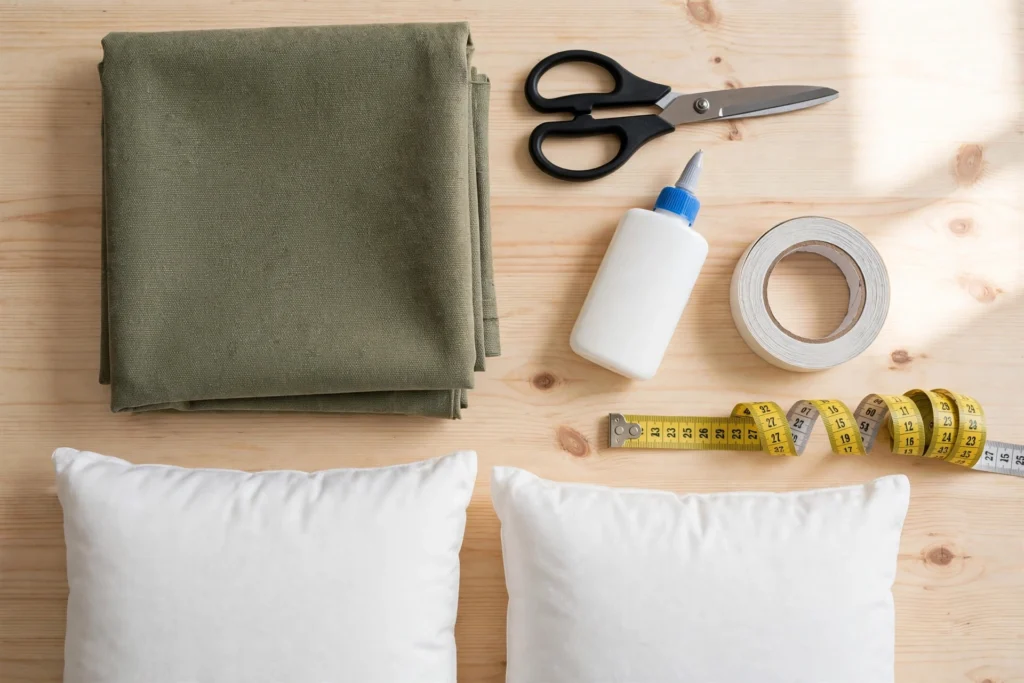
The gateway method for DIY outdoor pillow covers: lay your fabric face-down, center the pillow insert, fold the fabric over like wrapping a gift, and secure the flaps with fabric glue or iron-on hem tape. Trim the excess, let the glue cure for 24 hours, and you’re done. The seams land on the back where nobody sees them.
Best for: Beginners who want a finished look in under 15 minutes.
Search for: “how to wrap a pillow like a gift no sew”
2. Shower Curtain Pillow Covers
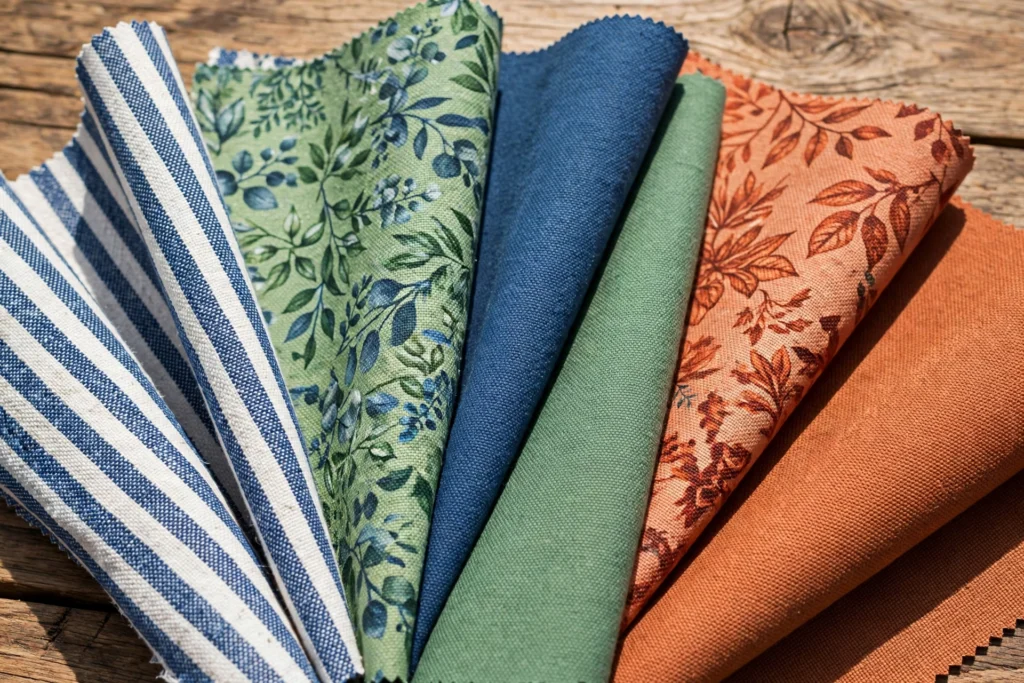
A standard shower curtain gives you roughly five yards of water-resistant fabric — enough for four or five DIY outdoor pillow covers. Cut panels to size, wrap-and-tuck or glue the edges, and you’ve got covers that shrug off rain by design. Bonus: shower curtains come in genuinely pretty patterns now, from block prints to botanicals.
Best for: Rainy climates and anyone who hates bringing pillows inside.
Search for: “shower curtain outdoor pillow cover DIY”
3. Bandana Pillow Covers
Two large bandanas (22-inch) placed back-to-back make perfect DIY outdoor pillow covers for 16-inch inserts — just glue three sides and leave one open, or tie the corners for a knotted boho look. At about $1 each, a set of six costs less than one store-bought pillow.
Best for: Boho and farmhouse patios on a micro budget.
Search for: “bandana pillow cover no sew tutorial”
4. Placemat Pillow Covers
Woven outdoor placemats are already hemmed on all four sides — sew or glue two together (patterned sides out) on three edges and slide the insert in through the fourth. The texture reads as intentional design, not a hack.
Best for: Small lumbar pillows and accent pops.
Search for: “placemat pillow cover DIY outdoor”
5. Iron-On Hem Tape Covers
If you own an iron, you own a “sewing machine.” Cut two fabric panels an inch larger than your insert all around, sandwich iron-on hem tape between the edges, press for 10 seconds per section, and turn right-side out. The bond survives washing and weather.
Best for: Anyone who wants real seams without threading a needle.
Search for: “iron on hem tape pillow cover no sew”
6. Drop Cloth Pillow Covers
A $15 canvas drop cloth from the hardware store yields six or more covers with that perfect modern-farmhouse texture. Wash it first for softness, then wrap-and-tuck or hem-tape. Stencil a number or simple motif on the front for a designer touch.
Best for: Farmhouse, coastal, and neutral patio palettes.
Search for: “drop cloth pillow covers no sew”
7. Outdoor Tablecloth Covers
Vinyl and polyester outdoor tablecloths are waterproof, wipeable, and cost a few dollars at discount stores. Wrap inserts the gift-box way and secure with fabric glue — ideal for dining-area cushions that meet ketchup.
Best for: Families with kids and splash zones near the pool.
Search for: “vinyl tablecloth outdoor pillow covers”
8. Denim Jean-Leg Covers
Cut the legs off old jeans, slide a lumbar insert inside, and glue or stitch one end shut. Denim is tough, fades beautifully, and the back-pocket detail makes guests do a double take. Free if you raid the closet.
Best for: Casual, rustic, and upcycled-style patios.
Search for: “old jeans pillow cover DIY”
9. Burlap Coffee Sack Covers
Authentic coffee sacks (about $5 each online) are already pillow-sized with printed graphics that look incredible outdoors. Slip the insert in, fold and glue the open end — the rustic texture hides every imperfection.
Best for: Rustic and industrial patio styles.
Search for: “burlap coffee sack pillow cover”
10. Fat Quarter Patchwork (No-Sew)
Quilting fat quarters ($2–3 each) in coordinating prints can be arranged in a patchwork front and fused with iron-on adhesive web instead of stitching. You get a custom designer print for under $10 with zero sewing.
Best for: Colorful, maximalist, and eclectic outdoor spaces.
Search for: “no sew patchwork pillow cover fat quarters”
11. Beach Towel Wrap Covers
Thick, thirsty, and already finished on the edges — wrap a faded insert in a bright beach towel, tuck the ends, and secure with a few dabs of fabric glue. When it gets dirty, unwrap and toss the towel in the wash.
Best for: Pool areas where everything gets wet anyway.
Search for: “beach towel pillow cover no sew”
12. Faux Leather Wipe-Clean Covers
Marine vinyl or faux leather from the fabric store wraps like a dream and wipes clean with a damp cloth. Use fabric glue rated for vinyl, and let it cure a full 48 hours. The result looks far more expensive than the $8/yard price tag.
Best for: Modern patios and anyone done with laundry.
Search for: “faux leather outdoor pillow cover DIY”
🌿 Pro Tips
- Go snug: cut DIY outdoor pillow covers about 1 inch smaller than the insert — the pillow will look plumper and more expensive.
- Glue matters: use fabric glue labeled for outdoor or washable use on DIY outdoor pillow covers; craft glue yellows and cracks in sun.
- Cure time is real: let glued DIY outdoor pillow covers sit 24–48 hours before their first rainstorm.
- Spray backup: a coat of water-repellent spray (like Scotchgard) on non-waterproof DIY outdoor pillow covers adds a season of protection.
💛 You’ll Also Love This
If you’re refreshing the whole space, pair new pillows with small-space styling ideas and a covered patio layout — textiles do half the work of making a patio feel finished.
DIY Outdoor Pillow Covers Compared
| Method | Cost per Pillow | Time | Tools Needed | Weather Durability |
|---|---|---|---|---|
| Wrap-and-tuck + fabric glue | $3–6 | 10 min | Scissors, fabric glue | Good (with outdoor fabric) |
| Shower curtain covers | $2–4 | 15 min | Scissors, glue or tape | Excellent |
| Iron-on hem tape | $4–8 | 20 min | Scissors, glue or tape | Very good |
| Bandana / placemat | $1–3 | 10 min | Scissors, glue | Fair (bring inside in storms) |
| Drop cloth | $2–4 | 15 min | Scissors, glue or tape | Good (spray for extra protection) |
| Faux leather / vinyl | $6–10 | 20 min | Scissors, vinyl-rated glue | Excellent |
Frequently Asked Questions
What fabric is best for DIY outdoor pillow covers? Solution-dyed acrylic (like Sunbrella) and olefin are the gold standards — the color runs through the fiber so they resist fading, and they shed water and resist mildew far better than cotton. For budget DIY, polyester outdoor fabric, shower curtains, and vinyl are all solid picks.
Can I really make DIY outdoor pillow covers without sewing? Absolutely. Fabric glue, iron-on hem tape, and fusible adhesive web create bonds strong enough for outdoor use. The key is using glue rated for fabric (not regular craft glue) and letting it cure the full recommended time.
How do I keep my DIY outdoor pillow covers from getting moldy? Choose water-shedding fabrics, let covers dry fully between rains, and store inserts (not just covers) somewhere dry during long wet spells. A mesh storage bin on the patio beats a sealed plastic tub, which traps moisture.
What size should DIY outdoor pillow covers be? Cut the cover about 1 inch smaller than the insert in both dimensions. An 18-inch insert gets a 17-inch cover — the slight compression is what gives that plump, high-end look.
How do I clean no-sew DIY outdoor pillow covers? Most can be spot-cleaned with soap and water. Glued covers survive gentle machine washing, but air-dry them — dryer heat can weaken adhesive bonds. Vinyl and faux leather just need a wipe-down.
Why Trust This Guide
Every one of these DIY outdoor pillow covers has survived at least one full season on a real patio — including the shower-curtain covers, which went through a famously rainy spring without a spot of mildew. Fabric recommendations cross-check against manufacturer durability testing for olefin and solution-dyed acrylic. No method made the list unless it could be done in under 30 minutes with tools from a basic craft drawer.
👩🌾 Sophia Bennett is the creator behind Cozy Patio Home, where she shares budget-friendly patio and outdoor decor ideas for small spaces. She’s re-covered more patio cushions than she can count — usually with fabric glue, always without a sewing machine.