
An enclosed patio floor has a harder job than most indoor floors. It can bake in afternoon sun, sit damp after a storm blows through the screens, and freeze solid in January. The right choice depends less on the photo you love and more on what kind of room you actually have: screened, three-season, or fully conditioned.
If you are still planning the enclosure itself, start with these enclosed patio ideas for every budget and season to match the floor to the structure. Then narrow the options below by exposure, budget, and how much maintenance you will honestly do.
1. Porcelain Tile, the Freeze-and-Fade-Proof Default

Best for: All three enclosure types, especially screened and three-season rooms that freeze.
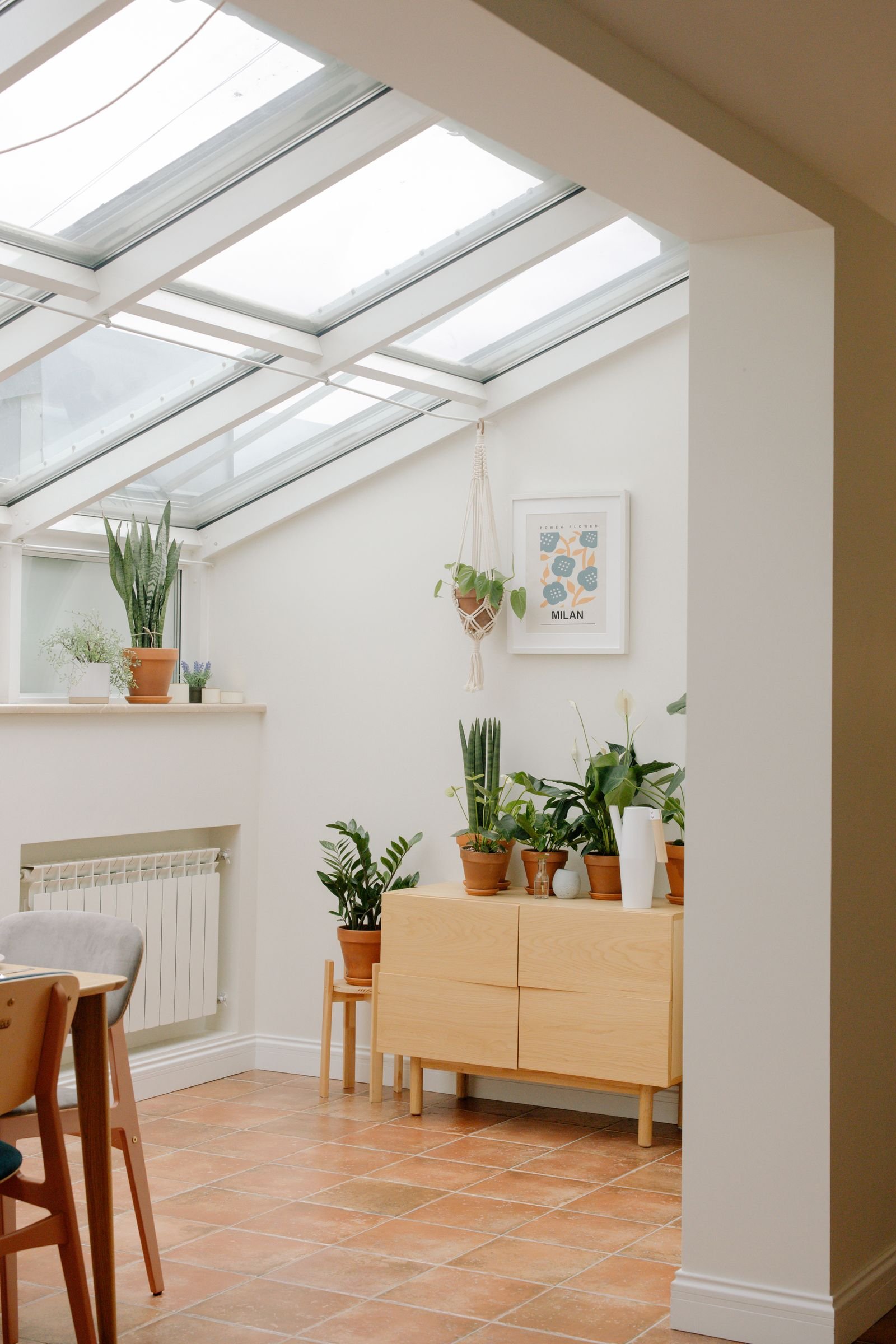
Porcelain is the safest all-around answer. Denser and less absorbent than standard ceramic, it will not crack when water freezes inside it, and its color will not fade in UV. That is why This Old House’s sunroom guide recommends ceramic tile, stained concrete, and stone over hardwood and carpet, which fade and suffer in the sun. Choose outdoor-rated porcelain with a matte, textured finish — glossy tile gets slippery when rain is tracked in. Expect $3 to $10 per square foot for tile, $6 to $12 installed. A 12×24-inch format cuts grout lines in a 12×16-foot room; pick mid-tone grout so pollen does not show.
2. Luxury Vinyl Plank With an SPC Rigid Core
Best for: Three-season rooms and conditioned sunrooms that want a wood look without wood risk.
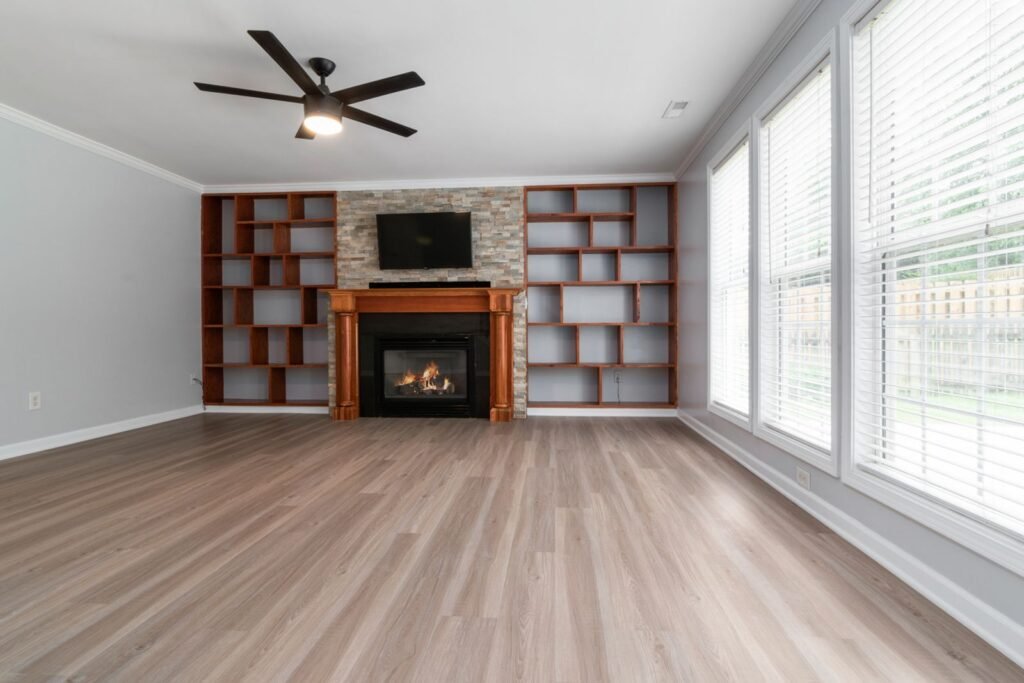
Look for luxury vinyl plank with an SPC (stone plastic composite) rigid core, a 20-mil wear layer, and a rating for wide temperature swings. Cheap flexible glue-down vinyl can expand, gap, or curl in a three-season room that swings from 35°F to 95°F, while SPC handles that range and is fully waterproof from above. Material runs $2.50 to $5.50 per square foot, and click-lock installation is a realistic weekend DIY over a clean slab with a vapor barrier underneath. Keep a 1/4-inch expansion gap at the walls. In a screened porch with direct wind-driven rain, porcelain or deck tiles are still safer.
3. Interlocking Deck Tiles Over the Existing Slab
Best for: Screened porches and renters — the fastest cover-up for an ugly or cracked slab.
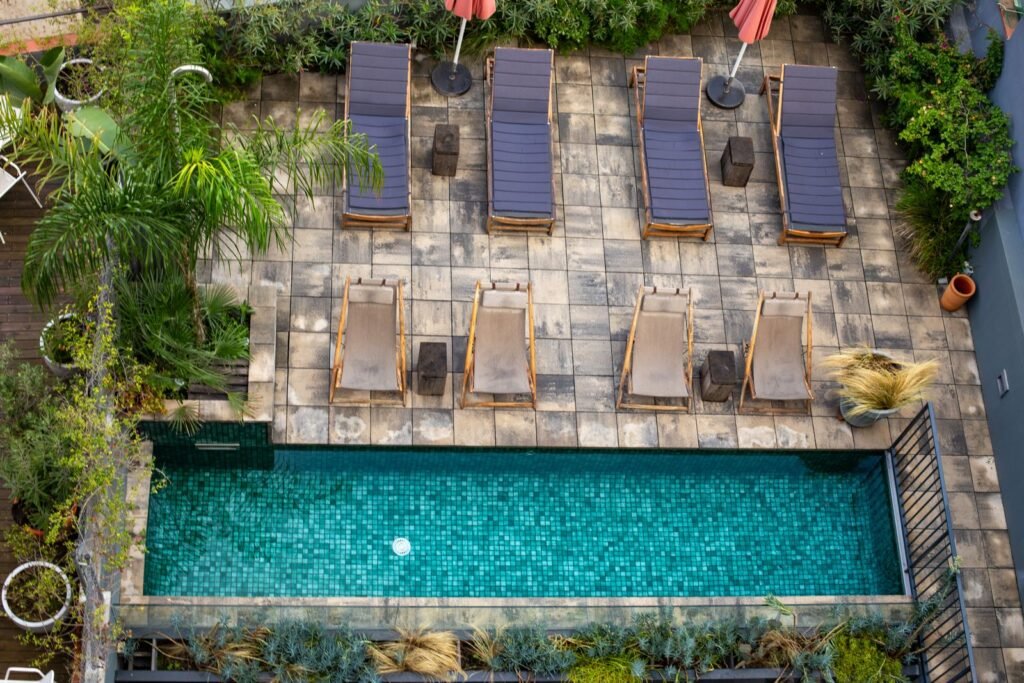
Interlocking tiles in acacia, composite, or stone snap together over existing concrete with no adhesive and no demo. They lift the walking surface 1/2 to 1 inch, so water drains underneath instead of pooling. If your slab is stained or hairline-cracked but sound, this is a one-day fix. I cover patterns and pros and cons in this guide to patio flooring options with deck tiles. Budget $3 to $8 per square foot. Lift and hose underneath once or twice a year — leaves collect in the grid — and confirm your door swing clears the added height before ordering.
4. Stained and Sealed Concrete: Use the Slab You Have
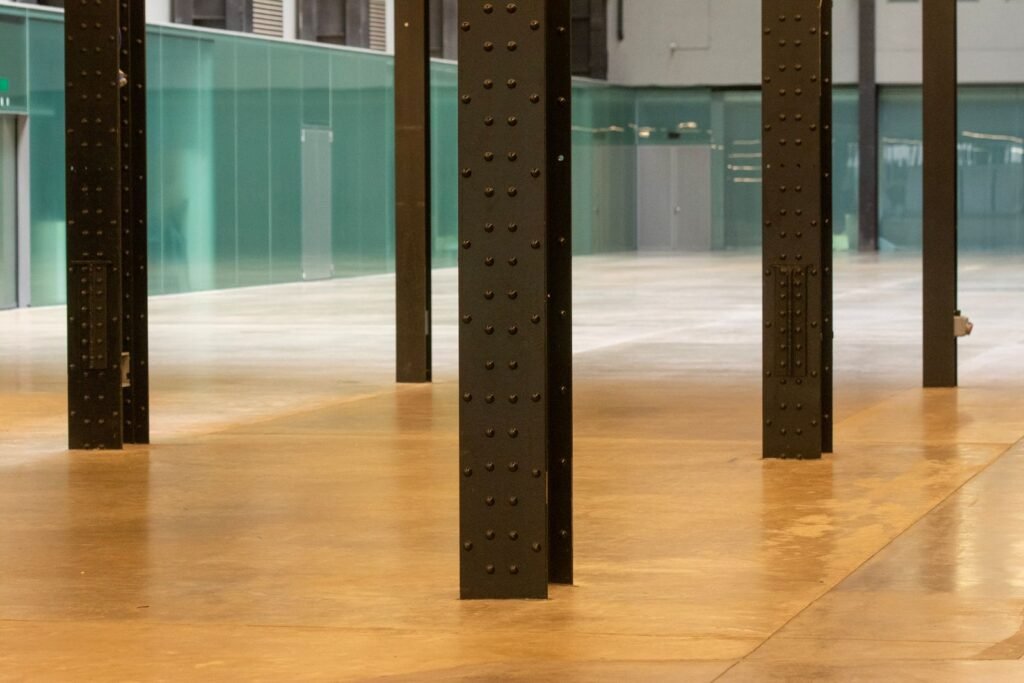
Best for: Any enclosure on a sound slab when the budget is tight.
If your slab is level and mostly crack-free, you already own a durable floor. Concrete stain adds mottled, stone-like color for $2 to $5 per square foot professionally done, or under $1 per square foot DIY with stain and sealer. Finish with a UV-rated sealer, and reseal every 2 to 3 years in a screened room, every 3 to 4 years in a conditioned sunroom. Stain will not hide patched cracks or paint drips — it telegraphs them — so test a corner first, or use a resurfacer ($1 to $2 per square foot) on rough slabs. Concrete stays cold and hard, so pair it with the layered rug approach in section 10.
5. Natural Stone, Slate or Travertine

Best for: Conditioned sunrooms and upscale three-season rooms wanting a permanent finish.
Slate, travertine, and bluestone bring real texture and stay cool in summer heat; in a conditioned sunroom they also pair well with radiant heat. Choose a honed or tumbled finish, not polished, for traction. Slate runs $5 to $15 per square foot for material, travertine $4 to $12, plus $8 to $15 for installation, since stone varies in thickness and needs careful leveling. All natural stone is porous: seal it at installation and every 1 to 2 years in a screened or three-season room. In freeze-thaw climates, confirm the specific stone is rated for exterior freeze use — some travertines spall if water sits in their pits through winter.
6. Outdoor Carpet Tiles for Three-Season Softness
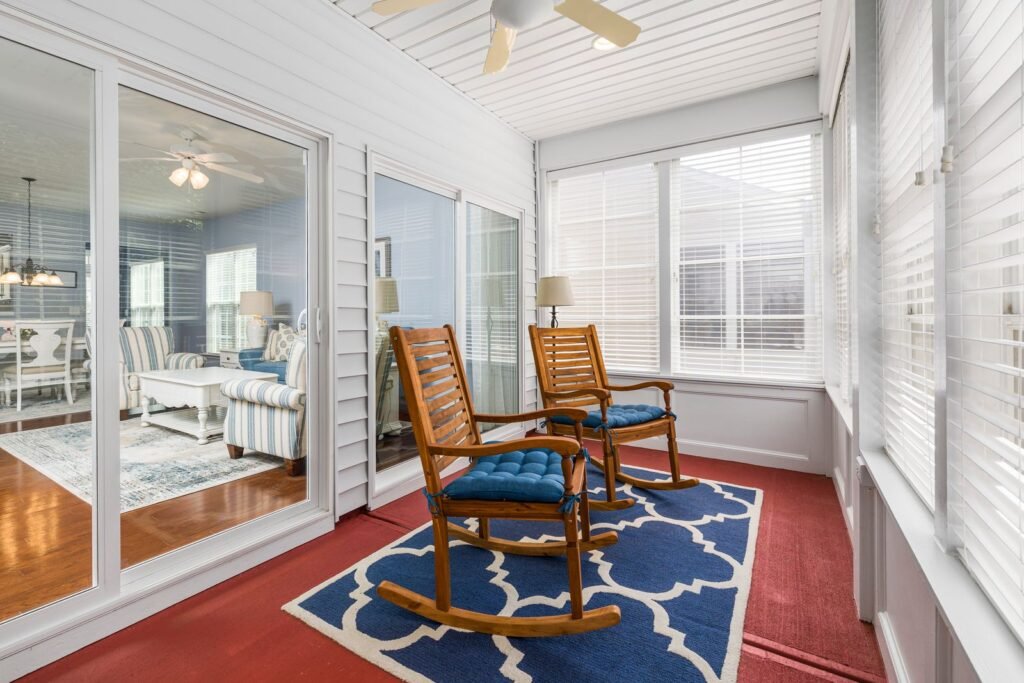
Best for: Three-season rooms where kids play on the floor and noise needs softening.
Modular carpet tiles made for outdoor use — solution-dyed polypropylene face fiber on a waterproof backing — give softness without the mildew trap of wall-to-wall carpet. One stained 24×24-inch tile lifts out, hoses off, or gets replaced for a few dollars. Expect $2 to $4.50 per square foot, loose-laid or peel-and-stick over a dry slab. This works best in three-season or conditioned rooms; in a screened porch that takes wind-driven rain weekly, tiles stay damp underneath and need regular lifting to dry. Choose a low, tight loop pile that resists crushing, vacuums easily, and does not trap grit.
7. Brick Pavers or Brick-Look Tile for a Courtyard Feel

Best for: Screened and three-season rooms with traditional or cottage style.
Real brick pavers, about 2 1/4 inches thick, are nearly indestructible and freeze-proof, but they add real height and cost $8 to $18 per square foot installed. For most slab-based enclosures, thin brick — real clay slices about 1/2 inch thick, set in mortar like tile — is smarter at $6 to $12 installed, with the same look and far less door-clearance trouble. Brick-look porcelain is the lowest-maintenance impersonator: no sealing and no efflorescence, the white salt haze real brick sometimes grows. Whichever you choose, reserve a flatter area or a large rug where dining chairs need to slide.
8. Engineered Wood, Only for Conditioned Sunrooms
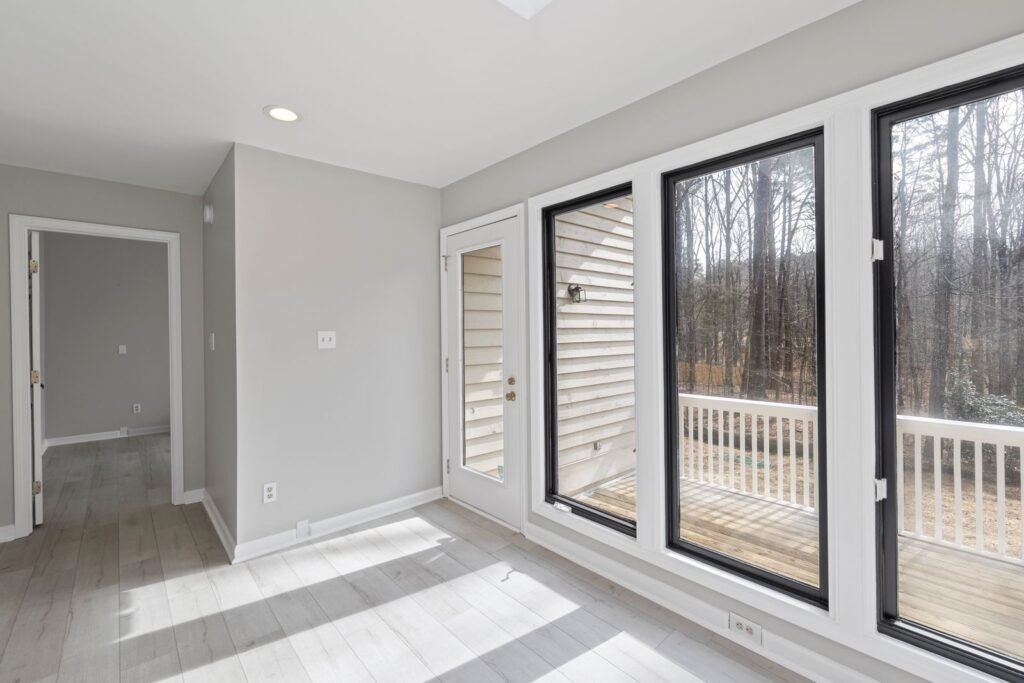
Best for: Fully heated and cooled sunrooms that behave like any other indoor room.
This is the one wood option that can work — with strict conditions. Engineered wood, with its cross-ply core, moves less than solid hardwood, but it still needs a stable climate year-round and indoor humidity held between 35% and 55%. If your sunroom is heated only by a space heater on weekends, skip this and return to porcelain or SPC vinyl. Choose a thick sawn wear layer (3mm or more) in a light-to-medium tone, since UV through south-facing glass darkens wood over time; rotate rugs seasonally to even it out. Budget $5 to $12 per square foot over a vapor-barrier underlayment. Never install it in a screened or three-season room.
9. Cork or Bamboo for Conditioned Rooms

Best for: Conditioned sunrooms used as a reading room, office, or yoga space.
Cork is warm, quiet, and cushioned, and it bounces back from furniture dents better than most floors. Strand-woven bamboo is far harder — it resists chair legs and dropped mugs — though it is less forgiving on knees. Both run $4 to $9 per square foot and install as click-lock floating floors over a vapor barrier, much like vinyl plank. Both are strictly indoor materials: cork swells if water sits on it, and bamboo dislikes humidity swings and strong UV, which can fade one side of the room faster than the other. Use them only where you would comfortably leave upholstered furniture and paper books year-round, with felt pads under everything.
10. The Layered Fix: Hard Floor Plus a Big Indoor-Outdoor Rug

Best for: Every enclosure type — the cheapest way to add warmth and zones to a hard floor.
Think of this as the finishing system for sections 1 through 5: the hard base floor handles the climate; the rug handles comfort. Size up — an 8×10-foot or 9×12-foot rug should sit under the front legs of every chair and sofa. Flatweave polypropylene rugs cost $80 to $300 in those sizes, shrug off rain and sun, and hose clean. In a screened porch, skip the pad or use a mesh outdoor pad that drains. In a three-season or conditioned room, a thin felt-and-rubber pad adds cushion and stops creeping.
11. What to Avoid: Hardwood, Standard Laminate and Wall-to-Wall Carpet

Best for: Nobody — these three cause most enclosed patio flooring regrets.
Solid hardwood expands, cups, and fades in any room without full climate control, and even in a sunroom, UV can leave permanent rug-shaped shadows in the finish. Standard laminate is worse: its fiberboard core swells irreversibly the first time water reaches a seam, and many warranties specifically exclude sunrooms and unheated spaces. Wall-to-wall indoor carpet traps moisture against the slab and mildews underneath where you cannot see it. Before committing to any floor, confirm your enclosure can support it — this breakdown of enclosed patio screen types and costs explains how the screen and frame system affects moisture, temperature, and what you can safely install inside.
Frequently Asked Questions
What is the best flooring for an enclosed patio that is not heated?
Porcelain tile is the most reliable choice for an unheated enclosure because it will not crack in freeze-thaw cycles, fade in strong sun, or mildew when damp. Interlocking deck tiles are a close second if your slab is ugly but sound. Avoid wood, laminate, and standard vinyl, which gap or swell without climate control.
Can I put luxury vinyl plank in a three-season room?
Yes, if you choose SPC rigid-core plank rated for wide temperature swings and install it as a floating floor with a vapor barrier and proper expansion gaps. Avoid flexible glue-down vinyl and soft WPC cores, which can curl or separate when an unheated three-season room drops near freezing in winter and bakes in summer.
How much does enclosed patio flooring cost per square foot?
Budget options like stained concrete, carpet tiles, and SPC vinyl run roughly $2 to $6 per square foot installed or DIY. Mid-range porcelain and thin brick land around $9 to $20 installed. Natural stone and real brick pavers top the range at $15 to $30 per square foot installed, depending on region and slab preparation.
Do I need a subfloor or vapor barrier over a concrete slab?
In most cases, yes to the vapor barrier. Concrete wicks ground moisture upward, so floating floors like vinyl, cork, and engineered wood need a 6-mil vapor barrier or an underlayment with one built in. Tile and stone go down with mortar instead, but a crack-isolation membrane is wise. Always run a simple plastic-sheet moisture test first.