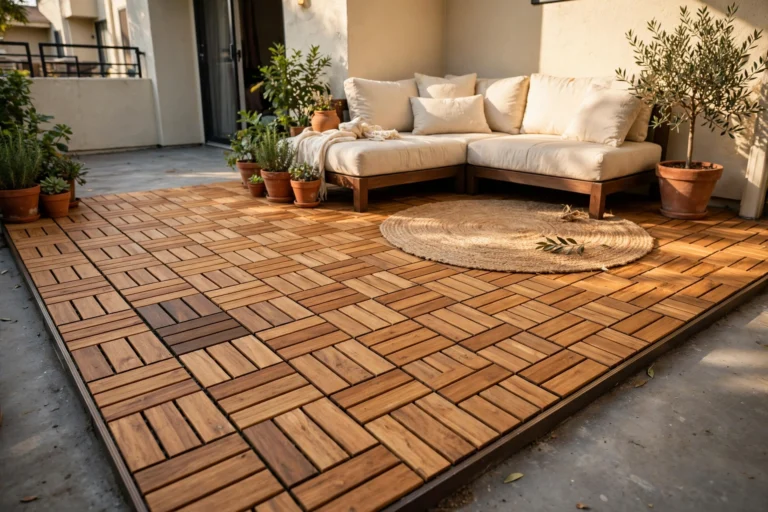
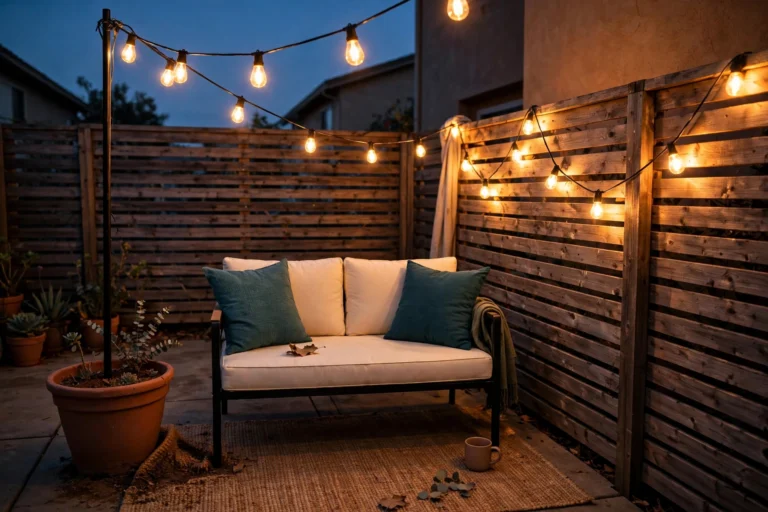
The most practical patio flooring options for 2026 are interlocking deck tiles ($2–$5 per sq ft, DIY-friendly), concrete pavers ($3–$6 per sq ft as a DIY project), and porcelain pavers ($5–$10 per sq ft) for a premium look. For a 12×12 patio, deck tiles cost an estimated $300–$700 for a weekend project; installed pavers run $1,500–$3,500.
Here’s an uncomfortable truth about patio makeovers: most people buy the furniture first and think about the floor last. But the ground under your feet sets the entire mood — a stained, cracked slab makes even beautiful furniture look tired, while the right patio flooring options make a budget patio feel intentional.
The good news? You don’t need a contractor or a demolition crew. From snap-together deck tiles to gravel you can spread in an afternoon, here are ten patio flooring options ranked by cost, difficulty, and durability, so you can pick the one that fits your patio, your budget, and your weekend.



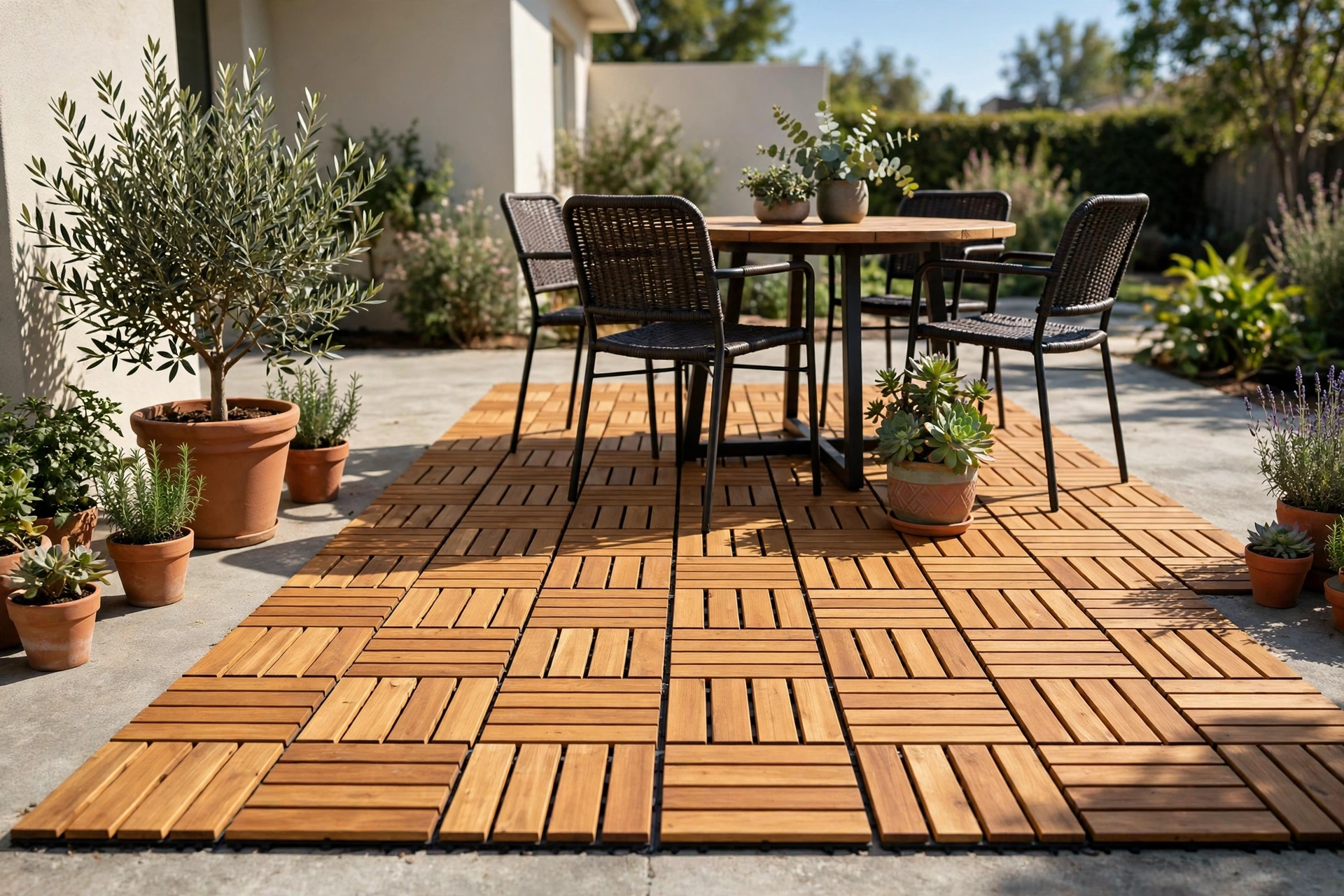
1. Interlocking Acacia Deck Tiles: The Weekend Warrior’s Favorite
If you want a wood-deck look without building a deck, interlocking deck tiles are the answer. These 12×12-inch squares — solid acacia slats on a plastic snap-together base — click into place over concrete, pavers, or even compacted soil with no tools. Typical 2026 pricing from major retailers runs an estimated $3–$4.50 per square foot, so a 10×10 patio costs roughly $300–$450 in materials. They instantly warm up a gray concrete slab, drain well thanks to the raised base, and individual tiles can be lifted and replaced if one gets damaged. Maintenance is simple: sweep, hose off, and re-oil the wood once a year to keep the color rich. They’re also renter-friendly — unsnap them and take your “deck” with you when you move.
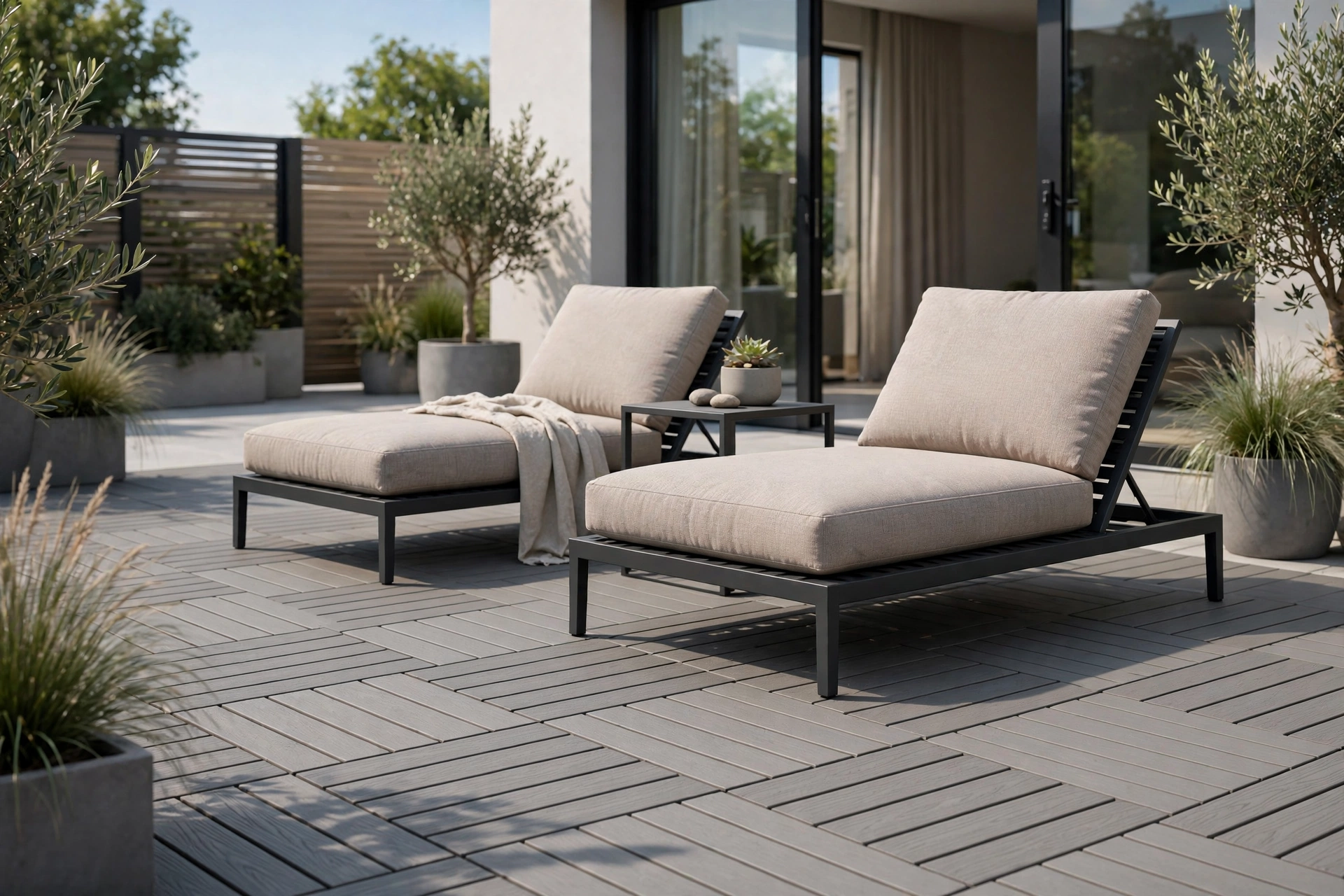
2. Composite Deck Tiles for Zero-Maintenance Flooring
Love the deck-tile concept but not the upkeep? Composite deck tiles swap the wood slats for wood-plastic composite or all-plastic planks that never need oiling, staining, or sealing. Budget composite tiles — the kind sold at big-box stores — cost an estimated $2–$3 per square foot, making them one of the cheapest patio flooring options that still looks finished; a 144-square-foot patio can be covered for around $300–$430. Premium wood-look composites run higher, roughly $7–$11 per square foot. They handle sun, rain, and pool splash without fading much, and the open-grid bases promote drainage. The trade-off is feel: composite doesn’t have the warmth of real wood underfoot, and darker colors can get hot in direct sun — choose lighter tones for south-facing patios.
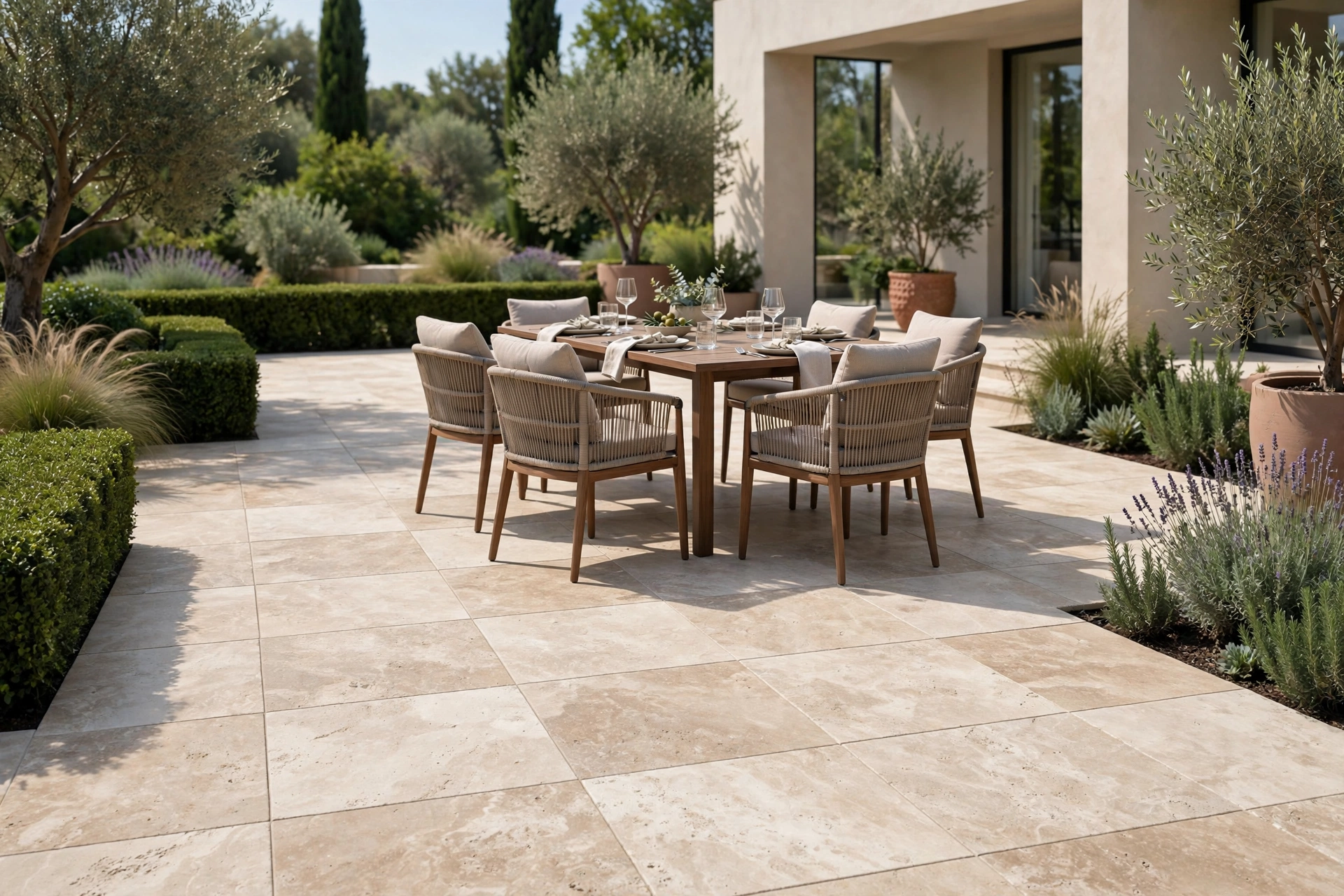
3. Porcelain Pavers for a High-End Stone Look
Porcelain pavers are the quiet luxury pick among patio flooring options: 3/4-inch-thick outdoor-rated porcelain that mimics travertine, slate, or concrete with photographic realism, minus the sealing and staining those materials demand. Typical pricing runs an estimated $5–$10 per square foot for the pavers themselves. They’re frost-proof, fade-proof, stain-proof, and grippy enough for pool decks — which is why you see them at resorts. Installation over a concrete slab is a manageable DIY with a tile saw and polymeric sand; over soil, they need a compacted gravel base like any paver. The main drawback is brittleness during handling — order 10% extra for cuts and breakage — but once installed, they outlast nearly everything else on this list.
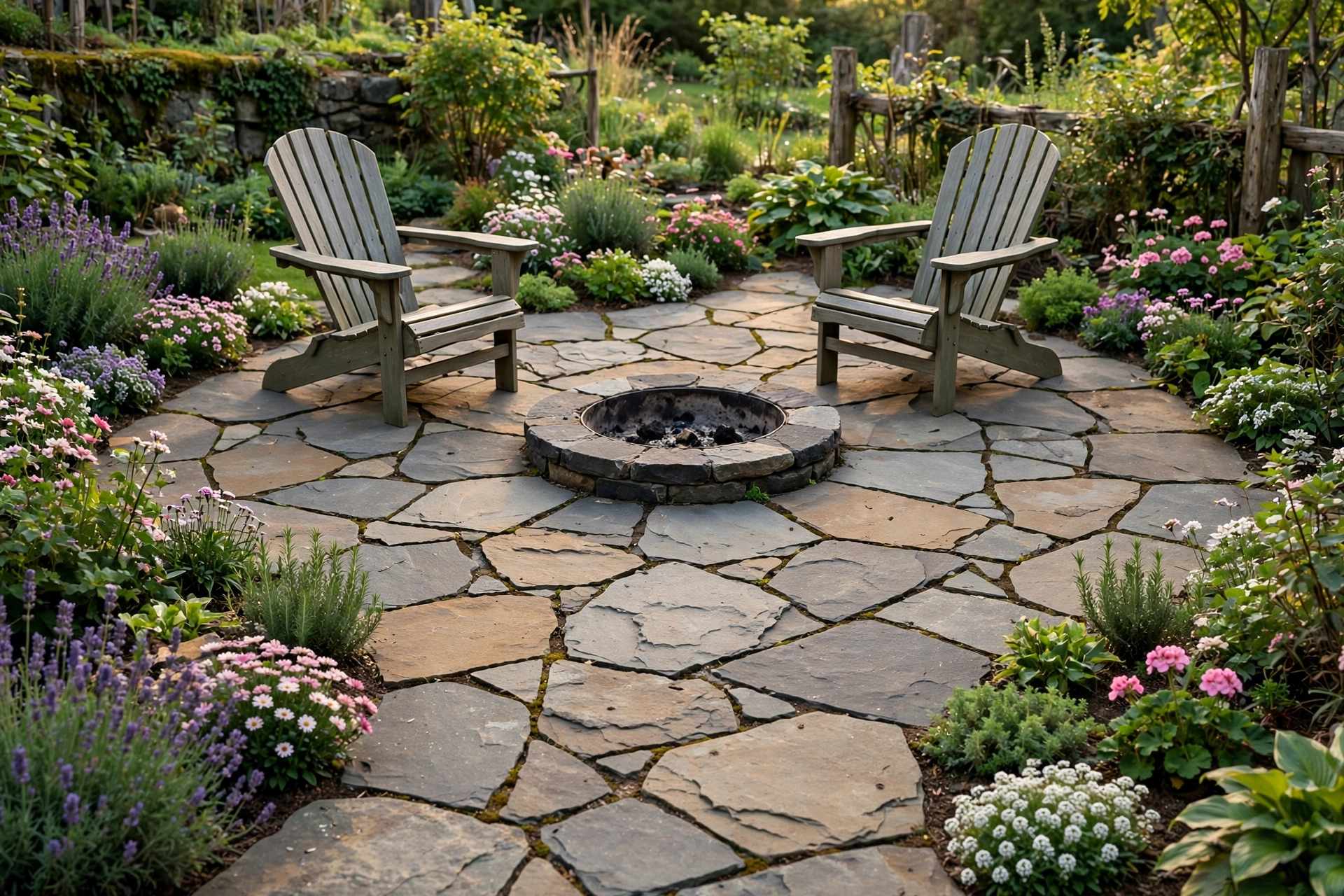
4. Natural Stone Pavers: Slate, Flagstone, and Bluestone
Nothing looks quite like real stone. Natural stone patio flooring — irregular flagstone, sawn bluestone, or slate tiles — brings texture and variation that manufactured products can’t fully copy. Material costs vary widely by region and stone type, but an estimated $6–$15 per square foot is typical for the stone alone; professionally installed flagstone patios often run $15–$30 per square foot all-in. Dry-laid flagstone over compacted gravel is a feasible DIY for patient beginners, while mortared installations are best left to pros. Stone is heavy, so delivery matters — have it dropped as close to the work area as possible. Seal sandstone and slate every few years to prevent staining; dense bluestone and granite need it less often.
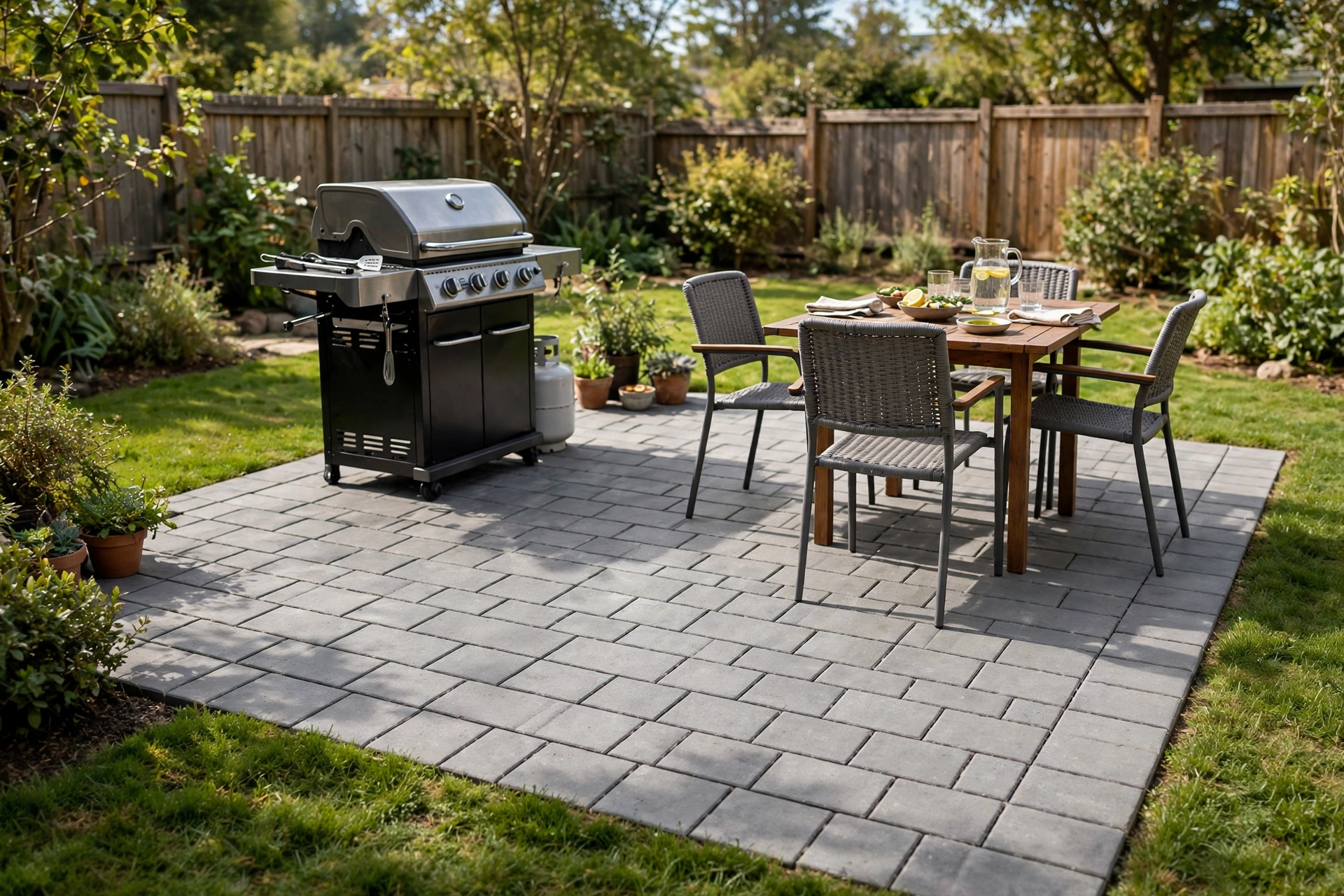
5. Classic Concrete Pavers: The Reliable Workhorse
Concrete pavers are the most-installed patio flooring option in the US for good reason: they’re affordable, strong, and come in endless shapes and colors. DIY material costs run an estimated $3–$6 per square foot; professional installation typically doubles that. The classic installation — 4–6 inches of compacted gravel, an inch of bedding sand, pavers, then polymeric sand swept into the joints — is very doable over two weekends for a small patio. Herringbone and basketweave patterns hide in the same price as running bond; the pattern costs you time, not money. Pavers can settle or shift over years, but that’s also their superpower: unlike a cracked slab, you can lift and re-level individual pavers without redoing the whole patio.
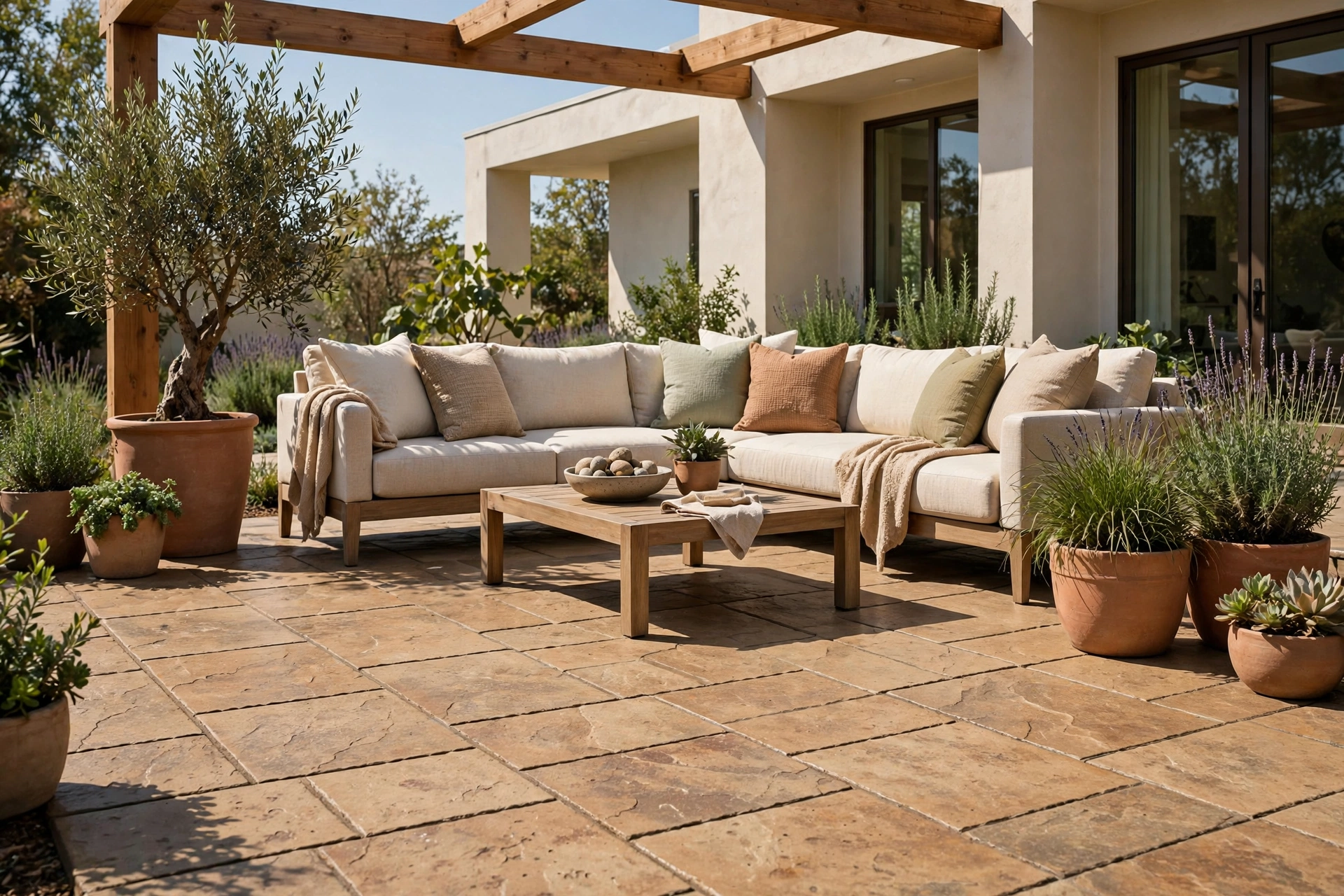
6. Stamped Concrete for Custom Looks at a Moderate Price
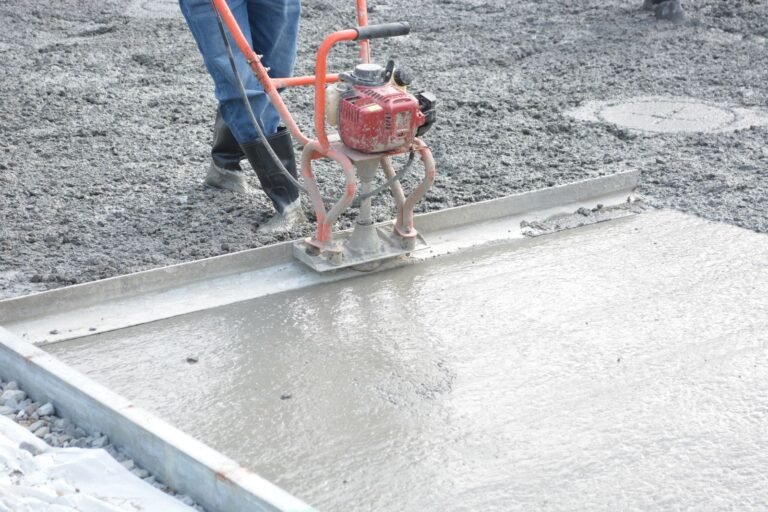
Stamped concrete gives you the look of stone, brick, or wood planks in a single poured slab — and if your patio already has a structurally sound concrete slab, you can skip the pour entirely and use a stamped overlay. New stamped concrete typically costs an estimated $12–$18 per square foot installed; an overlay on existing concrete runs $6–$10 per square foot. The result is seamless (no weeds in joints, ever) and endlessly customizable with colors and release agents. The honest downsides: concrete cracks — control joints manage where, not whether — and the sealer needs reapplying every 2–3 years to keep colors vivid. Get multiple quotes; workmanship quality varies enormously with stamped concrete, and a bad stamp job is permanent.
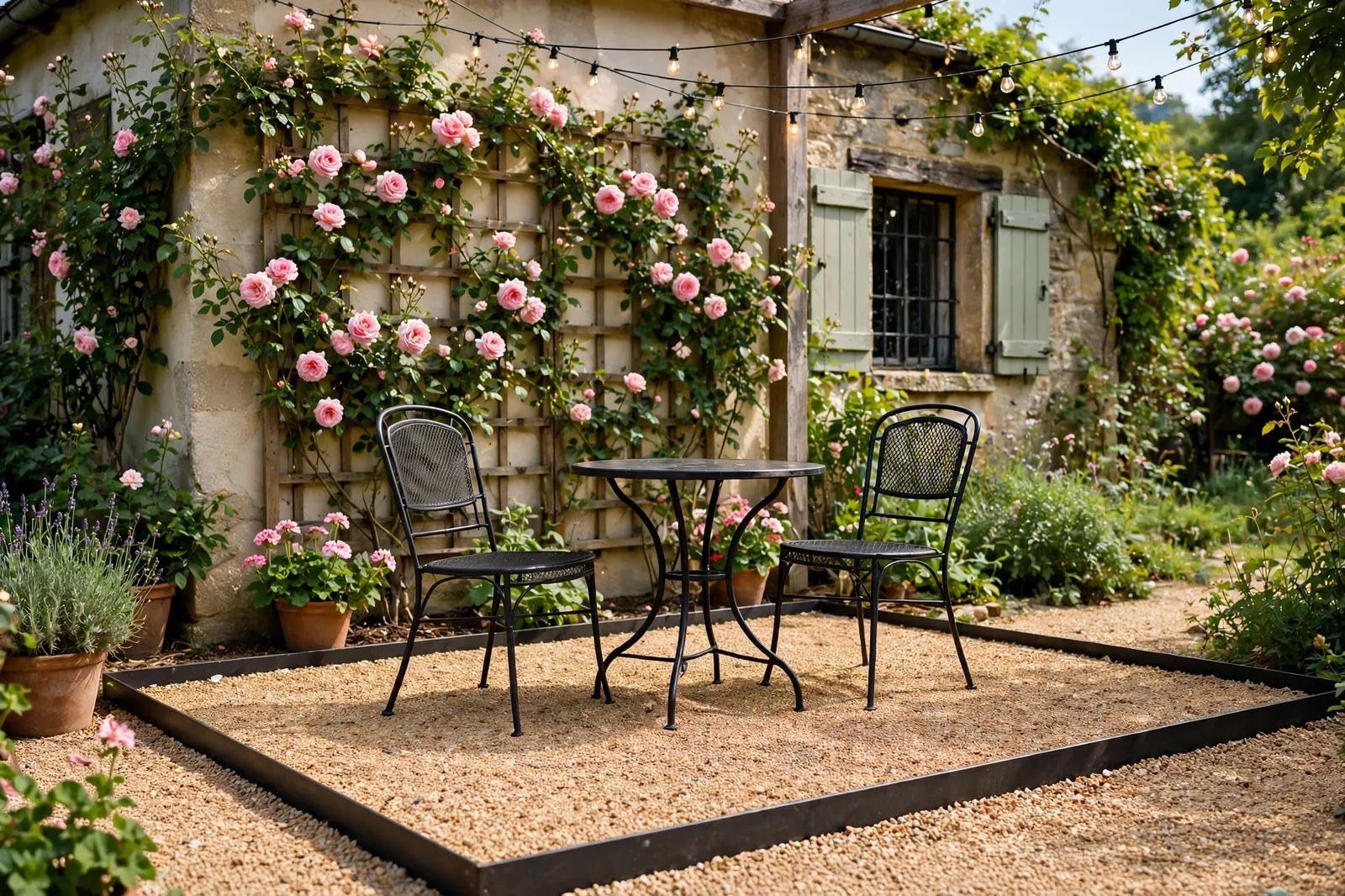
7. Pea Gravel: The Cheapest of All Patio Flooring Options
Let’s talk about the budget champion. Pea gravel — small, smooth, rounded stones — creates a charming, European-courtyard feel for an estimated $1–$2 per square foot including landscape fabric and edging. A 12×12 patio needs roughly 1.5–2 tons, often deliverable in a single bulk bag. Installation is genuinely a one-day project: level the area, lay fabric, install metal or stone edging to contain the gravel, and spread it 2–3 inches deep. It drains beautifully and never cracks. The trade-offs: it’s not wheelchair- or stroller-friendly, furniture legs sink and wobble (use wide-foot furniture or paver pads under legs), and you’ll occasionally chase stray stones back with a rake. For a casual, cottage-style patio, though, it’s unbeatable value.
8. Artificial Turf for a Soft, Green Patio Floor
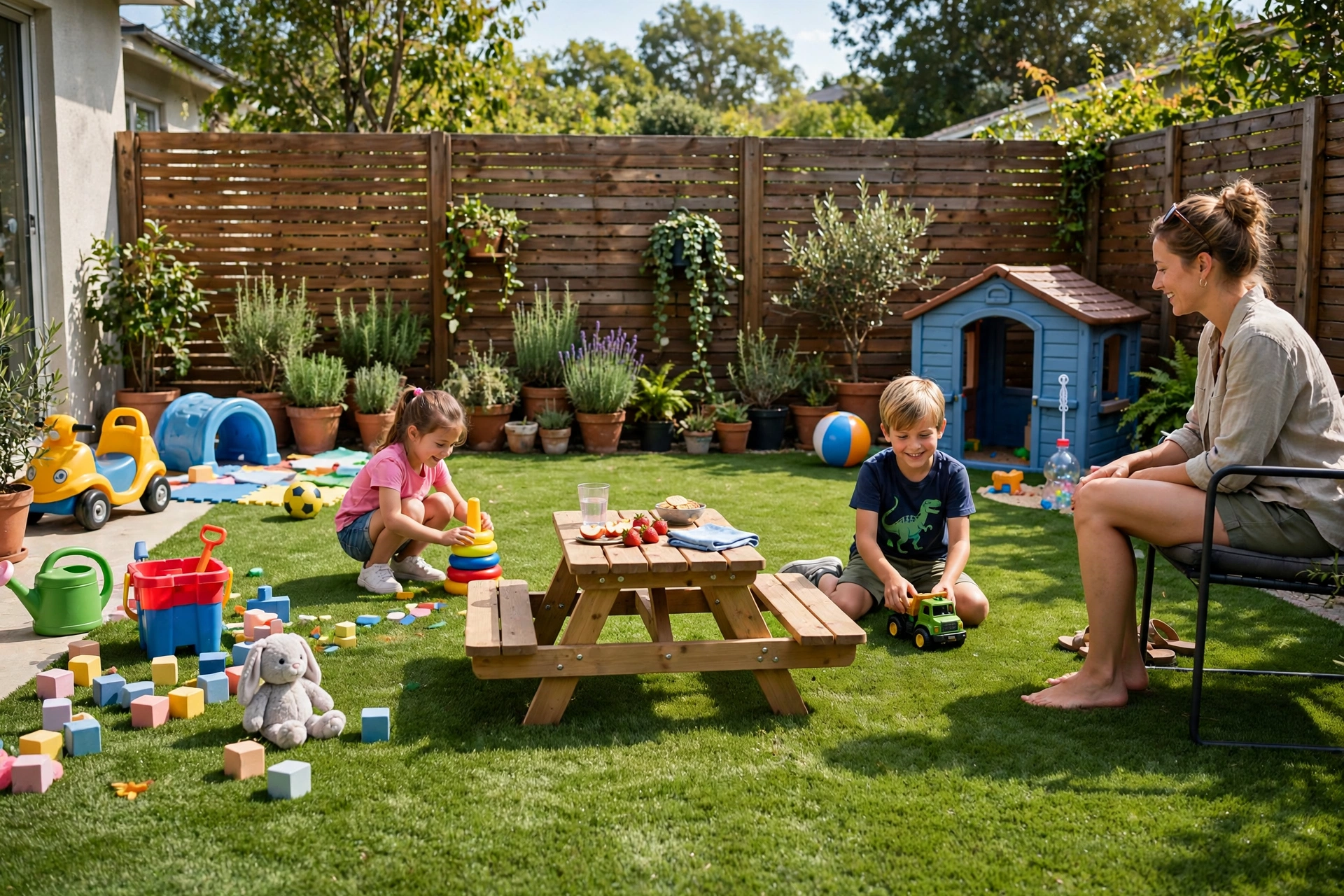
Artificial turf turns a concrete slab or dirt patch into a soft, always-green surface that’s kind to bare feet and great for kids and pets. Quality outdoor turf costs an estimated $5–$12 per square foot installed, or $2–$5 per square foot DIY for the turf alone plus adhesive or seam tape. Modern turf looks convincingly real from a few feet away — the plasticky Astroturf era is long over. It drains through perforated backing, so rain isn’t an issue, though it can run 20–30 degrees hotter than natural grass in direct sun; a light hose-down cools it fast. Brush it occasionally to keep blades upright, and rinse pet areas regularly. It’s one of the more polarizing patio flooring options, but for families who live barefoot outdoors, it’s transformative.
9. Brick Pavers in Herringbone for Timeless Charm
For the full deep-dive, see these paver patio ideas with real costs.
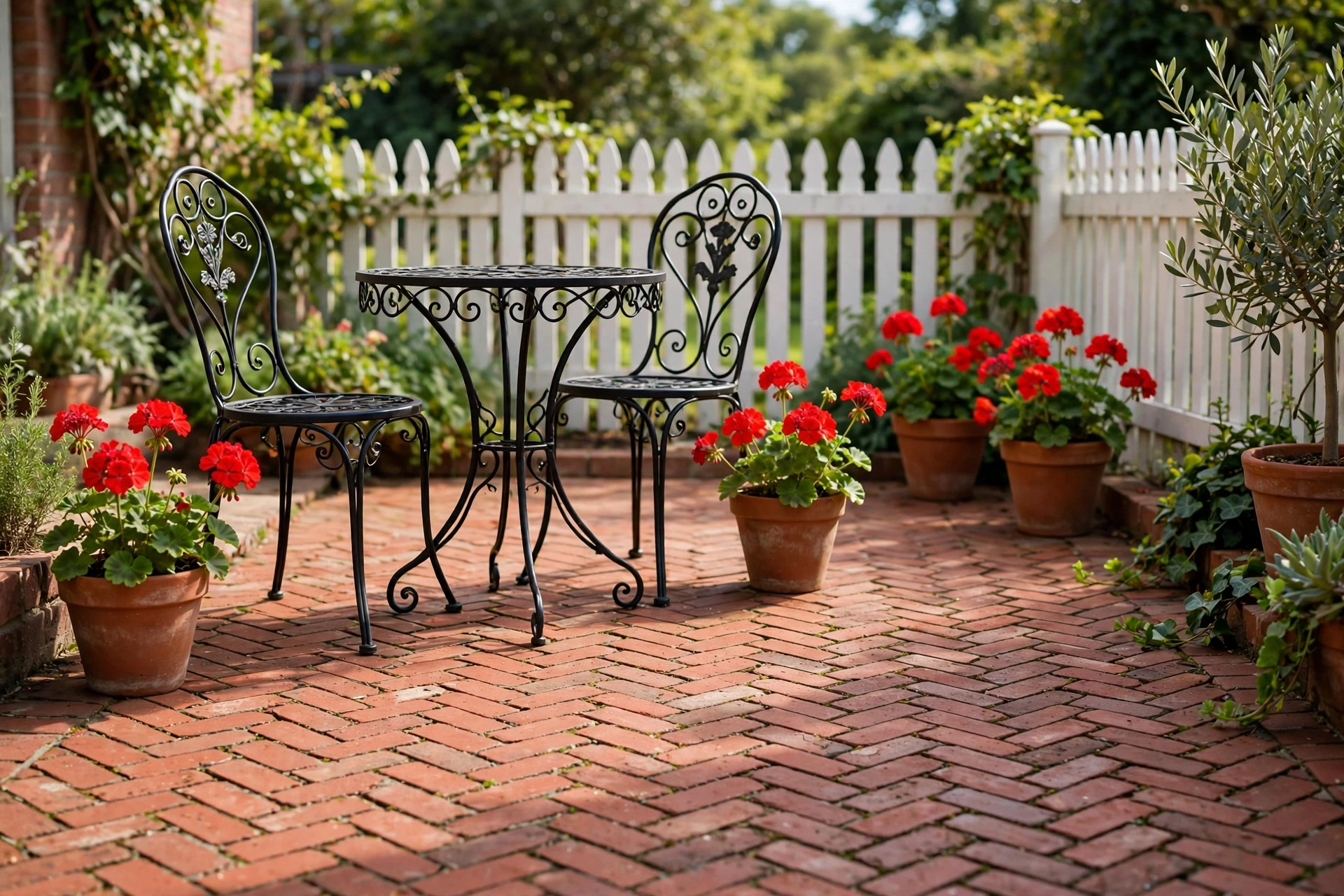
Clay brick pavers in a herringbone pattern are the definition of timeless — they suit colonials, cottages, and farmhouses, and they age gracefully, developing character instead of just wearing out. Material costs run an estimated $4–$8 per square foot for the brick; installation follows the same gravel-and-sand method as concrete pavers. Use pavers rated for outdoor use (not standard wall brick, which can spall in freeze-thaw cycles). The herringbone pattern interlocks tightly, making it one of the most stable DIY patterns for driveways and high-traffic patios. Expect some color variation between batches — embrace it; uniform brick looks manufactured, and variation is the whole point.
10. Stained or Painted Concrete: The $100 Patio Refresh
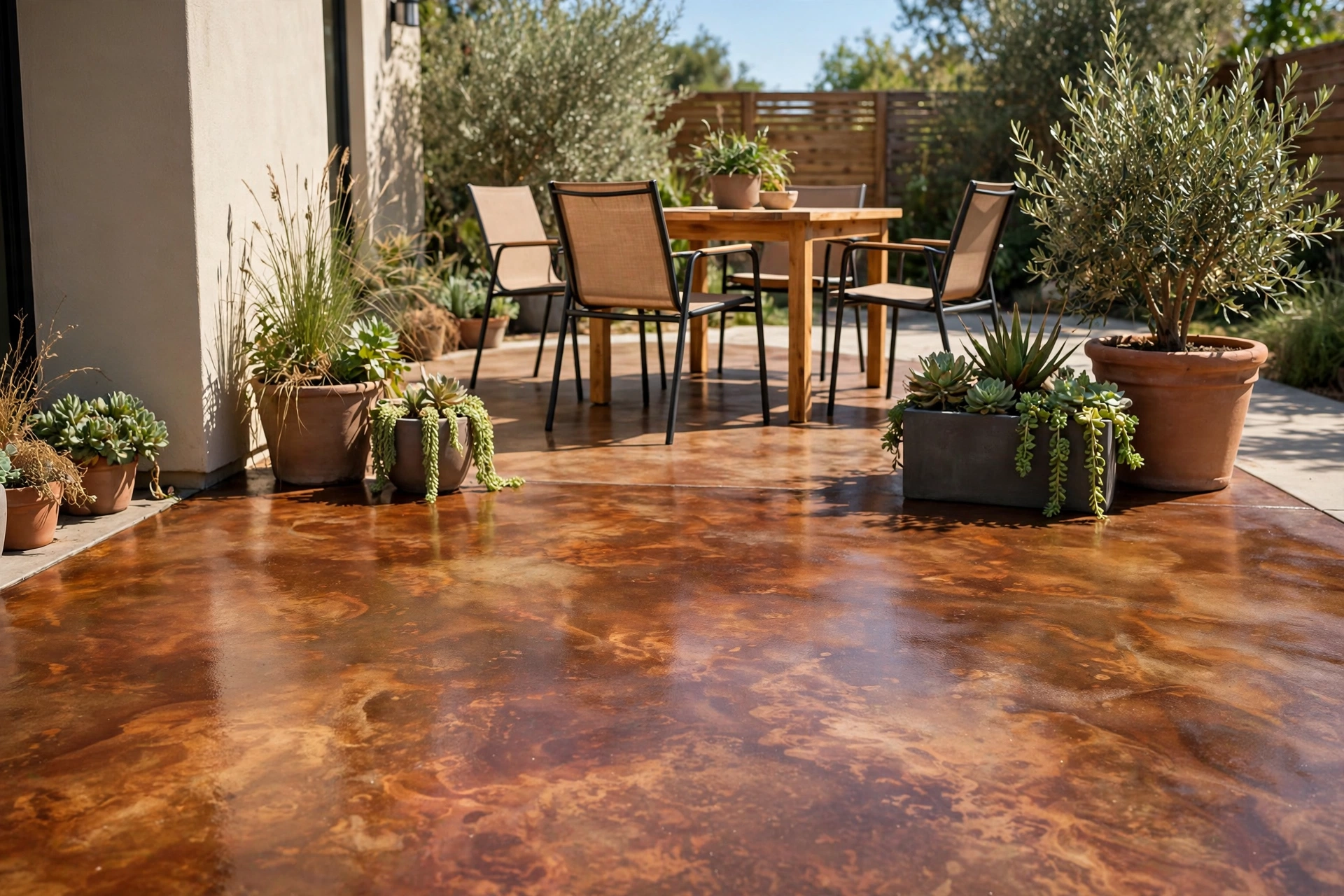
Already have a concrete slab in decent shape? Don’t replace it — refinish it. Concrete stain (acid or water-based) soaks into the surface for a variegated, stone-like finish at an estimated $0.50–$1.50 per square foot in materials; a 12×12 patio can be transformed for under $150 including cleaner, stain, and sealer. It’s a genuinely one-weekend project: etch or clean the slab, apply stain with a sprayer, seal it. Painted concrete with a porch-and-floor enamel is even simpler and lets you go bold with color or a stenciled pattern — a stenciled “tile” look is a classic budget trick. The catch is prep: stain and paint only bond to clean, unsealed concrete, so test a small area first. Done right, this is the highest-impact-per-dollar patio flooring option on the list.
| Flooring Option | Est. Cost per Sq Ft | DIY Difficulty | Lifespan | Best For |
|---|---|---|---|---|
| Interlocking acacia deck tiles | $3–$4.50 | Easy (weekend) | 5–10 years | Covering old concrete fast |
| Composite deck tiles | $2–$11 | Easy (weekend) | 10–20 years | Low maintenance |
| Porcelain pavers | $5–$10 | Moderate | 25+ years | Premium, lasting look |
| Natural stone | $6–$15 (materials) | Hard | 50+ years | Timeless, high-end patios |
| Concrete pavers | $3–$6 (materials) | Moderate | 25+ years | Best all-rounder |
| Stamped concrete | $12–$18 (installed) | Pro recommended | 25+ years | Seamless custom designs |
| Pea gravel | $1–$2 | Easy (one day) | Indefinite | Tightest budgets |
| Artificial turf | $2–$12 | Easy–Moderate | 10–15 years | Kids, pets, bare feet |
| Brick pavers | $4–$8 (materials) | Moderate | 50+ years | Classic / cottage style |
| Stained / painted concrete | $0.50–$1.50 | Easy (weekend) | 5–10 years | Cheapest refresh |
Prices reviewed: October 2026. All costs are estimates based on typical 2026 pricing from major home-improvement retailers and landscape suppliers; actual prices vary by region, brand, and project size.
Frequently Asked Questions
What is the cheapest patio flooring option?
Pea gravel ($1–$2 per sq ft) and staining existing concrete ($0.50–$1.50 per sq ft in materials) are the cheapest patio flooring options. For a finished look over an ugly slab with minimal work, budget composite deck tiles at $2–$3 per sq ft are the best value.
Can I put deck tiles directly over concrete?
Yes — that’s exactly what interlocking deck tiles are designed for. The raised plastic base allows drainage and airflow underneath. Just make sure the concrete is reasonably level and clean first; tiles will telegraph major dips and wobble on uneven spots.
Do I need a professional to install patio pavers?
Not necessarily. A small paver patio (under 150 sq ft) is a realistic two-weekend DIY if you’re comfortable with digging, leveling, and compacting. Larger patios, complex patterns, or significant grading issues are worth hiring out — poor base prep is the number-one cause of paver failure.
What patio flooring is best for dogs?
Artificial turf (rinse regularly) and sealed concrete pavers are the most pet-friendly patio flooring options. Avoid pea gravel if your dog likes to dig or eat stones, and skip dark composite tiles on sunny patios — they get hot on paws.
How long do interlocking deck tiles last?
Acacia wood deck tiles typically last 5–10 years outdoors with yearly oiling; composite and plastic tiles last 10–20 years with almost no maintenance. Individual tiles can be replaced as needed, which extends the life of the whole floor.
Key Takeaways
- The most versatile patio flooring options: interlocking deck tiles ($2–$5/sq ft) for quick DIY resurfacing, concrete pavers ($3–$6/sq ft) for the best all-rounder.
- Say you have a 12×12 patio: budget $300–$700 for deck tiles DIY, or $1,500–$3,500 for professionally installed pavers.
- Cheapest refresh: stain or paint an existing slab for under $150 in materials — a single weekend project.
- Match flooring to lifestyle: turf for kids and pets, porcelain for low maintenance luxury, gravel for cottage charm on a budget.
- Prices reviewed: October 2026 — all costs are estimates from major 2026 retailers, not fixed quotes.