The best porch ceiling ideas combine classic looks with weather-smart materials: painted beadboard, natural wood planks, haint-blue paint, low-maintenance PVC panels, and coffered or beamed designs all work beautifully on covered porches. Most materials run roughly $2–$8 per square foot, with professional installation adding another $3–$7 per square foot (estimates based on typical 2026 retailer pricing).
Walk onto almost any porch and your eyes go to the furniture, the plants, the front door. Almost nobody looks up — which is exactly why the ceiling is the biggest missed opportunity in outdoor design. A finished porch ceiling pulls the whole space together, hides wiring and joists, and makes even a modest porch feel intentional and complete.
I’m Sophia Bennett, and I spend a lot of time thinking about the details most people skip. A porch ceiling is one of those details that quietly does a huge amount of work: it brightens the space by reflecting light, gives ceiling fans and lights something solid to mount to, and sets the tone for everything below it. Whether your porch is a tiny stoop or a wraparound showpiece, these ten porch ceiling ideas will help you pick a finish you’ll love every time you glance upward.




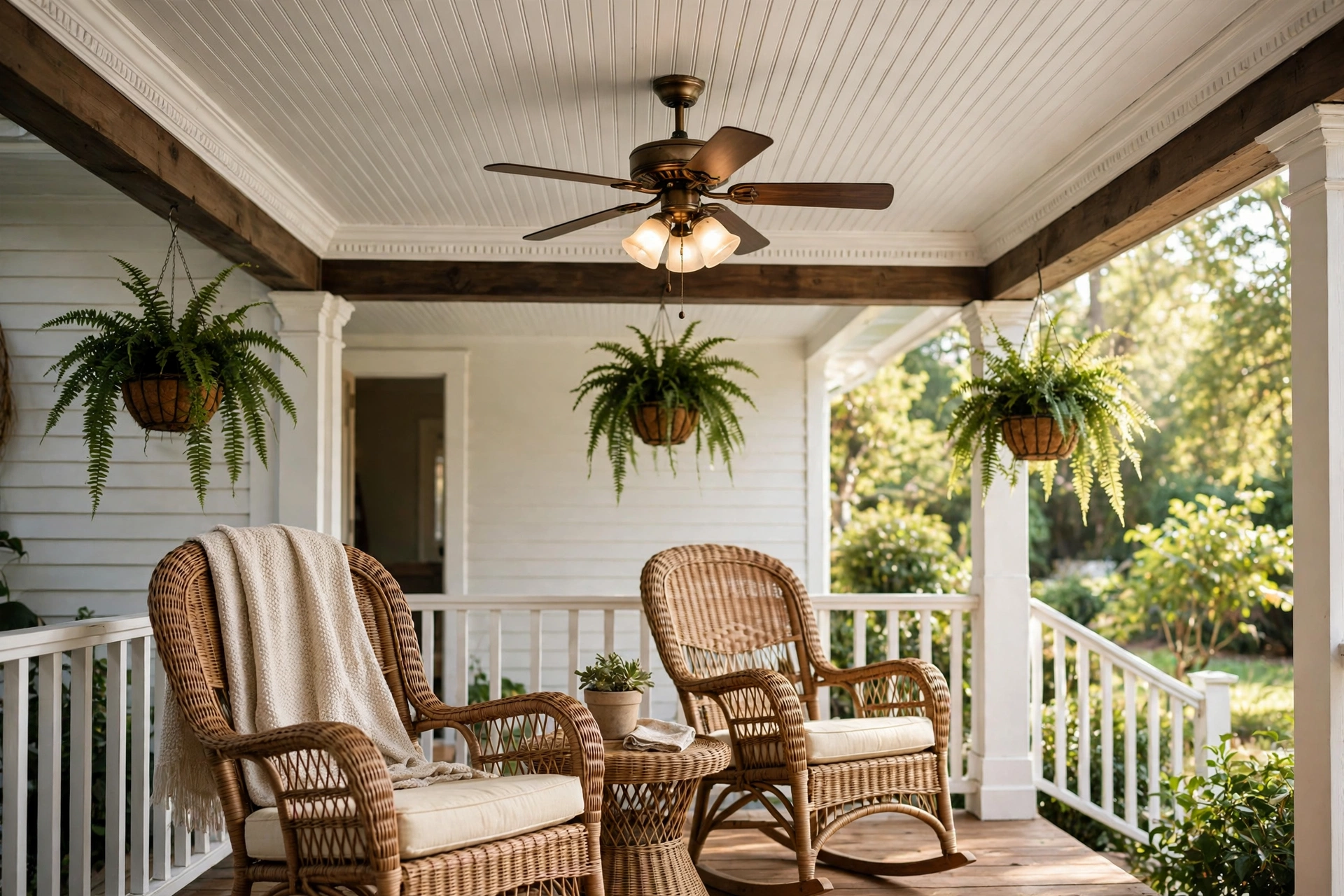
1. Porch Ceiling Ideas: Classic White Beadboard Panels
White beadboard is the porch ceiling idea that never goes out of style, and for good reason. The narrow grooves add texture and shadow lines that make a flat ceiling feel crafted, while bright white paint bounces light around and keeps a covered porch from feeling dim. It suits farmhouse, cottage, coastal, and traditional homes equally well, which is why builders have used it for generations.
For a covered porch, solid wood beadboard or moisture-rated PVC beadboard panels are both solid choices; wood needs periodic repainting, while PVC shrugs off humidity. Install the boards running from the house outward toward the porch edge to visually lengthen a shallow porch, or run them parallel to the house on a long, narrow porch to emphasize its lines. Finish with a simple crown or cove molding where the ceiling meets the beams for a polished, custom look.
2. Natural Stained Tongue-and-Groove Pine
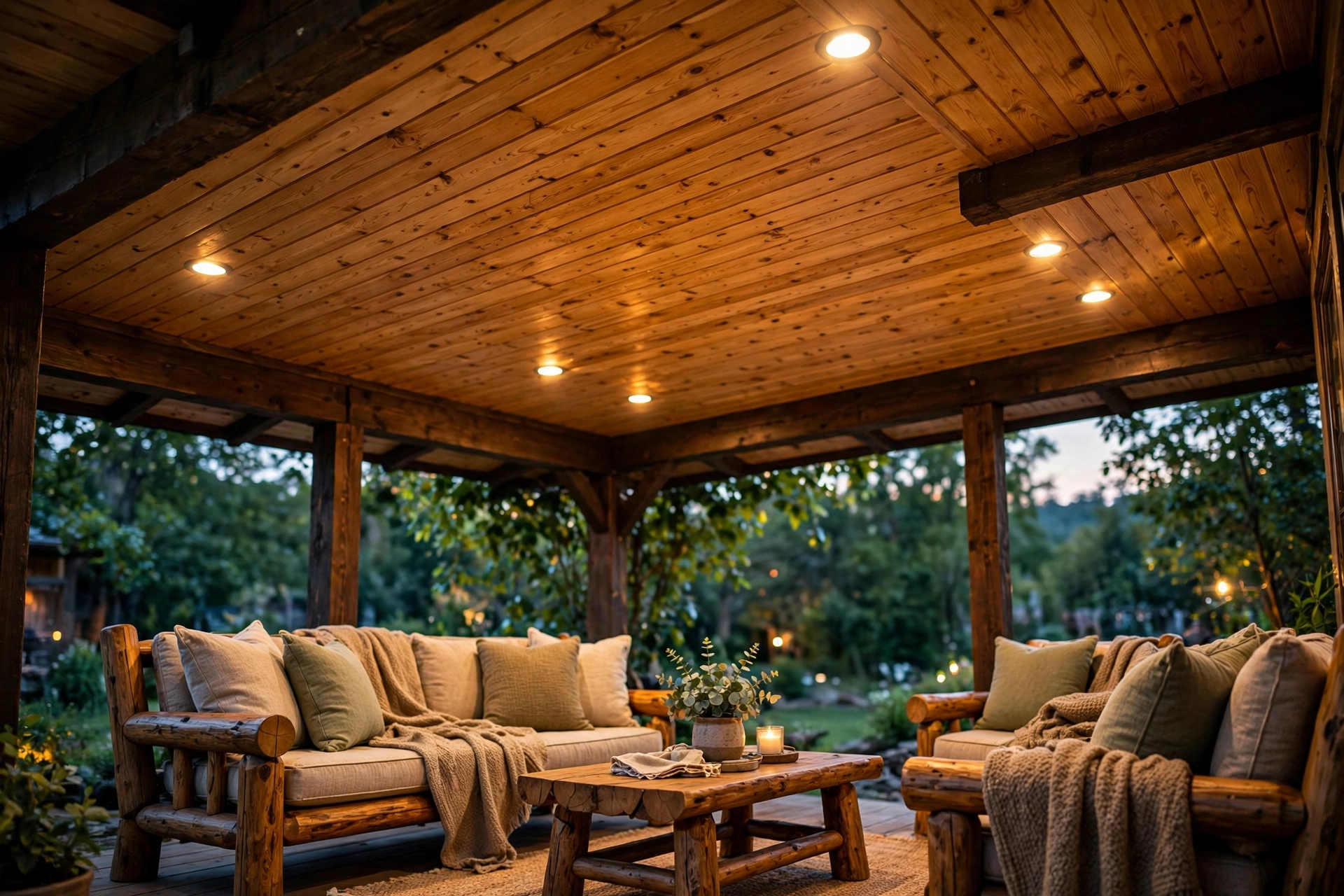
If white beadboard feels too crisp for your style, warm stained pine offers the same grooved texture with a much cozier mood. A honey, cedar, or walnut-toned stain brings out the wood grain and pairs beautifully with brick, stone, and dark-stained porch floors. It’s a favorite for cabins, craftsman bungalows, and any home where you want the porch to feel like an outdoor living room.
Use an exterior-rated stain or a spar urethane topcoat so the finish stands up to humidity and temperature swings. One thing to plan for: stained wood darkens a ceiling visually, so it works best on porches with good natural light or plenty of fixtures. Add recessed can lights or a ceiling fan with a light kit to keep the space glowing after dark, and choose a semi-transparent stain rather than a solid one if you want the grain to stay visible.
3. Haint Blue Painted Porch Ceiling
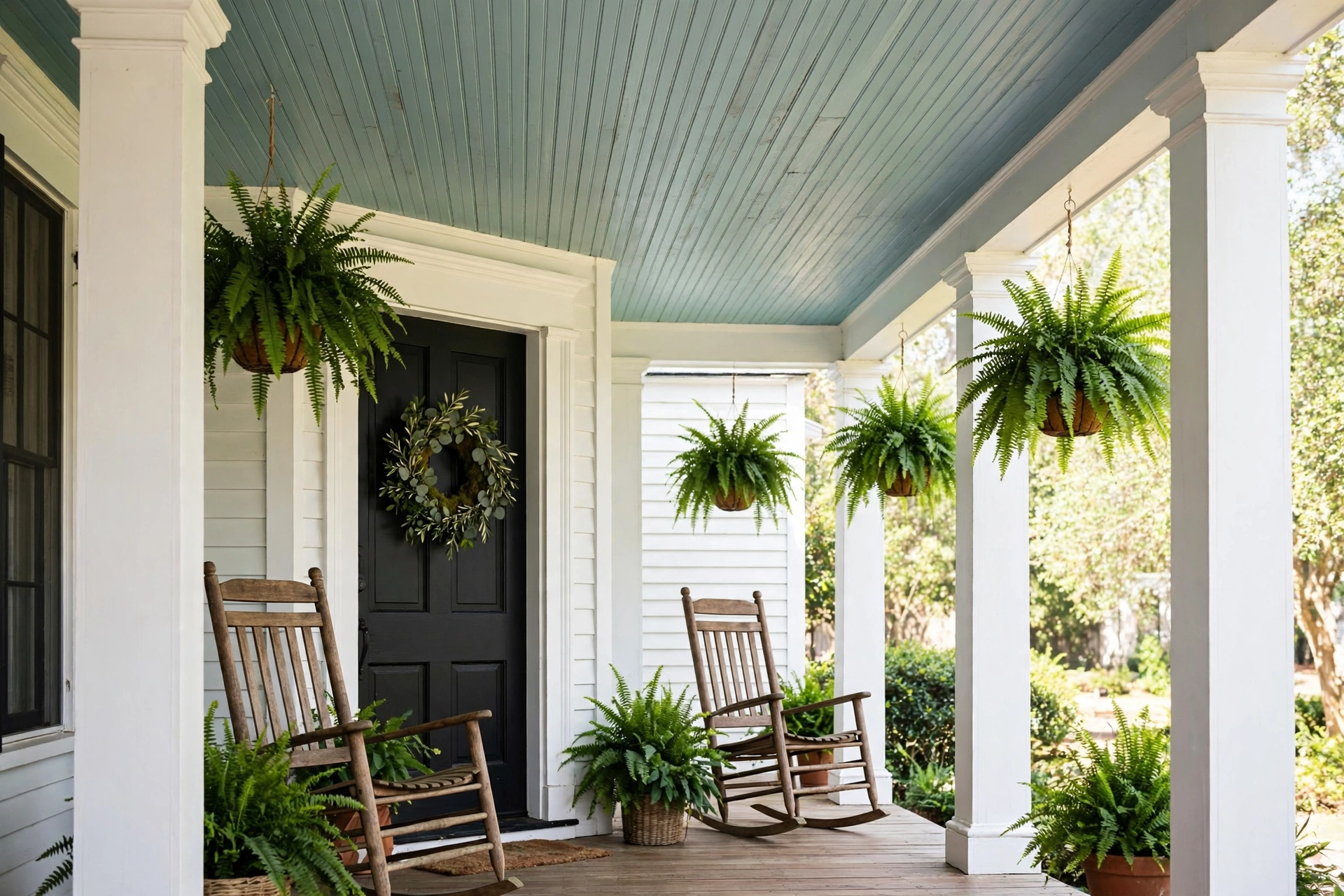
Haint blue — a soft blue-green shade rooted in Southern tradition, from Charleston porches to New Orleans cottages — is one of the most charming porch ceiling ideas you’ll find. The folklore says the color confuses insects and spirits alike; the practical reality is that a pale blue-green reads like sky, which makes a low porch ceiling feel higher and airier. Either way, the result is lovely.
You don’t need to commit to a historic formula. Any pale, slightly green-tinted blue works: think robin’s egg, sea glass, or a soft sky blue. It pairs gorgeously with white trim, natural wood furniture, and hanging ferns. On a covered porch, use an exterior acrylic latex paint for durability. If your porch gets strong afternoon sun, pick a shade with a little more saturation so it doesn’t wash out to near-white in bright light.
4. Crisp White Shiplap Ceiling
Shiplap gives you wider planks and a bolder shadow line than beadboard, which makes it a great pick for larger porches where thin grooves might get lost. Painted white, it delivers that clean modern-farmhouse look that photographs beautifully and makes the whole porch feel fresh and current. The wider boards also mean fewer pieces to install, which can speed up a DIY project.
For outdoor use, choose shiplap rated for exterior or covered-porch applications, and leave the tiny nickel gap between boards for the signature look. White shiplap pairs especially well with black or bronze light fixtures, a dark-stained floor, and simple modern furniture. If you love the farmhouse aesthetic but want something a touch more contemporary than beadboard, this is your ceiling.

5. Reclaimed Barn Wood Planks
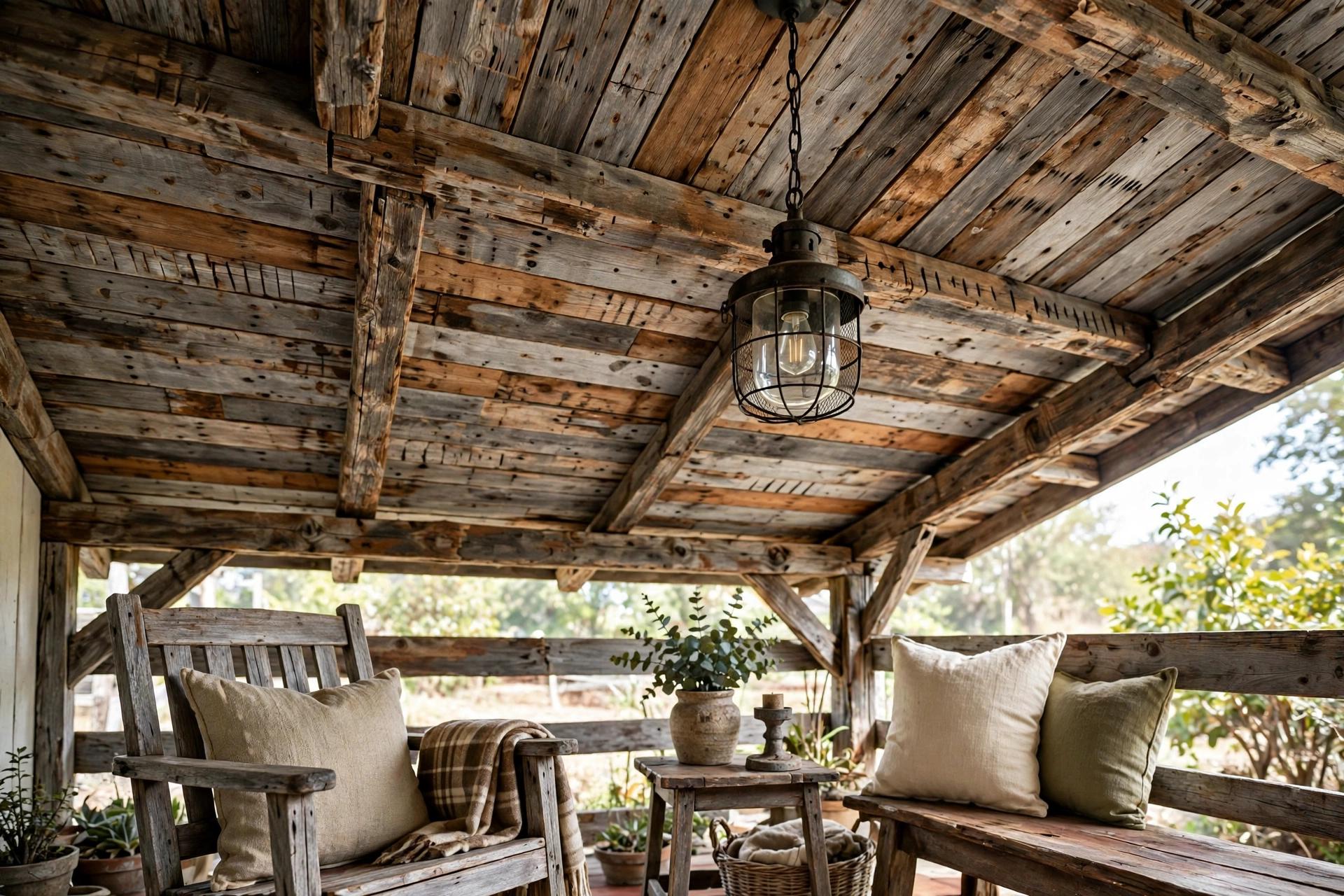
For rustic character that new lumber simply can’t fake, reclaimed barn wood makes a stunning porch ceiling. Weathered grays, warm browns, and the occasional nail hole or saw mark give the ceiling instant history and texture. It’s a bold choice, but on the right home — farmhouses, mountain cabins, industrial-style spaces — it’s unforgettable.
Source reclaimed boards from a reputable salvage yard and make sure they’re kiln-dried and free of pests before bringing them overhead. Because reclaimed wood is irregular, plan for a bit more waste and patience during installation than you’d need with new boards. Seal it with a clear matte exterior finish to lock in the patina while protecting against moisture. Keep the walls and floor simpler so the ceiling can be the star.
6. Low-Maintenance PVC Beadboard Panels
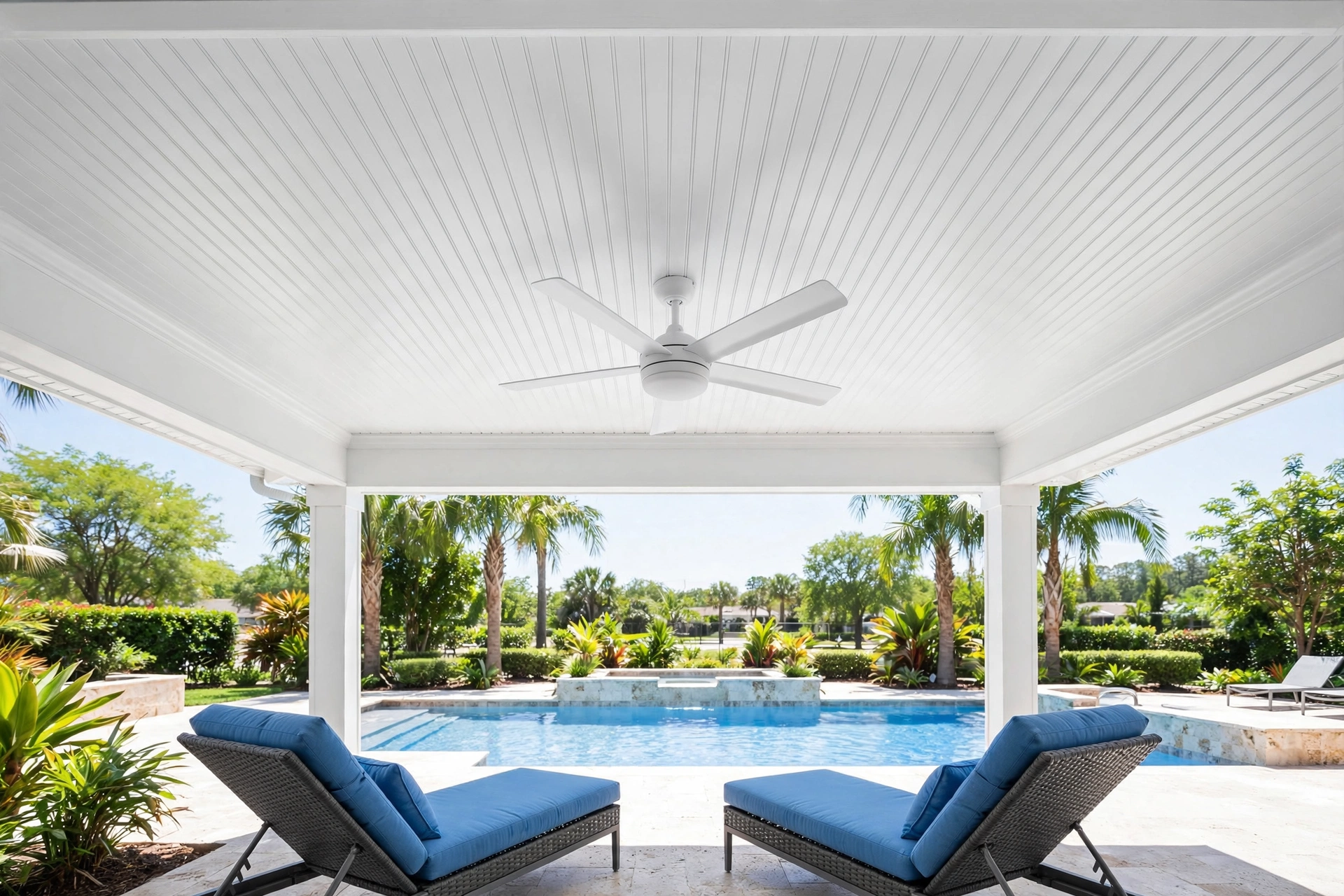
Love the beadboard look but not the upkeep? PVC beadboard panels deliver the same grooved profile in a material that never needs painting, won’t rot, and shrugs off the humidity that makes real wood swell and peel. It’s the set-it-and-forget-it option, and from a normal viewing distance it’s hard to tell from painted wood.
PVC panels typically cost a bit more than basic wood beadboard up front, but many homeowners find the savings on repainting and repairs make up for it within a few years. Installation is DIY-friendly: the lightweight panels cut with standard woodworking tools and fasten with nails or adhesive. This is the smartest pick for porches in humid climates — think Gulf Coast summers or Florida’s year-round dampness — near pools, or anywhere you’d rather enjoy the porch than maintain it.
7. Coffered Porch Ceiling for a High-End Look
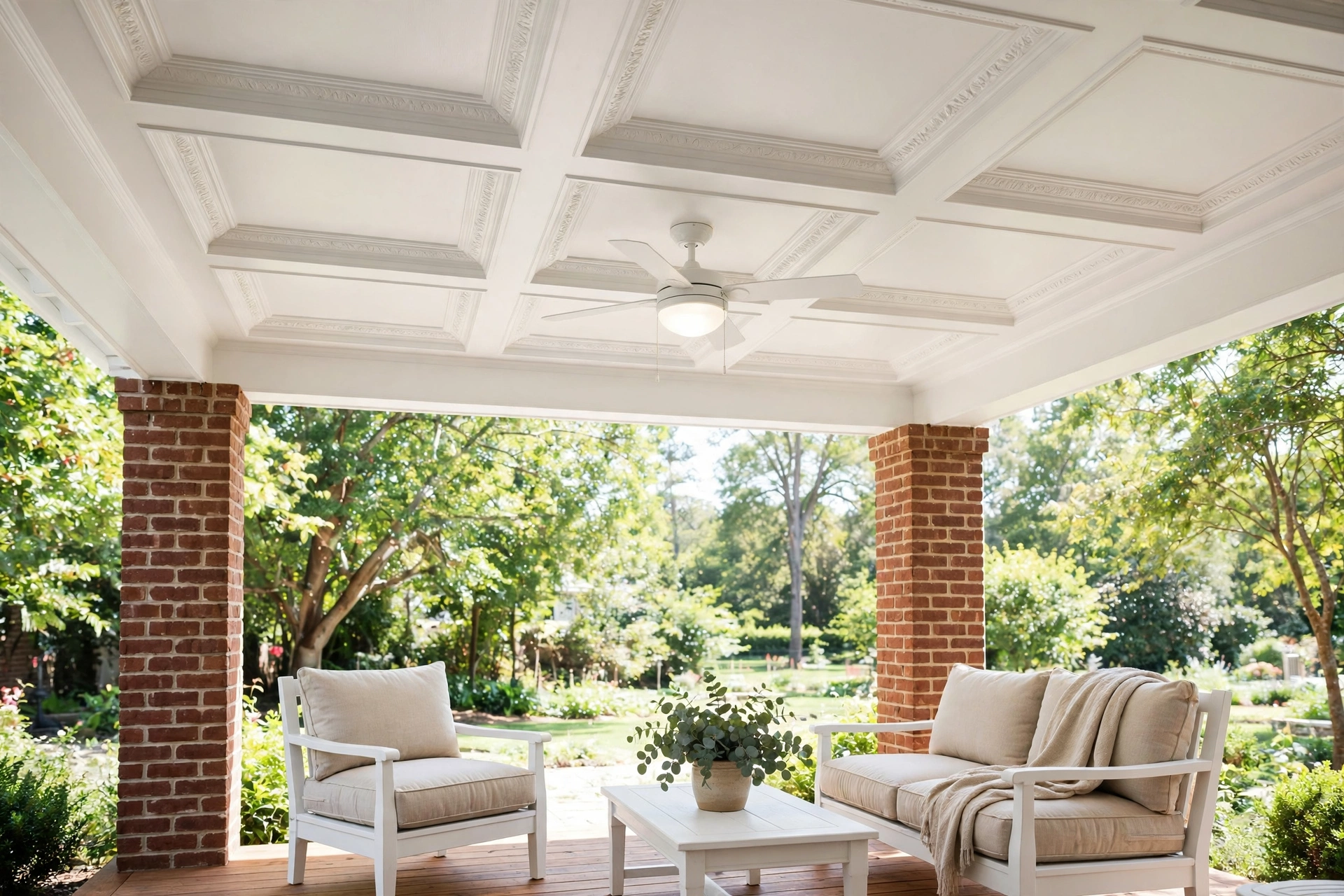
If your porch has the height for it, a coffered ceiling — recessed panels framed by beams or molding — adds architecture and drama that flat ceilings can’t match. Each coffer creates depth and shadow, turning the ceiling into a genuine design feature. It’s the kind of detail that makes guests stop and look up, and it suits colonial, Georgian, and upscale traditional homes especially well.
Coffers work best with at least nine feet of ceiling height so the framing doesn’t press down on the space. Paint the whole treatment one color (white is classic) to keep it elegant rather than busy, and consider placing a light fixture or fan in the center coffers to emphasize the symmetry. This is a bigger project than flat beadboard, so get a couple of quotes from carpenters experienced with exterior trim work before committing.
8. Exposed Beams with Wood Planking
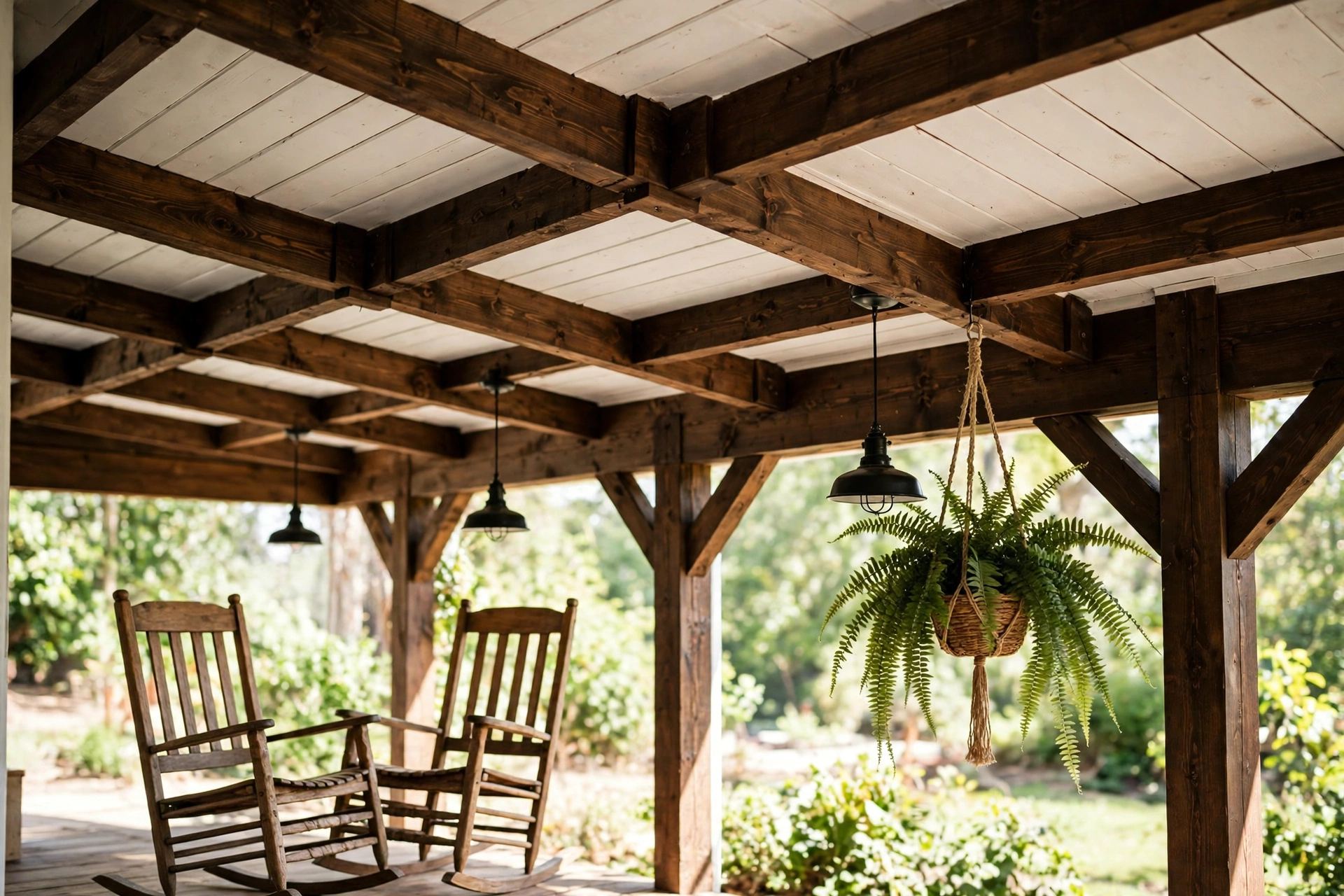
Exposed beams paired with wood planking give a porch ceiling warmth, rhythm, and a handcrafted feel. The beams break a wide ceiling into pleasing sections, add visual weight that grounds the space, and provide natural mounting points for fans, pendant lights, and hanging plants. Stain the beams a shade darker than the planking for contrast, or paint everything one color for a calmer look.
This style shines on craftsman, lodge, and Mediterranean-style porches. If your porch already has structural beams, you may just need to dress them up with planking between them — a much smaller project than adding beams from scratch. Wrap any visible wiring for fans or lights neatly along a beam so it disappears into the design. For a modern twist, try chunky box beams in a dark stain over white beadboard.
9. Whitewashed or Lime-Washed Wood Planks
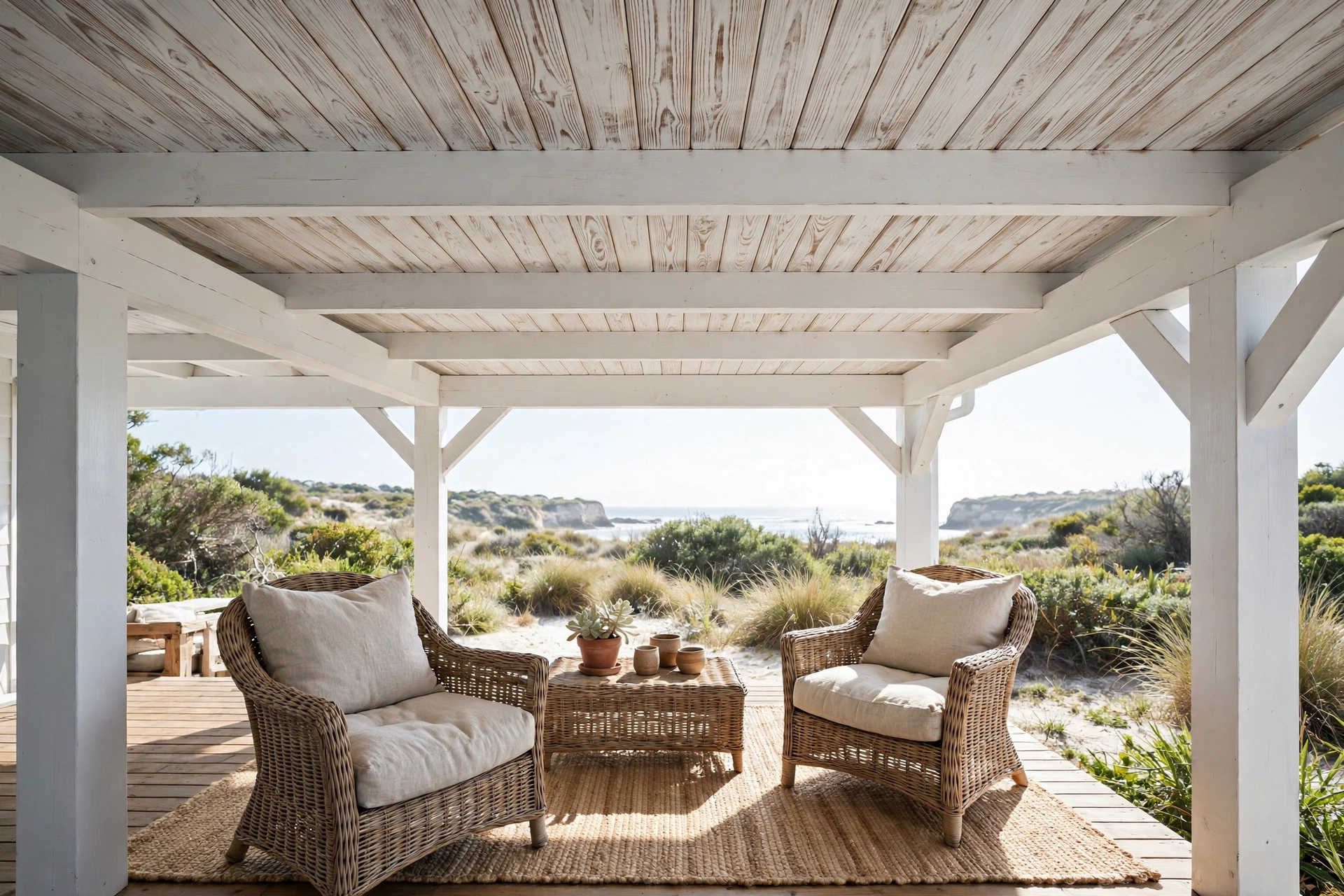
Whitewashing sits perfectly between painted white and natural wood: the thin wash lets the grain show through while lightening the boards to a soft, sun-bleached tone. It’s ideal for coastal cottages, Scandinavian-inspired porches, and anyone who finds solid white a bit stark but natural wood a bit dark. Lime wash gives a similar effect with a chalky, old-world finish.
You can whitewash new pine planks yourself with diluted white exterior paint — brush it on, then wipe back the excess so the grain peeks through. Test your ratio on a scrap board first, because it’s easier to add a second coat than to remove one. Seal the finished ceiling with a clear exterior topcoat for durability. Pair a whitewashed ceiling with linen-look cushions, jute rugs, and light wood furniture for an easy breezy feel.
10. Pressed Tin Ceiling Tiles
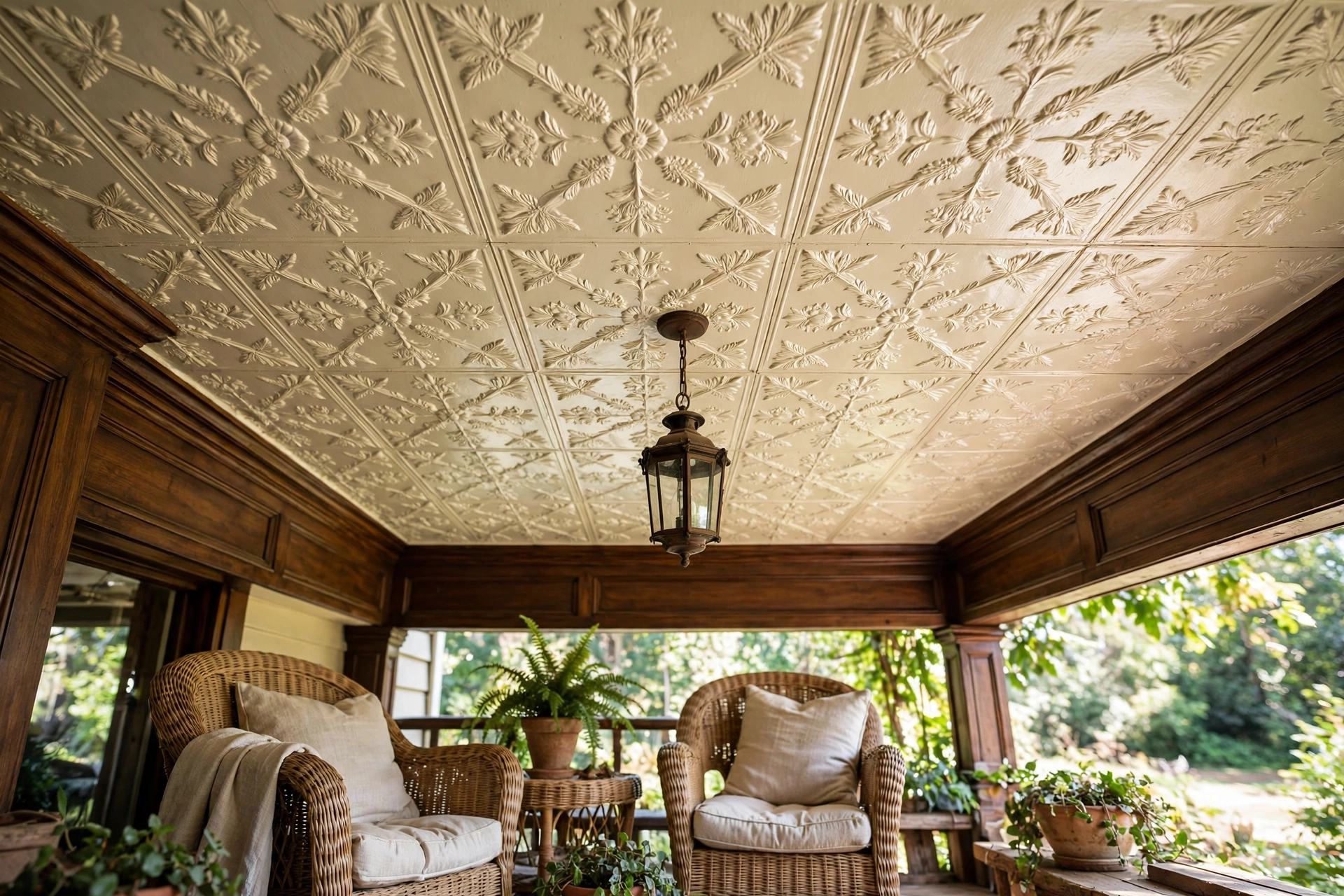
Pressed tin tiles bring vintage charm and intricate pattern to a porch ceiling — think Victorian storefronts and old farmhouse kitchens. The embossed designs catch light beautifully, adding shimmer and detail that flat materials can’t offer. Painted white or cream, tin tiles feel fresh and cottage-like; left in a metallic or copper finish, they turn glamorous.
Modern tin-style tiles are often made from lightweight aluminum or PVC, which makes them practical for porch use and much easier to install than antique tin. They’re a natural fit for Victorian, cottage, and eclectic homes, and they pair wonderfully with vintage-style light fixtures. Because the pattern is busy, keep the rest of the porch relatively simple so the ceiling can shine without competition.
Porch Ceiling Material Cost Comparison
Budgeting is easier when you can see the options side by side. The table below compares common porch ceiling materials by typical material cost, upkeep, and best use. Prices reviewed: October 2026.
| Material | Est. material cost (per sq ft) | Maintenance | Best for |
|---|---|---|---|
| Solid pine beadboard | $4–$8 | Repaint or restain every 3–5 years | Classic look on covered porches |
| MDF beadboard panels | $2–$4 | Paint as needed; avoid heavy moisture | Budget projects in dry climates |
| PVC/vinyl beadboard | $3–$6 | Occasional rinse; no painting | Humid climates, low upkeep |
| Cedar tongue-and-groove | $5–$8+ | Reseal every 2–3 years | Warm natural wood look |
| Pressed tin-style tiles | $4–$10 | Wipe clean; touch up paint | Vintage and cottage styles |
Cost estimates are based on typical 2026 pricing from major home-improvement retailers and home-cost guides; professional installation generally adds $3–$7 per square foot depending on region and ceiling height. Always get local quotes before budgeting.
Frequently Asked Questions
What is the best material for a porch ceiling?
For most covered porches, painted wood beadboard or PVC beadboard panels are the best all-around choices. Wood offers authentic texture and takes paint beautifully, while PVC costs a bit more up front but needs almost no maintenance and resists moisture, making it ideal for humid climates.
Should a porch ceiling be painted or stained?
Either works — it’s a style decision. Painted ceilings (especially white or haint blue) reflect more light and make a porch feel brighter and taller. Stained ceilings feel warmer and cozier but absorb light, so they’re best on porches with good daylight or plenty of fixtures. Always use exterior-rated paint or stain.
What is haint blue, and does it really repel insects?
Haint blue is a pale blue-green paint color with roots in Southern tradition, where folklore held that it confused insects and spirits. There’s no strong evidence it repels bugs, but the color genuinely makes ceilings feel higher and airier because it reads like sky. It remains one of the most beloved porch ceiling colors for its looks alone.
Can I install a beadboard porch ceiling myself?
Yes, if you’re comfortable with basic carpentry. Beadboard panels or tongue-and-groove boards install with nails or a brad nailer over ceiling joists or furring strips, and PVC panels are especially DIY-friendly because they’re lightweight. You’ll need a miter saw, a level, and a plan for working around light fixtures and fan boxes — turn off power at the breaker before touching any electrical.
How do I maintain a wood porch ceiling?
Inspect it once a year — ideally in spring, after a Northeast or Midwest winter has done its worst — for peeling paint, mildew, or water stains that could signal a roof leak. Clean with a soft brush or a gentle hose rinse, treat any mildew with an exterior-safe cleaner, and plan on repainting or restaining every three to five years. Catching small issues early keeps a wood ceiling beautiful for decades.
Key Takeaways
- White beadboard is the timeless, can’t-go-wrong choice for nearly any porch ceiling.
- Match your material to your climate: PVC or vinyl beadboard wins in humid areas, while real wood shines where upkeep is manageable.
- Paint color changes everything — white brightens, haint blue lifts, and stain warms up the space.
- Budget roughly $2–$8 per square foot for materials plus $3–$7 for professional installation (estimates; prices reviewed October 2026).
- Details like beams, coffers, and molding turn a plain ceiling into a design feature worth looking up at.