
You don’t need an acre to have a pool. Plunge pools — compact, deep, designed for cooling off and lounging rather than laps — fit in yards as small as 10×15 feet. Here’s how to make a tiny pool feel like a boutique hotel.
1. The Cocktail Pool
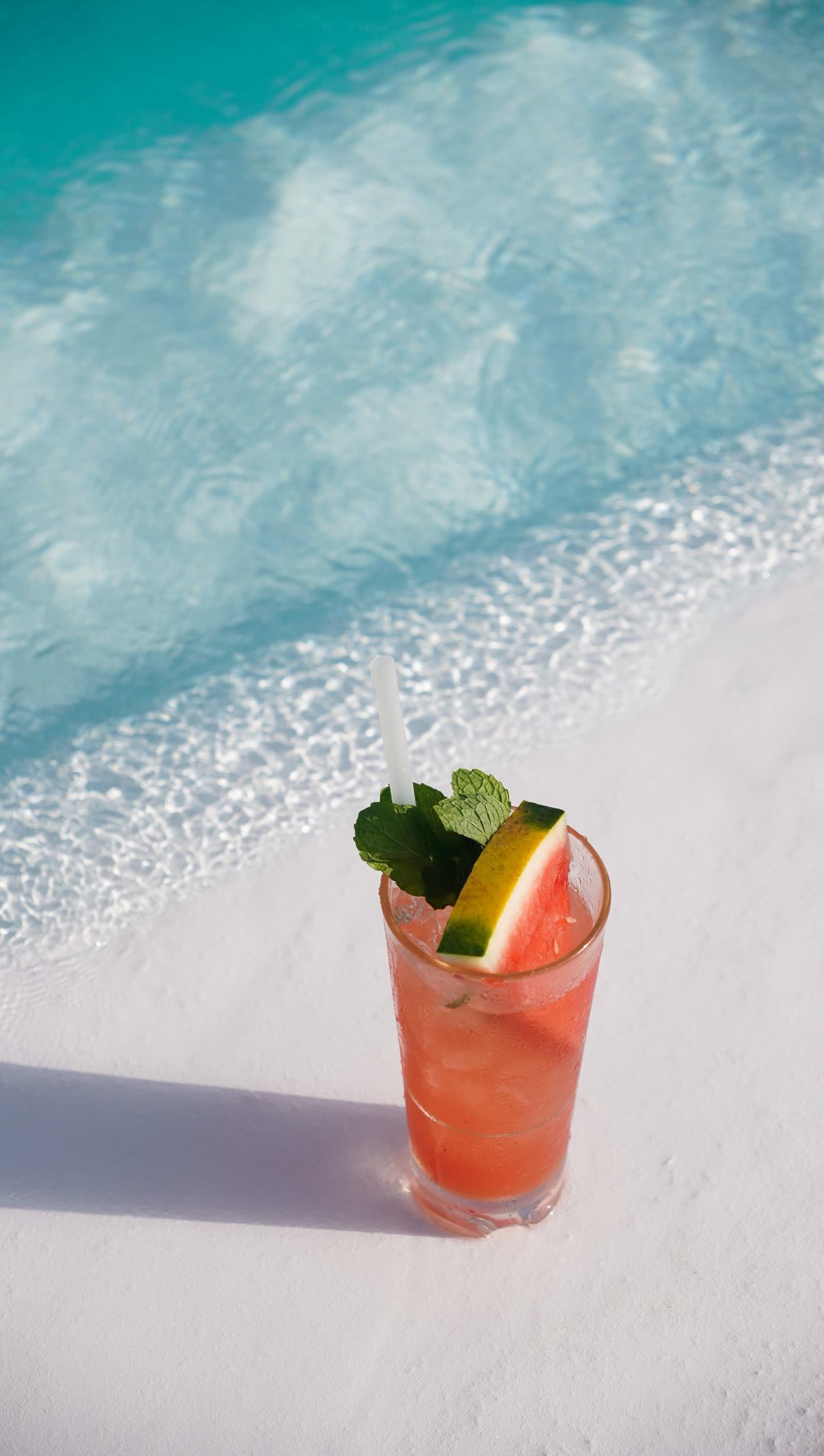
The “cocktail pool” is the plunge pool’s social cousin: typically 10–12 feet across, 3.5–4 feet deep, built for wading with a drink rather than swimming. Add a Baja shelf (a shallow ledge) for in-water loungers and it’s the most-used square footage in the yard.
Best for: Entertainers who want the pool-party vibe without the pool-maintenance bill.



2. The Spool (Spa + Pool)
A spool combines a hot tub’s heating and jets with a pool’s size — usually 12–16 feet long. Run it cool in summer, hot in winter, and you’ve got a genuine four-season water feature. The dual personality justifies the cost better than either alone.
Best for: Cold-climate owners who want year-round use.
3. Narrow Lap-Lite Lane
If your yard is long and skinny, a narrow pool (6–8 feet wide, 20+ feet long) fits where nothing else will. You won’t do real laps, but a tethered swim system (a resistance belt, ~$50) turns it into legitimate exercise.
Best for: Side yards and anyone who actually wants to swim.
4. The Courtyard Plunge
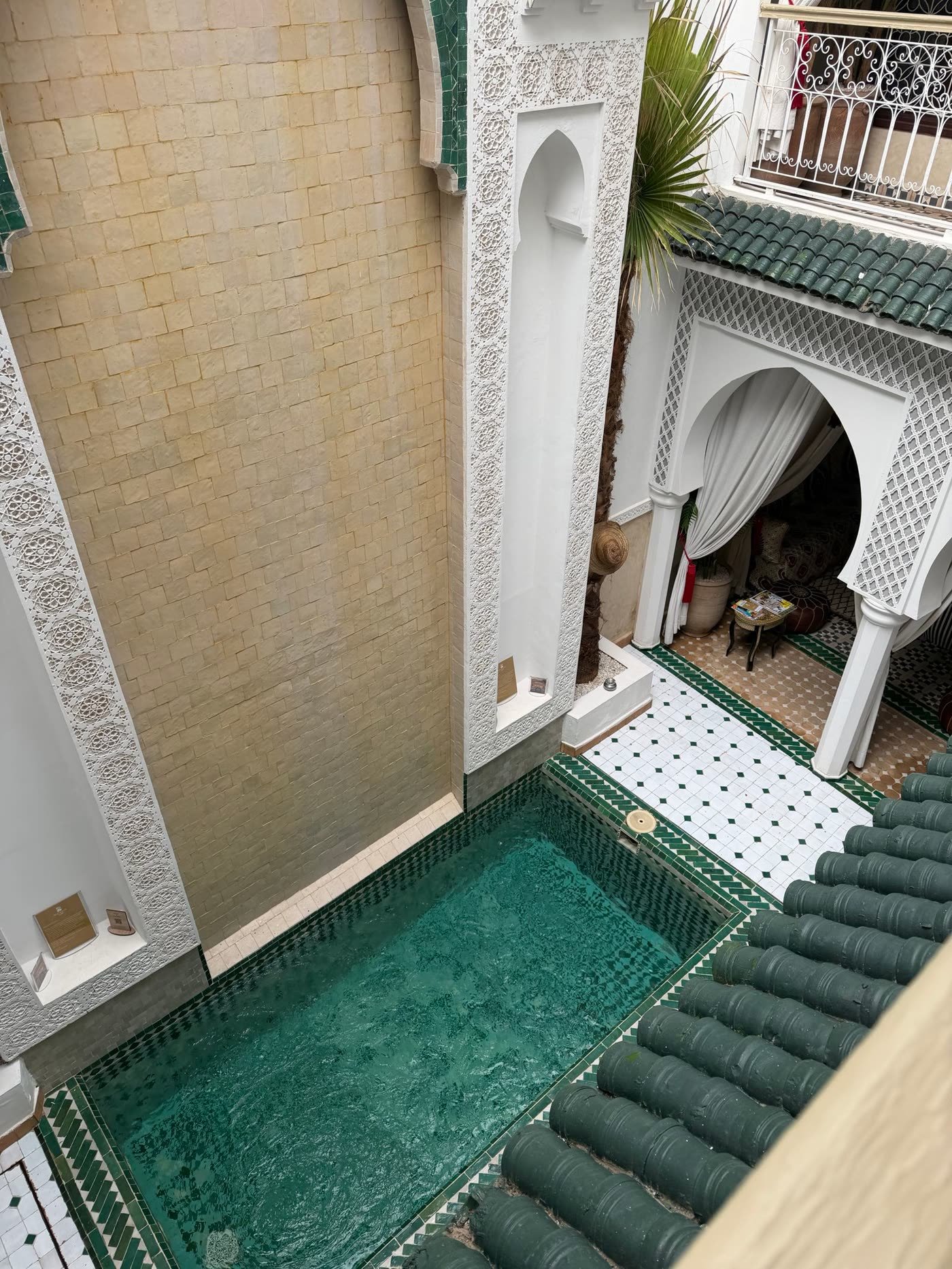
Center the pool in a walled courtyard with the house on two sides. The enclosure creates privacy, blocks wind (warmer water, less evaporation), and the whole space reads as an outdoor room rather than “a pool crammed in a yard.”
Best for: Urban lots where neighbors are close on every side.
5. Raised Edge Seating
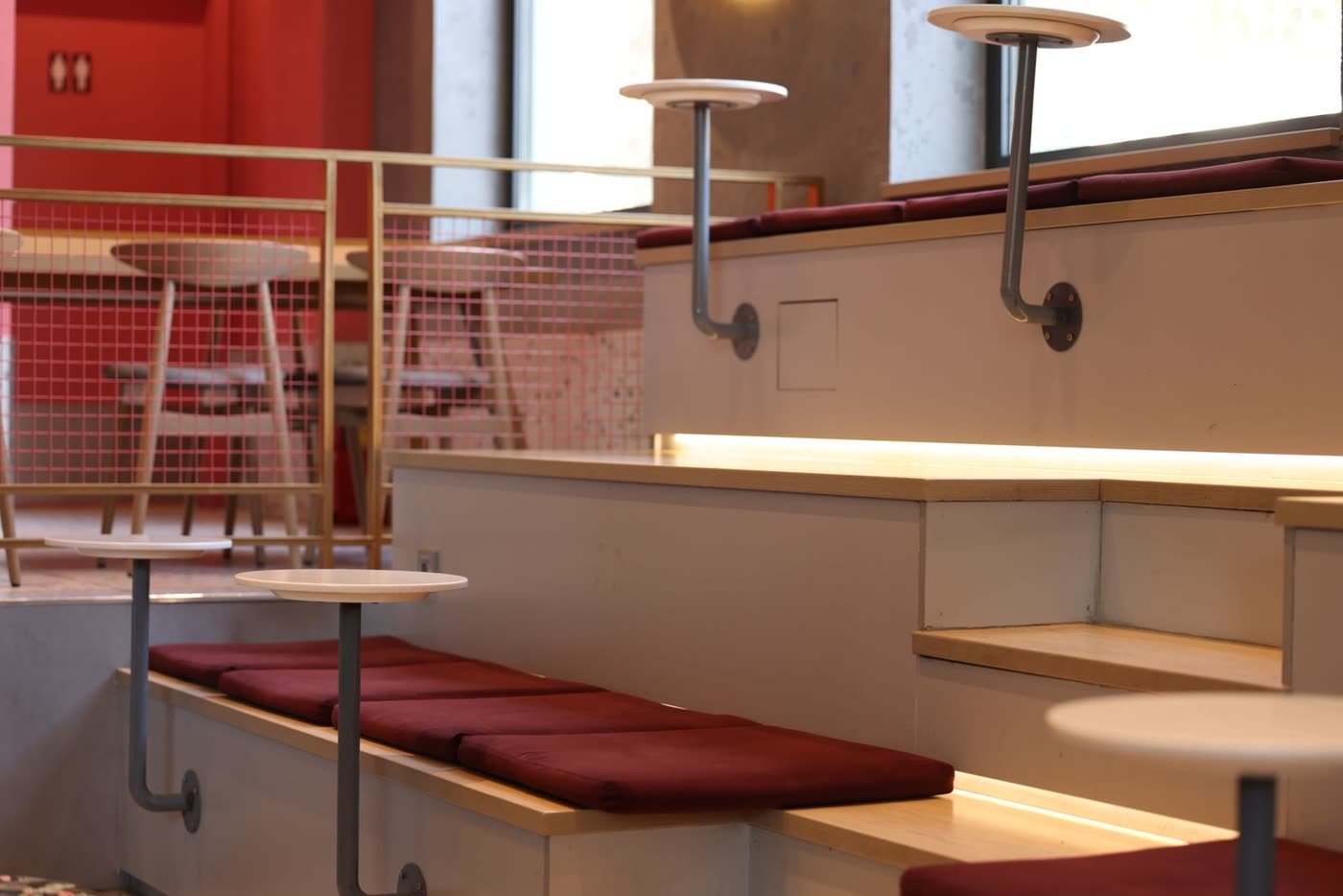
Build the pool with an 18-inch raised coping edge on one or two sides — it doubles as bench seating, a drink ledge, and a safety barrier for small kids. The raised edge also makes the pool read as architecture, not just a hole with water.
Best for: Making a small pool feel designed and multi-functional.
6. Dark Interior Finish
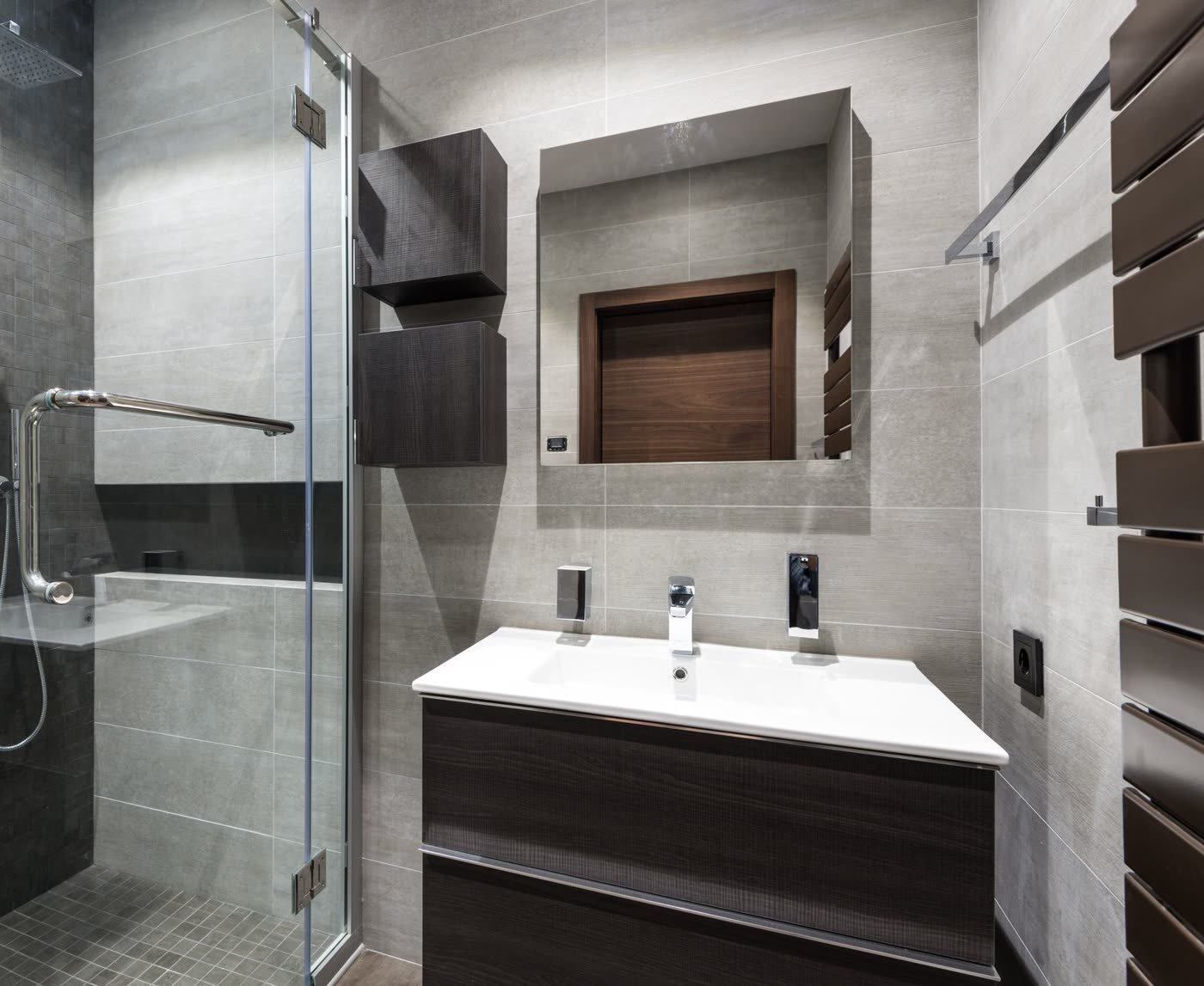
Deep gray, charcoal, or dark blue plaster makes a small pool look dramatically deeper and more lagoon-like than standard white or light blue. The dark surface also absorbs heat, warming the water a few degrees for free.
Best for: The boutique-hotel look on a plunge-pool budget.
7. The Infinity Edge Illusion

On a sloped lot, even a small pool can have a vanishing edge on the downhill side. The infinity effect makes the water feel endless and the yard feel bigger — it’s the highest visual-impact upgrade per square foot in pool design.
Best for: Sloped yards with any kind of view.
8. Integrated Spa Spillover
A small raised spa that spills over into the plunge pool adds the sound of moving water, a hot-soak option, and visual interest — all in about 30 extra square feet. The spillover edge becomes the pool’s focal point.
Best for: Getting spa + pool in one compact footprint.
9. Tanning Ledge Focus
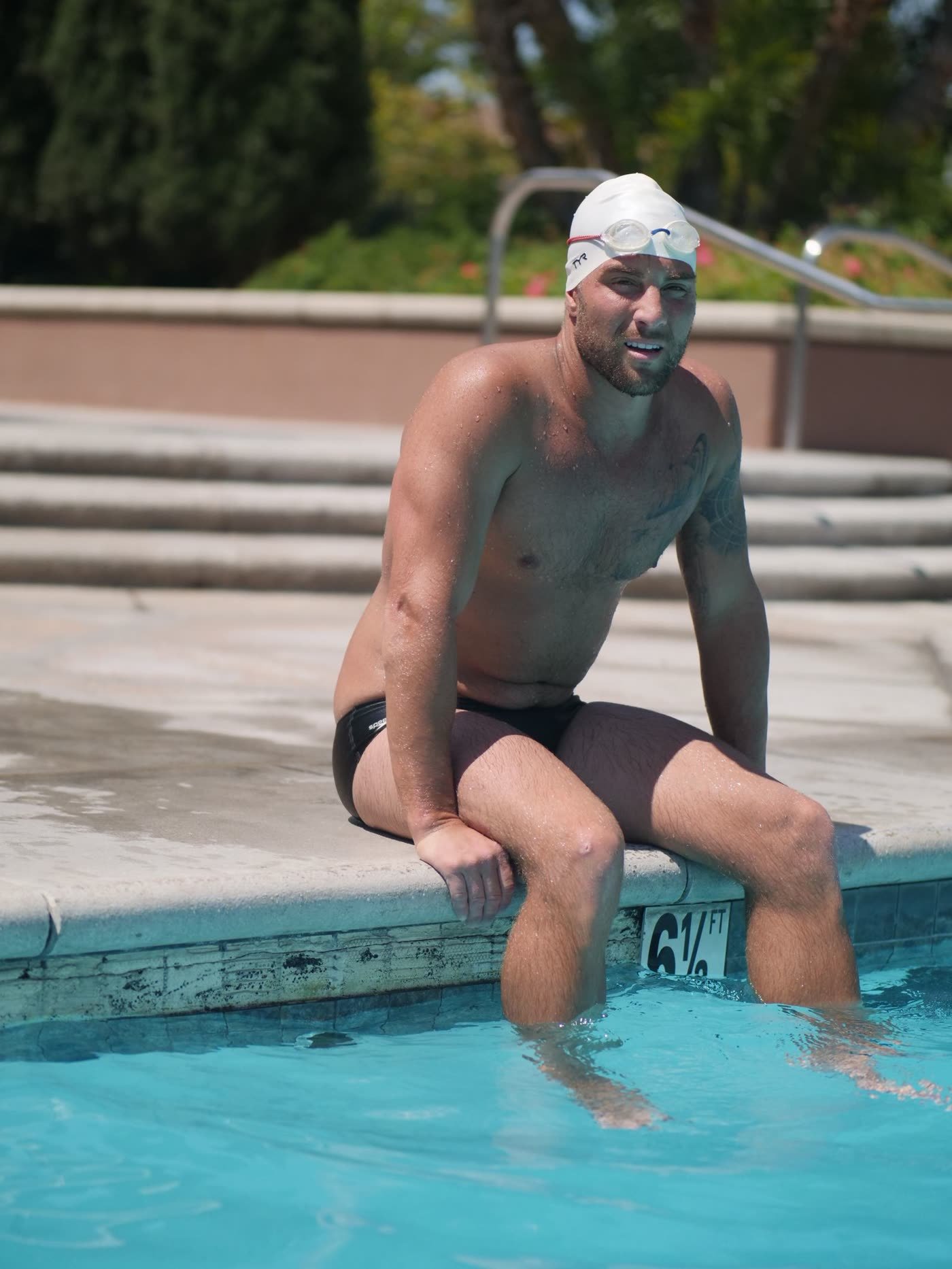
Dedicate a third of a small pool to an extra-large Baja shelf (12–18 inches deep) with two in-water loungers and a shared umbrella. In a plunge pool, the shelf IS the pool for most users — design around lounging, not swimming.
Best for: Sun-lovers; the shelf gets more use than the deep end.
11. The Stock Tank Stepping Stone
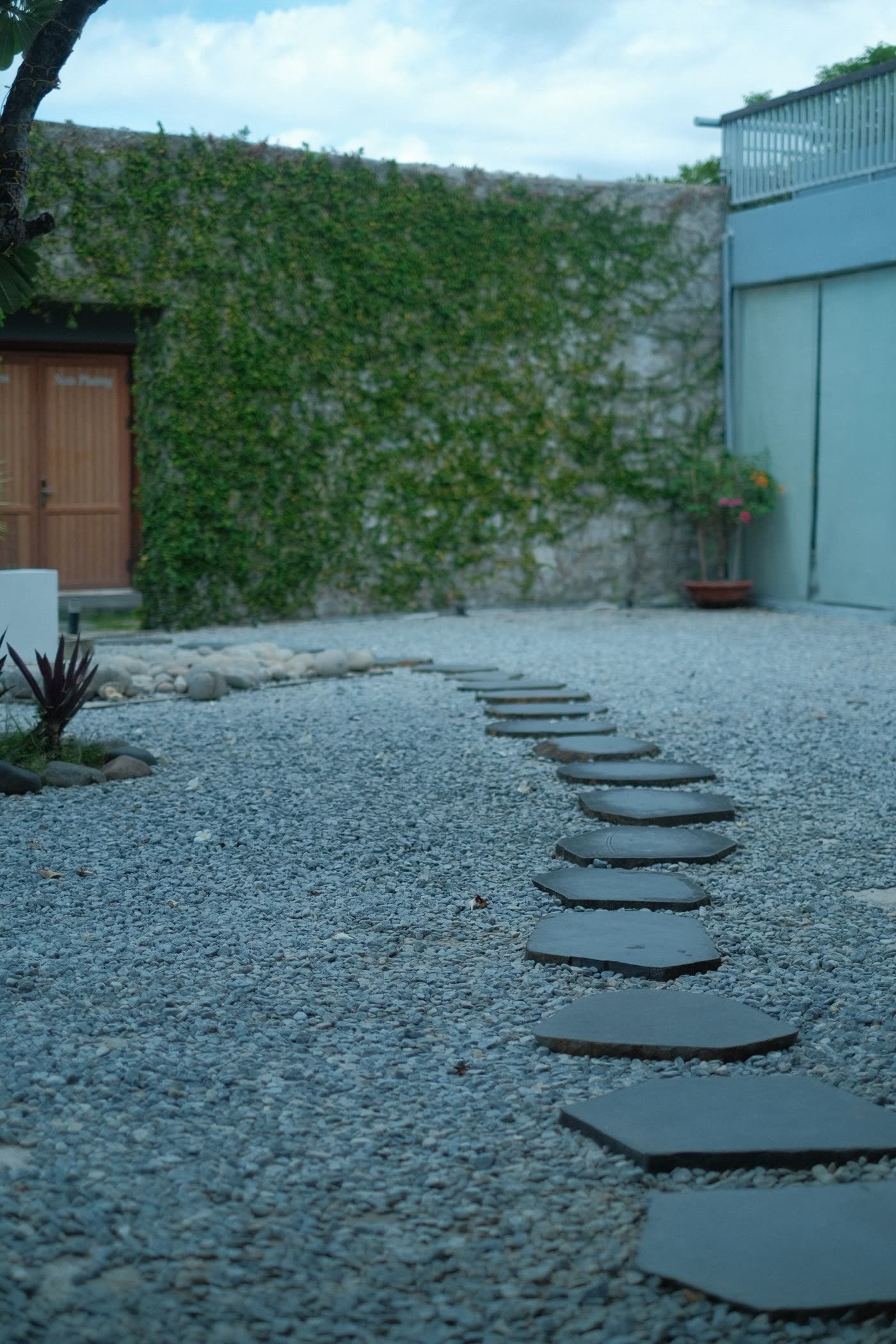
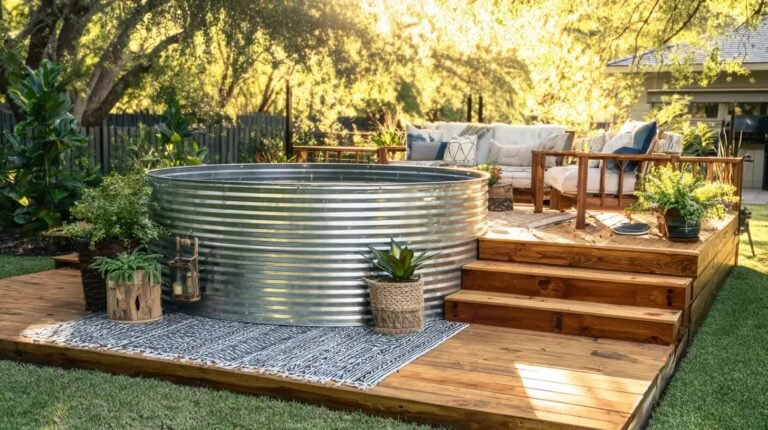
Not ready for $25,000? An 8-foot galvanized stock tank ($400–$600) with a filter pump is a legitimate plunge pool trial run. Use it for a summer: if you find yourself in it daily, the inground plunge pool is worth the investment. If it becomes a leaf collector, you’ve saved yourself twenty grand. Many plunge pool owners started exactly this way.
Best for: Testing whether you’ll actually use a plunge pool before committing.
12. Partially Above-Ground Build
On flat lots, building the pool 18–24 inches above grade (with the rest buried) cuts excavation costs dramatically and creates natural seating edges all around. The raised profile also keeps out surface runoff and makes the pool a visual anchor rather than a hole in the lawn.
Best for: Flat yards where digging deep is expensive or hits rock.
10. Night-First Design
Design the pool for evening use: underwater LEDs, perimeter strip lighting, a fire bowl at one corner, and steam rising off heated water. A small pool used at night feels mysterious and luxurious in a way daylight can’t match.
Best for: People whose pool time is mostly after work.
Plunge Pool Cost Guide (2026 US Prices)
Costs vary wildly by type and region, but here’s the honest range:
Prefab fiberglass plunge pool: $15,000–$30,000 installed. The shell arrives on a truck, gets craned in, and you’re swimming in 2–3 weeks. Best value for a real inground pool.
Gunite/concrete plunge pool: $30,000–$60,000+. Fully custom shape and finish, but you’re paying for 6–10 weeks of construction and a crew in your yard all summer.
Spool (heated): $25,000–$55,000. The heater, jets, and controls add $8,000–$15,000 over a comparable unheated plunge pool — worth it if you’ll use it October through April.
Above-ground plunge / stock tank style: $800–$10,000. The budget end of the spectrum; see our stock tank guide for the ultra-budget play.
Running costs: A plunge pool’s small volume is its superpower — expect $50–$100/month in chemicals and energy versus $150–$300 for a full-size pool. Heating a spool in winter runs $100–$200/month depending on your climate and energy rates.
Where the money goes: excavation and access (can a truck reach your yard?) is the wildcard — tight urban lots can add $3,000–$8,000 in crane and hand-dig costs. Get at least three quotes and ask specifically about access surcharges.
For the bigger-picture pool planning, our backyard pool ideas covers full-size options, and backyard wedding decor ideas shows how a pretty pool doubles as event scenery. The Association of Pool & Spa Professionals has solid guidance on compact pool construction standards.
Frequently Asked Questions
How small can a plunge pool be?
Functional plunge pools start around 8×10 feet. Below that you’re in “large hot tub” territory — still enjoyable, but call it what it is when getting quotes.
How much does a small plunge pool cost?
A basic inground plunge pool runs $25,000–$50,000 installed in most US markets. Prefab fiberglass plunge pools are the budget play at $15,000–$30,000 installed. Above-ground plunge options can go under $10,000.
Are plunge pools worth it?
If your yard can’t fit a full pool, absolutely — a plunge pool delivers 80% of the pool experience (cooling off, floating, evening soaks) in 30% of the space and roughly half the maintenance.
Do plunge pools add home value?
In warm climates, yes — appraisers and buyers treat them like real pools. In cold climates the value-add is softer, but a spool (heated) holds value better than an unheated plunge pool.