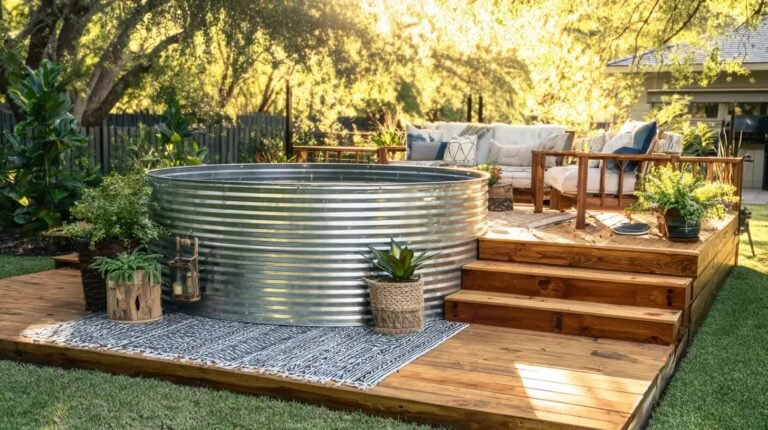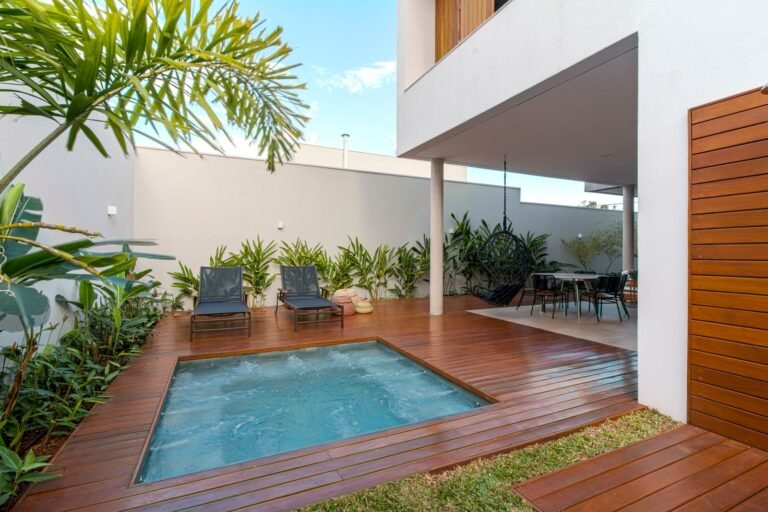

The difference between “a pool” and “a resort” is landscaping. The right plants hide fences, soften hard edges, create privacy, and make every swim feel like vacation. The wrong plants drop leaves in the water and die from chlorine splash. Here’s how to get it right.
1. Clumping Bamboo for Instant Privacy
Clumping (not running!) bamboo grows 10–15 feet in a couple of seasons and creates a living wall that sways beautifully. Plant it in contained beds or large pots to be extra safe. It’s the fastest privacy screen in landscaping.
Best for: Blocking a two-story neighbor’s view, fast.



2. Ornamental Grasses (The No-Mess Choice)
Maiden grass, pampas grass, and fountain grass give you height, movement, and zero leaf litter in the pool. They tolerate splash, need almost no water once established, and look good 10 months a year.
Best for: Low-maintenance owners who hate skimming.
3. Bird of Paradise
The single most “resort” plant you can buy. Big architectural leaves, dramatic flowers, and it thrives in the heat radiating off pool decks. In zones below 9, grow it in large pots and overwinter indoors.
Best for: Instant tropical vibes, even in non-tropical states.
4. Raised Planter Walls
Build 18–24 inch raised planters along the pool’s edge and fill with layered planting (tall behind, trailing in front). The elevation keeps soil out of the pool, improves drainage, and creates a finished look that flat beds can’t match.
Best for: A polished, designed feel around any pool shape.
5. Palm Cluster (Cold-Hardy Varieties)
Windmill palms and needle palms survive down to zone 7 and give you the silhouette everyone associates with pool vacations. Cluster three at varied heights rather than lining them up like soldiers.
Best for: Southern and mid-Atlantic yards wanting palms without the tropics.
6. Trailing Plants on the Coping
Let creeping jenny, trailing rosemary, or dichondra spill over the pool’s edge from raised beds. The softness contrasts beautifully with hard coping stone, and trailing plants rarely drop debris into the water.
Best for: Softening a stark modern pool.
7. Privacy Hedge: Podocarpus or Wax Myrtle
For a formal evergreen screen, podocarpus (zones 8–11) or wax myrtle (zones 7–10) shear into clean hedges, tolerate pool-adjacent conditions, and don’t shed much. Plant 3–4 feet apart for a solid wall in 2–3 years.
Best for: A manicured, always-green backdrop.
8. Gravel + Boulder Zones
Replace fussy lawn right at the pool’s edge with river rock or decomposed granite and a few sculptural boulders. No mowing near the pool, no grass clippings in the water, and the texture contrast looks high-end.
Best for: Eliminating the muddy, trampled grass ring around pools.
9. Night-Lit Planting Beds
Uplights in the planting beds around the pool do double duty: they make the landscaping gorgeous after dark and provide ambient light so the pool area doesn’t need harsh floodlights. Warm-white (2700K) keeps the resort mood.
Best for: Evening swimmers — the pool area’s best hours.
10. Citrus in Pots
Dwarf Meyer lemon or lime trees in large pots around the pool: fragrant flowers, fruit you can actually use, and easy to move. Citrus loves the heat and sun of a pool deck.
Best for: Edible landscaping with a vacation scent.
11. The Outdoor Shower Corner
Tuck a simple outdoor shower (even a $150 freestanding kit) into a planted corner near the pool. Surround it with tall grasses for privacy. It keeps sunscreen and chlorine out of the house and feels incredibly luxurious.
Best for: Anyone tired of wet footprints through the house.
12. Hibiscus Hedge
In zones 9–11, hibiscus grows into a flowering hedge 6–8 feet tall with blooms all summer. In colder zones, grow tropical hibiscus in pots and swap in hardy Rose of Sharon for the same effect. Flowers + privacy in one plant.
Best for: Color and screening in warm climates.
13. Deck-Level Herb Wall
Mount a vertical planter on the fence near the pool’s lounge area with mint, basil, and rosemary. Fresh herbs for poolside drinks, great scent, and vertical gardening wastes zero floor space.
Best for: Cocktail enthusiasts with limited square footage.
14. Stepping Stone Path
A path of large natural stepping stones through planting beds to the pool keeps feet clean and creates a sense of arrival. Space them for a comfortable stride and set them in gravel, not mud.
Best for: Connecting the house to a detached pool area.
15. The “No-Plant” Minimalist Edge
Sometimes the best landscaping is restraint: a clean concrete or paver surround, one sculptural plant per corner (agave, olive tree, or cordyline), and nothing else. Minimal debris, minimal maintenance, maximum modern.
Best for: Modern homes and people who’d rather swim than garden.
Plants to Never Put Near a Pool
Trees with aggressive roots: Willow, ficus, silver maple, and elm will hunt down your pool’s plumbing and shell. Keep them at least 20 feet away — no exceptions.
Heavy shedders: Deciduous trees that drop leaves, flowers, or seed pods (looking at you, crepe myrtle and jacaranda) mean daily skimming. Beautiful from a distance; miserable poolside.
Thorny plants near walkways: Roses and bougainvillea are fine in beds, but keep them back from paths where wet bare feet walk. One thorn incident ruins the vibe.
Bee magnets right at the loungers: Lavender and bee balm are lovely, but plant them at the yard’s edges, not next to the chairs. Nobody relaxes while dodging bees.
Invasive spreaders: Mint, bamboo (running types), and ivy will escape their beds and colonize everything. If you must have them, pots only — never in the ground near a pool.
See our main backyard pool ideas for the pool itself, and patio privacy ideas with screens and plants for more screening tactics. The Clemson Extension’s poolside planting guide is an excellent authority on chlorine-tolerant plant selection.
Frequently Asked Questions
What plants survive around a saltwater or chlorine pool?
Ornamental grasses, bird of paradise, hibiscus, agave, and most palms tolerate occasional splash. Avoid anything with heavy leaf drop (maples, oaks) or invasive roots (willows, ficus) near the pool shell.
How far should plants be from the pool edge?
Keep planting beds at least 2–3 feet from the water’s edge to reduce debris and give maintenance access. Raised planters can sit closer since they’re contained.
What should I NOT plant near a pool?
Trees with aggressive roots (they crack pool shells), messy fruit droppers, thorny plants along walkways, and anything that attracts bees heavily right where people lounge.
How do I get privacy around my pool fast?
Clumping bamboo and tall ornamental grasses give the fastest coverage (one season). For instant results, combine young plants with a temporary reed or fabric screen that you remove once the planting fills in.