Balcony herb garden ideas work best when you match herbs to your sun hours: 6+ hours for basil and rosemary, 3–4 for mint, parsley, and chives. Start with 4–6 seedlings ($2–$4 each), pots with drainage, and quality potting mix — a full starter setup costs $67–$114 and yields fresh herbs in 2–3 weeks.
Before you buy a single pot for these balcony herb garden ideas, you face two decisions that determine whether your balcony herb garden thrives or fizzles. First: how many hours of direct sun does your balcony actually get? Second: seeds or seedlings? Get the sun match right and buy established seedlings from a US garden center, and you skip the hardest part of herb gardening entirely. Most failed balcony herb gardens are not a talent problem — they are a sun-mismatch problem, like planting basil on a north-facing balcony that gets two hours of light.
This guide gives you 10 balcony herb garden ideas designed for real apartment balconies — railing planters, tiered stands, vertical walls, and more — plus a starter cost breakdown in USD and honest care tips for US climate zones. Whether you are in a sunny Texas apartment or a shaded Chicago high-rise, there is a setup here that works.




1. Railing Planters for Sun-Loving Herbs
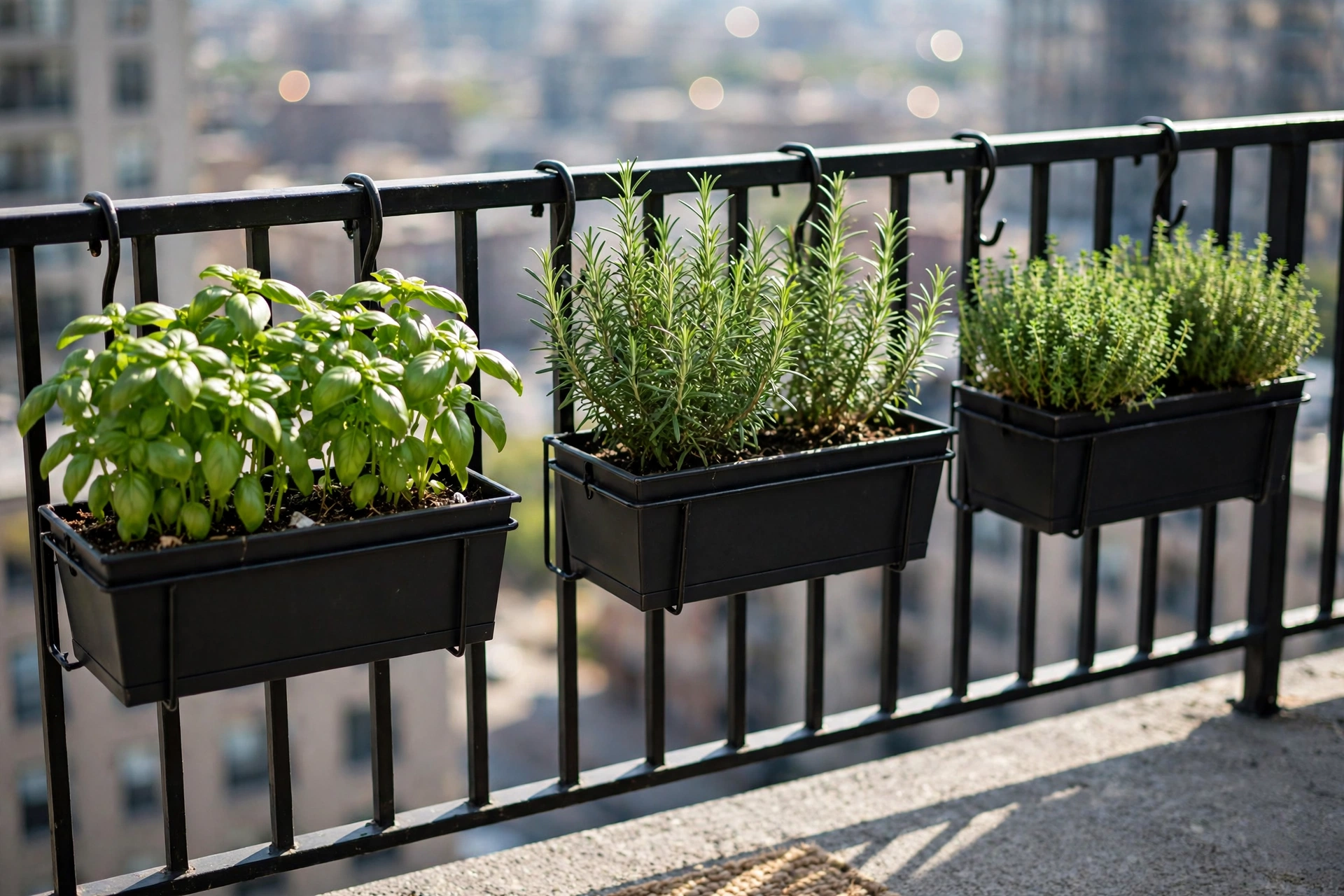
Your balcony railing is prime real estate for balcony herb garden ideas: it catches the most sun and uses zero floor space. Saddle-style railing planters hook over standard 2×4 or metal railings and put basil, rosemary, thyme, and oregano right where the light is strongest. These Mediterranean herbs all want 6 or more hours of direct sun, which is exactly what a south- or west-facing railing delivers in most US apartments. Choose planters at least 6 inches deep with drainage holes — shallow boxes dry out fast in July heat, especially in Texas and Arizona where afternoon temperatures punish small containers. Line metal planters with coco coir to insulate roots, and water daily in summer since railing pots dry faster than floor pots. One 24-inch railing box holds three herb plants comfortably.
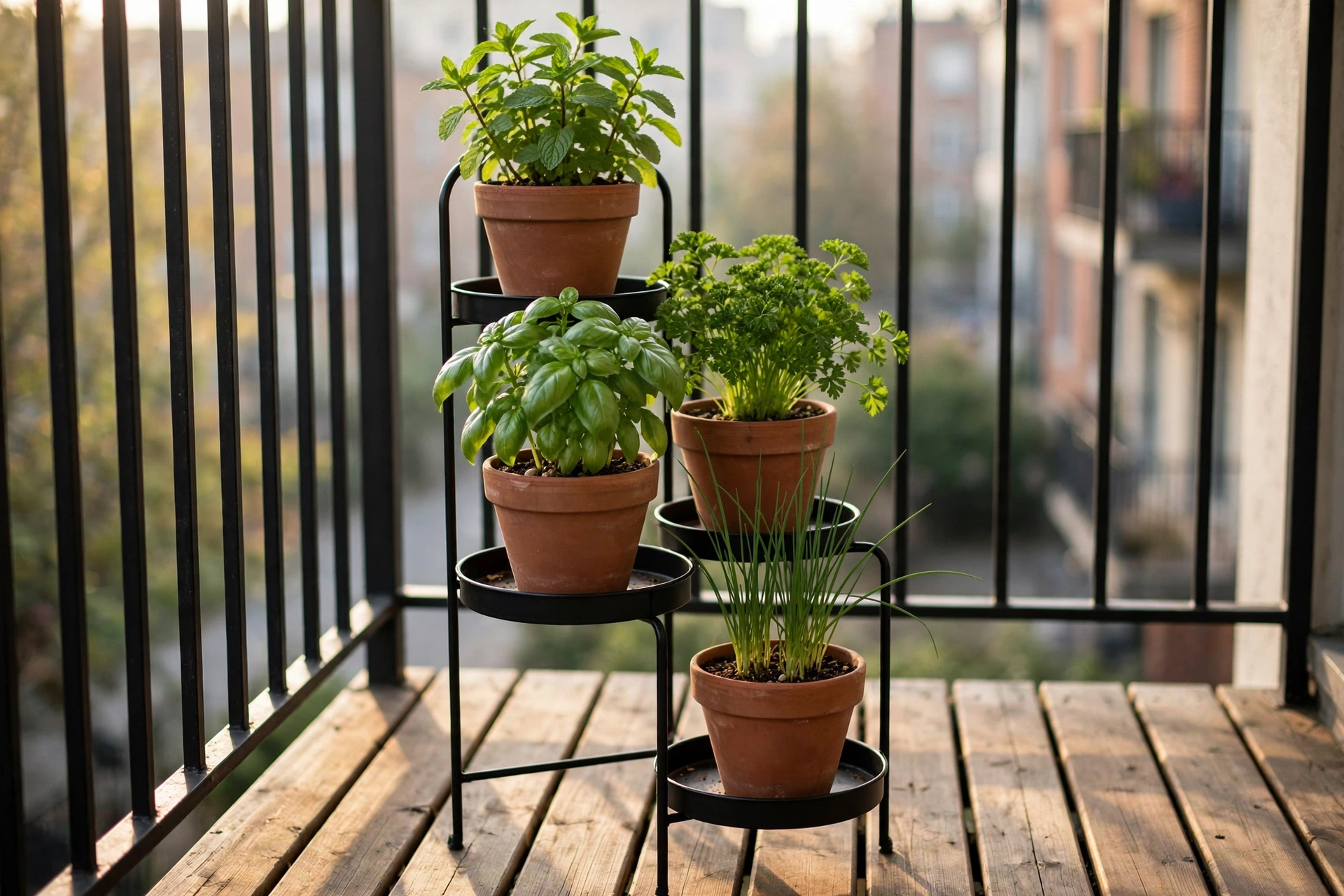
2. Tiered-Stand Balcony Herb Garden Ideas for Tiny Floors
When floor space is measured in square feet, go vertical. A 3-tier freestanding plant stand (typically $30–$50 at US home-improvement stores) holds 6 to 9 pots in about 2 square feet of floor — the highest herb density of any balcony herb garden idea on this list. Put sun-lovers like basil and rosemary on the top tier, partial-shade herbs like parsley and cilantro in the middle, and shade-tolerant mint and chives on the bottom. This zoning trick lets one stand serve a balcony with mixed light. Terracotta pots breathe well and look classic, but they are heavy; lightweight resin pots are smarter for upper-floor balconies with weight limits. Check your lease or HOA rules first — many US apartment buildings cap balcony loads, and a fully planted tiered stand with wet soil can weigh 60+ pounds.
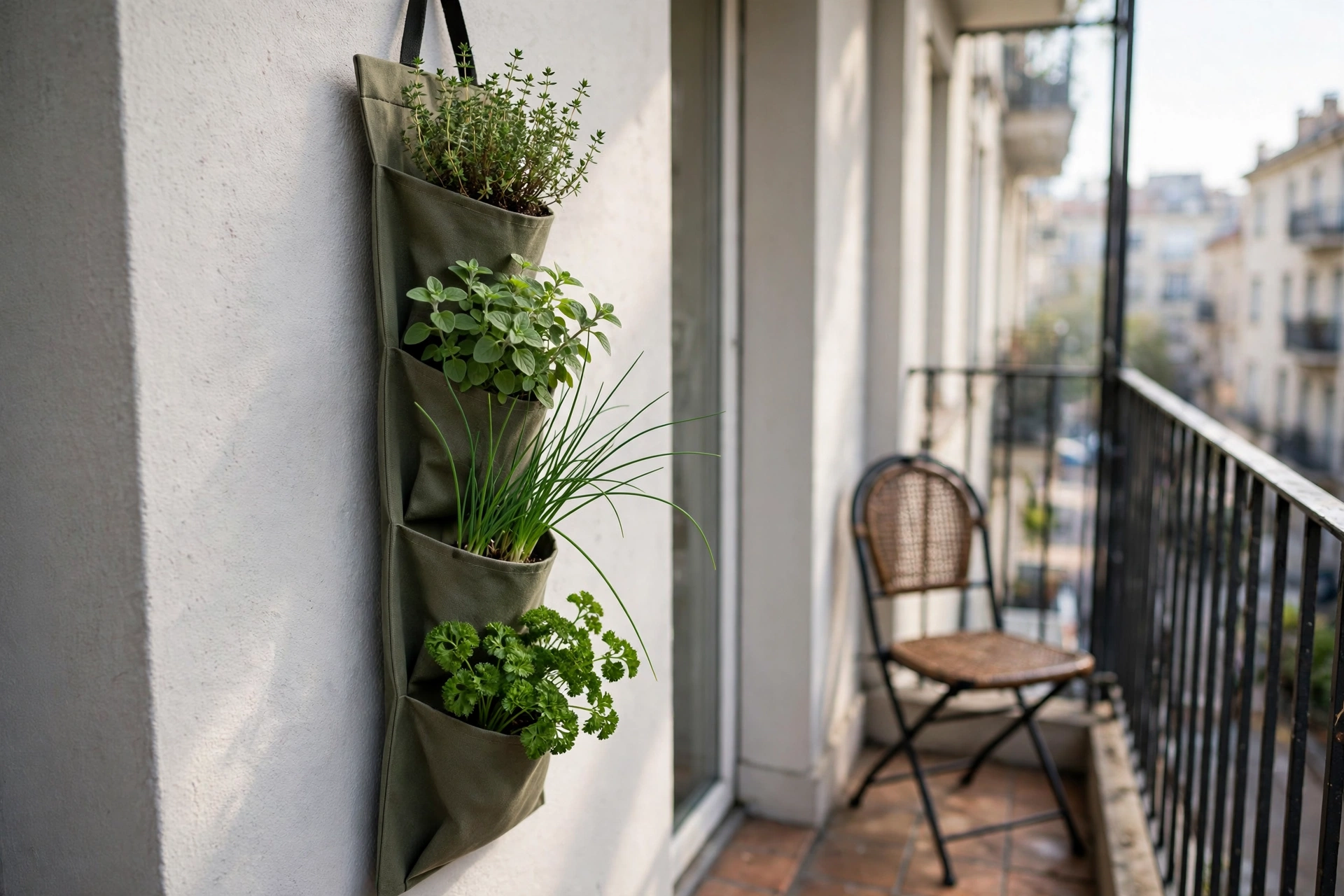
3. Vertical Pocket Planters on the Balcony Wall
Fabric pocket planters turn a blank balcony wall into a living herb display. These hanging panels with sewn pockets hold one herb per pocket and need no floor space at all — ideal for narrow balconies where every inch of floor is walking space. They work best for compact herbs: thyme, oregano, chives, parsley, and small basil varieties. Avoid aggressive growers like mint, which will try to colonize neighboring pockets through the fabric. Pocket planters dry out quickly, so in hot US climates (USDA zones 9–10, think Florida, Southern California, and the Gulf Coast) plan on watering twice daily in peak summer, or rig a simple drip line along the top row. Choose UV-stabilized fabric planters; cheap non-woven versions disintegrate after one season in strong sun.
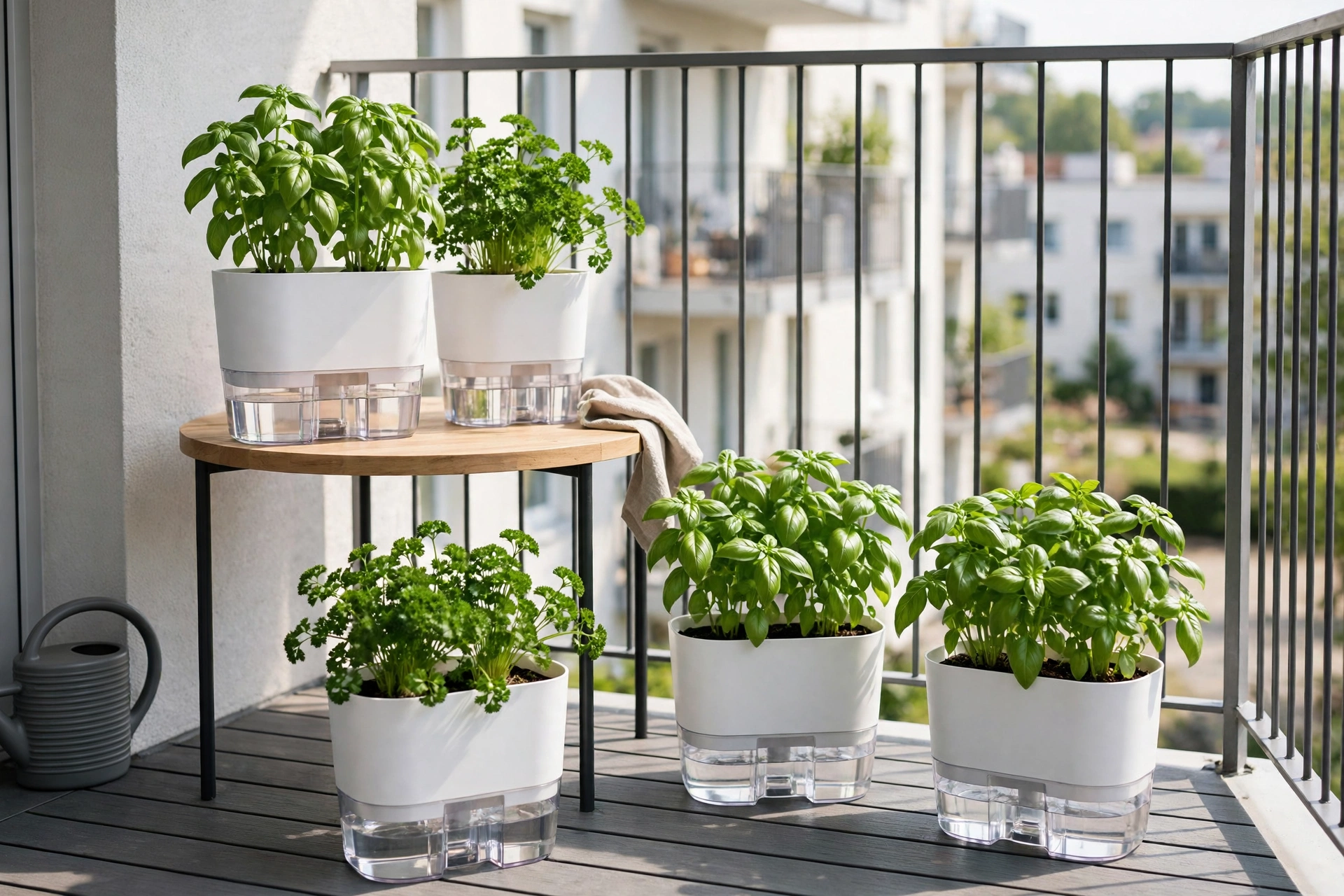
4. Self-Watering Planters for Busy Weeks
Herbs die most often from inconsistent watering, not neglect of any other kind. Self-watering planters with built-in reservoirs (usually $18–$35 for herb-sized pots) keep soil evenly moist for a week or more, which covers business trips and heat waves alike. They are the set-and-forget backbone of a low-maintenance balcony herb garden. Fill the reservoir weekly, top-water occasionally to flush salts, and your basil will forgive the occasional forgotten Tuesday. These planters shine for thirsty herbs like basil, parsley, and cilantro; Mediterranean herbs like rosemary and thyme actually prefer drier soil, so give them standard pots with extra perlite instead. In the Northeast and Midwest, bring self-watering planters indoors before the first hard freeze — trapped water can crack the reservoir.
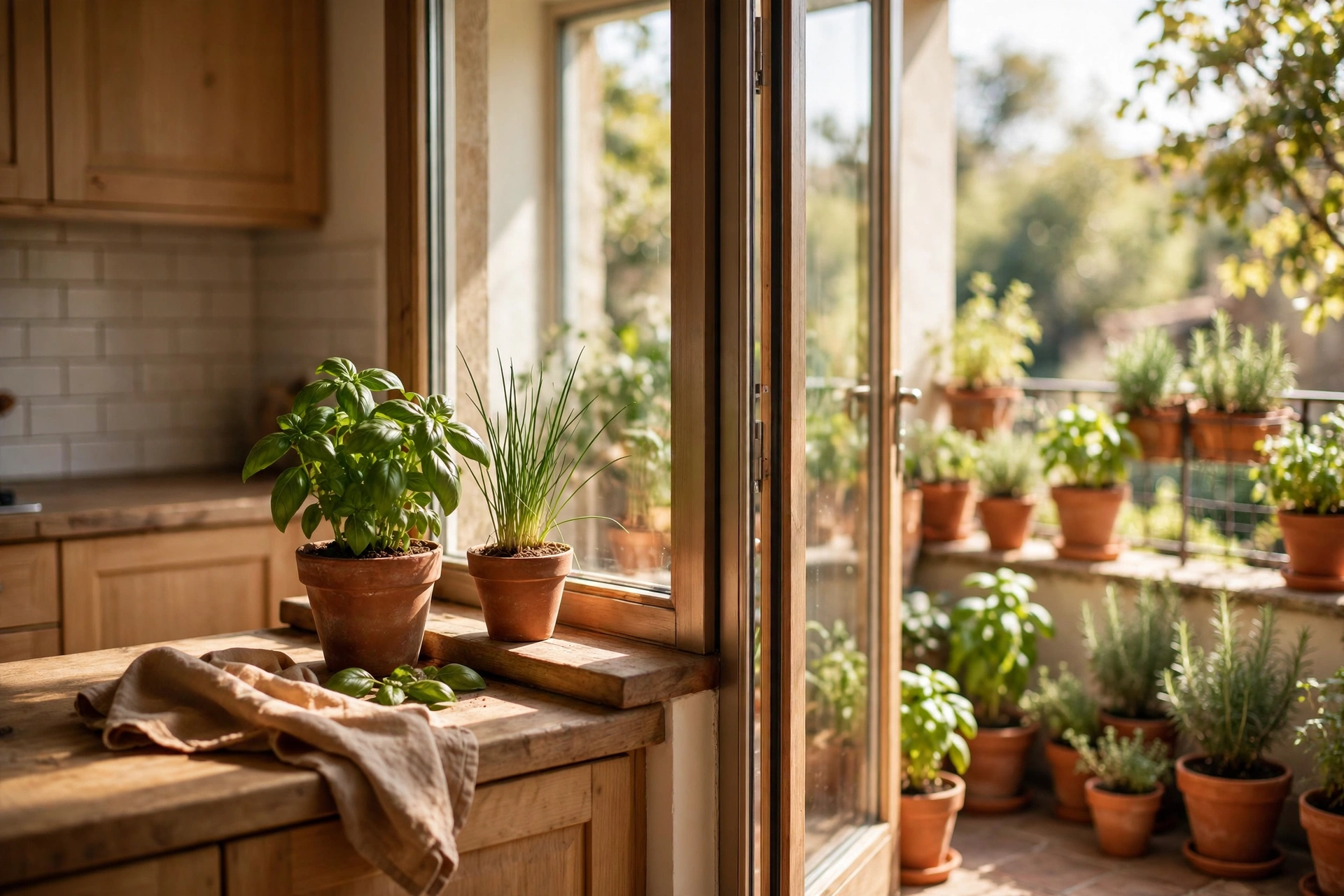
5. Windowsill-to-Balcony Herb Bridge
Why choose between indoor and outdoor herbs? A windowsill-to-balcony bridge keeps tender herbs like basil on the kitchen windowsill through cold snaps and moves the hardy crew — rosemary, thyme, chives, mint — out to the balcony once nighttime temperatures stay above 50°F. Use matching pots in both spots so the arrangement looks intentional, and keep a small tray by the door as the transition station. This approach extends your harvest season dramatically: in USDA zones 5–7 (much of the Midwest and Northeast), you can start seedlings indoors in March, move them out in May, and bring the tender ones back in October. It also solves the renter’s dilemma — nothing is permanently mounted, drilled, or attached, so your security deposit stays safe.
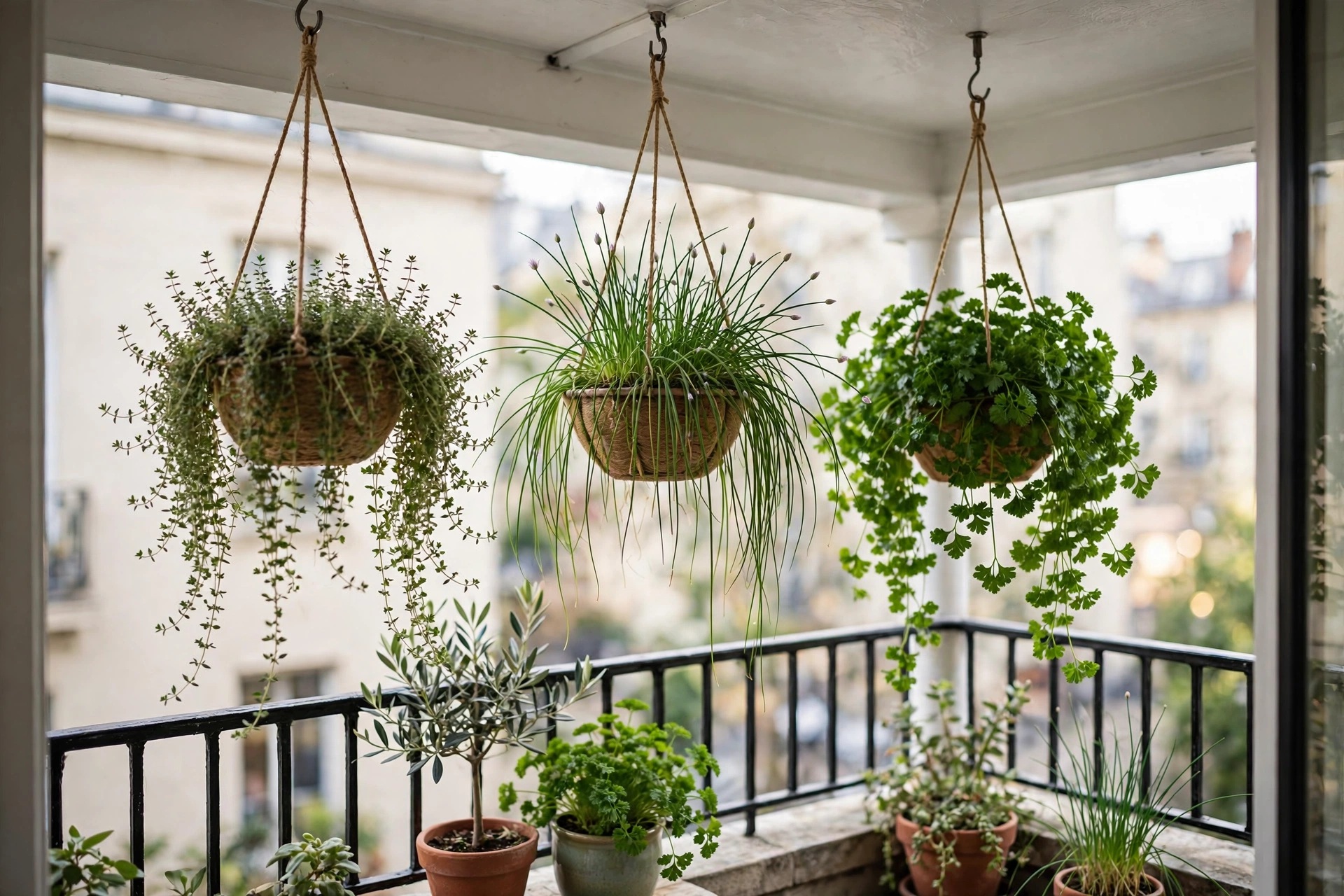
6. Hanging Baskets for Trailing and Compact Herbs
Hanging baskets lift herbs into the light zone above the railing, where air circulation is better and slugs cannot reach. They suit trailing herbs like creeping thyme and compact growers like chives, parsley, and dwarf basil. Hang them from the balcony ceiling or a sturdy shepherd’s hook, keeping the basket bottom at least 6 feet off the floor so nobody bonks their head. Use lightweight potting mix (with extra perlite) because a watered 12-inch basket can weigh 15 pounds — confirm your hook or ceiling anchor is rated for it. Hanging baskets dry out fastest of all container types, so they are best for gardeners who enjoy the daily watering ritual, or pair them with a self-watering basket insert in hot-summer states.
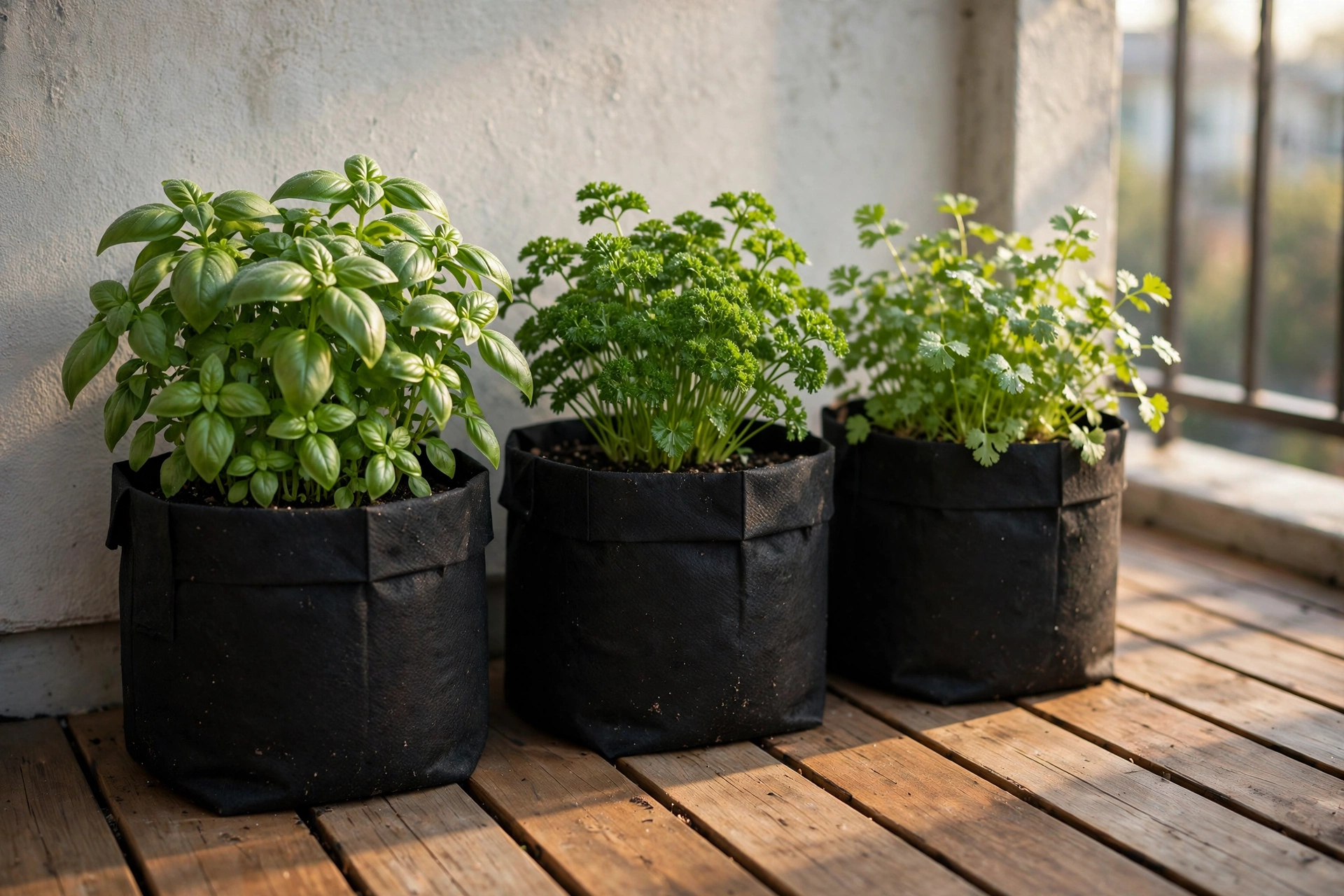
7. Fabric Grow Bags on a Small Footprint
Fabric grow bags ($8–$15 for 5-gallon size) are the unsung heroes of balcony gardening. They air-prune roots for healthier plants, drain perfectly so overwatering is nearly impossible, and fold flat for winter storage — a huge win when your “garden shed” is a hall closet. A row of three 5-gallon bags along the balcony wall grows enough basil, parsley, and cilantro for a household’s daily cooking. They are featherweight when empty, which matters for upper-floor balconies. The downside: they dry out faster than rigid pots and look utilitarian, so slip them into decorative outer baskets if appearances matter. In zones 8 and warmer, grow bags can stay out year-round with hardy herbs like rosemary and thyme; in colder zones, empty and store them in fall.
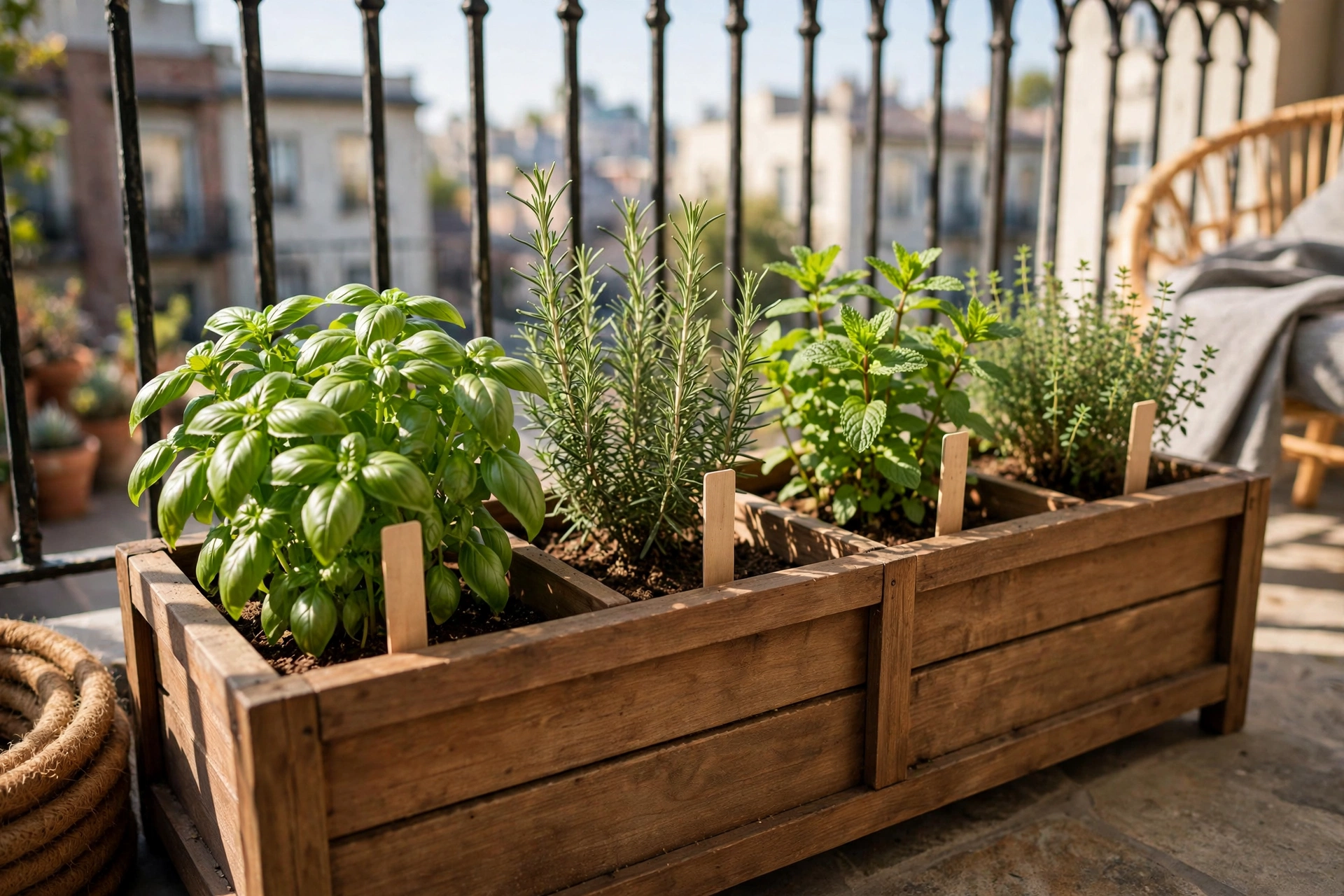
8. The Divided “Herb Bar” Long Planter
A single long planter divided into sections works like a salad bar for your kitchen — one box, six herbs, zero clutter. Use a 36- to 48-inch planter box with internal dividers (or insert small plastic pots inside a larger trough) so aggressive roots stay separated. This matters most for mint: give mint its own divided section or its own pot buried in the box, because uncontained mint will strangle everything else within a season. Arrange by water needs — thirsty basil and parsley at one end, drought-tolerant rosemary and thyme at the other — so one watering routine does not drown half the box. Place the herb bar along the sunniest wall or railing base, and label each section with a small plant marker so guests (and forgetful cooks) harvest the right herb.
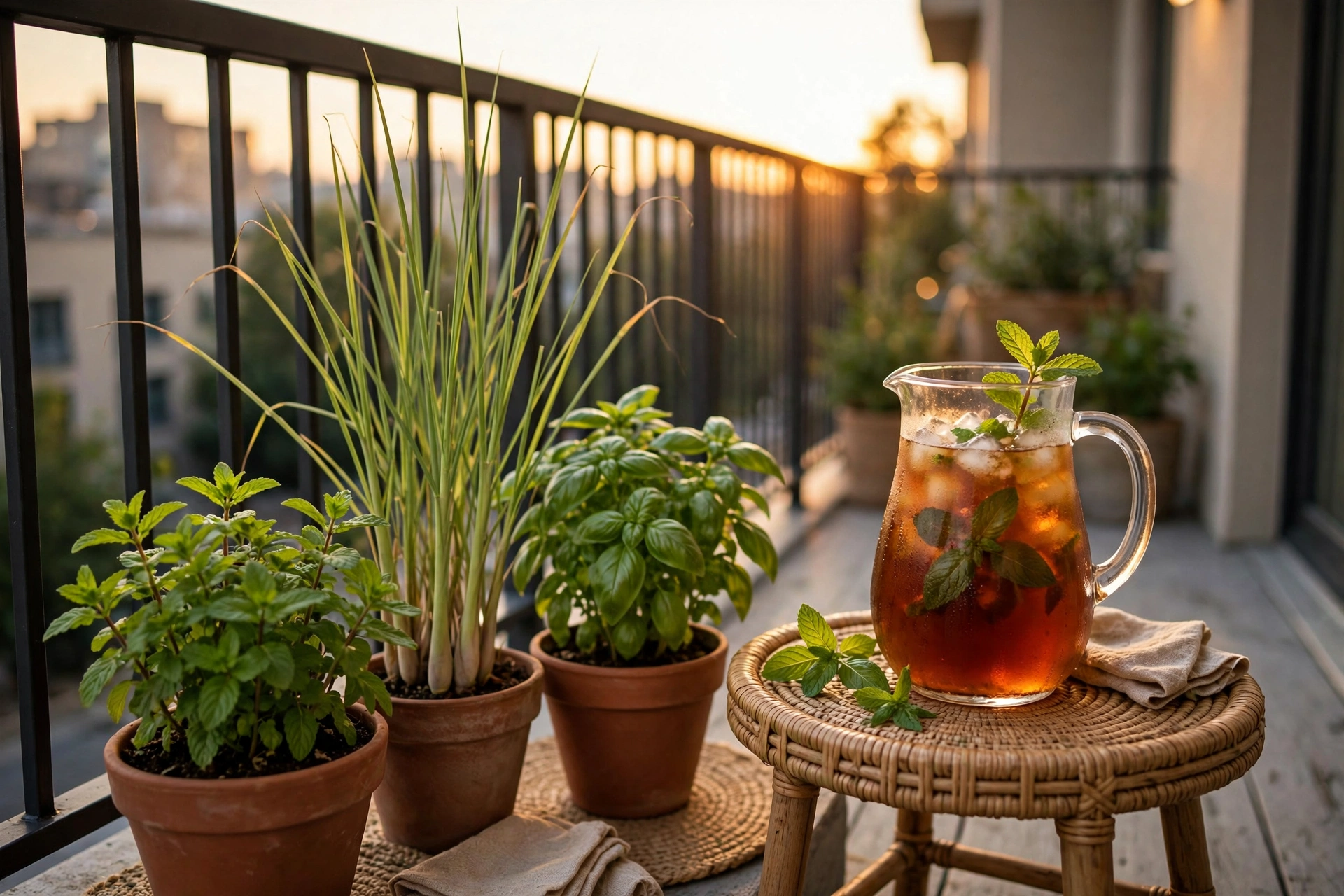
9. Cocktail and Tea Herb Balcony Garden
Design your herb garden around what you actually drink. A cocktail and mocktail herb corner — mint for mojitos, lemongrass for iced tea, basil for gin smashes, rosemary for garnish — turns the balcony into an evening ritual station. Mint deserves its own large pot (12 inches or more) since it spreads aggressively; lemongrass wants the sunniest, warmest spot you have and plenty of water. In USDA zones 9–11, lemongrass can overwinter outside; everywhere else, bring it indoors before first frost or treat it as an annual. Add a small side table for the pitcher and glasses, and you have a happy-hour setup that costs less than one round at a bar. This is also the most giftable garden idea here — a potted mint and basil duo makes a great housewarming present.
10. Seasonal Rotation for Year-Round Harvests
A balcony herb garden does not have to look the same in January and July. Plan a simple rotation: cool-season herbs (parsley, cilantro, chives) for spring and fall, heat-lovers (basil, lemongrass, rosemary) for summer, and hardy perennials (thyme, oregano, sage, mint) that persist through mild winters in zones 7 and up. In the Northeast and Midwest, overwinter the perennials by clustering pots against the building wall and wrapping them in burlap once temperatures drop below freezing. Each seasonal swap costs about $15–$30 in seedlings — far less than buying fresh herbs weekly at the grocery store, where a single plastic clamshell runs $3–$4. Keep a simple note on your phone of what you planted where; after two seasons you will have a rotation dialed in for your exact balcony.
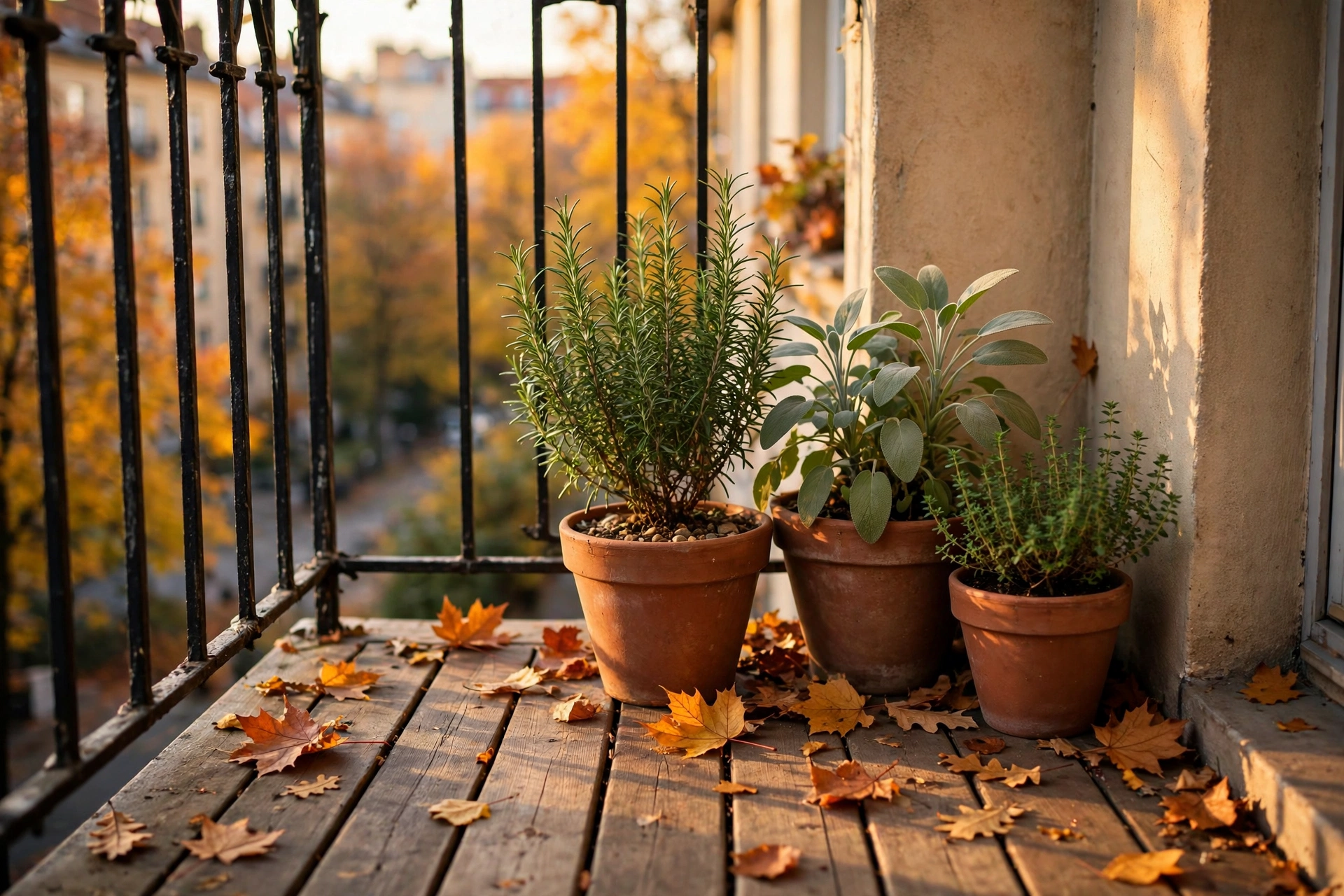
Balcony Herb Garden Starter Cost Breakdown
Starting small keeps costs low. The table below shows what a typical 4-herb starter setup costs in the US in 2026, based on typical pricing from garden centers and home-improvement retailers. Year two costs drop to just seedlings and a soil refresh — roughly $15–$30.
| Item | Details | Estimated cost (USD) |
|---|---|---|
| 3-tier plant stand | Freestanding, holds 6–9 pots | $30–$50 |
| 4 terracotta or resin pots | 8-inch with drainage holes | $16–$28 |
| Potting mix | 10-quart bag, quality blend | $8–$12 |
| Perlite | Small bag for drainage | $5–$8 |
| 4 herb seedlings | Basil, chives, mint, parsley | $8–$16 |
| Total starter cost | 4-herb balcony garden | $67–$114 |
Prices reviewed: October 2026. Estimates based on typical 2026 US pricing from garden centers and home-improvement retailers.
Frequently Asked Questions
What herbs grow best on a balcony?
Basil, rosemary, thyme, and oregano thrive on sunny balconies with 6+ hours of direct light. For shadier balconies (3–4 hours), grow mint, chives, parsley, and cilantro. Match the herb to your actual sun hours — that single decision matters more than containers, soil, or fertilizer.
Should I start a balcony herb garden from seeds or seedlings?
Buy seedlings. Established seedlings from a garden center cost $2–$4 each, are 4–6 weeks ahead of seeds, and give you a usable harvest in 2–3 weeks. Seeds are cheaper but add a month of waiting and a real risk of failure for beginners. Start four seedlings: basil, chives, mint (own pot), and parsley or thyme.
How much sun does a balcony herb garden need?
Most popular herbs need at least 4 hours of direct sun; Mediterranean herbs like basil, rosemary, and thyme want 6 or more. South- and west-facing balconies in the US can grow almost anything. North- and east-facing balconies should stick to shade-tolerant mint, chives, and parsley.
How often should I water balcony herbs?
Check soil daily in summer — water when the top inch feels dry. Small pots and railing planters may need daily watering in hot climates like Texas and Arizona; larger pots every 2–3 days. Always use pots with drainage holes, since soggy roots kill herbs faster than slight dryness.
Can I grow herbs on my balcony in winter?
In USDA zones 7 and warmer, hardy herbs like thyme, oregano, sage, and mint can overwinter outside with pots clustered against the building. In colder zones, bring tender herbs like basil indoors before the first frost, or grow them on a sunny windowsill through winter.
Key Takeaways
- Match herbs to your sun hours first — 6+ hours for basil and rosemary, 3–4 for mint, parsley, and chives.
- Start with seedlings ($2–$4 each), not seeds, for a harvest in 2–3 weeks.
- A complete 4-herb starter setup costs $67–$114; year two costs just $15–$30.
- Go vertical — railing planters, tiered stands, and wall pockets multiply growing space.
- Give mint its own pot, always. It will take over anything it touches.
Fresh herbs a few steps from your kitchen change how you cook — you will reach for them constantly once they are right there. Start with four seedlings this weekend and taste the difference. — Sophia Bennett