
Small backyard patio ideas on a budget start with one decision: the surface. A pea gravel or stepping-stone patio costs roughly $200–$500 for a 10×10 space in materials, versus $1,800+ for professionally installed pavers. This guide shares 11 budget designs — surfaces, seating, lighting, and layout tricks — that look intentional, not cheap.
Let’s talk numbers before we talk style, because budget is the whole point here. A professionally installed paver patio runs about $15–$25 per square foot with labor, so even a modest 10×10 patio can hit $2,000 fast. The DIY route cuts that dramatically: basic concrete pavers start around $1 per square foot in materials, a bag of pea gravel covers several square feet for a few dollars, and deck tiles run $3–$6 per square foot. Every idea below is something you can realistically build in a weekend or two, with cost estimates so you can plan honestly.
Say you have an 8×10 patio and $400 to spend. That’s enough for a gravel base, a bistro set, an outdoor rug, and string lights — a complete, finished-looking space. The secret to making budget patios look expensive isn’t spending more; it’s committing to one surface, one color story, and clean edges. Here’s how.




1. Pea Gravel Patio — Where Small Backyard Patio Ideas on a Budget Begin
Pea gravel is the undisputed champion of budget patio surfaces. A 10×10 gravel patio needs about 1.5 cubic yards of gravel, landscape fabric underneath, and simple metal or plastic edging — materials typically totaling $150–$300. It drains beautifully, feels great underfoot, and takes a single weekend to install: level the ground, lay fabric, spread gravel, done.
The details that make gravel look intentional: pick one gravel color and stick with it (warm tan or gray reads more polished than mixed), install proper edging so it doesn’t migrate into the lawn, and rake it level after the first rain settles it. Gravel also pairs beautifully with stepping stones (idea 2) to create a path from the door. One honest note: gravel shifts under chair legs, so use furniture with wide feet or set pavers as “parking spots” under chairs.
2. Stepping-Stone Grid Over Mulch or Gravel
If even a full gravel bed feels like too much, try a stepping-stone grid: large square concrete pavers (24″ x 24″) spaced a few inches apart over mulch, gravel, or even bare leveled soil with landscape fabric. Twelve 24-inch pavers cover roughly a 10×10 area with gaps, and at about $8–$15 each, the whole surface can cost under $200.
The gaps are the design feature here — fill them with pea gravel, mulch, or low ground cover like creeping thyme for a soft, garden-path look. Keep the grid straight and evenly spaced; the geometric rhythm is what makes this read as “designed” rather than “random stones.” This is also the most forgiving surface for uneven ground, since each paver can be leveled individually. For more surface options, check our patio flooring options with deck tiles.
3. DIY Concrete Paver Patio
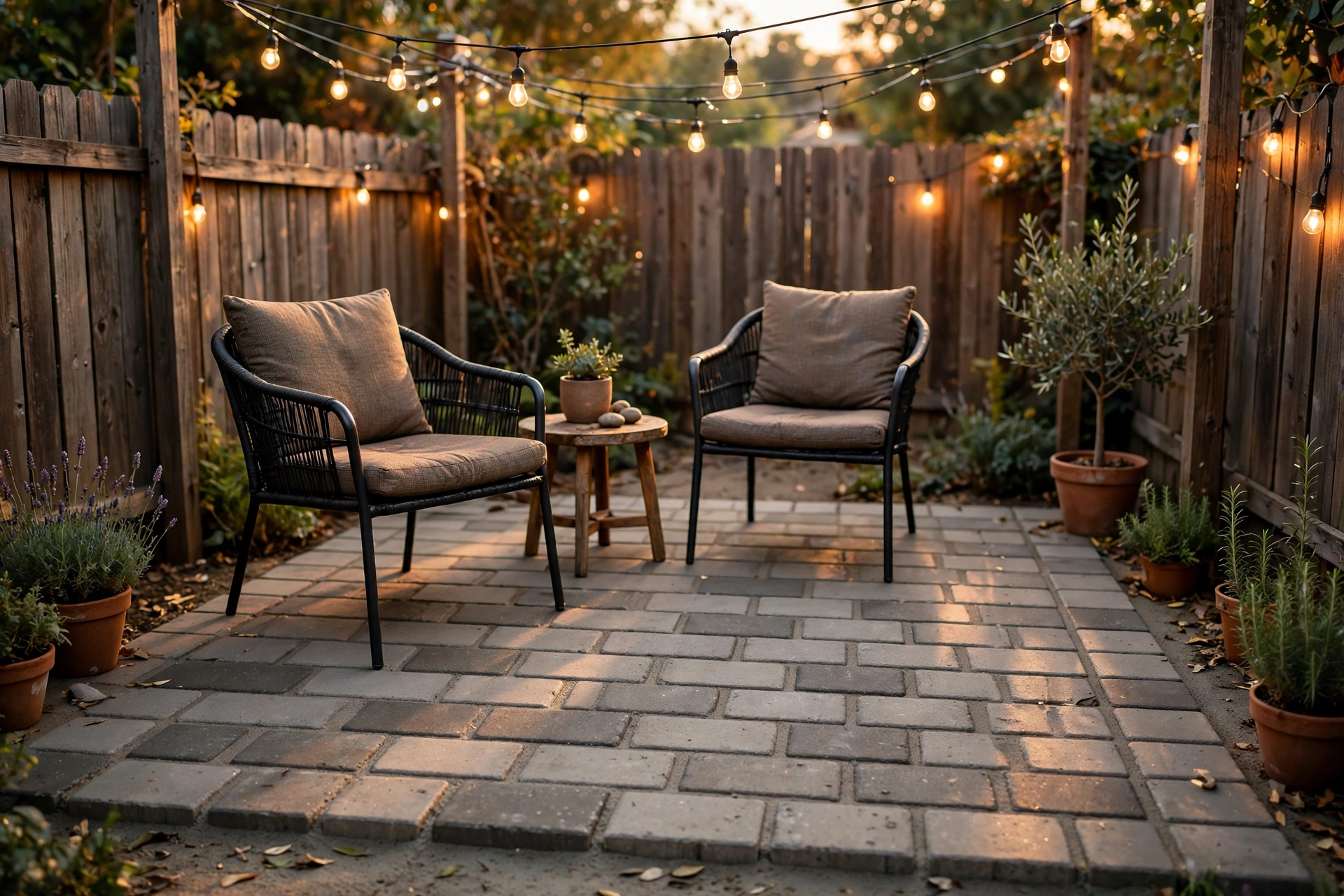
Basic concrete pavers are the workhorse of budget hardscaping: they start around $1 per square foot in materials, they come in clean modern shapes, and a simple running-bond or grid pattern needs zero cutting if you plan the dimensions right. A 10×10 DIY paver patio (100 sq ft) typically costs $300–$600 in materials — sand base, pavers, and edge restraints — versus $1,500–$2,500 professionally installed.
The key to a paver patio that doesn’t look DIY-in-a-bad-way is the base. Excavate 4–6 inches, compact crushed stone, add an inch of coarse sand, lay pavers tight, then sweep polymeric sand into the joints. Skimp on the base and pavers will rock and settle within a season — that’s the difference between a patio that lasts a decade and one that annoys you by fall. Renting a plate compactor for a day (usually $50–$80) is the best money you’ll spend on this project.
4. Deck Tiles Over an Ugly Concrete Slab
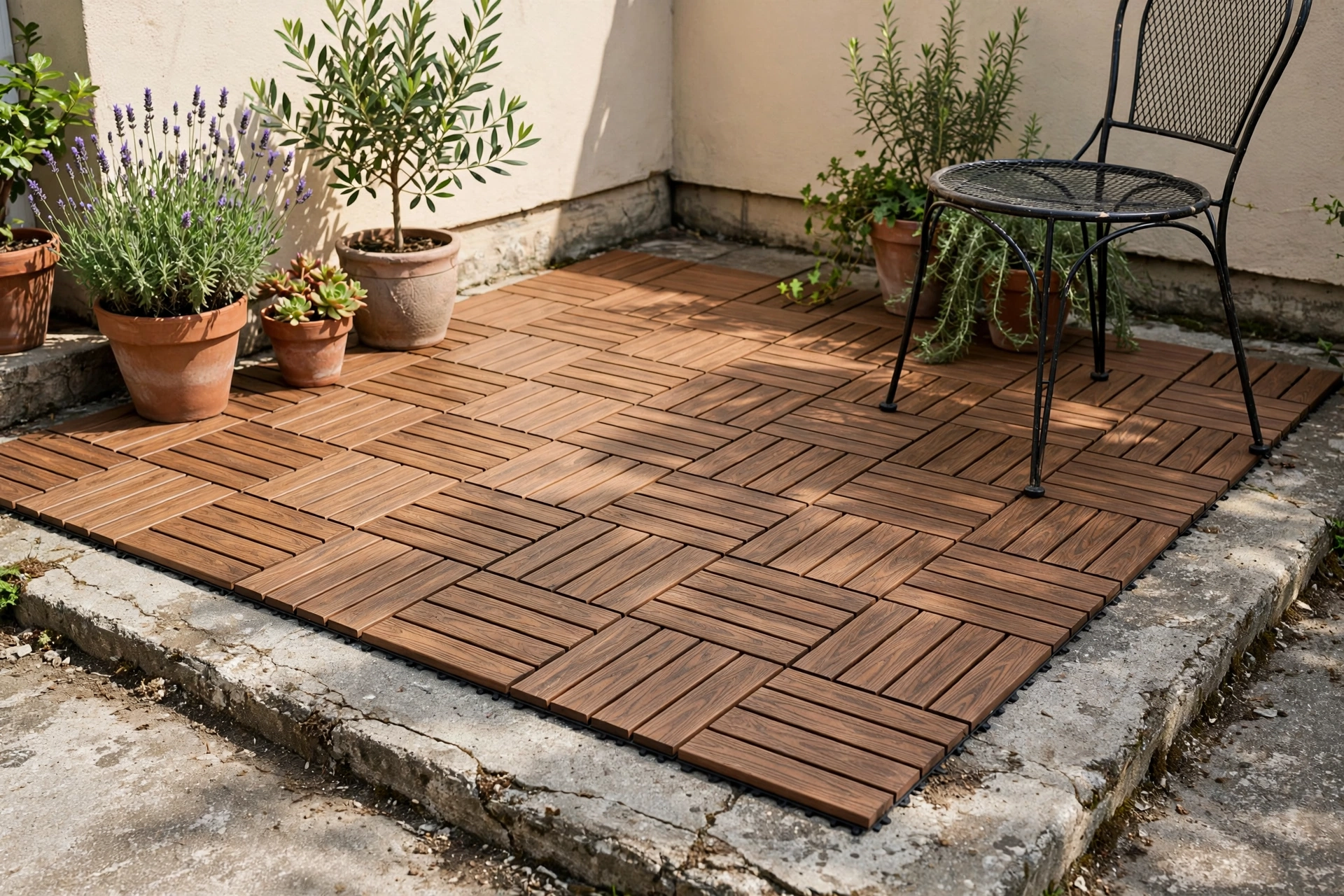
Got an existing concrete slab that’s cracked, stained, or just sad? Interlocking deck tiles snap together right over it — no demolition, no adhesive, no contractor. Wood-look composite tiles run $3–$6 per square foot, so a 10×10 slab refreshes for roughly $300–$600, and you can do it in an afternoon.
Deck tiles are also renter-friendly-ish: they lift right back up when you move. Choose tiles with good drainage gaps underneath so water doesn’t pool on the old slab, and leave a small expansion gap at the edges. This is one of the fastest transformations on the list — morning: ugly gray slab; evening: warm wood-look patio. Pair it with an outdoor rug for a small patio and the slab disappears entirely.
Prices reviewed: October 2026
| Surface Option (10×10 patio) | Typical DIY Material Cost | Skill Level | Lifespan |
|---|---|---|---|
| Pea gravel + edging | $150–$300 | Beginner | 5+ years (top up yearly) |
| Stepping-stone grid | $150–$250 | Beginner | 10+ years |
| Concrete pavers (DIY) | $300–$600 | Intermediate | 15+ years |
| Deck tiles over slab | $300–$600 | Beginner | 5–10 years |
| Painted concrete | $50–$120 | Beginner | 2–4 years |
Cost ranges above are estimates based on typical 2026 pricing from major home-improvement retailers; pro installation roughly triples material costs.
5. Painted Concrete Patio Refresh
The absolute cheapest patio makeover is a gallon of concrete paint. For $50–$120 in paint, primer, and supplies, you can take a stained slab from eyesore to intentional. Stencil a tile pattern for a Mediterranean look, or go with a solid warm gray and let furniture do the talking. Concrete stain (which soaks in rather than sitting on top) lasts longer than paint in high-traffic areas.
Prep is everything: pressure-wash, degrease, etch if the concrete is smooth, and let it cure fully between coats. Painted concrete in full sun will need touch-ups every 2–4 years, so treat this as a refresh rather than a forever solution. But as a one-weekend, under-$100 transformation? Nothing beats it.
6. Fire Pit Circle on Gravel
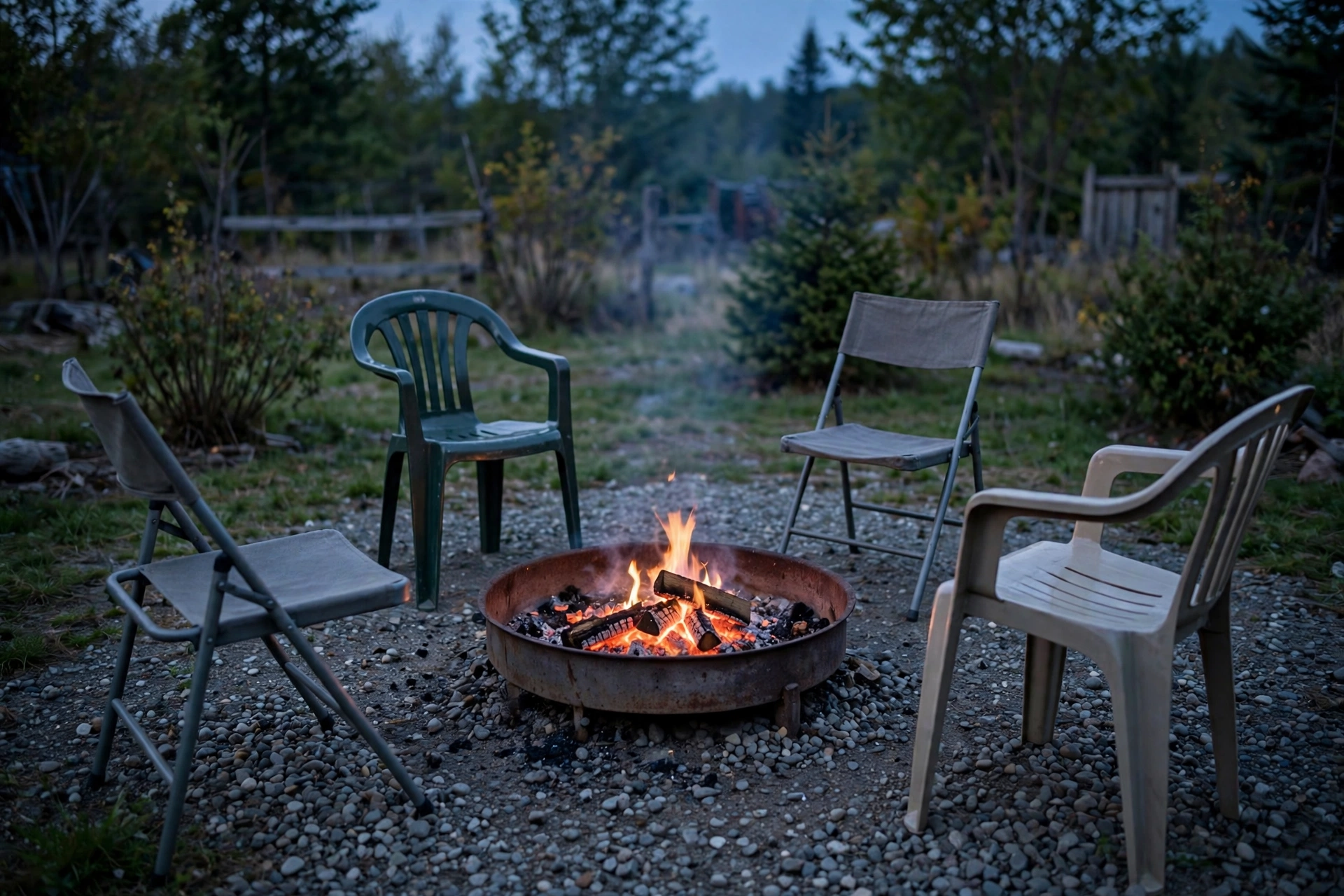
A fire pit turns a small patio from “somewhere to sit” into “somewhere to gather,” and it’s one of the cheapest focal points you can build. A simple steel fire ring ($40–$80) or a stack of retaining-wall blocks ($60–$120) on a gravel circle gives you a complete fire pit zone for well under $200. Add four basic chairs and you’ve built the coziest corner of the yard.
Keep it safe and legal: check local burn rules first, keep the pit at least 10 feet from structures, and use a spark screen. On a small patio, a 24–30 inch fire pit is plenty — bigger just eats your limited floor space. A gravel base under and around the pit (at least 3 feet in every direction) catches stray sparks and defines the zone visually. For full seating layouts around the fire, see our fire pit seating area ideas.
7. Pallet and DIY Wood Seating
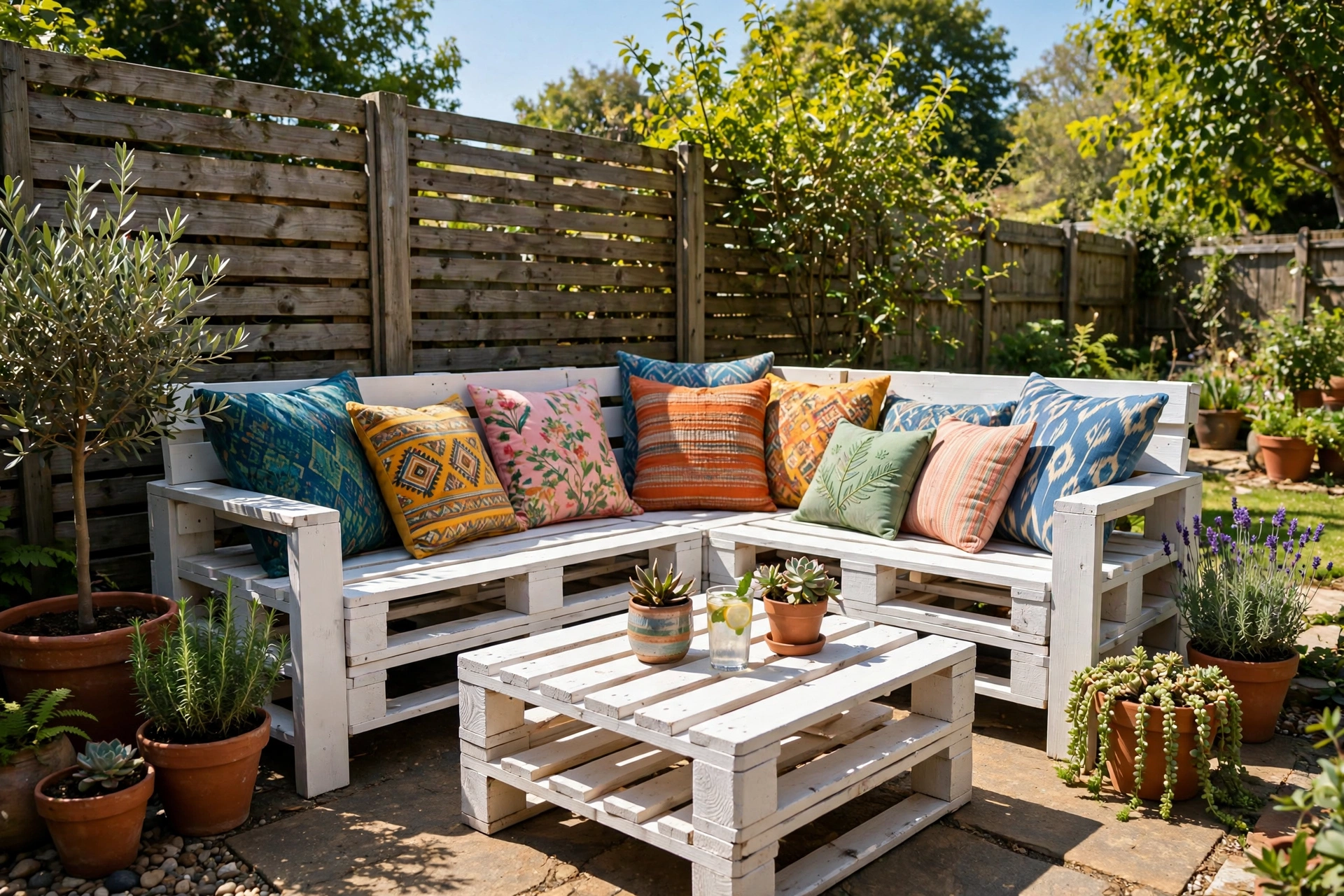
Pallet furniture gets a bad rap because most of it looks like, well, pallets. The upgrade is simple: sand them smooth, paint or stain them one cohesive color, and top them with real outdoor cushions. Two pallet sofas and a pallet coffee table can furnish a whole seating area for $50–$150 in pallets and hardware — the cushions are where you invest.
Safety note: use heat-treated (HT-stamped) pallets, not chemically treated ones, and avoid pallets of unknown origin for anything you’ll sit on daily. Alternatively, simple 2×4 DIY benches cost about $20–$40 each in lumber and look far more polished than their price suggests. Either way, one color of outdoor paint across all the wood pieces is what makes DIY seating look designed instead of improvised.
8. Bistro Set: Small-Space Dining That Actually Fits
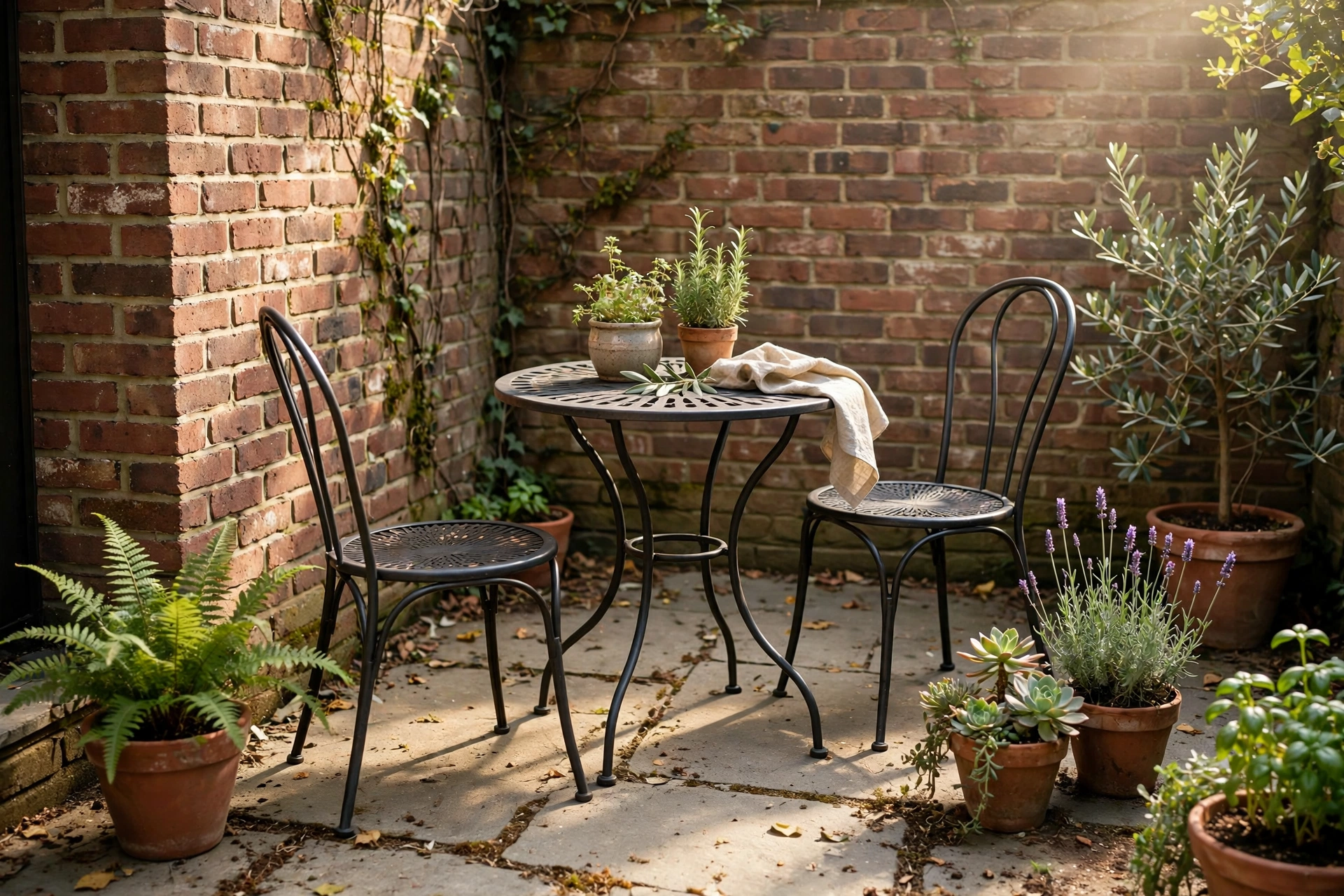
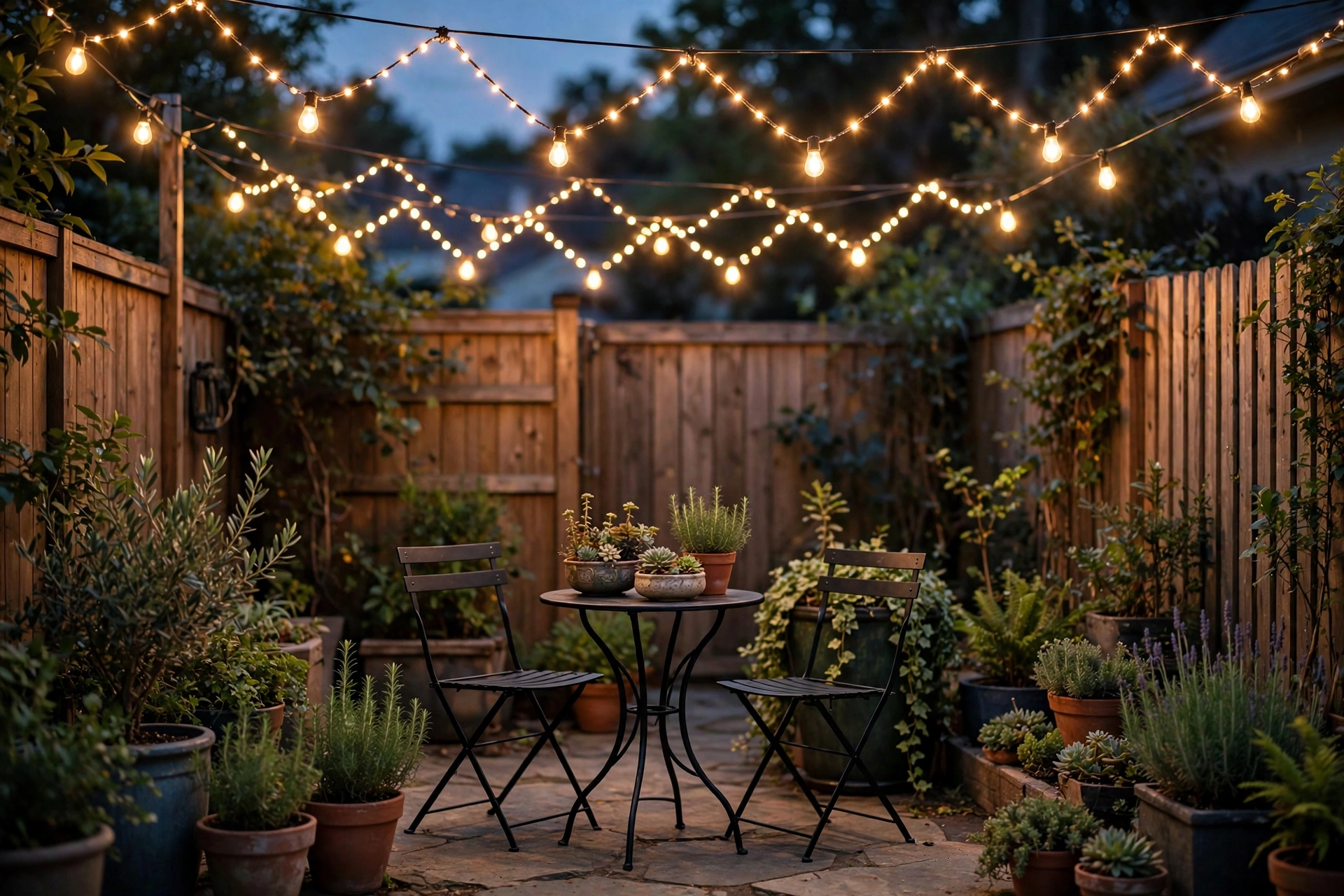
On a truly small patio, a full dining set is a space hog. A bistro set — one small round table and two chairs — seats two comfortably in about 16 square feet and costs $80–$200 for a decent metal or acacia set. It’s the right scale for morning coffee, weeknight dinners, and small yards where every square foot counts.
Look for folding bistro sets if you need the floor space back for other uses, and choose metal over cheap plastic-resin for longevity in sun. Position the set where it catches morning light or evening shade depending on how you’ll use it most. A bistro set plus a container or two (idea 9) is a complete small patio — sometimes less really is more.
9. Container Garden Edging
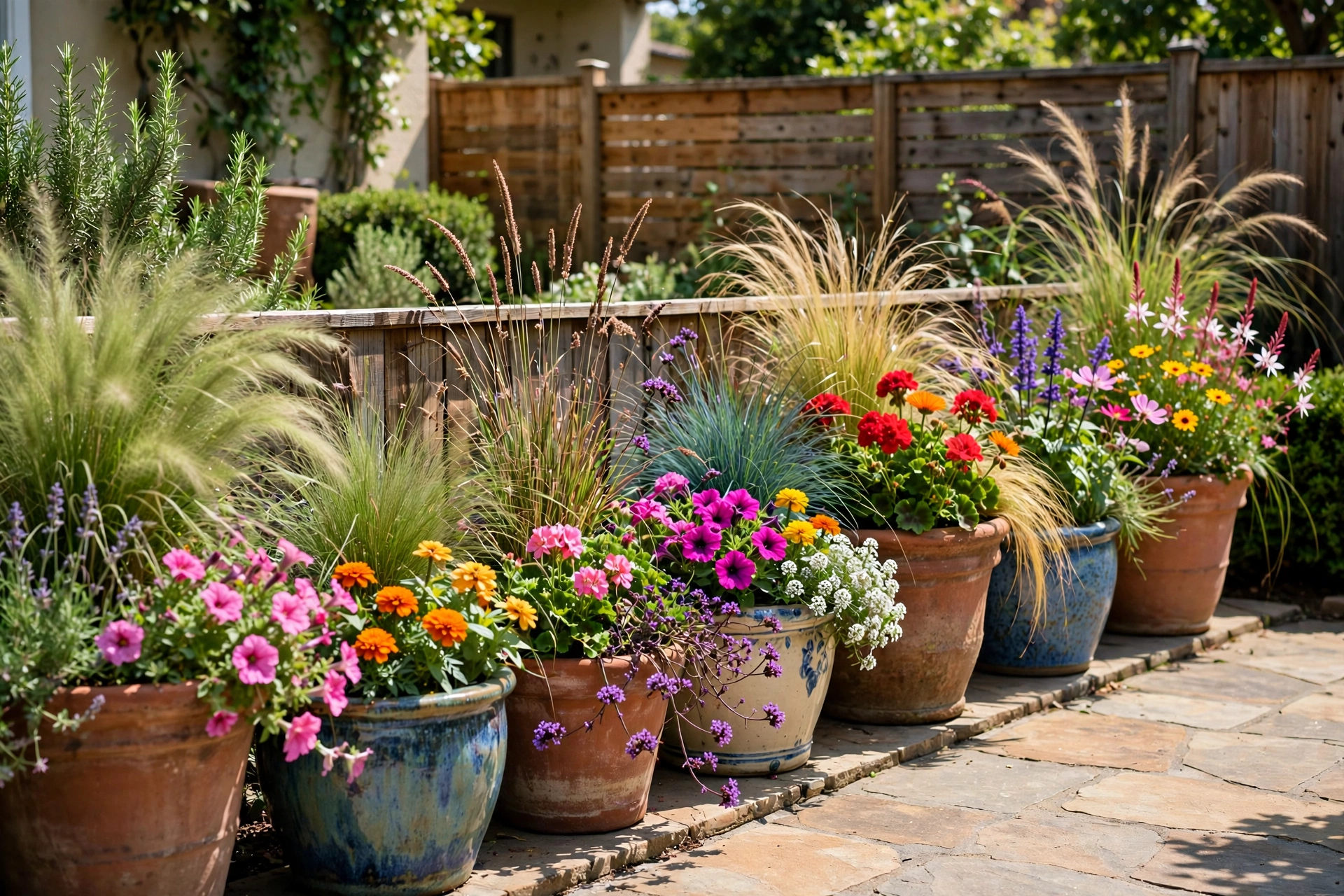
Plants are the cheapest “decor” in existence, and on a budget patio they do triple duty: softening hard edges, adding privacy, and making the space feel alive. A row of large containers along the patio edge — thrillers, fillers, spillers in each pot — can transform a plain slab for $60–$150 in pots and plants.
Money-saving moves: buy the biggest pots you can afford (fewer pots, bigger impact, less watering), use the “thriller-filler-spiller” formula so each pot looks professional, and check end-of-season nursery sales for perennials at half price. Group pots in odd numbers and vary the heights — three pots of different sizes read as a design; three identical small pots read as an afterthought. Our patio container garden ideas have full planting formulas.
10. Outdoor Rug to Define the Zone
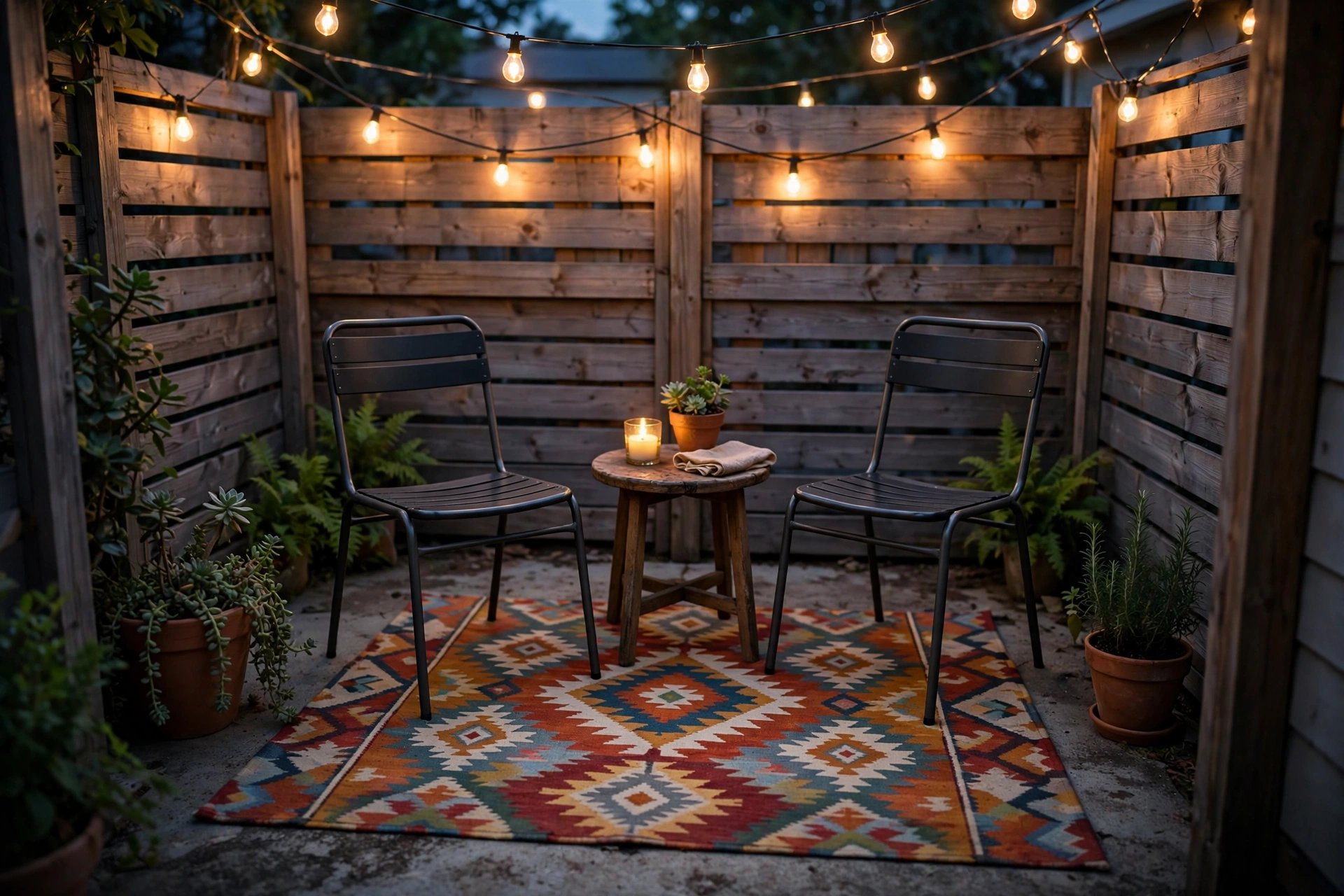
An outdoor rug is the fastest way to make a budget patio look finished. It covers stained concrete, ties furniture together, and visually “rooms” an open slab. A 5×7 outdoor rug costs $40–$90, and on a small patio that’s all you need — the rug becomes the room.
Choose polypropylene rugs (they hose clean and resist mildew) in a pattern with at least two colors from your cushion palette. On gravel patios, use a rug pad or choose a flat-weave so it sits level. And size it right: front legs of all seating should be on the rug. Too-small rugs are the most common mistake — when in doubt, go one size up.
11. String Lights and Solar Lanterns for Instant Atmosphere
Here’s the open secret of every gorgeous budget patio photo you’ve ever saved: the lighting is doing half the work. A $20–$40 strand or two of outdoor string lights plus a few solar lanterns ($10–$25 each) will make a $300 patio photograph like a $3,000 one after dark. Light is the cheapest luxury in outdoor design.
Hang string lights in a zigzag or swag pattern overhead — they need an anchor on each side (house eave, fence post, shepherd’s hook, or a simple pole in a planter). Solar lanterns on the table and steps add layers at ground level. Warm white (2700K) reads cozy; cool white reads commercial. For hanging patterns and spacing math, our patio string light ideas walk through it step by step.
Frequently Asked Questions
What is the cheapest way to make a small patio?
A pea gravel patio is the cheapest durable option — roughly $150–$300 in materials for a 10×10 space, installed in a weekend. A painted concrete refresh is even cheaper ($50–$120) if you already have a slab. Both look intentional with clean edging and a cohesive color scheme.
How much does a small DIY paver patio cost?
Materials for a 10×10 DIY concrete paver patio typically run $300–$600 (pavers, sand, base stone, edging), versus $1,500–$2,500 professionally installed. The biggest cost variable is the base: don’t skip the compacted stone layer or pavers will settle unevenly.
How do you make a small backyard look bigger on a budget?
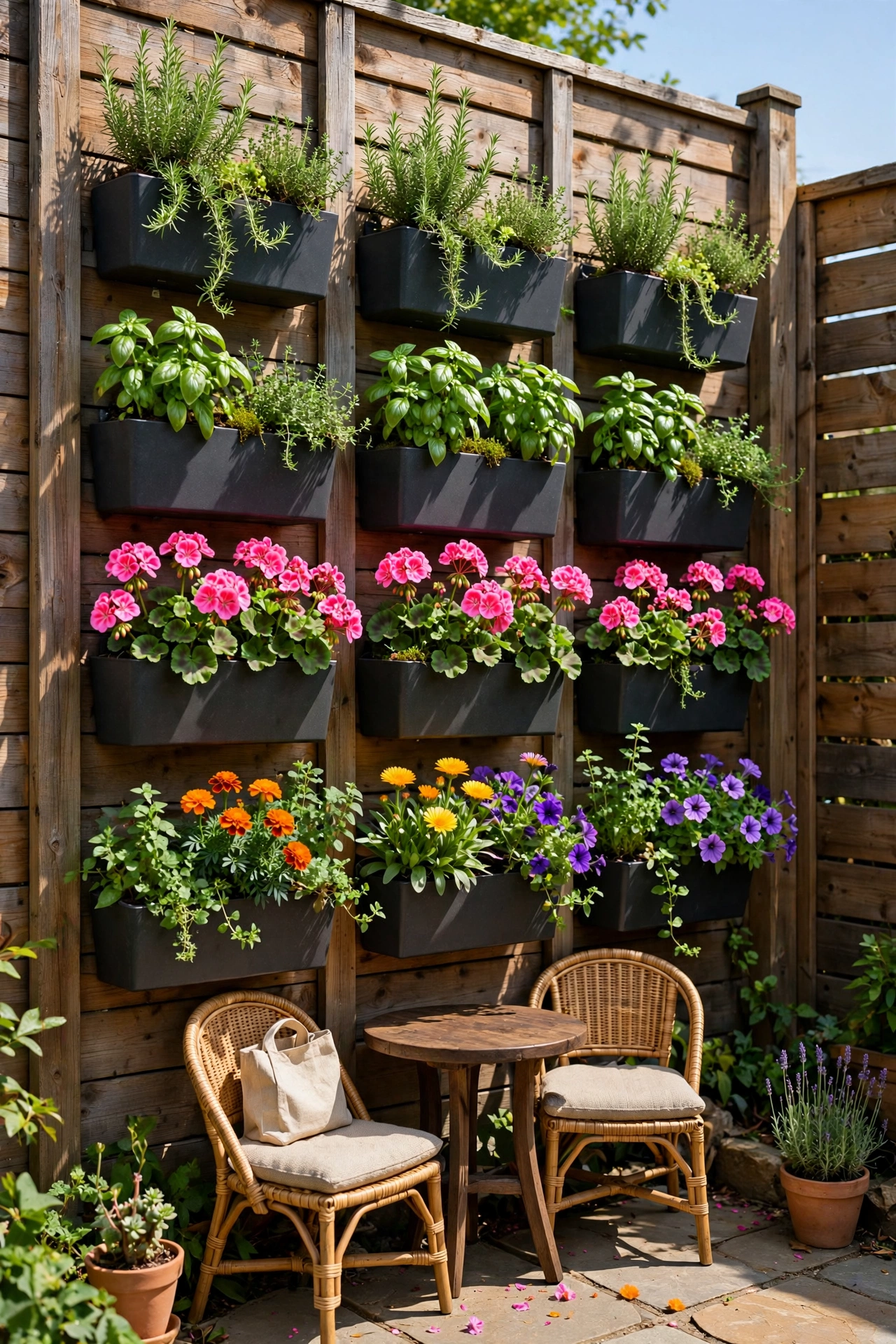
Use one continuous surface, keep furniture small-scale (bistro sets, armless chairs), run string lights overhead to draw the eye up, and use vertical elements like wall planters instead of floor-hogging pots. A single outdoor rug also “rooms” the space so it feels intentional rather than leftover.
Can you build a patio for under $500?
Yes. A realistic $500 budget covers a gravel or stepping-stone surface ($150–$300), a bistro set ($80–$200), and string lights ($20–$40). Add containers from nursery sales and you’ve got a complete patio. The trade-off is your labor — DIY is what makes the math work.
What should I put on a small patio with no grass?
Start with a defined surface (gravel, pavers, deck tiles, or a rug over concrete), add compact seating scaled to the space, then layer plants in containers and lighting overhead. Even a fully paved 8×10 space feels like a garden with enough greenery at the edges.
Key Takeaways
- Small backyard patio ideas on a budget start at $150–$300 for a gravel surface or $50–$120 for a painted concrete refresh.
- DIY labor is the budget multiplier: a paver patio costs $300–$600 DIY versus $1,500–$2,500 installed.
- One surface, one color story, and clean edging make cheap materials look expensive.
- Scale furniture to the space — bistro sets and pallet seating fit where full dining sets overwhelm.
- String lights and containers are the highest-impact finishing touches per dollar spent.