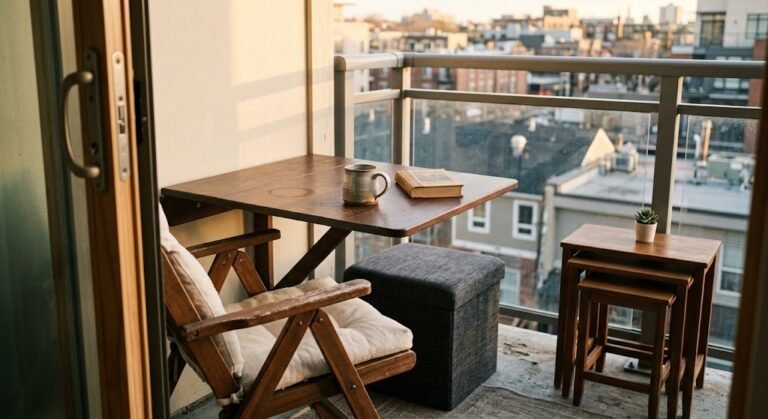

Style a Small Patio: A reader sent me a photo of her small patio last year — 8×10 ft, a pile of Pinterest screenshots, and furniture bought in no particular order over several months. Nothing looked bad individually, but together it felt cluttered rather than cozy.
We started over, but not by buying anything new first — we measured the space, picked one focal point, and only then worked through furniture, flooring, lighting, and final styling in that specific order. The same pieces she already owned, rearranged and edited down, looked like a finished space within an afternoon.
How to style a small patio comes down to sequence as much as taste. Below are the seven steps in the order that actually works, with a deeper guide linked at each stage if you want more specific ideas once you know what that step calls for.
Step 1: Measure Your Space and Plan Two Zones Maximum
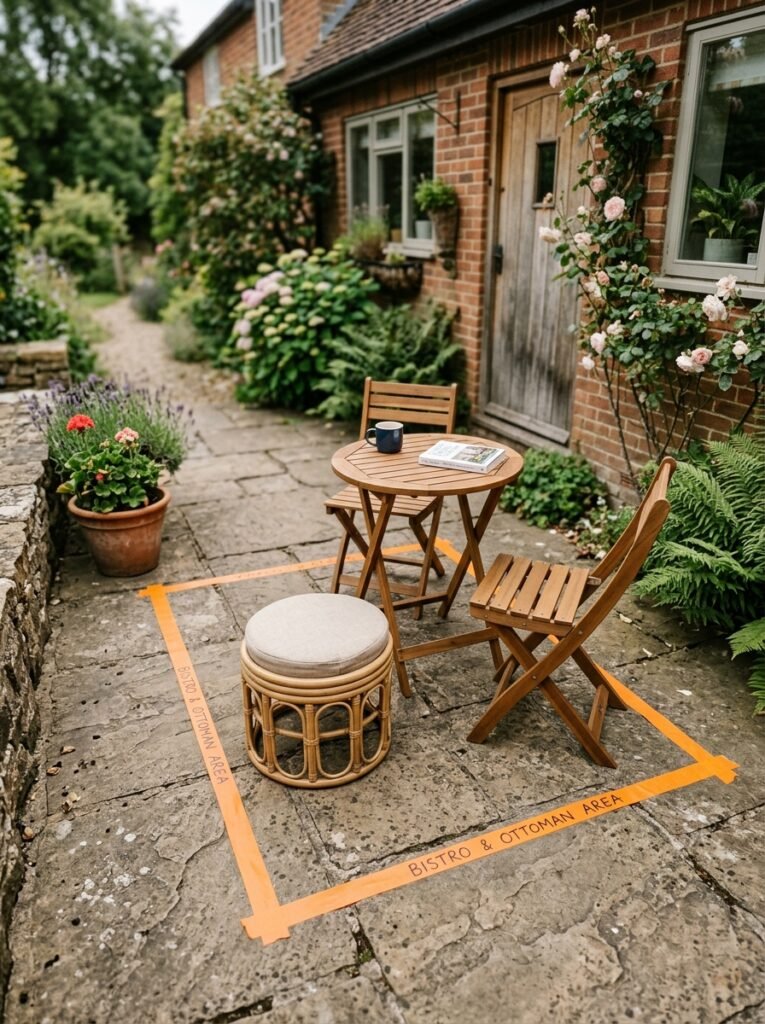
Before buying or moving anything, measure your patio’s actual usable floor space — not the total footprint, but what’s left after accounting for doors that swing open, walkways, and any fixed obstacles. Most small patios (under 120 sq ft) only have genuine room for two functional zones: a seating area and one secondary zone (dining, a reading corner, or a small garden display). Trying to fit three or more zones into a small footprint is the single most common reason a patio ends up feeling cluttered rather than cozy.
Sketch your two zones on paper first, even roughly, before any furniture arrives.
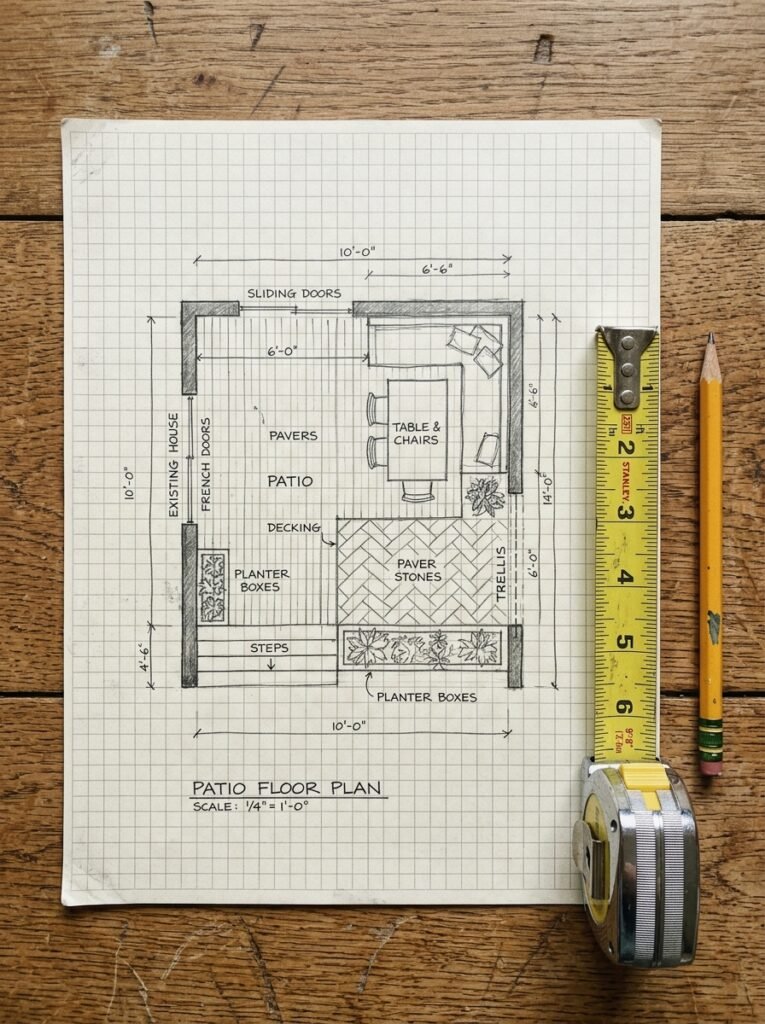
💡 PRO TIP Mark your two zones with painter’s tape on the actual patio floor before buying furniture. Standing in the taped-out space tells you more about whether a layout will feel right than any measurement on paper does.
Step 2: Choose One Focal Point Before Anything Else
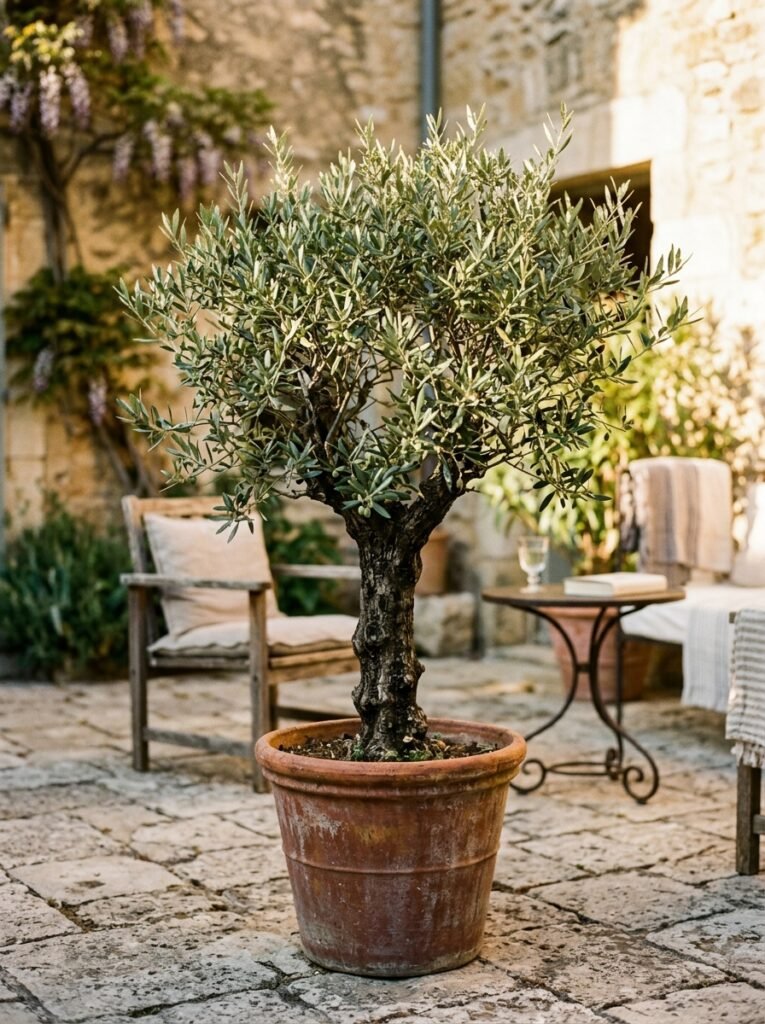
Every well-styled small patio has one clear focal point — a single tree or tall plant, a distinctive chair, a small water feature, or even just a well-placed piece of art on the nearest wall. Choose this before selecting any other furniture or decor, since everything else in the space should support that focal point rather than compete with it.
A small patio with no focal point tends to look like a collection of individual items; a small patio with one clear focal point looks like a designed space.
Step 3: Pick Furniture Scaled to Your Actual Footprint
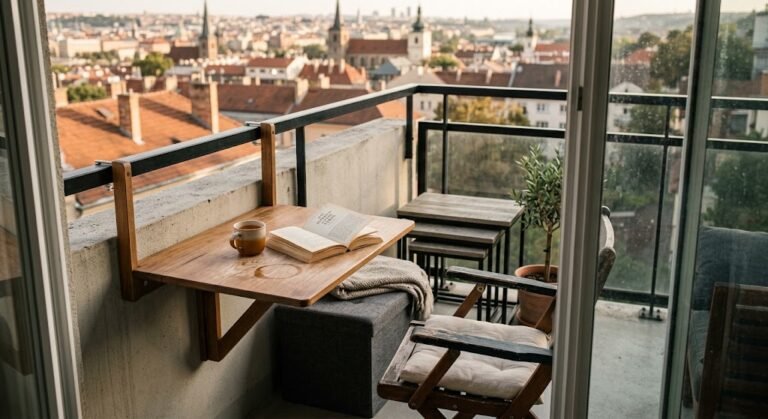
With your zones and focal point set, choose furniture sized to the specific measurements from Step 1 — not furniture that “looks small” in a product photo. A piece that’s even a few inches too deep can make a tight walkway feel genuinely unusable. Favor multi-function and fold-flat pieces on the smallest footprints, since they solve both the space and storage problem at once.
For a full breakdown of specific furniture types, materials, and sizing by small footprint, see our small patio furniture ideas for apartments guide.
📌 You’ll Also Love This 15 Small Patio Furniture Ideas for Apartments (That Actually Fit) The full furniture breakdown for this exact step →
Step 4: Layer the Floor Before Adding Anything Else on Top
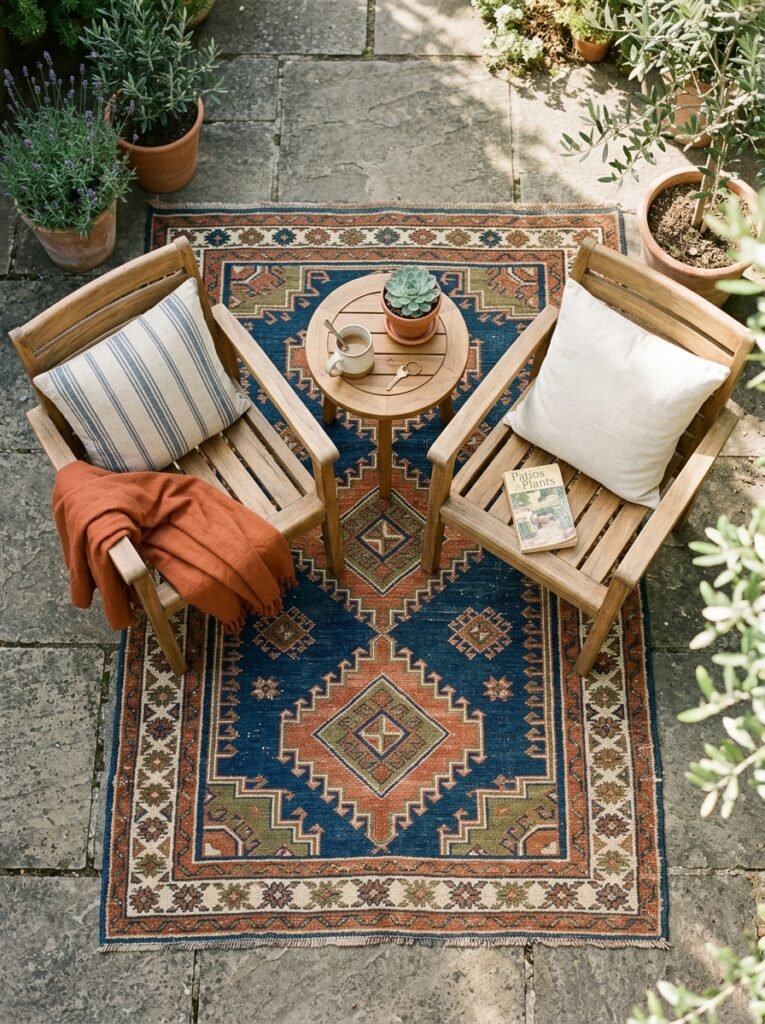
Once furniture is placed, address the floor before adding any other decor layer. A single rug, or two layered rugs on a slightly larger patio, grounds the whole space visually in a way that’s hard to achieve any other way — this step gets skipped more often than any other, and its absence is usually the reason a patio feels unfinished even once furniture is in place.
Choose a rug sized to sit just under your main seating zone, with a few inches of floor visible around the edges rather than covering wall-to-wall.
Step 5: Add Privacy or Shade Where the Space Actually Needs It
Before moving to lighting and final styling, address any real privacy or sun exposure problem the space has — it’s much harder to retrofit a shade structure or privacy screen around furniture and decor that’s already in place. Identify the one specific sightline or sun angle that’s actually a problem, rather than defaulting to screening the whole patio.
For specific no-permit privacy options, see our DIY patio privacy screen ideas guide; for overhead shade structures, our patio cover ideas guide covers that in depth.
📌 You’ll Also Love This DIY Patio Privacy Screen Ideas (Budget-Friendly) The full privacy breakdown for this exact step →
Step 6: Light the Space With at Least Two Light Sources
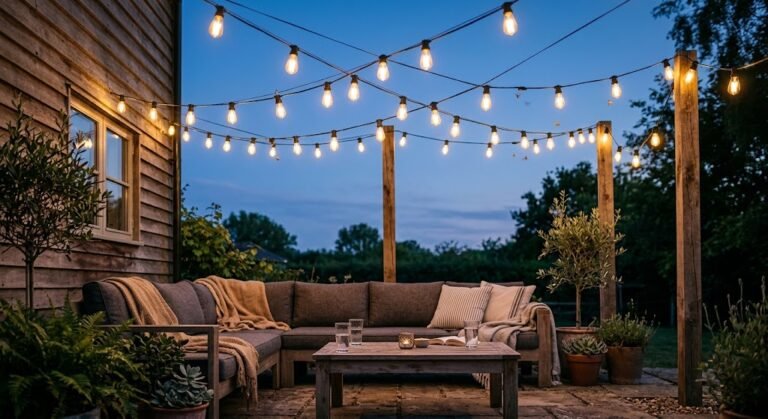
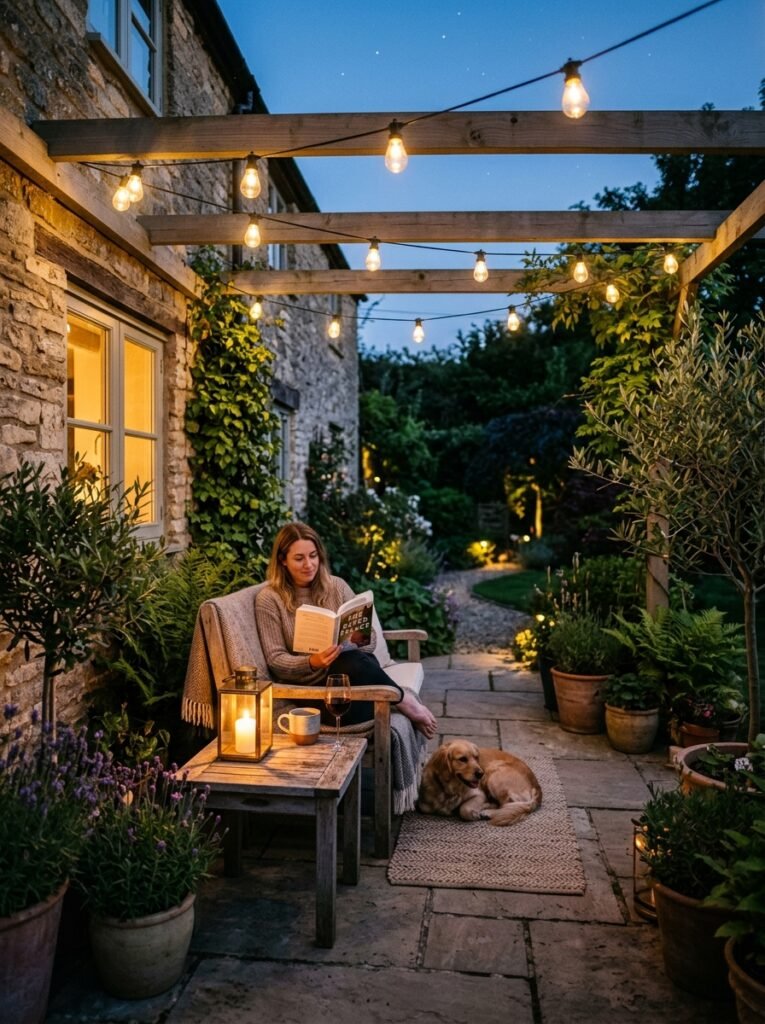
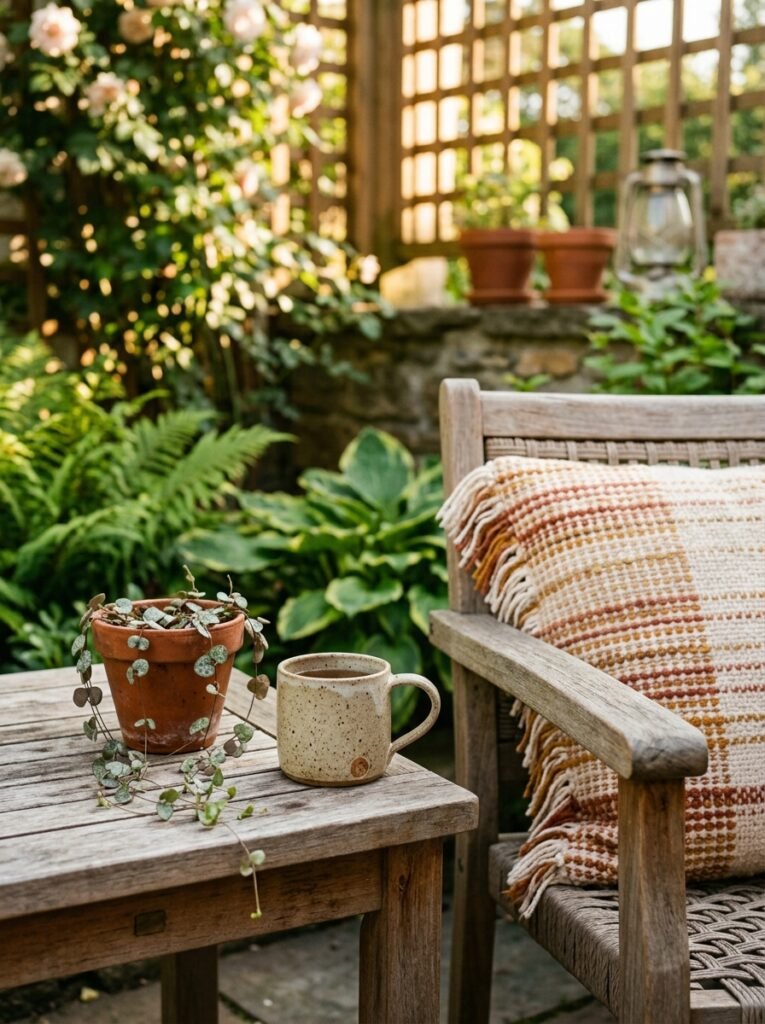
A single overhead light source (or none at all) is the most common lighting mistake on a small patio. Layer at least two sources — a string light run for ambient overhead glow, plus one lower source like a lantern or small table lamp — to avoid the flat, single-note lighting that makes even a well-furnished patio feel unfinished after dark.
For specific layout patterns and bulb types, see our patio string light ideas guide.
📌 You’ll Also Love This Patio String Light Ideas: 15 Layouts for the Coziest Backyard Glow The full lighting breakdown for this exact step →
Step 7: Finish With Textiles, Plants, and One Personal Touch
The final step is the layer most people start with by mistake — cushions, throws, plants, and one or two genuinely personal objects (a piece of art, a thrifted find, a handmade item). Added last, after the structural decisions in Steps 1 through 6 are settled, these final touches read as intentional finishing details rather than an attempt to distract from an unresolved layout underneath.
For more layering and textile ideas at this stage, see our cozy patio decor ideas guide or, for a warmer and more global-inspired finish, our boho decor ideas guide.
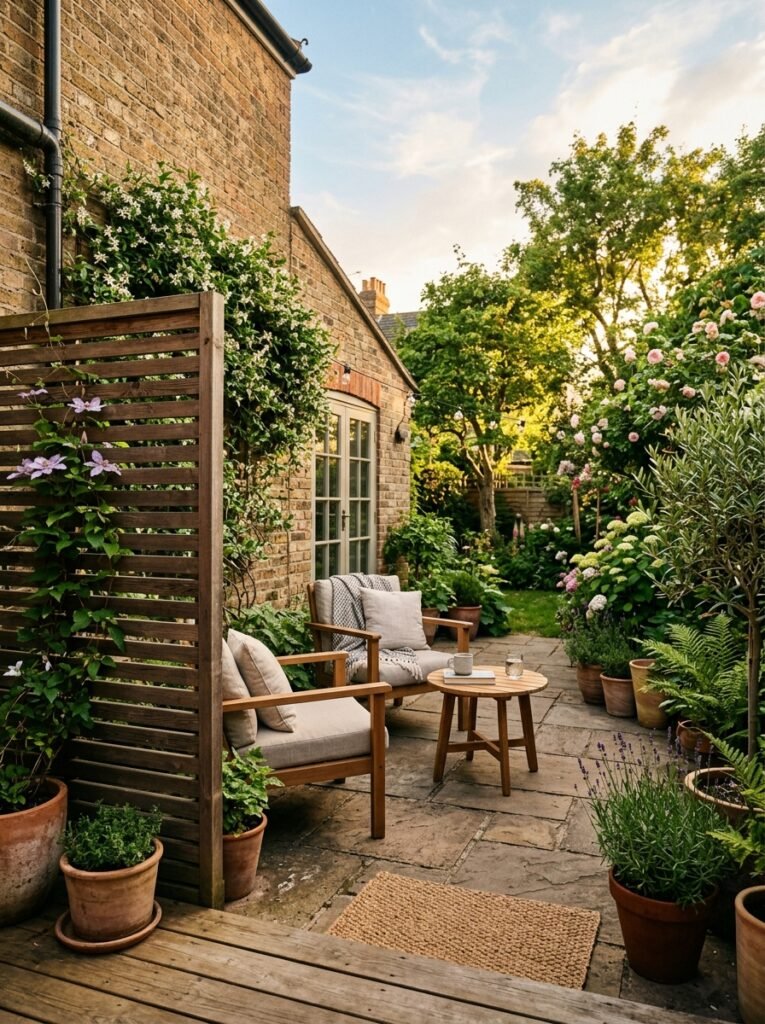
💡 PRO TIP If you only have budget or time for a partial refresh, do Steps 1, 2, and 4 (measuring, focal point, floor rug) first. Those three alone close most of the gap between “furnished” and “styled,” even before lighting or final decor touches are added.
The 7-Step Small Patio Styling Checklist
| Step | Task | Full Guide |
|---|---|---|
| 1 | Measure space, plan two zones max | — |
| 2 | Choose one clear focal point | — |
| 3 | Select furniture scaled to your measurements | Small Patio Furniture Ideas |
| 4 | Layer the floor with a rug | — |
| 5 | Add targeted privacy or shade | Privacy Screen Ideas / Patio Cover Ideas |
| 6 | Layer at least two light sources | Patio String Light Ideas |
| 7 | Finish with textiles, plants, and personal touches | Cozy Patio Decor Ideas / Boho Decor Ideas |
Small Patio Styling Mistakes to Avoid
- Styling before measuring — buying decor before confirming what actually fits is the most common reversal of this whole process.
- More than two zones on a small footprint — it reads as cluttered no matter how nice each individual zone is.
- No clear focal point — a patio full of nice individual pieces with nothing anchoring them still looks unfinished.
- Skipping the floor rug — this is the single most under-used step on small patios specifically.
- Single-source lighting — one overhead string alone leaves the space feeling flat after dark.
- Decor before structure — cushions and plants can’t compensate for furniture that’s scaled wrong or a layout with no zones.
Quick FAQ about Style a Small Patio
What’s the most important step in styling a small patio? Measuring and zoning (Step 1) is the most important, since every later decision — furniture size, rug dimensions, lighting placement — depends on an accurate sense of your actual usable space.
How many furniture pieces fit on a small patio? Most small patios (under 120 sq ft) comfortably fit one seating zone and one secondary zone — trying to fit more typically makes the space feel cluttered rather than more functional.
Do I need a rug on a small patio? It’s one of the highest-impact, most skipped steps — a properly sized rug grounds a small patio visually in a way that’s difficult to replicate with any other single addition.
What order should I follow when styling a patio? Measure and zone first, choose a focal point, select scaled furniture, layer the floor, address privacy or shade, add layered lighting, then finish with textiles and personal touches — doing these out of order is the most common reason a patio refresh doesn’t come together.
Why Trust This Guide
This guide is built around a sequence, not just a list of ideas, because that’s genuinely what separates a small patio that feels professionally styled from one that just has nice individual pieces — the order these decisions get made in matters as much as the decisions themselves. Each step links to a deeper guide for that specific stage rather than repeating the same furniture, lighting, or decor recommendations already covered elsewhere on this site.
How to style a small patio comes down to following this order once, then returning to any single step for a refresh later without needing to redo the whole process. Start with Step 1, work through in sequence, and use the linked guides above when you’re ready for more specific options at any stage.