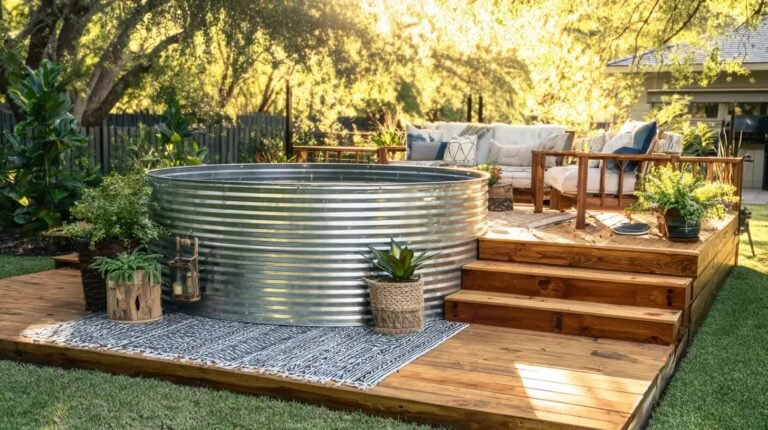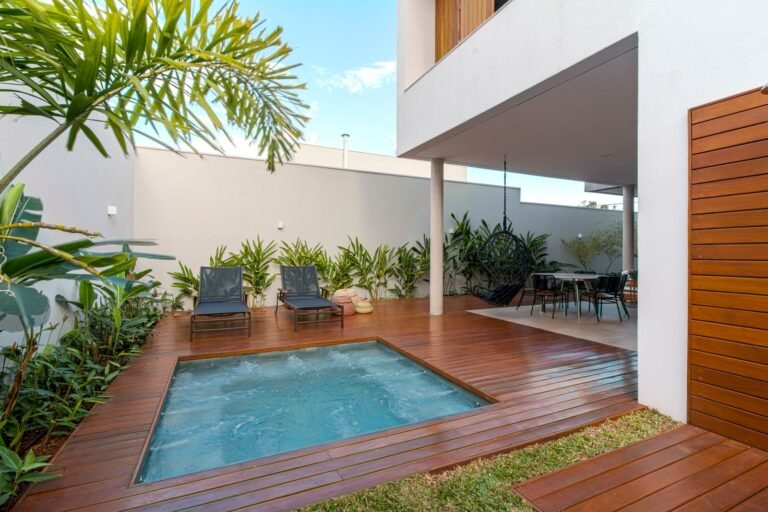

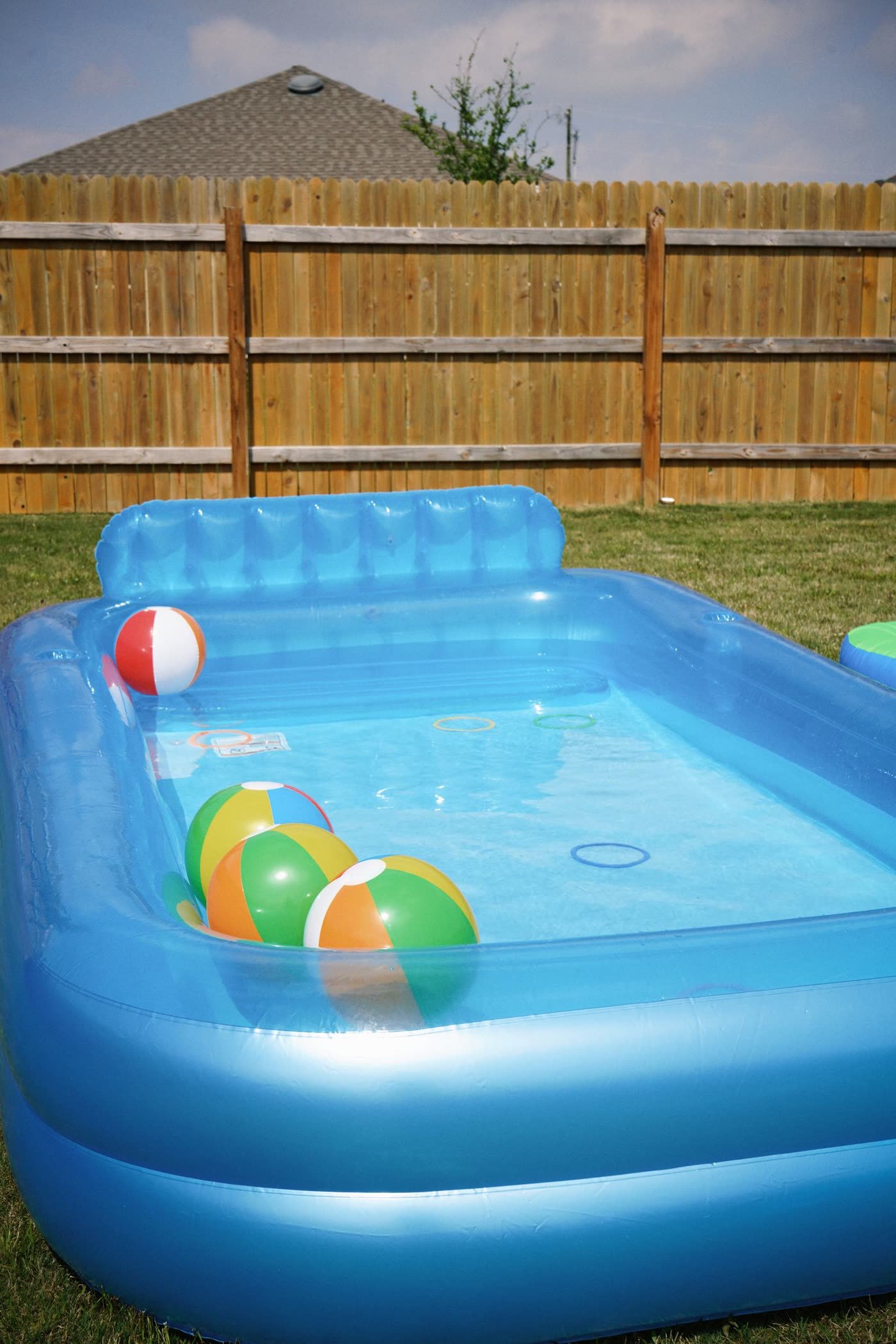
An inflatable pool doesn’t have to scream “toddler birthday party.” With the right setup — real filtration, decent heating, and some styling intention — a $100–$300 blow-up pool becomes a legitimate adult cool-down station. Here’s how the people who do it well pull it off.
1. Add a Real Filter Pump

The #1 upgrade: a small cartridge filter pump (the kind sold for Intex metal-frame pools, ~$60) plumbed to your inflatable with simple hose adapters. Circulated, filtered water stays clear for weeks instead of turning into a swamp in four days.
Best for: Anyone who wants to swim more than twice before draining.



2. The Ground Cloth Is Non-Negotiable
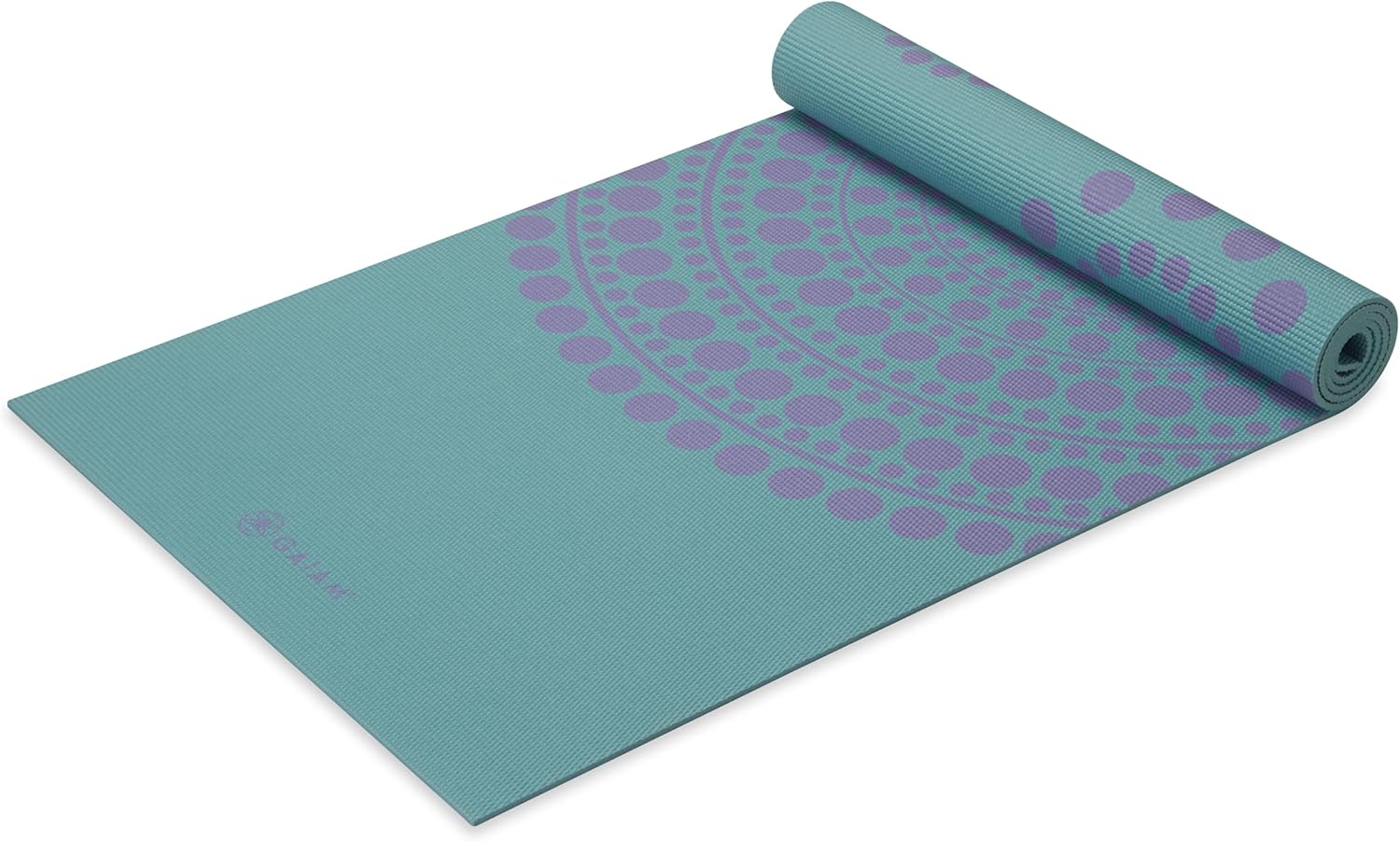
A $20 ground cloth or tarp under the pool prevents punctures, stops grass from dying in a perfect circle, and keeps the bottom from feeling lumpy. For extra comfort, interlocking foam mats under the tarp add cushioning that makes a real difference.
Best for: Protecting the pool and your lawn in one step.
3. Chlorine, But Make It Gentle
A mini floating dispenser with 1-inch tablets, or even simpler — a saltwater mini chlorinator. Test with strips weekly. The mistake most people make is running zero chemicals because “it’s just a blow-up pool,” then wondering why it smells by day five.
Best for: Water you’d actually put your face in.
4. Hide the Plastic
The fastest visual upgrade: surround the pool with a ring of large potted plants, a bamboo reed fence section, or outdoor curtains on a simple frame. You see greenery and fabric, not blue vinyl. The pool becomes a feature instead of an eyesore.
Best for: Making it look intentional in photos and real life.
5. Solar Heating That Works

A black solar heating mat ($40–$80) plumbed inline with your filter pump can raise water temperature 5–10°F on sunny days. Coil-style solar heaters work too. It’s not a hot tub, but it takes the morning chill off.
Best for: Cooler climates and early-season swims.
6. The Right Cover

A solar cover cut to size does three jobs: heats the water, slows evaporation, and keeps leaves out. Get one slightly larger than the pool and trim it — fitted covers for odd inflatable shapes rarely exist. Reel it or fold it; don’t just crumple it nearby.
Best for: Cutting maintenance in half.
7. Deck It (Temporarily)
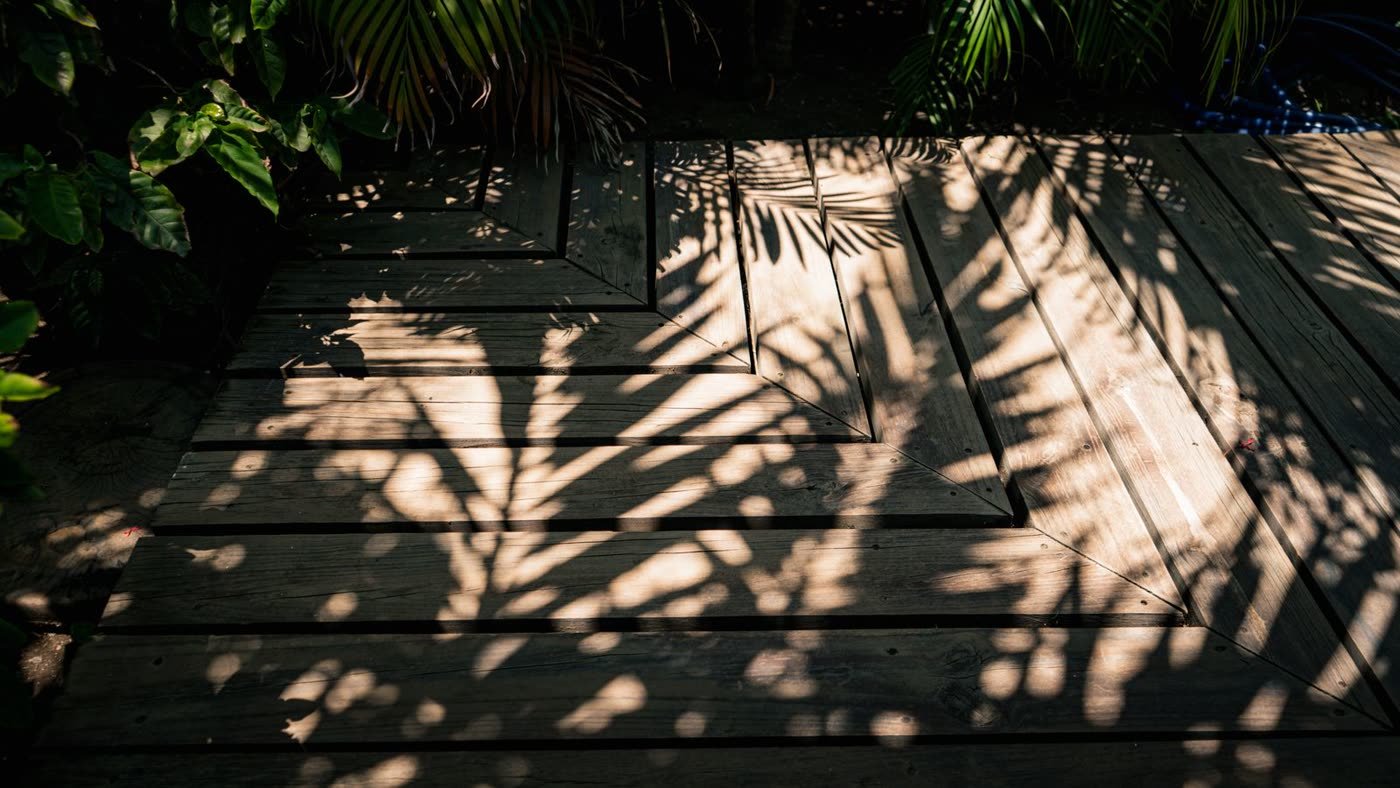
A few interlocking deck tiles or an outdoor rug around the pool’s entry side creates a “deck zone” for towels, drinks, and dry feet. It visually anchors the pool and stops the muddy-feet problem.
Best for: The 10-minute upgrade with the biggest lifestyle payoff.
8. Night Mode

Waterproof LED strip around the pool’s top ring (battery-powered, $15) plus string lights overhead. An inflatable pool at night with glowing edges looks genuinely magical — nobody’s thinking about the price tag.
Best for: After-work cool-downs, which is when adults actually use pools.
9. The Ice Bath Conversion

In shoulder seasons, skip heating and lean in: an inflatable pool makes a superb cold plunge. Add a cheap pool thermometer, keep it clean with the filter, and you’ve got the wellness trend for the cost of the pool you already own.
Best for: Fitness folks and the cold-plunge curious.
10. End-of-Season Storage Done Right
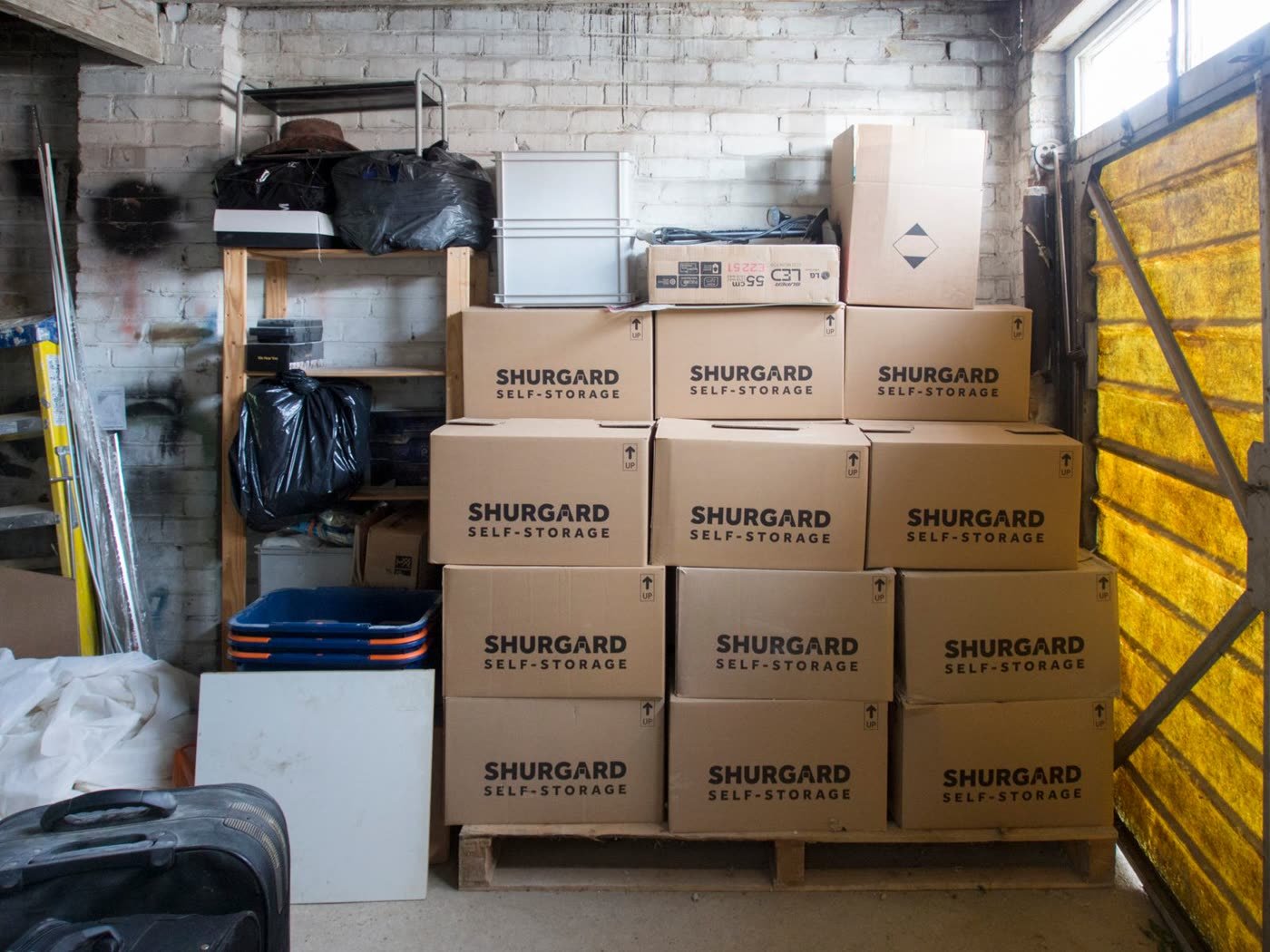
Clean thoroughly, dry COMPLETELY (mildew is the killer — inflate it one last sunny day to air out), sprinkle talc or cornstarch to prevent sticking, fold loosely, and store indoors. A well-stored inflatable lasts 3–5 seasons; a damp-folded one lasts one.
Best for: Not rebuying the pool every June.
11. The Two-Pool System
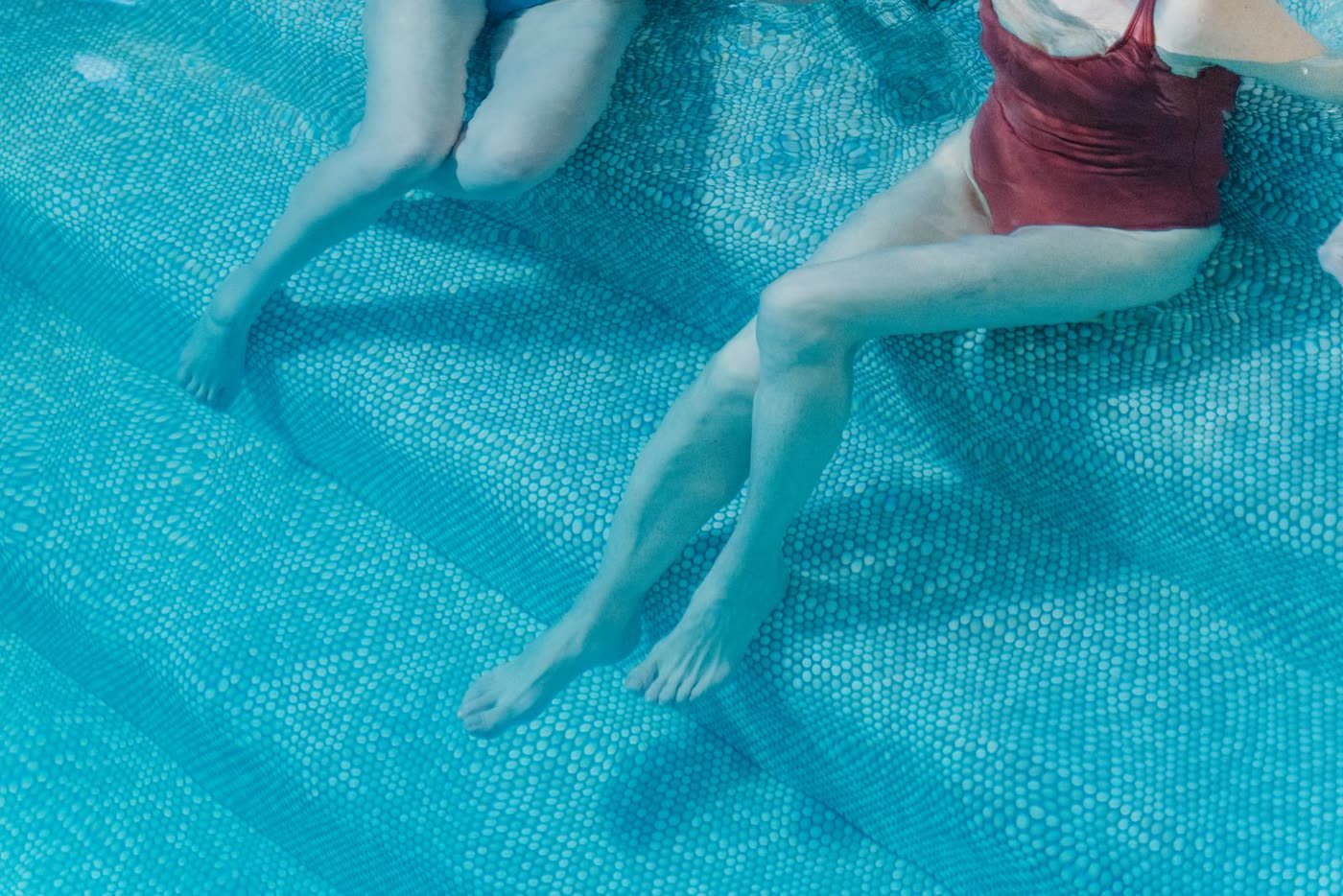
Serious inflatable owners run two: a larger swim pool and a smaller shaded “cool-down” pool under a canopy or umbrella. The small one stays cooler (less sun exposure) and gives overheated swimmers somewhere to actually cool off. Total cost for both is still under $400.
Best for: Hot climates where one pool turns into bathwater by afternoon.
12. Borrow the Hot Tub Playbook
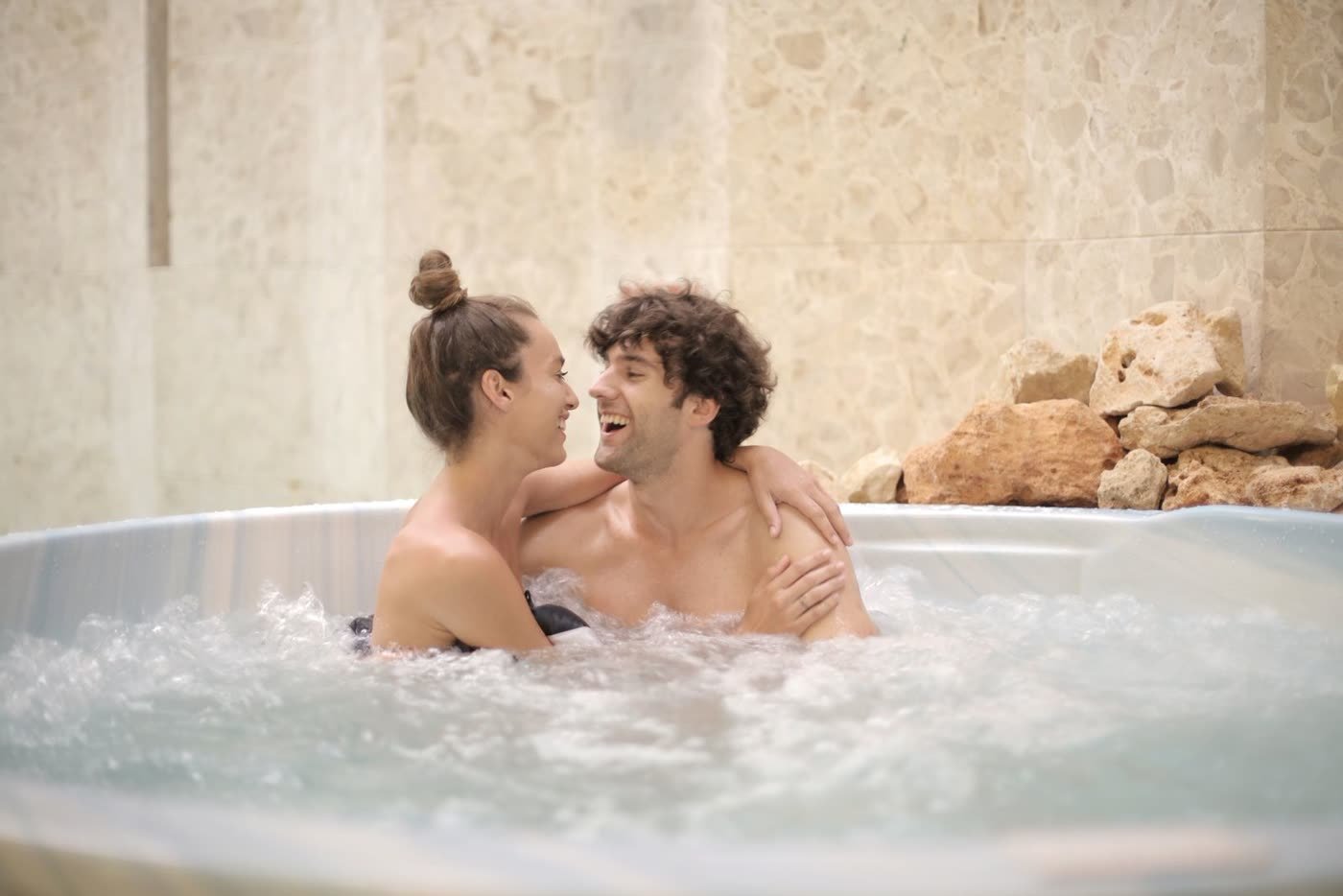
Treat your inflatable like a hot tub socially: a towel warmer (a $30 heated towel rail works outdoors under cover), a drinks caddy that clips to the pool edge, and a Bluetooth speaker on a floating shelf. The accessories that make hot tubs feel luxurious work just as well on a $200 inflatable.
Best for: Maximum luxury-per-dollar.
Inflatable Pool Sizing Guide for Adults
Minimum viable adult pool: 10-foot round × 30 inches deep. Two adults can float; three can sit. Anything smaller is a foot-soak, not a pool.
The sweet spot: 12–15 foot round or 10×15 foot rectangular, 36–42 inches deep. Fits 3–4 adults comfortably, holds enough water to stay clean with a filter, and still drains in a reasonable time.
Depth matters more than diameter. A 10-foot pool at 42 inches deep feels vastly bigger than a 15-foot pool at 24 inches. You can’t float in 2 feet of water — you just sit on the bottom. Prioritize depth when choosing.
Weight check: Water weighs 8.3 lbs/gallon. A 12-foot round pool at 36 inches holds ~2,500 gallons — over 20,000 pounds. Make sure the ground is level and compacted; soft spots become permanent dents. Never put an inflatable on a deck unless the deck was engineered for it.
Shape notes: Rectangular inflatables use space more efficiently and fit better against fences. Round ones are stronger structurally (even pressure distribution) and cheaper per gallon.
If the budget angle resonates, our small patio ideas for tight budgets has more wins, and backyard pool ideas covers the permanent-pool end of the spectrum. The CDC’s healthy swimming guidance applies to inflatables too — small pools need real water care.
Frequently Asked Questions
Can adults actually use inflatable pools comfortably?
Yes — look for 10-foot+ round or large rectangular models with 30″+ depth. The “kiddie” reputation comes from tiny shallow ones; a big inflatable with a filter is a different product entirely.
How long does the water last with a filter?
With a cartridge filter and basic chlorine, 3–6 weeks between water changes is realistic. Without filtration, plan on draining and refilling every 4–7 days in summer heat.
Will an inflatable pool kill my grass?
Any pool sitting in one spot will yellow the grass underneath within a week or two. Use a ground cloth, move the pool every couple of weeks if possible, and the grass recovers quickly once the pool moves.
How do I heat an inflatable pool cheaply?
A solar heating mat ($40–$80) is the best value — 5–10°F gain on sunny days. A solar cover adds a few more degrees and holds heat overnight. Electric heaters exist but often cost more than the pool.