This post contains affiliate links. If you buy through them, we may earn a commission at no extra cost to you.
Key Takeaways

- Can an HOA ban string lights? Usually yes — if the power is written into your CC&Rs or community rules. Private patios and balconies are still governed by the association.
- The first move is always reading your actual CC&Rs and architectural guidelines, not relying on what a neighbor told you or what’s “always been allowed.”
- Most approvals come down to three things: warm color temperature, no flashing or chasing effects, and lights that don’t spill onto neighbors’ property.
- If you get a violation notice, respond in writing, request the specific rule citation, and ask about the variance or approval process before removing anything.
- City and county ordinances can also regulate string lights — some specifically address flashing, brightness, and light trespass.
Two years. That’s how long one homeowner’s patio string lights had been hanging when the violation notice arrived. The lights hadn’t changed — the board had. Stories like this surface constantly in HOA forums, and they share one root cause: nobody read the actual rules until there was a problem. This guide fixes that. It’s the scenario behind countless searches for “can an HOA ban string lights.”
String lights are the fastest way to make a patio feel finished at night — and if you’re renting, our no-drill balcony shade guide covers the daytime side of the same small space. For the legal-adjacent side of community living, the Community Associations Institute at caionline.org publishes neutral explainers on how HOA rulemaking works.




Not legal advice: This guide explains general patterns in HOA and municipal rules. It is not legal advice and doesn’t cover your specific CC&Rs, state laws, or situation. For disputes, consult a licensed attorney in your state.
In This Guide
- 1. The Short Answer: Yes, But It’s Complicated
- 2. How to Read Your CC&Rs (Without a Law Degree)
- 3. The Rules HOAs Actually Write About String Lights
- 4. What City and County Ordinances Say
- 5. How to Request Approval (Template Language That Gets a Yes)
- 6. You Got a Violation Notice — Now What?
- 7. Neighbor-Friendly Lighting: Stay Out of Trouble by Design
- HOA Rule Types Compared
- Can an HOA Ban String Lights? FAQs
1. The Short Answer: Yes, But It’s Complicated

Best for: understanding where the HOA’s power actually comes from.
Can an HOA ban string lights? In most cases, yes — if the authority is granted in your governing documents. When you bought (or rented) in the community, you agreed to the CC&Rs (Covenants, Conditions & Restrictions), which typically give the board power to regulate exterior appearance, including lighting.
The complication: “can ban” doesn’t mean “has banned.” Many communities have no specific string-light rule, and boards enforce unwritten preferences inconsistently — which is why the two-year-lights-sudden-violation story keeps happening. A new board, a neighbor complaint, or a new management company can trigger enforcement of rules that existed on paper for years. So if you’re typing “can an HOA ban string lights” into a search box hoping for a simple yes or no, the honest answer is: usually yes — but only through a properly written and adopted rule.
Put simply, the question “can an HOA ban string lights” is really a question about paperwork: no written rule, no ban.
Your private patio is not exempt. Balconies, patios, and even fenced backyards are typically “exclusive use common areas” or otherwise subject to architectural control. The HOA usually can’t regulate what’s inside your home, but anything visible from outside — including string lights — is generally fair game. It’s the reason “can an HOA ban string lights” comes up so often — exclusive-use areas feel private, but they’re still subject to architectural control.
2. How to Read Your CC&Rs (Without a Law Degree)

Best for: finding the actual rule before you hang a single bulb.
Request the current governing documents from your HOA management company or board — you’re entitled to them. Look in this order:
- CC&Rs — the master document. Search for “lighting,” “exterior lighting,” “holiday lighting,” “decorations,” and “nuisance.” String lights may be named directly or swept under a general exterior-modification clause.
- Architectural guidelines / design standards — the detailed rulebook. This is where specific lighting rules usually live: color temperature limits, permitted hours, fixture types.
- Board resolutions and meeting minutes — rules adopted after the CC&Rs were written. A string-light policy passed in 2023 won’t be in the original 2005 CC&Rs.
- State law — some states limit HOA power over specific things (solar panels, clotheslines, political signs). String lights rarely have state-level protection, but check.
Once you’ve read these documents, you’ll know exactly where your community stands on whether an HOA can ban string lights — and what to do next.
What counts as a real rule: written, adopted through proper procedure, and applied consistently. A board member’s verbal “we don’t allow those” is not a rule — ask for the written citation, politely and in writing. Without a written rule, the answer to “can an HOA ban string lights” in your community is no — though the board can always adopt one later.
Pro Tip: Search your documents for “holiday” too. Many string-light rules were written for Christmas displays and get applied to year-round patio lights by analogy. Knowing the rule’s origin helps you argue for a patio-specific exception.
3. The Rules HOAs Actually Write About String Lights

Best for: predicting what your board cares about before you apply.
Across HOA lighting rules, the same patterns repeat:
| Common restriction | What it usually means | How to comply |
|---|---|---|
| No “holiday-style” lighting year-round | String lights read as Christmas decor to the board | Use warm-white commercial-style S14 strings, not multicolor minis |
| Color temperature limits | Often 2700K–3000K max (warm white) | Buy 2700K bulbs; keep the box as proof |
| No flashing/chasing/motion | Static lights only | Disable any twinkle or chase modes |
| Hours of operation | Off by 10 or 11 PM typical | Put lights on an outdoor timer |
| Light trespass limits | No significant spill onto neighbors’ lots | Aim strings inward; use shades or lower lumens near property lines |
| Architectural approval required | Any exterior change needs pre-approval | Submit before hanging, not after |
| Commercial appearance | Must look “residential” | Avoid industrial-looking installs, exposed conduit |
The single biggest predictor of approval: does it look like tasteful patio lighting or a holiday display? Warm-white, static, neatly hung commercial-style strings get approved far more often than multicolor or novelty shapes. When boards debate whether an HOA can ban string lights, the visual impression often matters more than the technical specs.
4. What City and County Ordinances Say

Best for: knowing when the government — not just the HOA — has a say.
When you search “can an HOA ban string lights,” most results focus on the association — but city and county ordinances can independently restrict your lights. Common ordinance patterns for residential string lights:
- Flashing and motion bans — several jurisdictions specifically prohibit flashing string lights in residential areas while allowing static ones.
- Light trespass / nuisance ordinances — limits on how much of your light can spill onto neighboring property or the street. Usually measured in foot-candles at the property line.
- Outlining restrictions — at least one county limits residential string lights to outlining patio edges rather than full overhead canopies in certain zones.
- Dark-sky ordinances — growing in the Southwest and rural areas; may require shielded fixtures, warm color temperatures, or curfews.
Check your city or county’s municipal code (usually searchable on the city website). Search “string lights,” “outdoor lighting,” and “light trespass.” If you’re trying to determine whether an HOA can ban string lights in your situation, check both layers — if both an ordinance and an HOA rule apply, you must satisfy both — the stricter one governs.
You’ll Also Love This: Dealing with brightness and placement questions? Our string light planner guide covers lumens-by-zone so your lights stay neighbor-friendly by design.
5. How to Request Approval (Template Language That Gets a Yes)

Best for: submitting an architectural request the board will actually approve.
Even in communities where the answer to “can an HOA ban string lights” is technically yes, boards routinely approve tasteful, well-documented installs — a proactive request beats an after-the-fact appeal every time. Most HOAs have an architectural review form. If yours doesn’t, a clear written request works. Include these five elements:
- What — “Commercial-style LED patio string lights, warm white (2700K), static (no flashing)”
- Where — a simple sketch or photo showing the patio location and mounting points
- When — “On a timer, off by 10:30 PM nightly”
- Specs — bulb type, color temperature, total wattage, and that they’re outdoor-rated
- Neighbor consideration — “Strings face inward over our patio; no direct spill onto adjacent units”
Sample request language you can adapt:
“We request approval to install warm-white (2700K) LED patio string lights over our rear patio (diagram attached). Static, no flashing modes, removable clips (no structural changes), on an outdoor timer off at 10:30 PM. Total draw under 50 watts. We believe this complies with Section [X] regarding exterior lighting.”
Submit before you buy or hang anything. Boards approve proactive requests far more readily than they forgive after-the-fact installs — and a written approval protects you if the board changes later.
Getting written approval upfront settles the “can an HOA ban string lights” question for your specific install — keep that letter with your records.
Pro Tip: Talk to your immediate neighbors first. A board is dramatically less likely to deny a request when the adjacent homeowners have already said they’re fine with it. Bring their written okay with your application.
6. You Got a Violation Notice — Now What?

Best for: responding to a patio lights violation without making it worse.
Don’t ignore it, and don’t tear the lights down in a panic. Work the process:
- Read the notice carefully. Note the deadline, the specific rule cited, and the fine schedule. Vague notices citing no specific rule are weaker.
- Request the rule citation in writing if none was provided. “Please identify the specific CC&R section or rule this notice is based on.” Keep everything in writing from here on.
- Check for selective enforcement. If other patios have string lights and only you got noticed, document it with dated photos — selective enforcement is a strong defense in HOA disputes.
- Ask about the variance/exception process. Most HOAs have one. Frame your request around compliance: warm white, timer-controlled, neighbor-approved.
- Attend the hearing if one is offered. Bring photos of your install, your product specs, neighbor support, and examples of similar approved installs in the community.
- Don’t pay fines blindly. In many states you have the right to dispute before fines become final. Know your state’s timeline.
Grandfathering — the myth: “My lights were up before the rule” rarely creates a legal right to keep them without an explicit grandfather clause. Prior non-enforcement can support a waiver or selective-enforcement argument, but it’s not automatic protection. So can an HOA ban string lights that were installed before a rule existed? In most cases, yes — prior installation alone doesn’t create a legal right to keep them.
7. Neighbor-Friendly Lighting: Stay Out of Trouble by Design
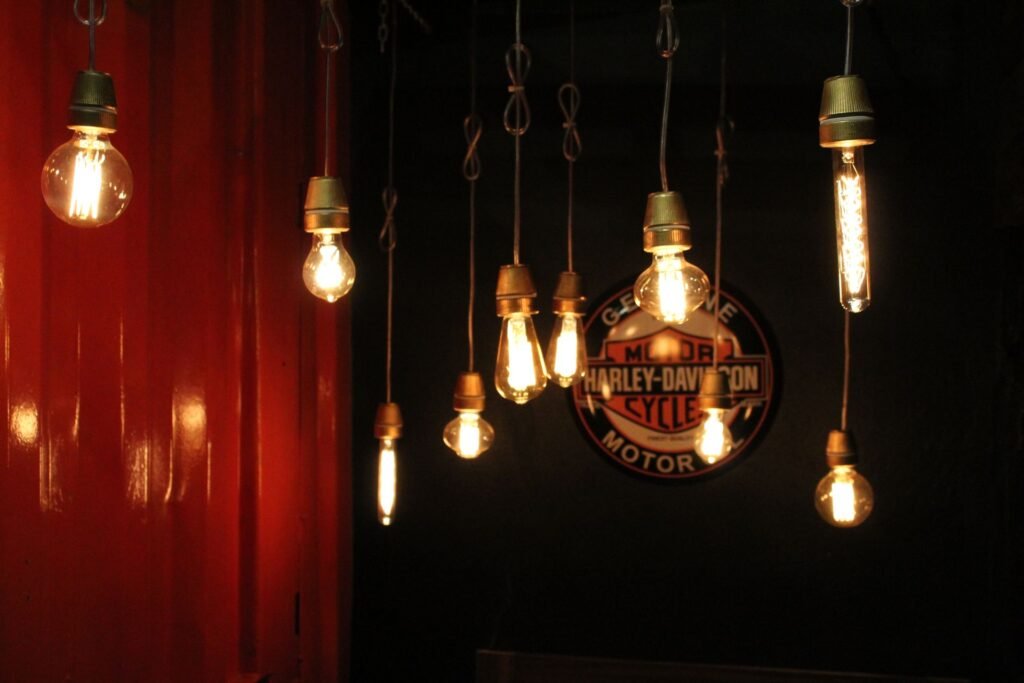
Best for: keeping the peace whether or not your HOA has strict rules.
Most complaints that reach boards start as neighbor complaints. Design them away:
- Warm white only (2700K or below) — cool white and daylight bulbs read as harsh and commercial from next door.
- Face lights inward — run strings over your own patio, not along the shared fence line pointing outward.
- Timer everything — lights that shut off at 10–11 PM generate a fraction of the complaints of all-night lighting.
- Mind the lumens — our string light planner shows how to hit 10–20 lumens per square foot for your zone without flooding the neighborhood.
- No motion modes — flashing, chasing, or twinkling modes are the #1 trigger for both HOA rules and neighbor complaints. Static is safe.
Pro Tip: The cheapest complaint insurance is a $15 outdoor timer. “They turn off automatically at 10:30” defuses most objections before they become formal complaints.
HOA Rule Types Compared
| Situation | Who governs | Your best move |
|---|---|---|
| No written rule exists | Board discretion / precedent | Submit a proactive approval request |
| Written rule bans string lights | CC&Rs / guidelines | Request a variance with compliance specs |
| Vague “exterior modification” clause | Architectural committee | Argue tasteful patio lighting fits the standard |
| Violation notice received | Board / management company | Respond in writing, cite specifics, request hearing |
| City ordinance also applies | Municipal code | Satisfy both; stricter rule governs |
| You’re a renter | Landlord + HOA | Get landlord written permission first, then HOA |
Can an HOA Ban String Lights? FAQs

Can an HOA ban string lights on a private patio?
Generally yes, if the power is granted in the CC&Rs or community rules. Patios and balconies are usually subject to architectural control even when they’re for your exclusive use. The ban must be in a properly adopted written rule — a board member’s verbal preference doesn’t count.
What if my string lights were up before the rule existed?
Prior installation doesn’t automatically grandfather you in unless the CC&Rs contain a grandfather clause. However, long unchallenged use can support arguments about waiver or selective enforcement, especially if similar installs remain. Document everything with dated photos.
Can an HOA ban string lights if there’s no written rule?
Generally no. Without a written, properly adopted rule, the board has no basis to ban them — though it can adopt a rule going forward.
Can an HOA ban string lights on a balcony?
Yes, if the CC&Rs or architectural guidelines give the board authority over balconies and exterior appearance — which they typically do, since balconies are visible from outside.
Can an HOA fine me for patio lights?
If a valid rule exists and the HOA followed its enforcement procedure (notice, opportunity to cure, hearing where required by state law), yes. Fine authority and procedures vary by state — know your state’s HOA statute before assuming the fines are valid.
Do renters have to follow HOA lighting rules?
Yes. HOA rules bind the property, not just the owner — and your lease almost certainly requires HOA compliance. Get your landlord’s written permission for any install, then follow the HOA’s approval process as the occupant.
Are there any lights an HOA can’t ban?
State laws occasionally protect specific things (solar devices, clotheslines, political signage in some states), but string lights rarely have statutory protection. When in doubt, the approval process is faster than the legal fight.
How do I find my HOA’s lighting rules?
Request the current CC&Rs, architectural guidelines, and recent board resolutions from your management company. Search them for “lighting,” “exterior,” “decorations,” and “nuisance.” Rules adopted after the original CC&Rs live in resolutions and meeting minutes.
Why Trust This Guide
Whether you’re asking “can an HOA ban string lights” before you buy a single bulb, or responding to a violation notice after the fact, the playbook is the same: read the actual documents, submit approvals with the specs boards want, and work the process in writing. It is not legal advice; for active disputes, consult a licensed HOA attorney in your state. For the lighting design side, see our string light planner guide.
About the Author
Sophia Bennett covers small-space outdoor living at Cozy Patio Home.