This post contains affiliate links. If you buy through them, we may earn a commission at no extra cost to you.
🔑 Key Takeaways
- Can you use a patio heater under a covered patio? Sometimes — but it depends on the heater type, the ceiling height, and the ceiling material. There is no universal yes.
- Electric and infrared heaters are the safest bets under covers; propane heaters need the most clearance and ventilation.
- Reported manufacturer clearances range widely (roughly 2–6 feet above the heat source) — your specific model’s manual is the only number that matters.
- Never use a heater under a low, combustible, or enclosed ceiling without confirming the manual allows it.
- When in doubt, move the heater to open air or switch to an electric model designed for covered spaces.
A friend once asked me to “just eyeball” whether his new propane tower heater was fine under his 8-foot pergola. I didn’t — and good thing, because his manual required 3 feet of clearance above the unit, which his setup didn’t have. He swapped it for an electric infrared panel and now the pergola is the warmest seat in the house. The whole point of this guide: the answer is always in the manual, and “probably fine” is not a clearance rating.
Can you use a patio heater under a covered patio? It’s one of the most-searched heater questions every fall, and the answers online genuinely conflict — which is exactly why this guide exists. Below you’ll find how the different heater types actually work, the clearance numbers manufacturers report, and a 7-step safety checklist to run before you ever light up under a roof. For the cozy side of cool-weather patios, our fire pit ideas for small backyards cover open-air heat, and the National Fire Protection Association publishes the fire-safety standards behind many of these rules.

How Patio Heaters Actually Work (The 2-Minute Primer)
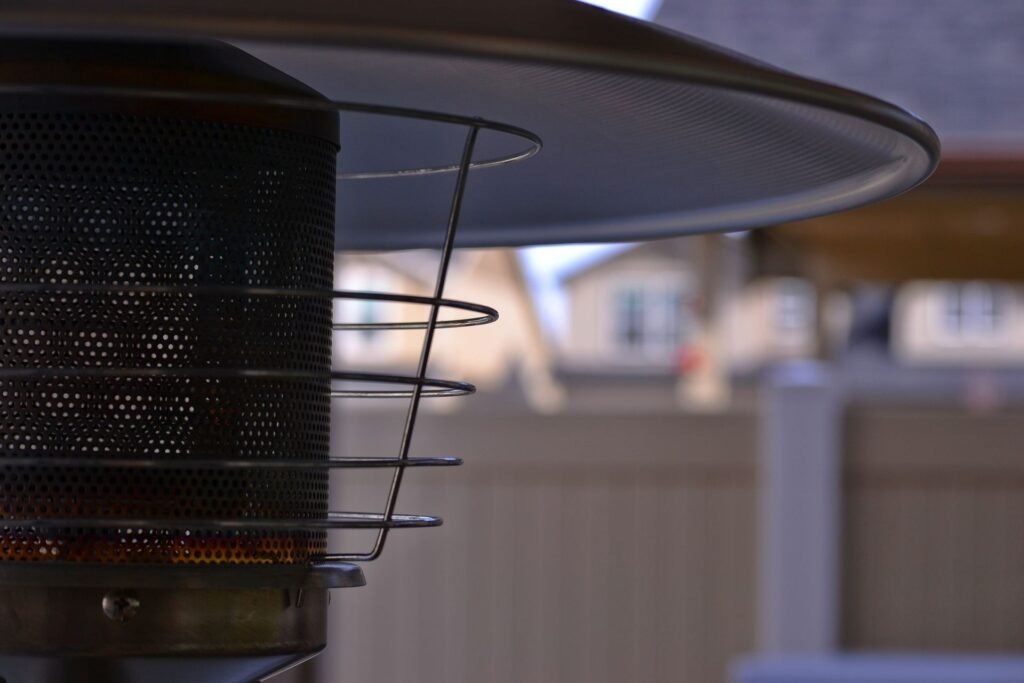
Not all patio heat is the same, and the type determines the risk under a cover:
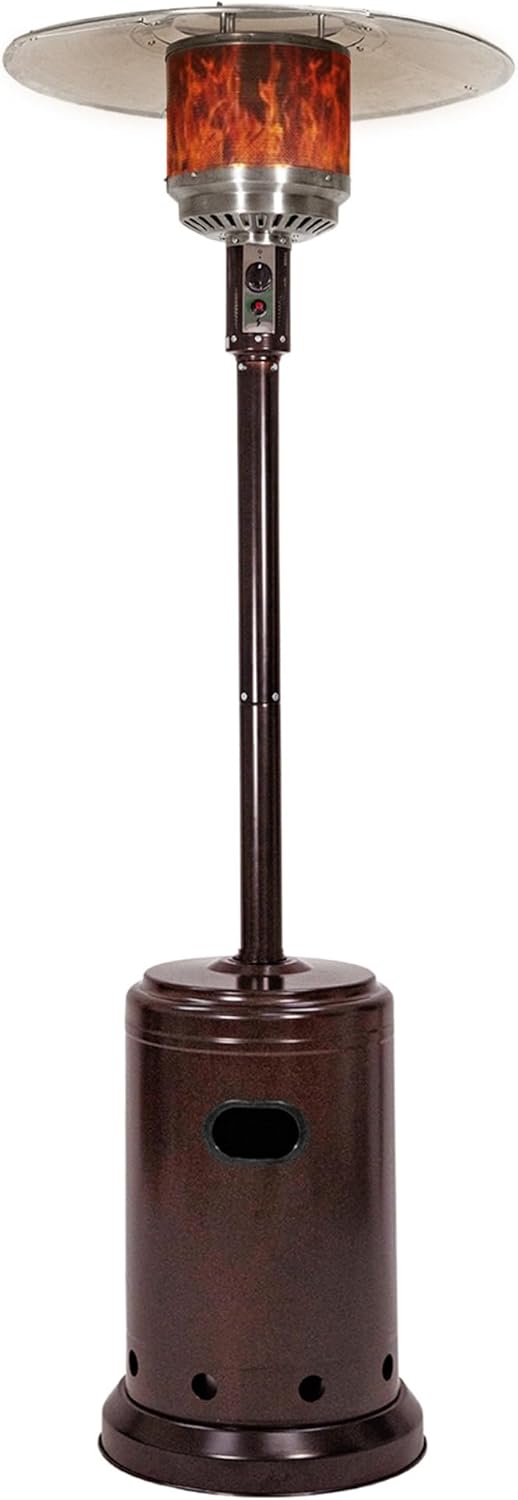
- Propane tower/mushroom heaters burn gas to heat a metal emitter, radiating warmth outward and upward. They produce combustion exhaust and need ventilation — the highest-risk type under a roof.
- Electric infrared heaters convert electricity to radiant heat with no flame and no exhaust. Wall- or ceiling-mounted models are specifically designed for covered patios and pergolas.
- Tabletop propane heaters are smaller versions of tower heaters — same combustion concerns, smaller heat radius.
- Fire pits and chimineas are open flame. They belong in open air, never under a covered patio. (Our fire pit guide is strictly an open-air game.)
The pattern: anything that burns fuel needs air in and exhaust out. Anything electric just needs clearance from things that can melt or ignite.
Safety Check 1. Read Your Manual First — Seriously
Best for: everyone, no exceptions | 5 minutes
This isn’t boilerplate. Clearance numbers vary enormously between models — published guidance I found ranges from about 2 feet to 6 feet of required clearance above the heat source depending on the heater and the source. Your manual’s number overrides everything in this article, every forum post, and every well-meaning neighbor. If the manual says “outdoor use only, not under any cover,” that’s the answer. No checklist can overrule it.
Search for: “[your heater brand + model] clearance requirements manual PDF”
Safety Check 2. Measure Your Ceiling Height Honestly
Best for: covered patios, pergolas, gazebos | tape measure required
Most reported manufacturer guidance clusters around 3 feet of clear space above a propane heater’s emitter, with some models requiring up to 6 feet near combustible materials like wood or fabric. Measure from the top of the heater — not the floor — to the lowest point of the ceiling, including beams, fans, and light fixtures. An 8-foot patio cover with a 7-foot heater leaves 1 foot. That’s not enough for any fuel-burning heater, full stop.
Ask your contractor for: “measure from heater emitter to lowest ceiling obstruction, not just ceiling height”
💡 PRO TIP — Ceiling fans and heaters are a bad combination under low covers. A fan directly above a propane heater disrupts the heat plume and can push hot exhaust sideways into beams. If your covered patio has a fan, mount electric infrared heaters on the walls instead — they’re designed for exactly this setup.
Safety Check 3. Match the Heater Type to the Cover

Best for: anyone shopping for a heater right now | buy-once guidance
Here’s the practical ranking, from safest to riskiest under a covered patio:
- Ceiling/wall-mounted electric infrared — designed for covered spaces; many models are rated for it explicitly.
- Freestanding electric infrared — no exhaust, but still needs the manual’s stated clearance from ceilings.
- Tabletop propane — smaller heat output, but still combustion; needs ventilation and clearance.
- Full-size propane tower — highest output, highest clearance needs, needs real airflow. Often fine under tall, open-sided covers — often not under low or enclosed ones.
If your patio cover is under 9 feet or enclosed on more than two sides, skip straight to electric.
Search for: “ceiling mount electric patio heater for covered patio”
📌 You’ll Also Love This — Outdoor Christmas Light Ideas That Look Magical
Cool-weather patios need light as much as heat — see the layouts that make covered spaces glow. →
Safety Check 4. Ventilation Matters More Than You Think
Best for: enclosed or semi-enclosed patios | the invisible risk
Propane heaters consume oxygen and produce carbon monoxide. An open-sided pergola breathes fine; a patio enclosed with curtains, screens, or walls on three sides does not. Never run a fuel-burning heater in an enclosed space — CO is odorless, and “it feels fine” is not a detector. If your covered patio has roll-down screens or heavy curtains you close in winter, treat it as enclosed and go electric. Bottom line: can you use a patio heater under a covered patio that’s enclosed on three sides? Only if it’s electric — never fuel-burning.
Search for: “carbon monoxide detector outdoor rated patio”
Safety Check 5. Know Your Ceiling Material
Best for: wood pergolas, fabric awnings, vinyl covers | the melting point question
Combustible ceilings (wood, fabric, thatch) need the most clearance — some reported guidance calls for up to 6 feet near combustible roofs. Non-combustible covers (metal, concrete, tile) are more forgiving but still need the manual’s minimum. Fabric awnings deserve special caution: some guidance suggests keeping heaters at least 6 feet from awning fabric, and heat can degrade fabric long before it ignites. When the ceiling material is uncertain, assume combustible.
💡 PRO TIP — Infrared thermometer guns cost under $25 and settle arguments fast. Point one at your ceiling beams after the heater’s been running 30 minutes. If any surface reads above 150°F, you don’t have enough clearance — regardless of what any chart says.
Safety Check 6. Pergolas, Gazebos, and Awnings Aren’t the Same
Best for: anyone with a named structure | each has its own rules
- Pergola (open slats): Best case for heaters — heat and exhaust escape upward. Still needs the manual’s clearance from the beams.
- Gazebo (solid roof, open sides): Treat like a covered patio. Solid roof traps more heat; measure to the roof’s lowest point.
- Retractable awning (fabric): Highest caution. Fabric + heat + wind movement is a bad trio. Many manuals prohibit heaters under awnings entirely — check yours.
- Fully covered patio (solid roof, 2+ walls): Ventilation is the limiting factor. Electric infrared is the sane choice here.
Search for: “can I use a patio heater under a [pergola/gazebo/awning]”
Safety Check 7. When the Answer Is No — Do This Instead
Best for: low covers, enclosed patios, strict manuals | the pivot
If your setup fails the checks above, you still have warm options:
- Wall-mounted electric infrared panels — the covered-patio gold standard; hardwired or plug-in, zero clearance drama beyond the manual’s mounting specs.
- Heated seating — outdoor heated cushions and throws warm people directly, using a fraction of the energy.
- Move the propane heater just outside the cover — heat radiates outward; placing a tower heater at the patio’s open edge warms the seating zone without going under the roof.
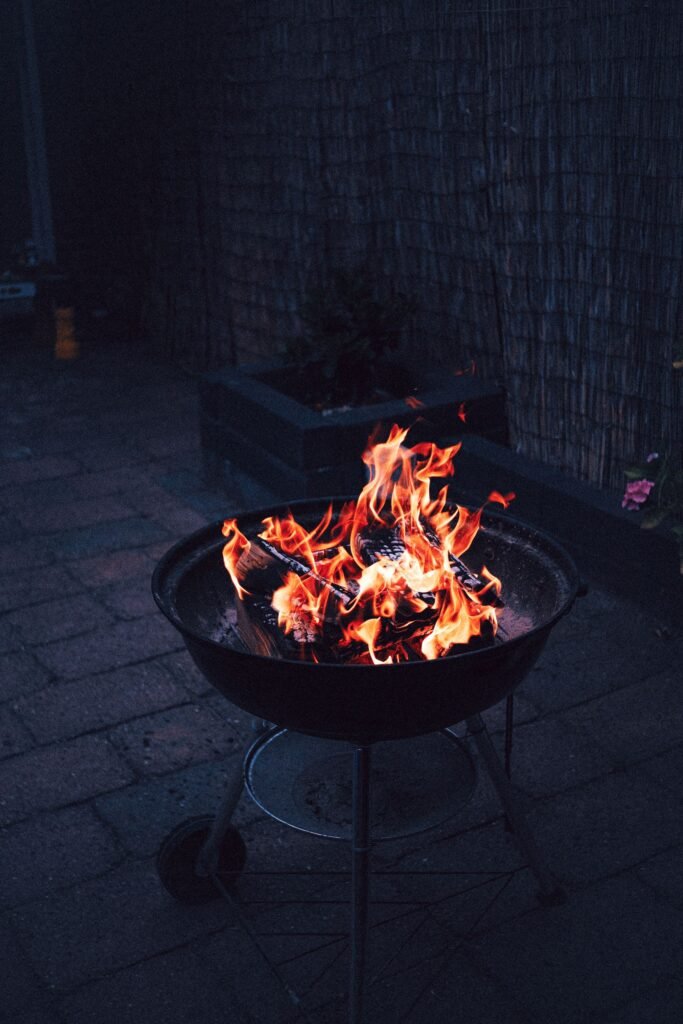
- Fire pit in the open yard — keep combustion fully outdoors (our fire pit guide covers small-yard-safe options).
Clearance at a Glance: Reported Guidance by Heater Type

| Heater type | Reported overhead clearance range | Ventilation need | Covered-patio verdict |
|---|---|---|---|
| Ceiling/wall electric infrared | Per manual (often ~2–3 ft) | None | Usually yes — designed for it |
| Freestanding electric infrared | Per manual | None | Usually yes with clearance |
| Tabletop propane | ~3 ft+ (check manual) | Yes | Sometimes — needs airflow |
| Full-size propane tower | ~3–6 ft (check manual) | Yes | Depends on height + openness |
| Fire pit / chiminea | N/A — open flame | Yes | No — open air only |
These ranges reflect published guidance found across manufacturers and safety sources; they conflict because models differ. Your manual’s number is the only one that counts.



Patio Heater Safety: What Actually Matters
- The manual beats the internet. Clearance numbers conflict across sources because every model is different. Read yours.
- Electric infrared is the covered-patio default. No exhaust, no flame, models explicitly rated for covers.
- Measure from the emitter, not the floor. Ceiling beams, fans, and fixtures count as the ceiling.
- Ventilation is non-negotiable for fuel-burning heaters. Enclosed = electric only.
- Fabric and wood need the most clearance. When in doubt about the ceiling material, assume combustible.
- A $25 infrared thermometer ends debates. Hot beams mean insufficient clearance, whatever the chart says.
- Still asking “can you use a patio heater under a covered patio”? Run the 7 checks above in order — manual, ceiling height, heater type, ventilation, and ceiling material — and you’ll have a safe, confident answer.
Can You Use a Patio Heater Under a Covered Patio? FAQs

Can you use a patio heater under a covered patio?
Sometimes. Electric infrared heaters — especially wall- or ceiling-mounted models — are often designed for covered patios. Propane heaters can work under tall, open-sided, non-combustible covers if the manual’s clearance (commonly around 3+ feet above the unit, more near combustibles) is met. Always confirm in your specific model’s manual.
How close can a patio heater be to the ceiling?
It depends on the model. Published manufacturer guidance ranges from about 2 feet to 6 feet of clearance above the heat source, with larger clearances required near combustible materials like wood or fabric. Measure from the top of the heater to the lowest ceiling obstruction and compare against your manual’s number.
Can I use a patio heater under a pergola or gazebo?
Pergolas (open slats) are the most heater-friendly covered structure since heat and exhaust escape upward — but you still need the manual’s clearance from the beams. Gazebos with solid roofs trap more heat, so measure carefully. Under fabric awnings, many manuals prohibit heaters entirely.
Can you use a heater under an awning?
Usually not recommended. Fabric awnings combine combustibility with movement in wind, and many heater manuals explicitly prohibit use under awnings. If your manual doesn’t forbid it, you’d still need generous clearance (some guidance suggests 6+ feet from fabric) — but the safer move is an electric wall-mounted unit or moving the heater beyond the awning’s edge.
Why Trust This Guide
I research patio safety the way I’d want someone to research it for my own family: by reading the actual manuals and saying plainly where sources conflict instead of inventing a single confident number. The clearance ranges above are reported from published manufacturer and safety guidance — and the central advice of this guide is to verify against your own model’s manual, because that’s the only number that governs your patio.
So, can you use a patio heater under a covered patio? Sometimes — and now you know exactly which questions determine your answer. Cool-weather patios are worth doing right — safe heat plus warm light is unbeatable. Once your heater situation is sorted, our fire pit ideas for small backyards and outdoor Christmas light ideas will help you build the full cozy setup.