This post contains affiliate links. If you buy through them, we may earn a commission at no extra cost to you.
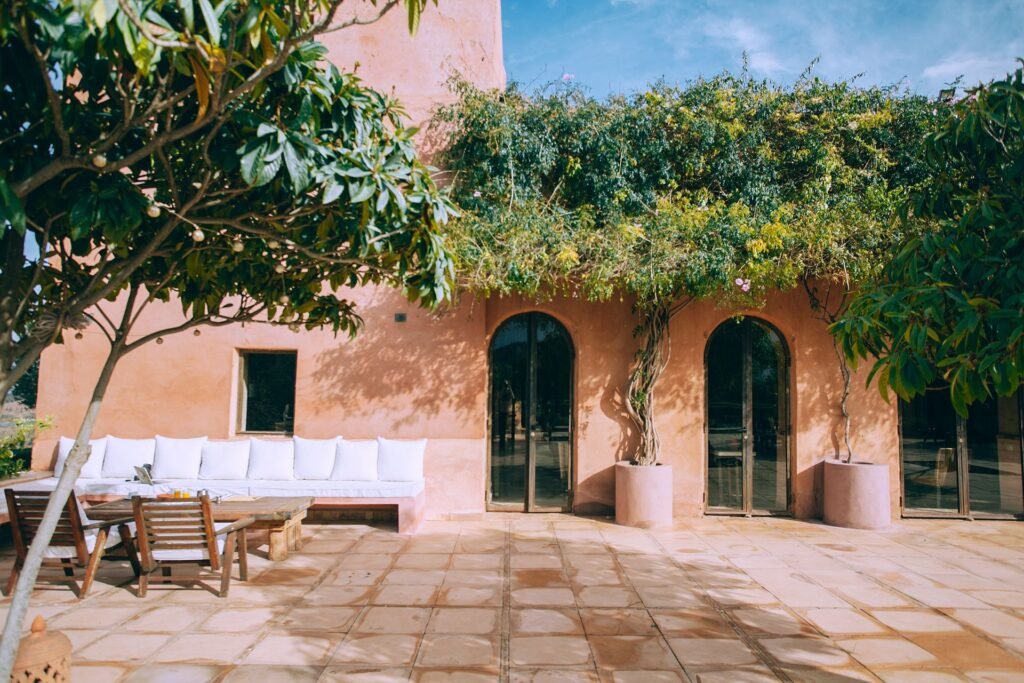
The best patio privacy ideas block sightlines from neighbors and the street without turning your outdoor space into a fortress. Wood slat screens, outdoor curtains, tall planters with ornamental grasses, and bamboo fencing all create real privacy — and most can be set up in a weekend for under a few hundred dollars.
Before you buy anything, stand where the neighbors stand. Walk to the fence line, look back at your patio, and note exactly which windows, second stories, or balconies have a sightline to your seating area. You only need to block those specific sightlines — a full fortress fence is overkill when one well-placed screen does the job. Here’s my quick map: want fast and cheap? Fabric screens and curtains. Want permanent and pretty? Wood slats or cedar panels. Want privacy that grows? Tall planters and climbing vines.



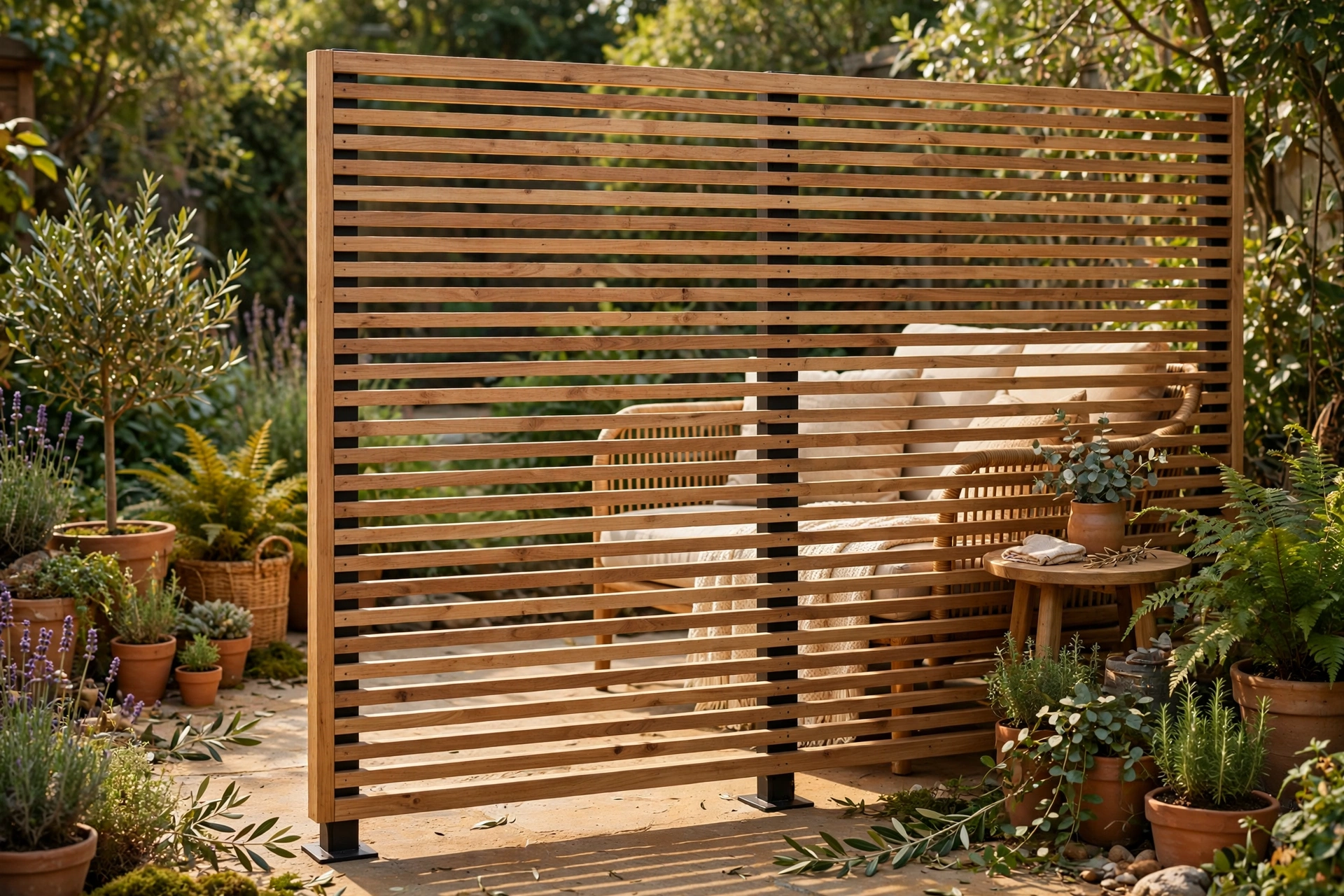
1. Wood Slat Privacy Screens for Instant Patio Privacy Ideas That Last
Freestanding wood slat screens are the most versatile patio privacy idea I recommend. They’re narrow-gap boards mounted in a frame on posts or feet, so they block sightlines while letting air and filtered light through. Set one behind your lounge chairs facing the neighbor’s window and you’ve solved the problem in an afternoon.
Cedar and redwood are the go-to woods because they resist rot and insects without chemical treatment. Buy pre-built panels or build your own with 1×4 boards and pressure-treated 4×4 posts — a single 6-foot-wide screen is a realistic one-day DIY. Angle the slats slightly or overlap them if you want total blockage; straight vertical slats leave small sightline gaps at extreme angles. Seal or stain them yearly, especially the end grain, or the wood will gray and check. Typical 2026 pricing from major home-improvement retailers and online sellers puts pre-built wood privacy screens around $100 to $400 per section depending on size and wood quality.
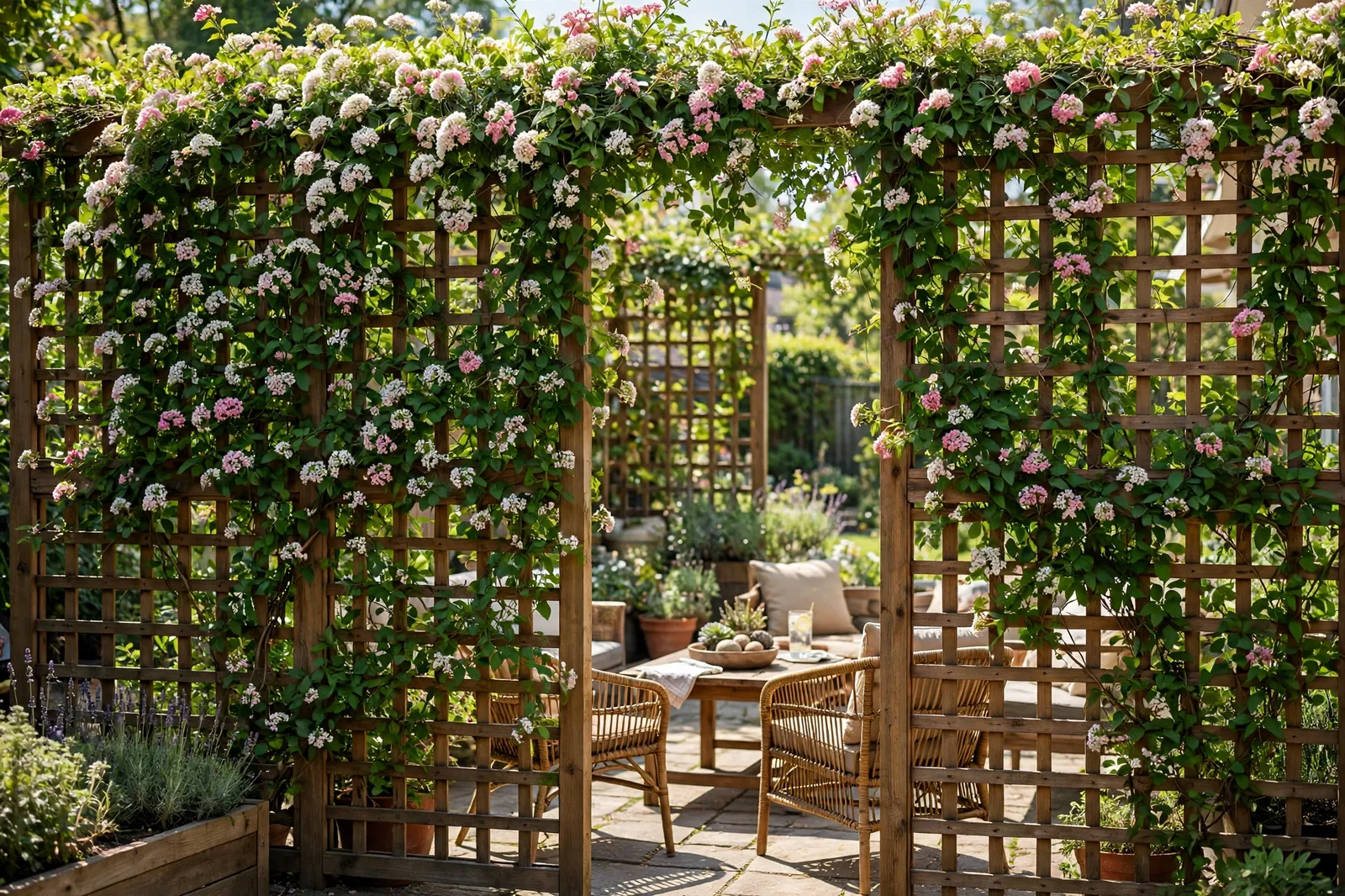
2. Lattice Panels Dressed With Climbing Vines
Lattice on its own only filters views, but lattice plus a climbing vine becomes a genuinely private living wall within one or two growing seasons. Clematis, jasmine, and honeysuckle all climb lattice readily and bring flowers along with the coverage.
Mount the panels on posts set in concrete or on weighted feet so they stand independent of your house — important for renters and for walls you don’t want to drill into. Plant the vine at the base in a deep container or bed and train new growth horizontally along the lattice; horizontal training makes the plant bushier and covers faster than letting it race upward. Evergreen vines like star jasmine keep privacy year-round in mild climates (USDA zones 8–10, think the South and coastal California), while deciduous clematis gives you summers-only cover (fine if you mostly use the patio in warm months). Water consistently the first year — a thirsty vine is a slow vine.
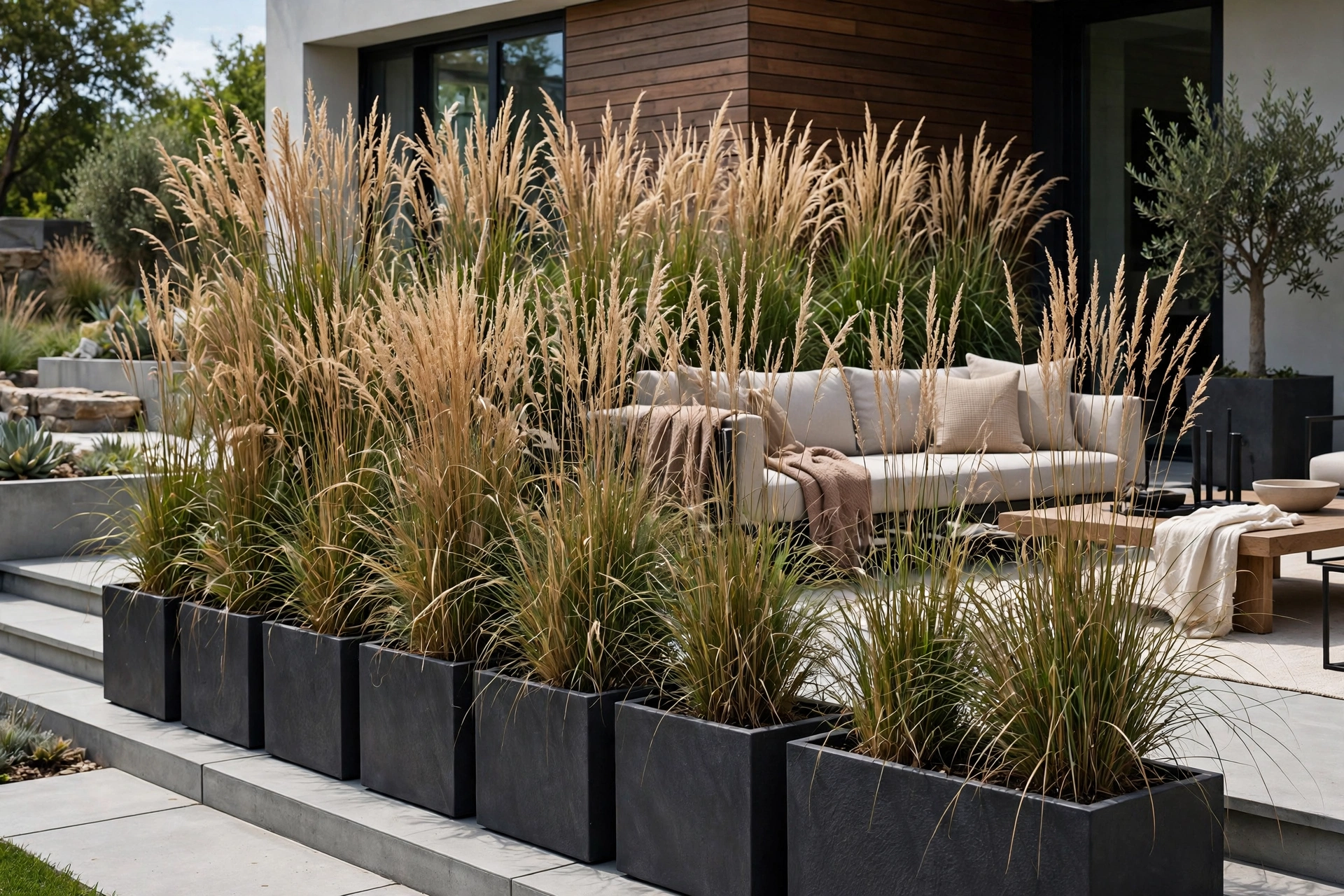
3. Tall Container Planters as Living Privacy Walls
Grouping tall planters filled with ornamental grasses, bamboo, or upright shrubs creates a privacy screen that’s also the prettiest option on this list. A row of three to five large planters along the exposed edge of a patio blocks views at seated eye level within weeks, not seasons.
Choose plants that stay narrow: feather reed grass (Calamagrostis), clumping bamboo, or upright arborvitae in pots. Big containers — at least 20 gallons — give roots room and add enough weight that wind won’t topple them. Add a drip irrigation line on a timer, because tall planters dry out fast in summer and dead grass is not privacy. This approach also works beautifully on balconies and rooftop patios where you can’t attach anything to the building. Swap in cold-hardy varieties if you garden in USDA zone 6 or colder, or accept replanting tender grasses each spring as part of the plan.
4. Outdoor Curtain Panels
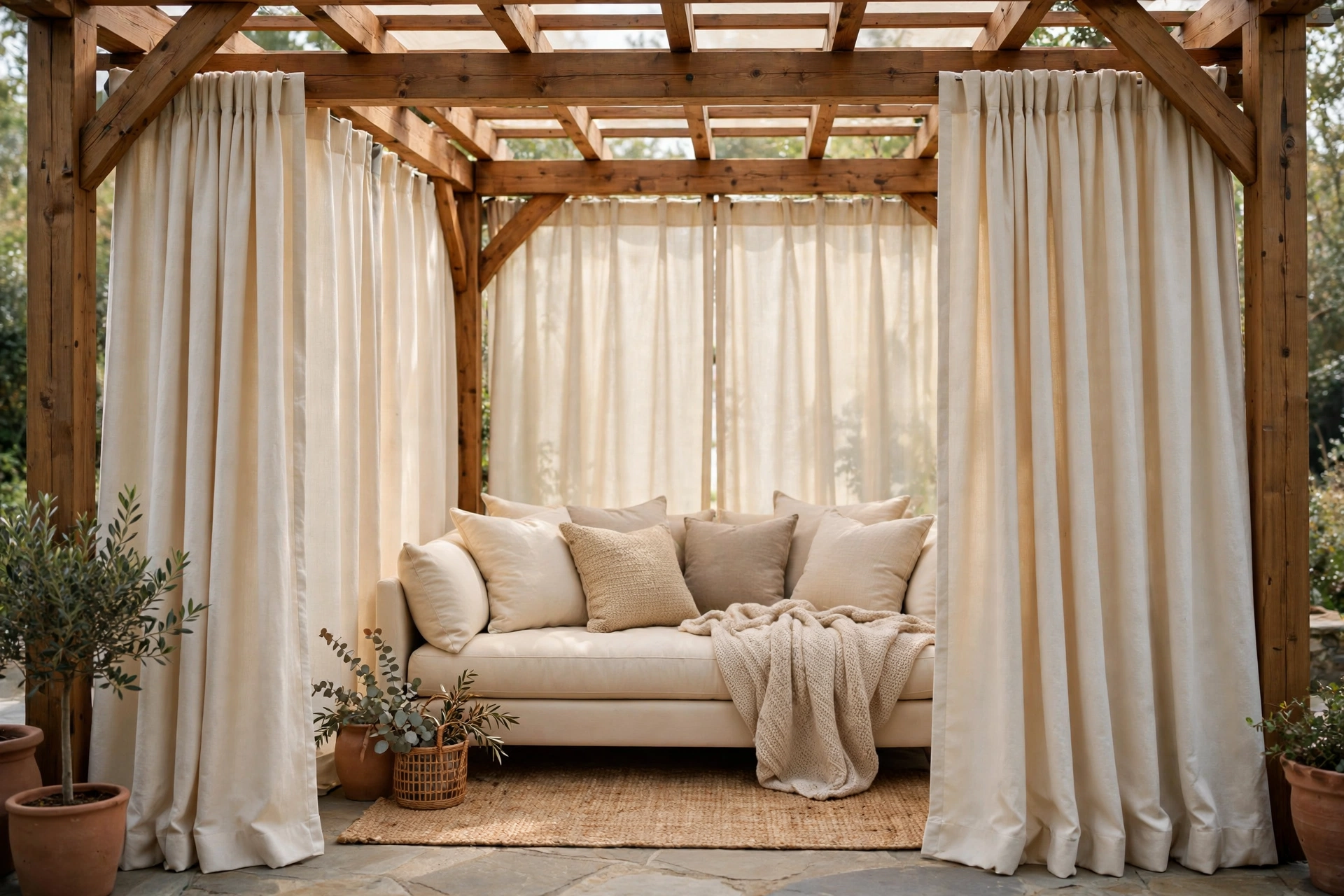
Weatherproof outdoor curtains are the fastest way to make a patio feel like a private room. Hang them on a wire cable, tension rod, or the beam of a pergola, and you can draw them open for sun and closed for dinner-party privacy in seconds.
Buy curtains labeled for outdoor use — they resist UV fading, mildew, and rain — in a tightly woven fabric if actual privacy (not just shade) is the goal. Sheer curtains look dreamy but won’t block a neighbor’s view, so choose light-filtering or blackout-weight outdoor fabric for real screening. Weight the bottoms with outdoor curtain weights or a sewn-in chain so they hang straight instead of billowing onto your table in the wind. In storm season, slide them fully open or take them down; a closed curtain in high wind acts like a sail.
5. Bamboo Fence Rolls
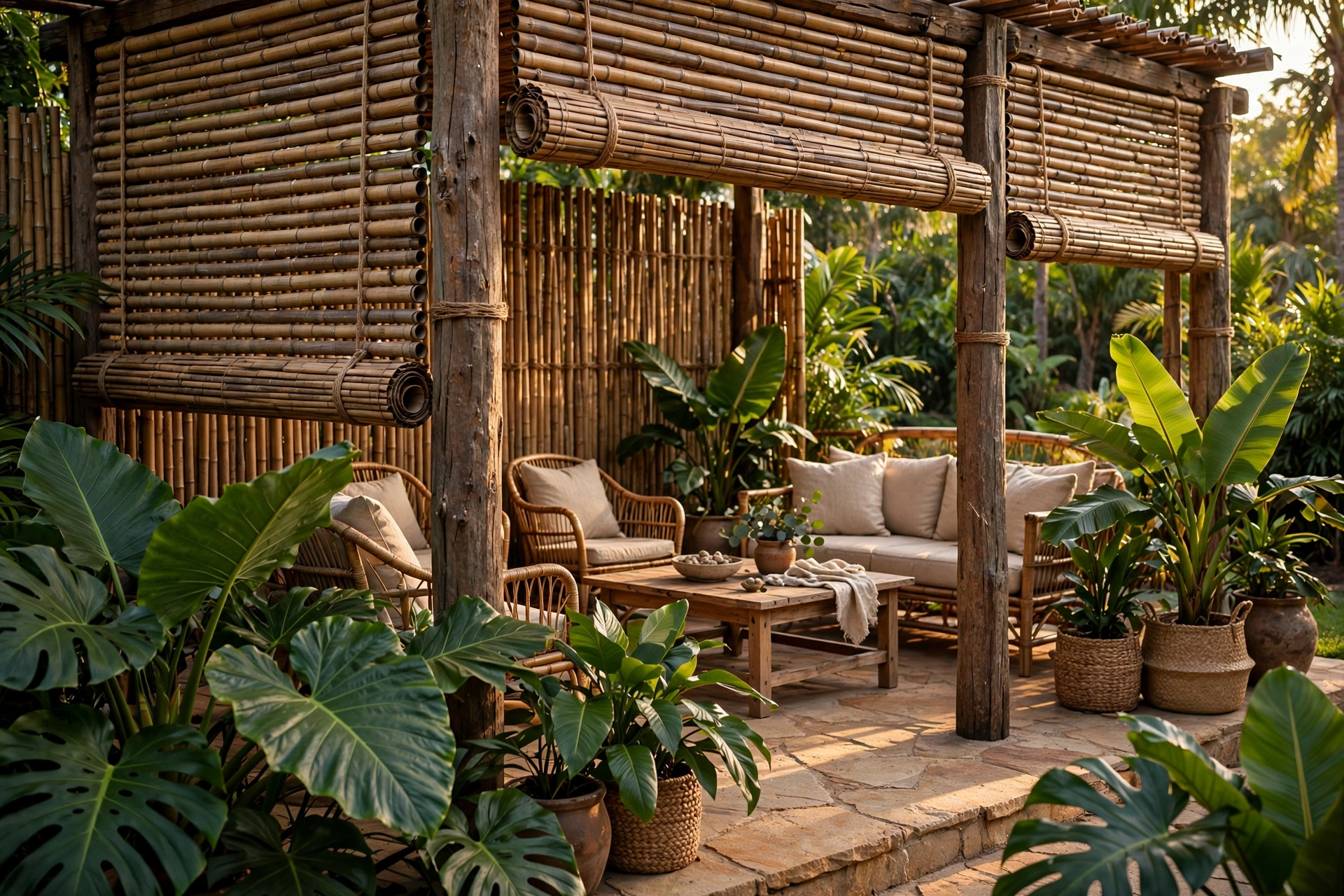
Rolled bamboo fencing is one of the most budget-friendly patio privacy ideas — a 6-foot-by-16-foot roll typically costs far less than an equivalent wood screen and installs in an hour by wiring it to existing posts or a fence frame.
Natural bamboo reeds age to a silvery gray unless sealed, so apply an exterior UV sealer if you want to keep the golden color. The rolls are thin, so they work best as a skin over an existing chain-link fence or a simple wood frame rather than as a freestanding wall. Double them up — two layers offset — for near-total opacity. In wet climates, bamboo lasts about 5 to 7 years before it needs replacing, which is fine given the price. For a tropical look, pair the bamboo with large-leaf plants like elephant ears in front of it.
6. Pergola Side Panels and Shade Sails
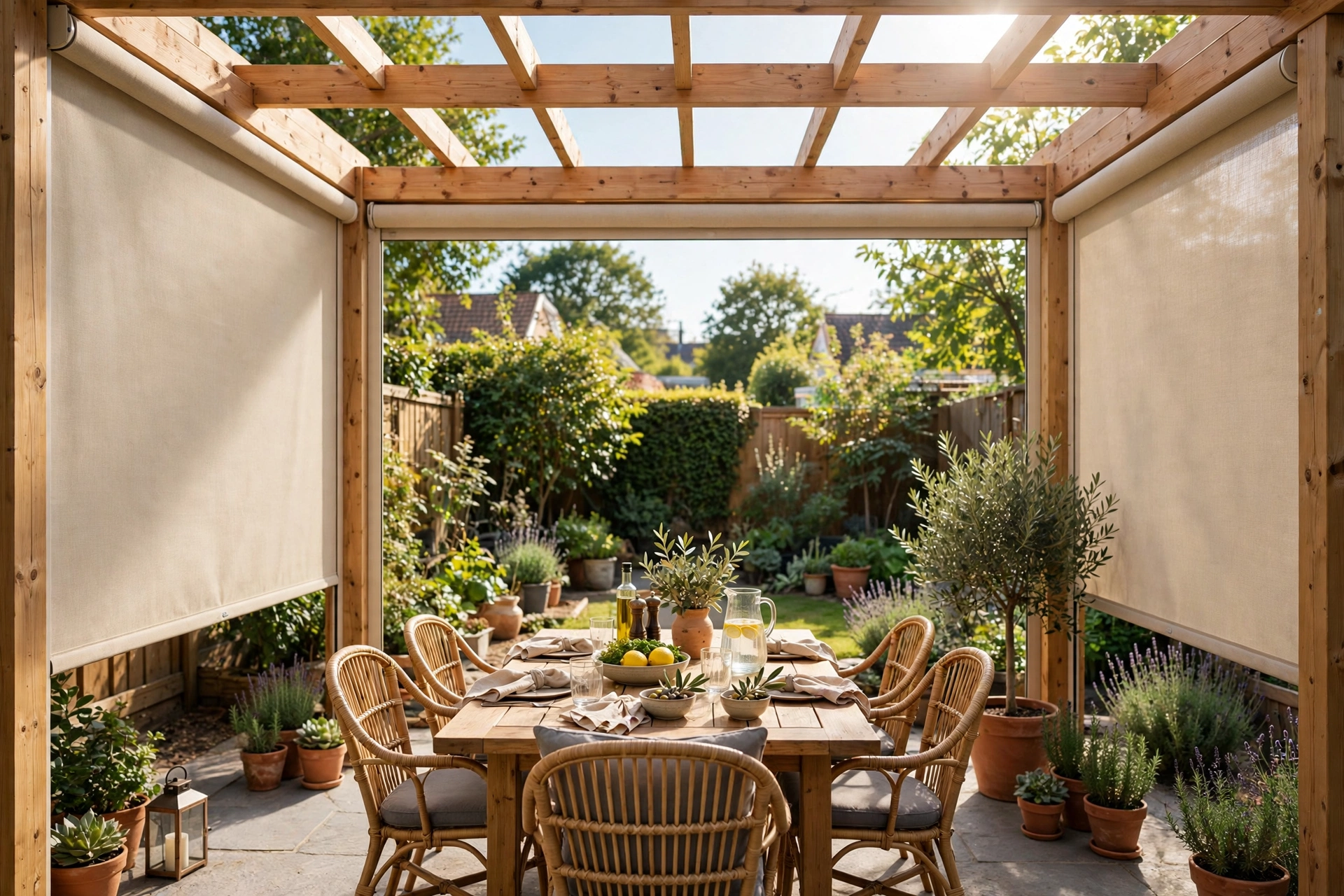
If you already have a pergola, its open sides are wasted privacy potential. Attachable side panels — roll-down shades, lattice inserts, or horizontal slat sections — convert the structure into a sheltered, private room without rebuilding anything.
Outdoor roll-down shades mounted to the pergola’s outer beam are the most flexible option: down for privacy and afternoon sun, up for open views. Choose shades with an openness factor under 5 percent for genuine sightline blocking. For a permanent look, mount cedar lattice or slat panels to two or three sides, leaving one side open for airflow. Make sure anything you attach can be secured or removed in storms — side panels catch wind, and a pergola wasn’t necessarily engineered for that extra load. This is also a natural place to layer in string lights, since the structure is already there.
7. Faux Ivy Expandable Trellis Screens
Expandable faux-ivy trellis panels give you a green privacy wall the day you hang them — no watering, no waiting for growth. They accordion out from a compact bundle to cover a fence, railing, or frame in minutes.
Quality varies enormously, so look for UV-stabilized leaves that won’t bleach white in one summer, and a sturdy wood or plastic lattice backing rather than flimsy mesh. Attach them with zip ties to railings or staples to wood frames, and overlap panels by a few inches to eliminate gaps. They’re genuinely useful for renters: hang on a balcony railing or a freestanding frame and take the whole thing when you move. Expect to replace them every 3 to 4 years in strong sun — treat them as a medium-term solution, not a forever fix.
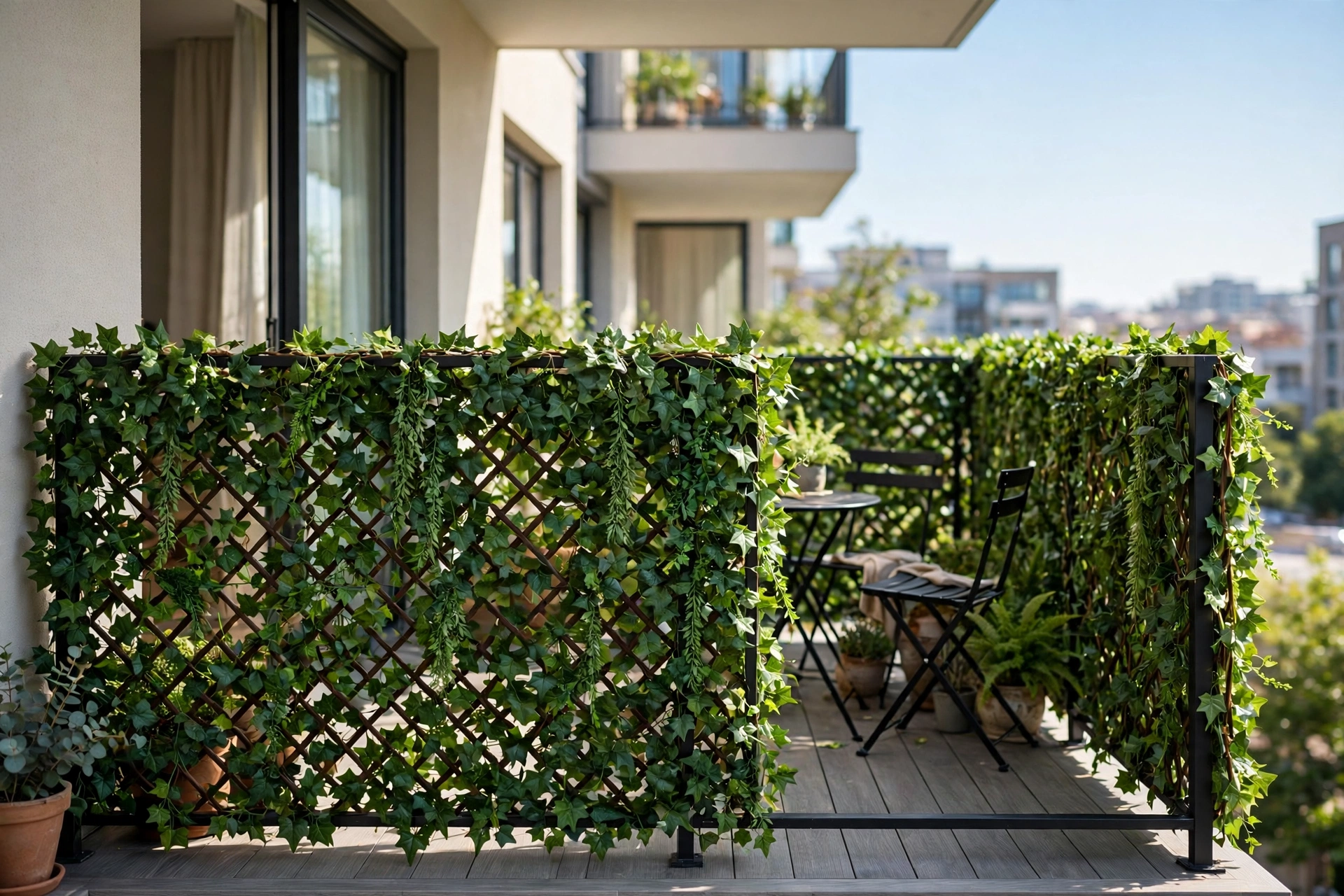
8. Raised Garden Beds With Built-In Trellises
A raised bed with a tall trellis at the back does double duty: vegetables or flowers up front, privacy behind. Place two or three along the patio’s exposed edge and you get a kitchen garden and a sightline screen in one project.
Build beds 2 feet deep and 4 feet wide, then mount a 6-foot trellis along the back edge. Grow pole beans, cucumbers, or morning glories up the trellis in summer for a living wall that also feeds you. In winter, the trellis can hold evergreen garlands or outdoor string lights so the structure still earns its keep. Keep the beds at least a foot off any fence line for air circulation, and choose rot-resistant cedar or composite boards for the bed itself. This is my favorite patio privacy idea for gardeners because it pays rent twice.
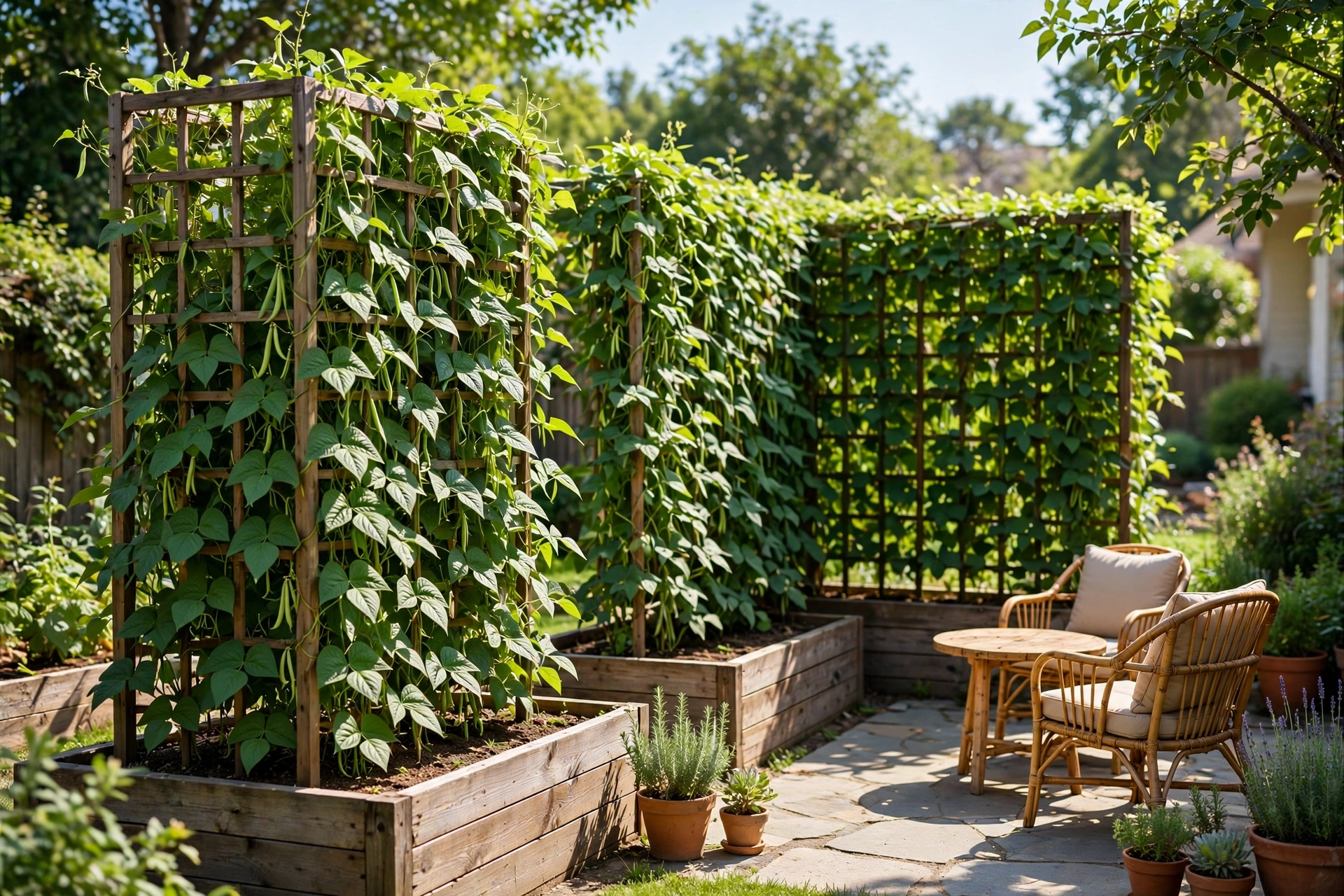
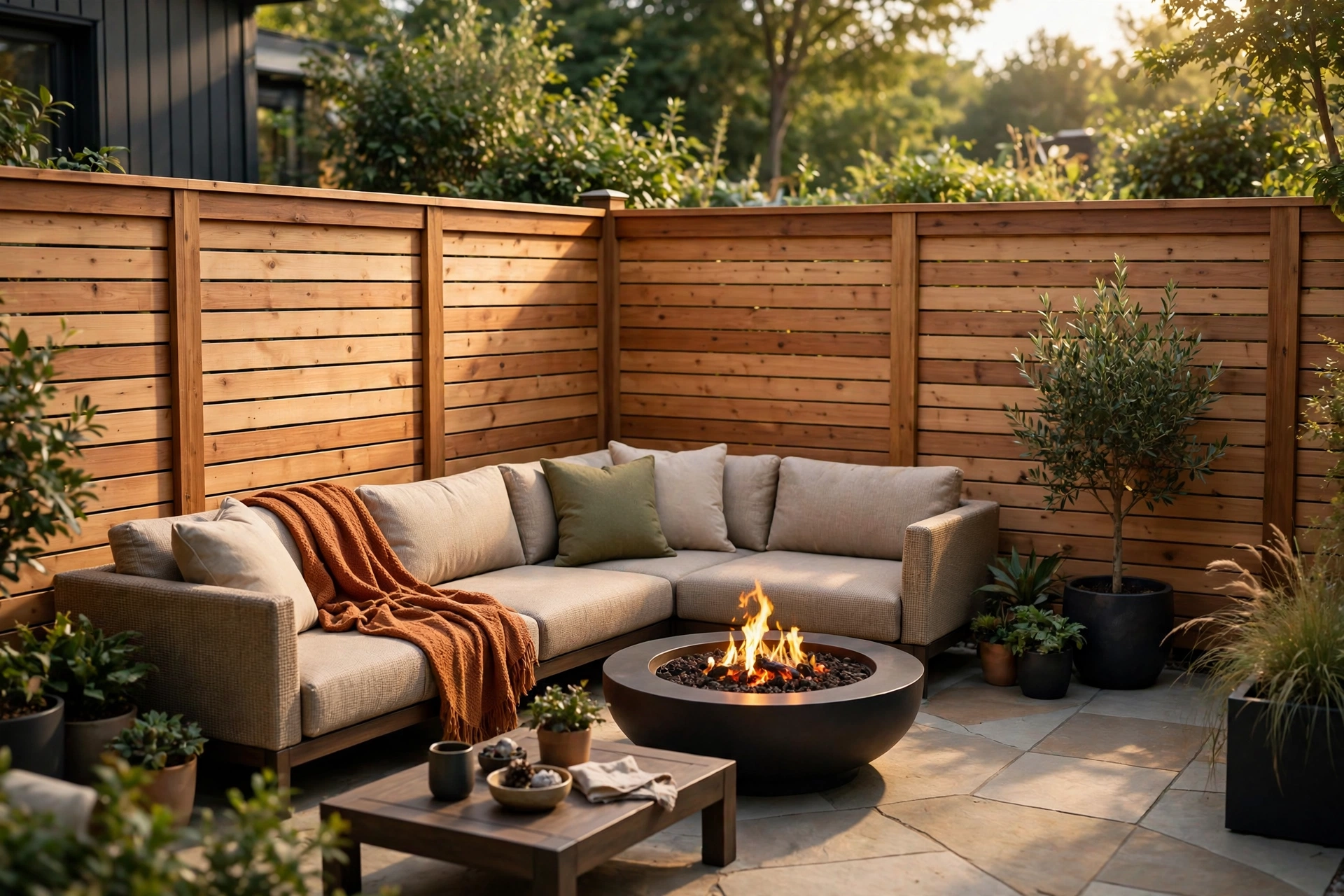
9. Horizontal Cedar Fence Panels
For a permanent, high-end look, horizontal cedar fence panels deliver total privacy with a modern profile. The horizontal lines make small patios feel wider, and a board-on-board arrangement leaves zero sightline gaps.
This is a bigger project than a freestanding screen — posts set in concrete, panels screwed to the rails — but the result lasts 15 to 20 years with basic sealing. Cap the top rail with a slightly wider board to shed water and protect the end grain below it. Leave a small gap at the bottom for drainage so the boards don’t sit in standing water. If a full fence isn’t in the budget, use horizontal cedar panels as a single accent wall behind the seating area and cheaper screening elsewhere; the eye reads the premium section first.
10. Retractable Side Awnings
Many of these screens also work as patio wind protection ideas.
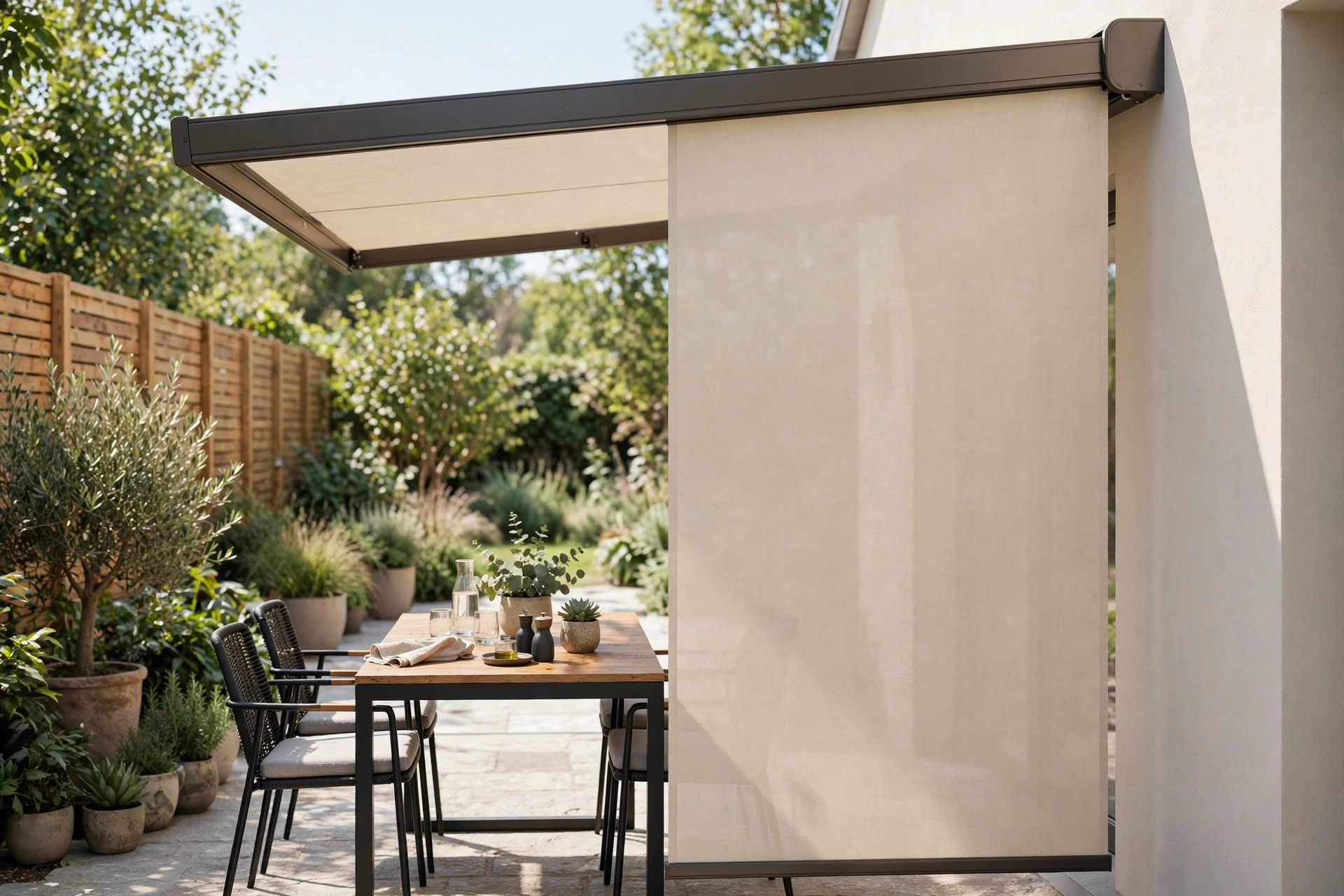
Retractable side awnings are the adjustable patio privacy idea: a weatherproof fabric screen that rolls out from a slim cassette to block a specific sightline, then retracts flush against the wall when you want the view back.
They’re ideal for the classic problem — one neighbor’s upstairs window overlooking your dining spot. Mount the cassette to the house wall or a sturdy post, extend the fabric to the opposite anchor point, and the screen blocks exactly that angle. Look for double-layer or high-density fabric rated for UV and rain, since a side awning takes weather on both faces. Most units span 10 to 13 feet, so measure your sightline before ordering. Because they retract, they’re also one of the few privacy options that won’t catch wind overnight — just roll it in when storms are forecast.
Patio Privacy Options Compared

Here’s how the main approaches stack up on cost, privacy level, and upkeep, so you can pick what fits your patio and patience.
| Privacy option | Typical 2026 cost | Privacy level | Maintenance |
|---|---|---|---|
| Fabric screens and curtains | $20–$80 per panel | Medium–High | Wash seasonally; replace every 2–5 seasons |
| Wood slat and lattice screens | $100–$400 per section | High | Seal or stain yearly |
| Tall container plantings | $50–$150 per planter, planted | Medium | Water and feed regularly |
| Metal and composite panels | $150–$700 per panel | High | Minimal — occasional wash |
| Bamboo fence rolls | $30–$80 per roll | Medium–High | Reseal yearly; replace every 5–7 years |
| Retractable side awnings | $80–$250 per unit | High (adjustable) | Retract in storms; clean fabric yearly |
Prices reviewed: October 2026. These ranges reflect typical 2026 pricing from major home-improvement retailers and online sellers; custom sizes and premium materials run higher.
Frequently Asked Questions
What’s the cheapest way to add privacy to a patio?

Fabric privacy screens and bamboo fence rolls are the cheapest routes — fabric panels typically run $20 to $80 each and a bamboo roll covers 16 feet for roughly $30 to $80. Both install in an afternoon with no special tools, making them ideal if you want privacy this weekend rather than this season.
How can I make my patio private without a fence?

Freestanding screens, tall planters, and outdoor curtains all create privacy without a permanent fence. Place them to block specific sightlines — the neighbor’s window, the street — rather than surrounding the whole patio. Retractable side awnings and faux-ivy trellis panels are also excellent no-fence options, especially for renters.
What plants are best for patio privacy?
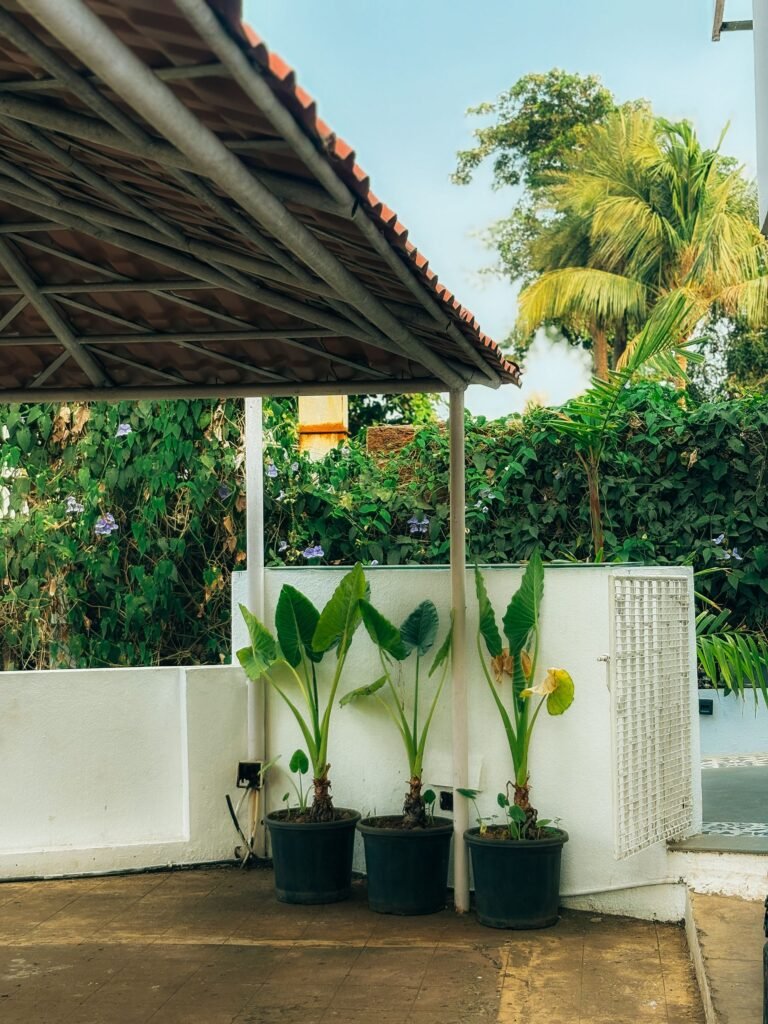
For instant screening, tall ornamental grasses like feather reed grass and clumping bamboo in large containers work within weeks. For permanent living walls, evergreen shrubs such as arborvitae or holly, or climbing vines like star jasmine on a trellis, give year-round coverage in mild climates. Match the plant to your sun exposure and winter lows before buying.
Do outdoor privacy screens block wind too?
Solid screens block wind as well as views, which is great on breezy patios but can make a sheltered patio feel stuffy in summer. Slatted, lattice, and plant-based screens let air through while still breaking sightlines — the best compromise for hot climates. If you use solid panels, leave at least one side of the patio open for airflow.
Can I add privacy to a rental patio?

Yes — choose freestanding or removable options. Weighted planter poles with screens, tall container plantings, faux-ivy trellis panels on frames, outdoor curtains on tension rods, and retractable awnings mounted to a freestanding post all come down without damage. Avoid anything that requires drilling into walls or digging post holes.
How tall should a patio privacy screen be?

Six feet is the standard for blocking standing sightlines from ground level. If the concern is a neighbor’s second-story window, you may need 7 to 8 feet or a screen placed closer to the seating area — a 6-foot screen near your chairs blocks an upstairs sightline better than an 8-foot fence far away. Check local codes before building anything tall or permanent, since many areas limit fence height.
Key Takeaways
- The most effective patio privacy ideas block specific sightlines — stand where the neighbors stand to find exactly what needs covering.
- Wood slat screens and outdoor curtains give the best privacy for the money; plant-based screens take longer but look the most natural.
- Renters can get real privacy with freestanding screens, tall planters, and removable trellis panels — no drilling required.
- Balance privacy with airflow: slatted and living screens keep breezy patios comfortable.
- Prices reviewed: October 2026 — budget roughly $20–$80 per fabric panel and $100–$400 per wood screen section.