
The best enclosed patios do not feel like patios at all. They feel like the room everyone drifts to — coffee in the morning, laptop in the afternoon, a nap when it rains. Getting there is mostly about layout and fabric: the right walkway widths, a rug that actually fits, and materials matched to how much weather still gets in.
As The Spruce’s sunroom ideas guide puts it, the trick is to furnish it like a real room, with rugs, lightweight rattan, and indoor-outdoor furniture that handles the light. Still deciding on the enclosure? These enclosed patio ideas pair the structure with how you want to live in it.
1. The Living-Room Layout: Sofa Facing the View

Best for: Conditioned sunrooms and wide three-season rooms, roughly 12 feet or wider.
Place a 72- to 84-inch sofa with its back to the house wall, facing the glass, flanked by two lounge chairs angled in at 45 degrees. Leave 30 to 36 inches of walkway behind it, and 18 inches between sofa and coffee table. Anchor the grouping on an 8×10-foot rug, or 9×12 feet if chairs sit fully on it. Use a coffee table 36 to 48 inches long, 16 inches high. In a sunroom, use an upholstered sofa; in a three-season room, an outdoor frame with performance cushions.
2. Slim-Profile Seating for Narrow Enclosures

Best for: Narrow screened porches and enclosures under 10 feet wide.
Depth is your enemy in a narrow room. Standard outdoor sofas run 36 to 40 inches deep; slim frames run 28 to 32 inches deep and can save a full foot of walkway. Look for armless chairs, loveseats 48 to 54 inches wide, and track arms instead of rolled arms. Keep a clear 36-inch path door to door — 30 inches is the minimum before it feels like an obstacle course. Push the loveseat against the long wall, face it with two armless chairs, and use a 12×36-inch console as the shared surface. These small patio furniture ideas for apartments translate directly to narrow enclosures.
3. A Wicker or Rattan Set for Screened Porches
Best for: Screened porches with classic or cottage style and full weather exposure.
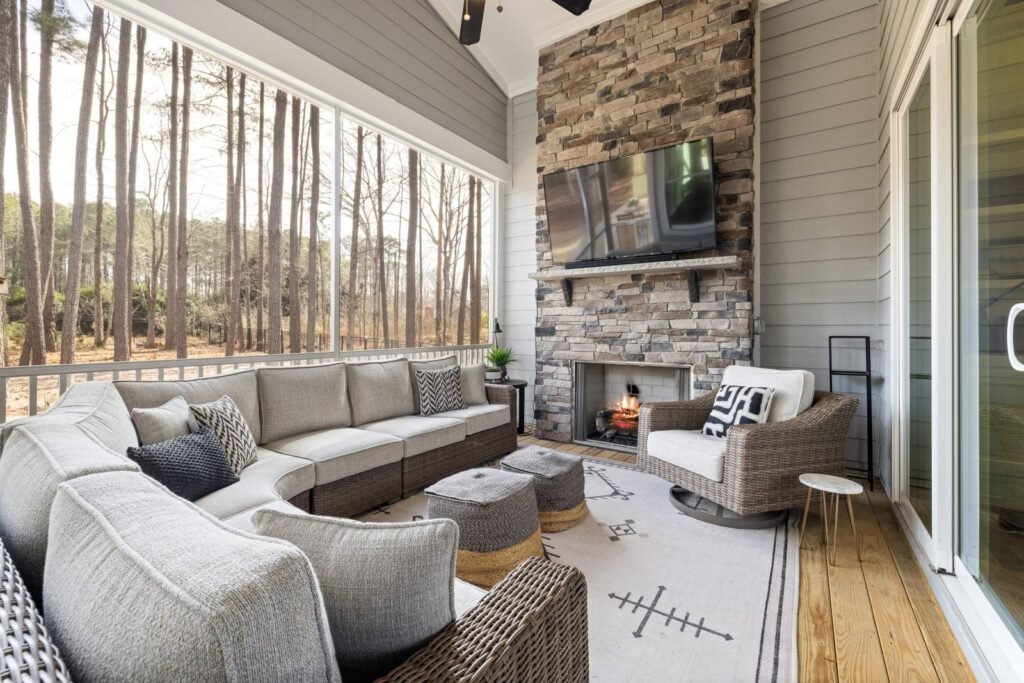
A screened porch is still outdoors, just with fewer bugs. Rain blows in, pollen coats everything, and humidity sits high all summer. All-weather resin wicker over powder-coated aluminum is the workhorse here: it hoses off, will not rust, and is light enough to rearrange. Natural rattan belongs only in three-season or conditioned rooms — in a screened porch it mildews and goes brittle. A practical set is a 70-inch sofa, two chairs, and a glass-top coffee table, roughly $900 to $2,500. Choose solution-dyed acrylic cushions and store them in a deck box during winter storms.
4. A Daybed Corner for Reading and Naps
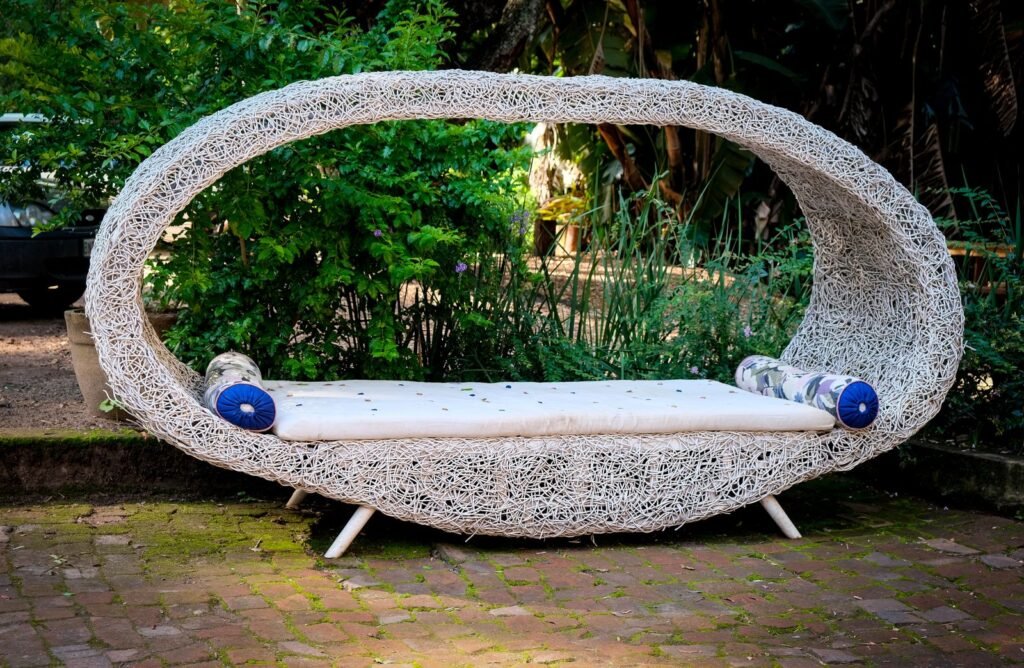
Best for: The shadiest, quietest corner of any enclosure, especially a three-season room.
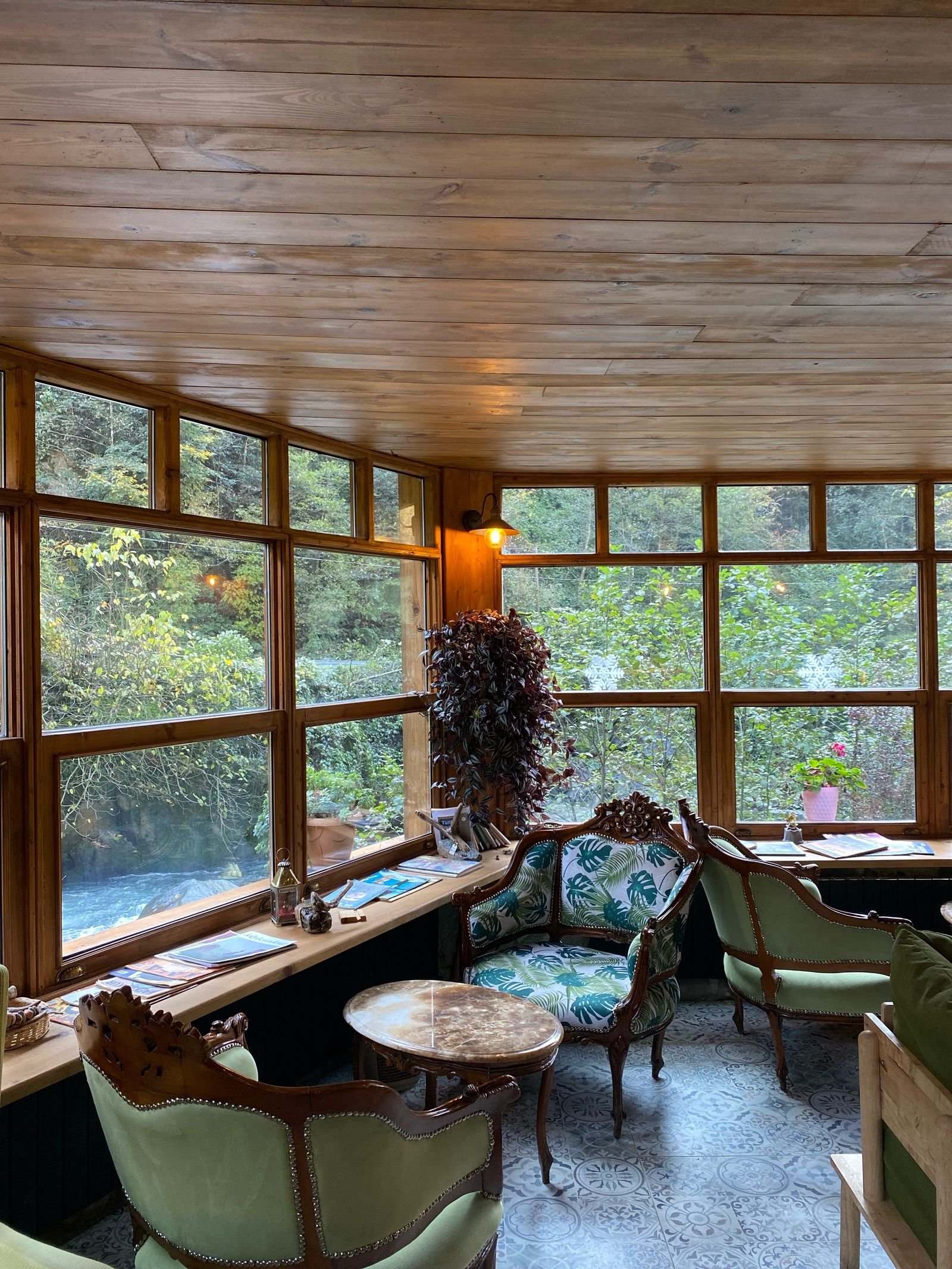
A twin-size daybed is 39 inches wide and 75 to 80 inches long, so measure the corner first. Against the short wall it works as a sofa by day — back cushions against the wall bring the effective seat depth to about 24 inches — and as a guest bed when family visits. In screened porches, pick an aluminum or resin-wicker frame; in sunrooms, a wood frame with a real twin mattress is fair game. Layer a washable cover, a flatweave throw, and two 24-inch back pillows. Keep an 18- to 20-inch side table within reach, and leave 24 inches of clearance at the open side.
5. Bistro Dining for Two
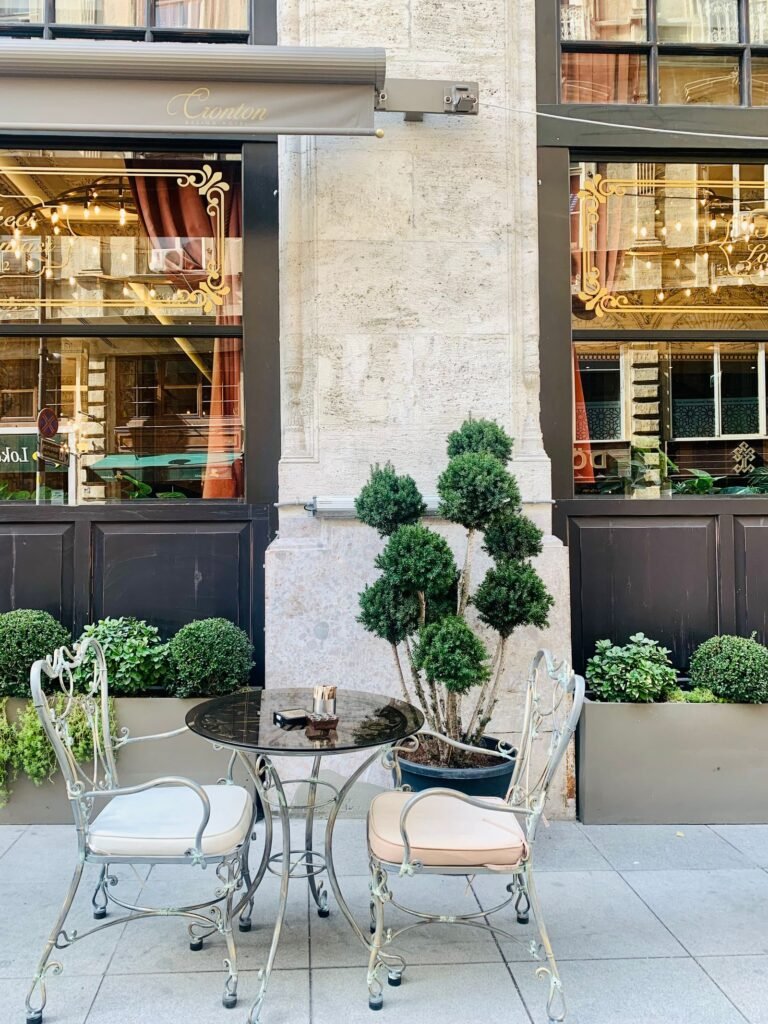
Best for: Small enclosures and breakfast corners, with under 80 square feet for dining.
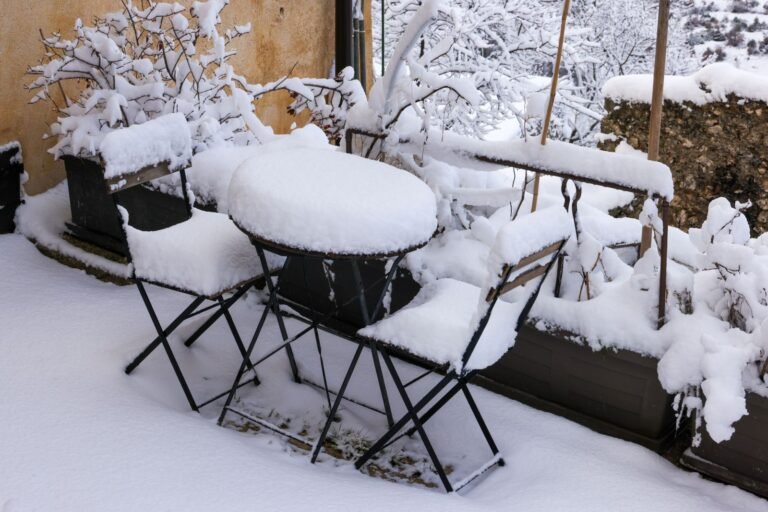
A 28- to 32-inch round bistro table seats two, takes the least floor space of any dining setup, and its pedestal base leaves room for feet. Chairs should be 18 inches wide or less, stackable or folding. The whole footprint, chairs pulled out, is about 5×5 feet — tape that square on your floor first. Folding sets in powder-coated steel or aluminum run $120 to $400 and store flat for storms. Set it in the sunniest morning corner; add a 5×7-foot rug only in three-season and sunroom settings, since it stays damp in screened rooms.
6. A Full Dining Layout for a Three-Season Room
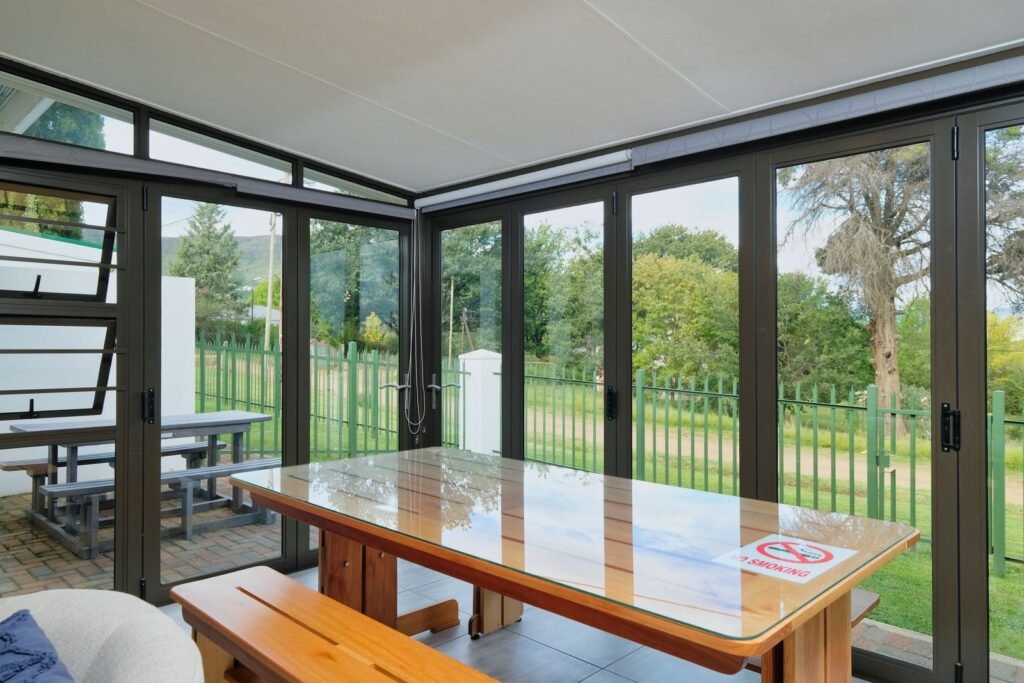
Best for: Three-season rooms 12×14 feet or larger hosting dinners of six to eight.
Work backward from the table: allow 24 inches per diner, so a six-person table should be 60 to 72 inches long and 36 inches wide. Allow 36 inches from table edge to wall so chairs — 18 inches deep, pulled out another 18 — still let someone squeeze behind. A true dining zone needs roughly 10×12 feet minimum. An 8×10-foot indoor-outdoor rug defines the zone, with all chair legs staying on it when pulled out. Extension tables that grow from 60 to 84 inches earn their keep here. Choose performance-fabric cushions or bare molded seats; spills plus humidity punish indoor fabrics.
7. A Hanging Chair as the Focal Point
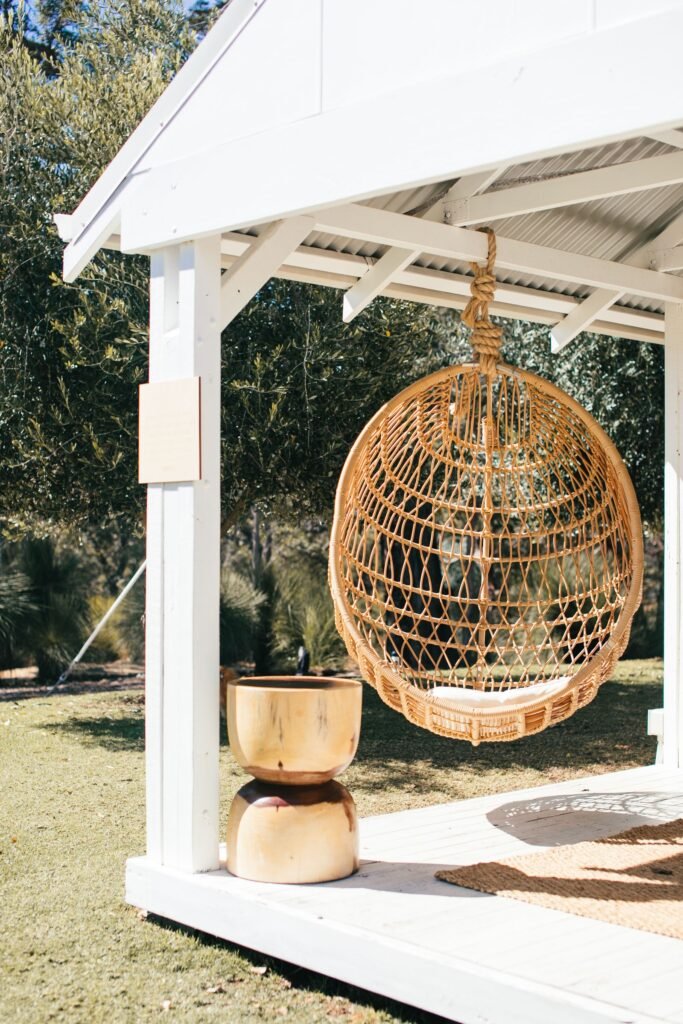
Best for: Any enclosure with one awkward corner and a strong joist or room for a stand.
Nothing makes an enclosed patio feel like a retreat faster than a hanging egg chair: it needs a 40- to 48-inch swing arc, plus 12 inches of clearance behind it so it never kisses the glass. Ceiling-hung versions must anchor into a joist and be rated for 250 to 300 pounds; a stand-based model costs $200 to $500 and avoids the structural question. In a screened porch, choose resin wicker and outdoor cushions; in a sunroom, natural rattan is fine. Face it toward the view and add a 20-inch garden stool as its side table.
8. A Console Against the House Wall
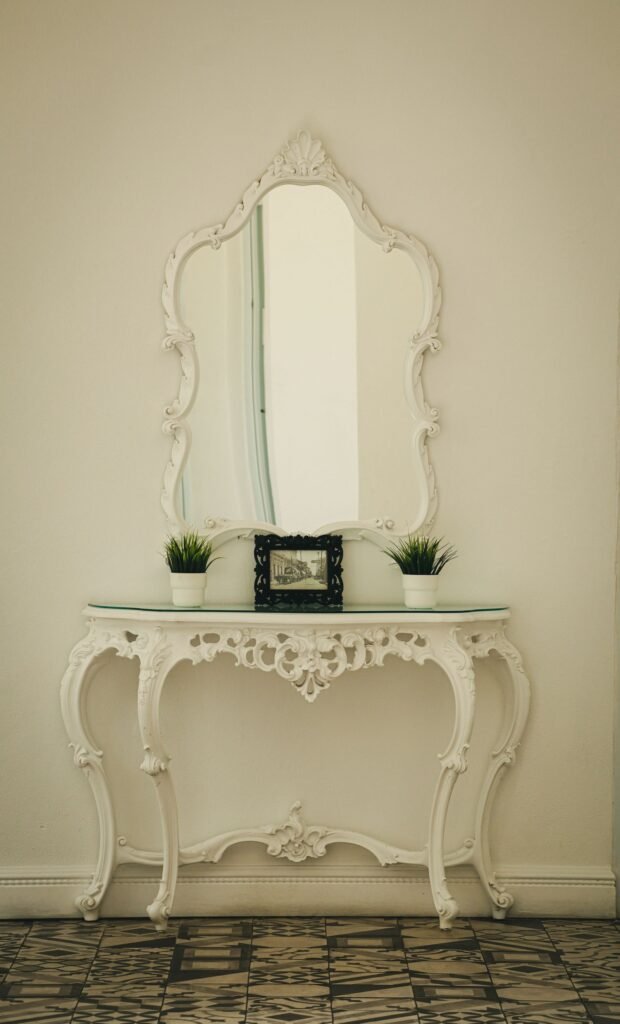
Best for: Every enclosure type — the hardest-working 12 inches of depth in the room.
The house wall is the driest, shadiest wall you have, making a 10- to 14-inch deep, 30- to 34-inch high console the perfect tenant for it. It holds lamps, drinks overflow, a speaker, and the plant that cannot take direct sun. A 48- to 72-inch console behind a floating sofa does the same job while hiding the sofa’s back. In screened porches, pick metal, teak, or resin; indoor wood is sunroom-only. Style the top in thirds — lamp, tray, plant — and use the space underneath for storage baskets or poufs that pull out as extra seats.
9. Storage Ottomans and Benches
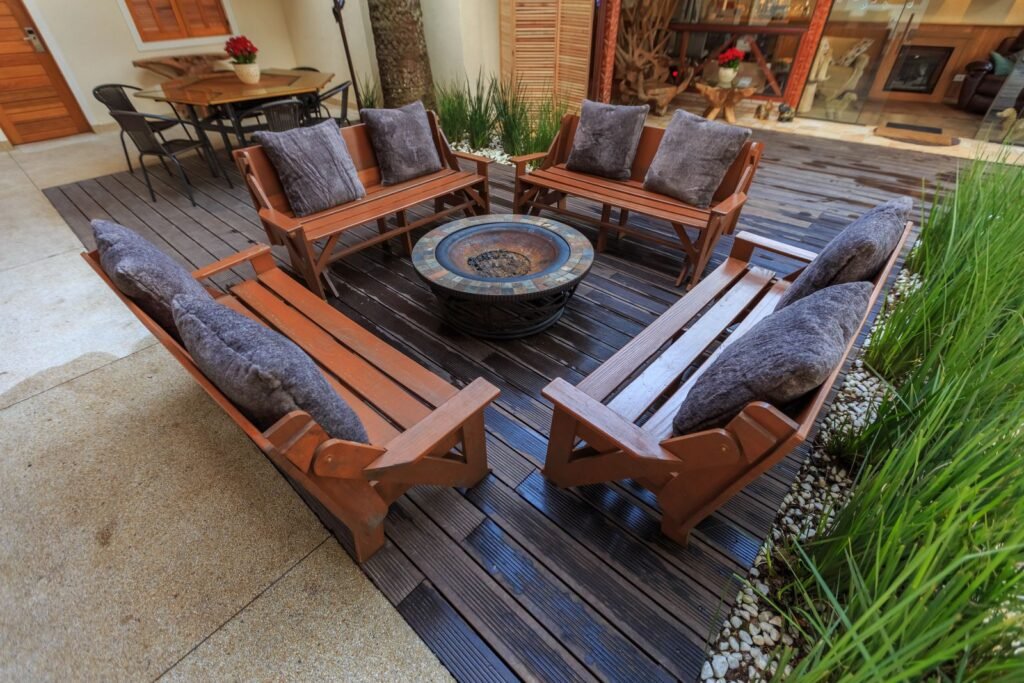
Best for: Small enclosures and three-season rooms that need to hide clutter fast.
Every enclosed patio accumulates stuff: throws, covers, bug spray, games. Storage ottomans — 18 inches high and 18 to 24 inches across — swallow a throw each and work as footrests, tray tables, and emergency seating. A 48-inch bench holds a full set of cushions; measure your largest first, since most need 24×24 inches of clear interior. For screened porches, resin or aluminum with drainage keeps contents from mildewing; upholstered benches belong in conditioned sunrooms. Budget $80 to $250 per ottoman, $200 to $600 for a bench.
10. The Plant-Led Layout: Shelves and Tall Corners
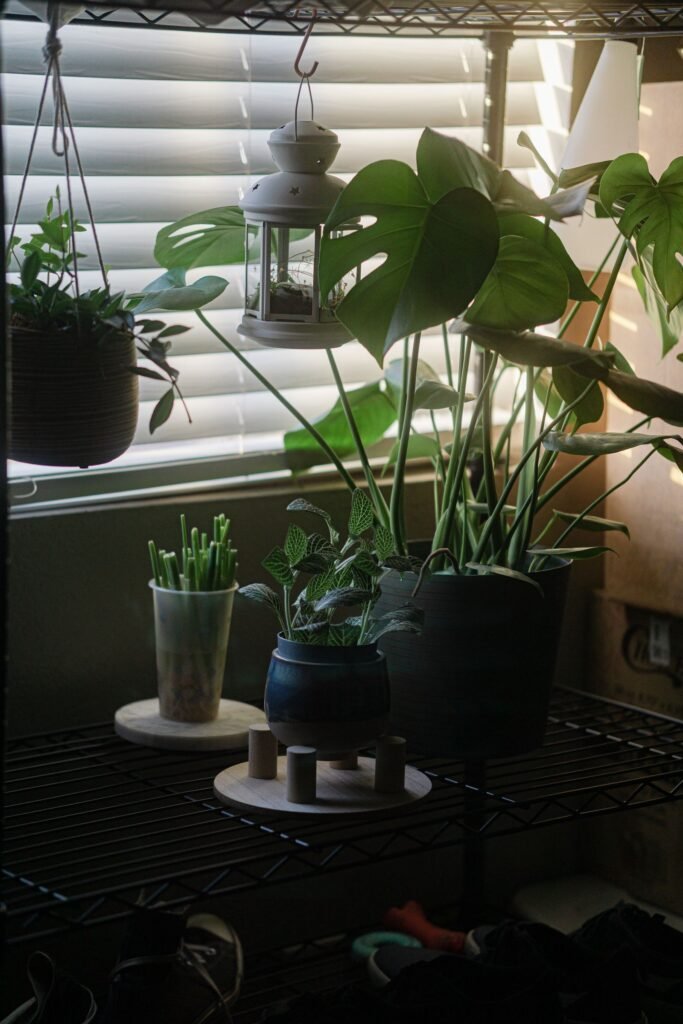
Best for: Bright three-season rooms and sunrooms, and gardeners overwintering tender plants.
Design this layout plants-first. Tall plants — a 5- to 6-foot olive, citrus, or fiddle-leaf — go in corners where they frame rather than block the glass, with 24 inches between pot and seating. A tiered shelf 12 to 14 inches deep runs along the sunniest wall; trailing plants on top, heavy pots below. Group pots in threes on stands at 8, 12, and 20 inches, on caster caddies in a three-season room so you can chase the light. In a screened porch, use metal or resin shelves; humidity warps cheap wood within a season.
11. A Workspace Nook in the Brightest Corner

Best for: Conditioned sunrooms, and three-season rooms in spring and fall.
A workspace nook needs little: a desk 24 inches deep and 42 to 48 inches wide, a chair with 24 inches of pull-out room, and a footprint of about 4×5 feet including you. Position the desk perpendicular to the glass — direct backlight makes screens unreadable. In a sunroom, almost any desk works; in a three-season room, choose metal, teak, or outdoor-rated pieces and bring the laptop inside for winter. Add a 4×6-foot rug, a task lamp, and one closed storage box so work disappears at 5 p.m.
12. The Fabric Rules by Enclosure Type
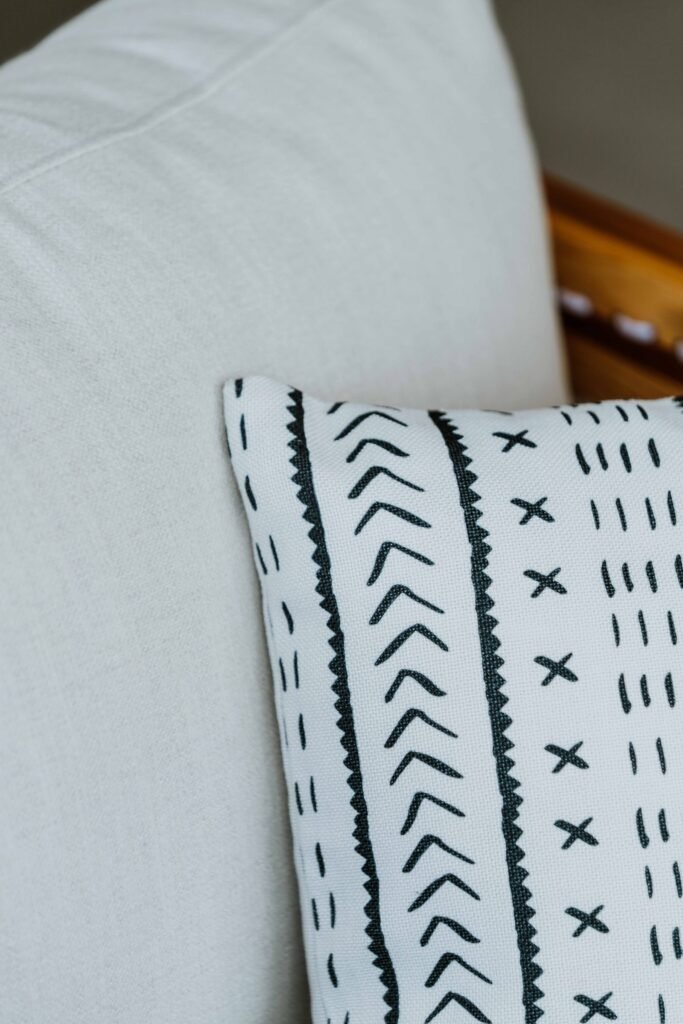
Best for: Read before buying any cushion, rug, or upholstered piece — this saves the most money.
This rule governs every layout above — if you are unsure which enclosure you have, this guide to enclosed patio screen types and costs breaks down the differences. Screened porch: treat it as fully outdoors — only solution-dyed acrylic or olefin, quick-drain foam, and rugs you can hose. Three-season room: performance fabrics are the standard, but skip leather, velvet, and natural rattan, since the room still freezes and sweats. Conditioned sunroom: almost anything goes, except UV is relentless — rotate cushions and expect fabrics to lighten in 3 to 5 years.
Frequently Asked Questions
How much space do you need around enclosed patio furniture?
Keep main walkways 36 inches wide, never less than 30 inches. Allow 18 inches between sofa and coffee table, 36 inches behind a dining table for chairs and pass-through space, and 24 inches beside a daybed or desk chair for entry.
Can you use regular indoor furniture in an enclosed patio?
Only in a fully conditioned sunroom — heated, cooled, and dehumidified year-round. In screened and three-season rooms, temperature swings and humidity will mildew upholstery, warp wood, and rust springs. Use outdoor or performance-fabric versions of indoor styles instead — same silhouettes, but cores and fabrics that survive.
What size rug works best in a sunroom or enclosed patio?
For a seating group, choose an 8×10-foot rug so the front legs of sofa and chairs sit on it, or 9×12 feet for all four legs. Under a dining table, add 48 inches to the table dimensions — typically 8×10 feet for a six-person table. Bistro corners suit a 5×7-foot flatweave.
What furniture holds up best in a screened porch?
Powder-coated aluminum, resin wicker, and teak hold up best because they resist rust, mildew, and humidity and hose clean after pollen season. Pair them with solution-dyed acrylic or olefin cushions on quick-dry foam. Avoid natural wicker, untreated steel, and indoor upholstery in damp air.